REVIEW · SEVILLE
Seville: Museum of Fine Arts Guided Tour
Book on GetYourGuide →Operated by Guides and Tours · Bookable on GetYourGuide
Big art, no stress. This guided tour gives you a focused way to see Seville’s Museum of Fine Arts inside the former convent of La Merced, with expert local context as you move room to room.
I especially like two things: the mix of Renaissance, Baroque, and Sevillian Gothic art in one route, and the way the guide helps you connect paintings and sculptures to the time and place they came from. It’s not just looking. It’s looking with a map in your head.
One possible drawback: if you want total freedom to wander slowly and pick your own pace, a set 2-hour plan may feel a bit tight. You’ll still see major highlights, but you won’t have hours to “get lost” on your own.
In This Review
- Quick take: best reasons to go
- La Merced first: why the building matters before the art
- Cloisters you’ll remember: Claustro de los Bojes to Claustro Mayor
- The art mix: Gothic to Renaissance to Baroque in one flow
- Seville Gothic: what to look for
- Renaissance example: Saint Jerome Penitent
- Baroque and the Sevillian voice
- Murillo room time: the biggest payoff for many visitors
- How the guide helps you see what labels don’t
- The route length (2 hours) and what it means for your day
- Small group logistics: why up to 8 people changes everything
- Price and value: is $23 worth it?
- Who should book this tour
- Practical tips so you enjoy it more
- Should you book the Seville Museum of Fine Arts guided tour?
- FAQ
- How long is the Seville Museum of Fine Arts guided tour?
- How much does the tour cost?
- Where do I meet the guide?
- What’s included in the price?
- Is transportation included to the meeting point?
- Is there an express security check?
- What languages are the tours offered in?
- Is the tour wheelchair accessible?
- Are pets allowed?
- Is free cancellation available?
Quick take: best reasons to go
- Small group (up to 8): you get more chance to ask questions and actually hear the guide.
- La Merced convent setting: cloisters and architecture add drama to the art.
- Two-hour, highlight-first route: you leave with a clear sense of Spanish art evolution.
- Murillo-focused room time: you get targeted context for a key Sevillian artist.
- Express security check: fewer delays getting inside.
- Licensed guide in English or Spanish: explanations are tuned to your level.
La Merced first: why the building matters before the art
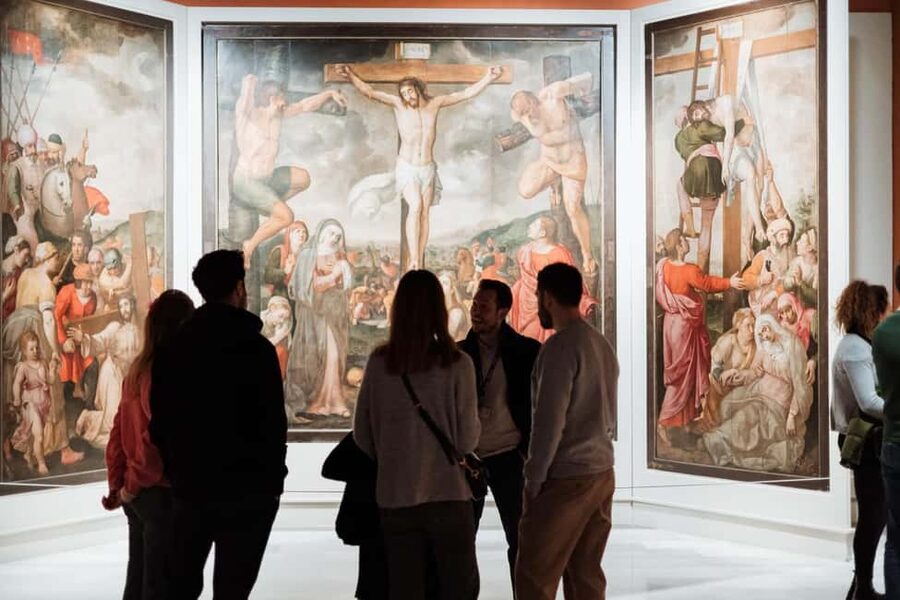
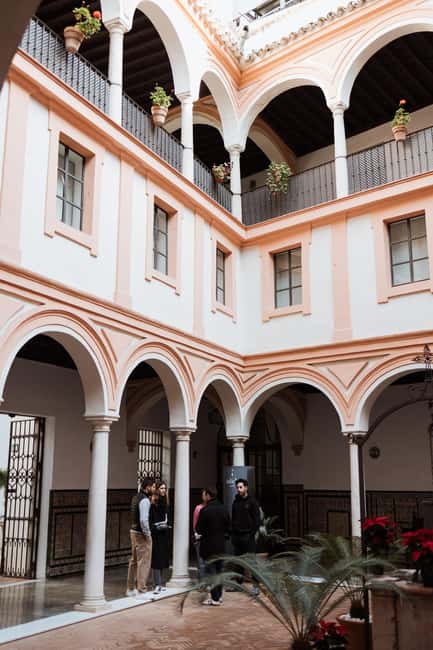
The Museum of Fine Arts of Seville isn’t just a place that happens to hold great art. It’s housed in the historic Convent of La Merced, and that changes how the whole visit feels. You start in a calm, monumental space where the architecture sets the mood. Think stone, quiet corridors, and cloisters that make the art feel less like a gallery stop and more like part of the city’s older rhythm.
The tour starts at Asociación Amigos del Museo de Bellas Artes, but your practical orientation is really tied to the museum area. When you arrive, the guide will wait at Plaza del Museo near the statue of Murillo, using a blue umbrella or a name tag that says Sevilla Guías & Tours. That’s a helpful detail because Seville’s central streets can look similar fast, especially in warm months when everyone’s moving at once.
If you’re the kind of person who takes one look and tries to read everything, this venue can overwhelm you. The good news: the guided format helps you avoid that trap. You get a line of sight through the museum rather than staring at labels alone.
You can also read our reviews of more tours and experiences in Seville.


Cloisters you’ll remember: Claustro de los Bojes to Claustro Mayor
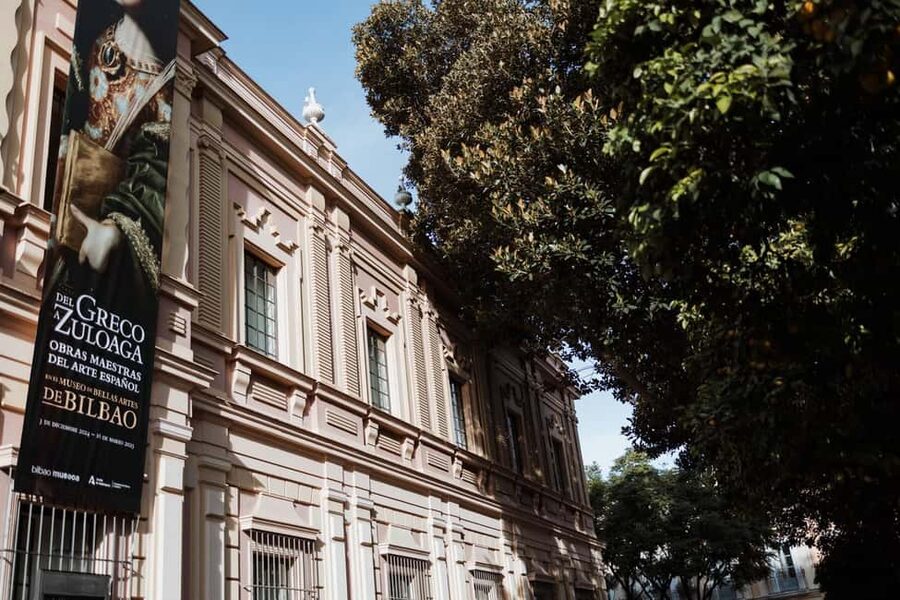
A big part of the value here is that you don’t rush only through rooms with paintings. You also slow down in the cloisters, starting with Claustro de los Bojes and then moving to the Claustro Mayor. Cloisters are where you can breathe. They also frame the art in a more human way—because convent spaces were built for movement, reflection, and daily life, not just display.
In practical terms, this means you get a natural pause between heavier rooms. And it helps your eyes adjust. Paintings can be intense. Sculpture can be subtle. Cloisters are like a reset button.
Also, the cloisters make the tour feel more “Seville” than “just a museum.” You’re walking through a building that shaped how people lived here, which is useful when the guide starts talking about the artistic evolution you’re seeing.
The art mix: Gothic to Renaissance to Baroque in one flow
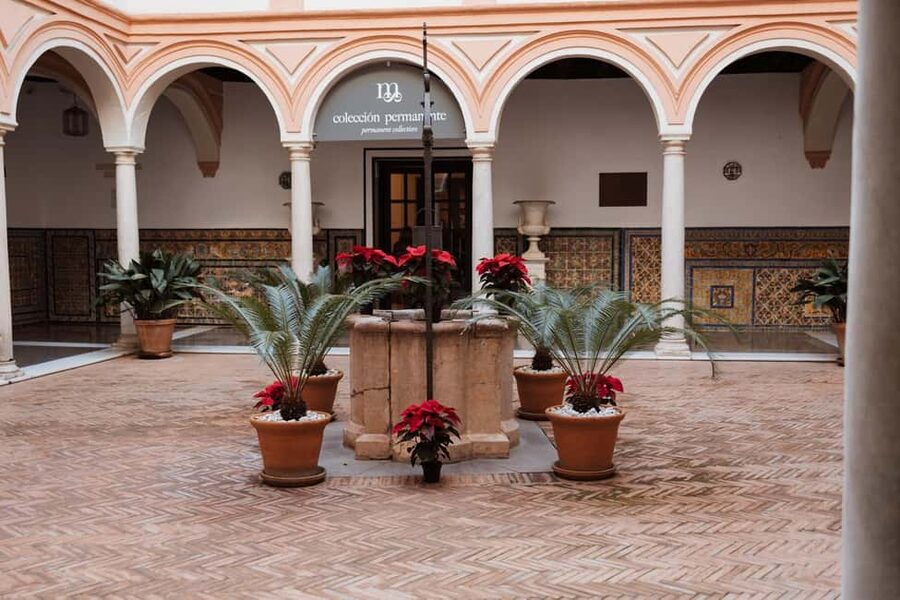
What makes this tour click is the way it presents an art timeline without turning it into a lecture you can’t follow. You’ll see Sevillian Gothic pieces, then move toward Renaissance works like Saint Jerome Penitent by Torrigiano, and keep going into Baroque and Sevillian masters.
For you, that structure matters. Without context, a museum can turn into a grab bag. With context, the same museum becomes a story: how style changed, what symbols meant, and why certain themes kept showing up in Seville and across Andalusia.
Seville Gothic: what to look for
When the guide points out Gothic elements, it’s usually not about naming styles only. It’s about noticing how emotion and spirituality were expressed through form—how saints were shown, how drama entered the scene, and how local tastes shaped what people valued.
If you’re new to art history, this section is your “aha.” You learn that Gothic isn’t just old. It’s specific. It has tools: angles, expression, and a sense of spiritual theater.
Renaissance example: Saint Jerome Penitent
Seeing Saint Jerome Penitent by Torrigiano with a guided explanation is the difference between admiration and understanding. The guide’s job is to connect you to the “why” behind the image—why this subject, why this treatment, and how Renaissance thinking shows up in the way the work is built.
You can also read our reviews of more museum experiences in Seville


Baroque and the Sevillian voice
Once you hit Baroque and the stronger Sevillian identity, the museum stops feeling like a textbook. It starts feeling like people. That’s when the guide’s storytelling becomes especially useful: you’re learning the lived world around the art.
Murillo room time: the biggest payoff for many visitors
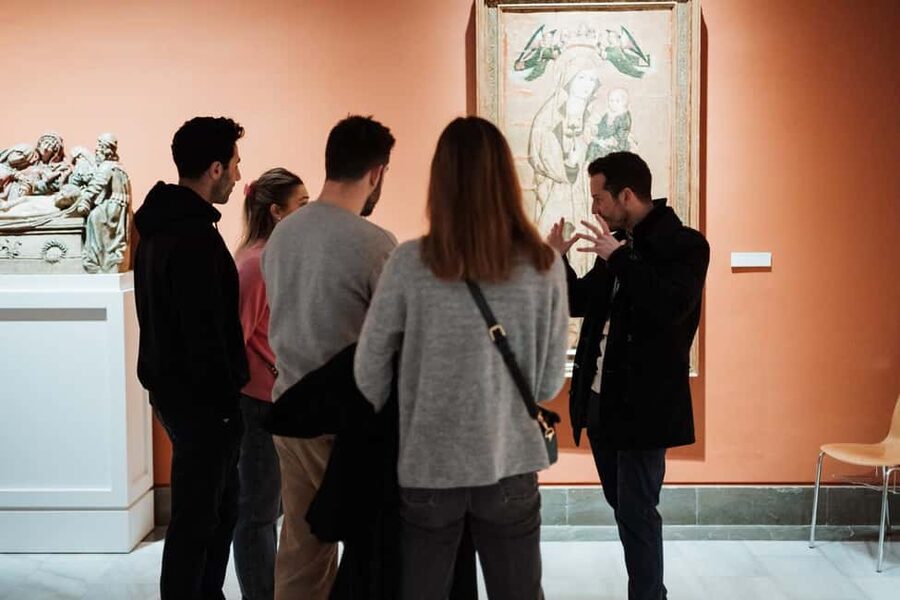
One of the most distinct segments of the tour is the room dedicated to Bartolomé Esteban Murillo. Murillo is a central name for Seville, and the guide’s approach here helps you see why his work resonates. You don’t just view paintings as objects behind glass. You’re shown what makes them “work” emotionally—how the images communicate devotion, humanity, and the look of everyday life through sacred themes.
You’ll also see selected works by other renowned Sevillian artists in that area, which is smart. It prevents Murillo from becoming a solo act. Instead, you start to understand the network of artists, styles, and local themes that fed into each other.
If you’ve ever felt lost in a museum because you don’t know which artists matter most, the Murillo focus solves that. It gives you a center of gravity.
How the guide helps you see what labels don’t
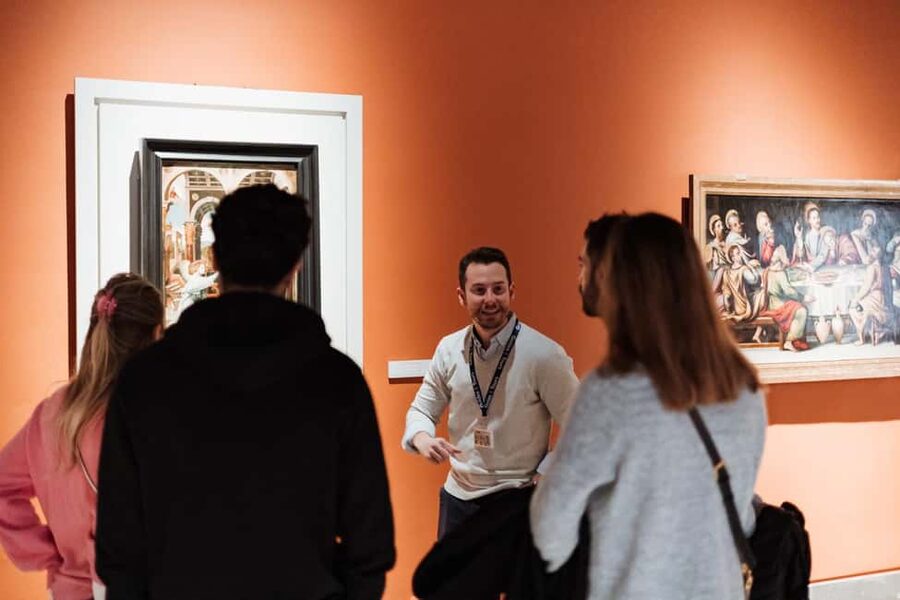
The standout pattern in the experience is the quality of the guide. Guides like Julio are often praised for connecting works to their historical period and for explaining symbolism and interpretation in a way that stays clear. That matters because symbolism is where a lot of museum magic hides—and it’s also where audio guides can fall flat.
Here’s the practical part: the guide doesn’t just say what you’re looking at. He (and guides have been English- or Spanish-speaking, depending on the tour) also helps you understand what the work is trying to do. That turns questions into something you can answer while you’re still in front of the painting.
You’ll also benefit from the tour’s format for hearing. One key detail from a guide experience is that the use of an ear piece makes it easier to follow without strain. In a big museum, that’s not a small comfort—it keeps you engaged instead of annoyed.
Another plus: guides seem ready to answer questions and to adjust to different levels. That’s useful if you’re going with a partner who isn’t an art person, or if you love art and want deeper explanations without feeling talked down to.
The route length (2 hours) and what it means for your day
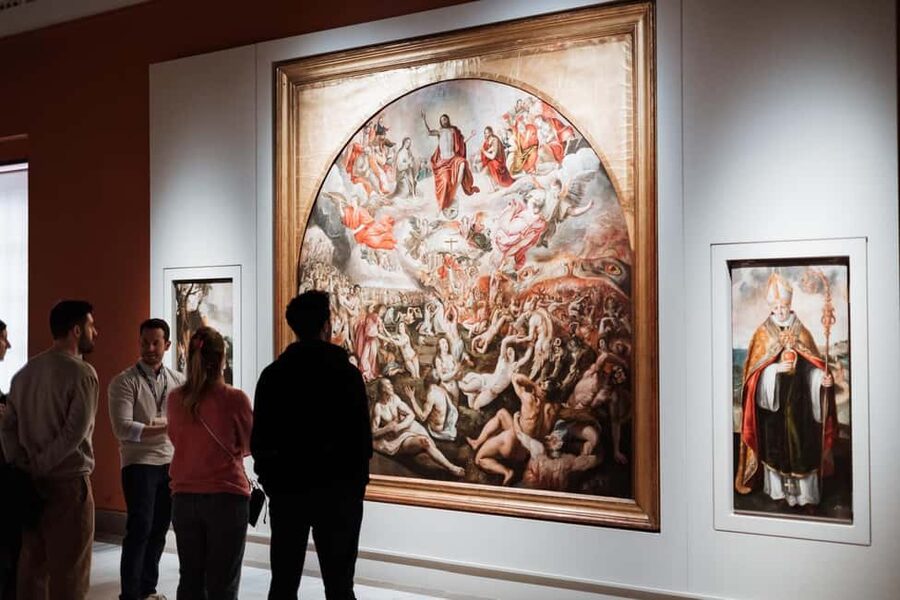
The tour clocks in at 2 hours. That time box is a major reason this is good value for your schedule. Seville is full of sights, and museums can quietly steal half a day if you’re not careful. Here, you get a structured “greatest hits” approach, plus architectural time, without exhausting yourself.
You also have an advantage in planning: you can pair this with other Seville walks the same day. The museum is in the historic center, so once you’re oriented around Plaza del Museo and the Murillo statue area, it’s easier to continue exploring nearby streets and sights without feeling like you’re starting from zero.
One caution: if you’re the type who loves reading every plaque, your natural pace may be faster or slower than the guide’s stopping points. Plan for the idea that this is about meaning, not marathon gallery time.
Small group logistics: why up to 8 people changes everything
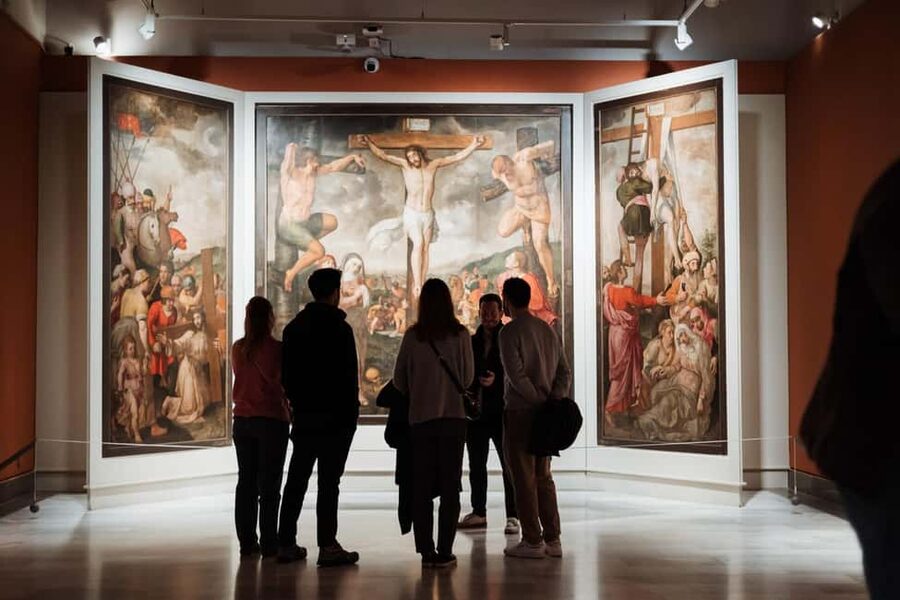
This is capped at 8 participants, which is a sweet spot. In a group that small, the guide can pause for questions and keep the pace from turning chaotic. It also tends to improve attention, because you’re not fighting a crowd for sight lines.
Another benefit is the express security check. Museums in Europe can have lines that feel like a test of patience. If you’ve got limited time, the ability to skip the line through express security makes a real difference.
Bottom line: this tour is built for people who want structure and context, not people who want to wander with a map and hope the best moments happen by luck.
Price and value: is $23 worth it?
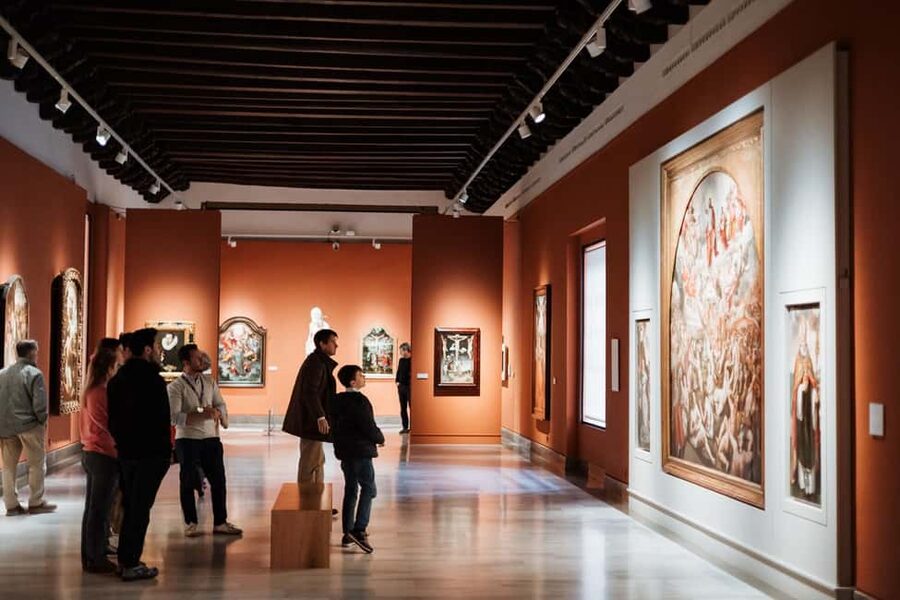
At $23 per person, this tour is priced like a smart add-on rather than a big splurge. What you’re paying for isn’t only a person pointing at paintings. It includes entrance to the Museum of Fine Arts, a licensed expert guide, and the benefit of express security, plus the small group size.
So the value question becomes simple: would you spend $23 anyway on museum entry plus the time you’d lose trying to figure out what matters? For most visitors, the answer is no. This option saves your time and gives you context that you’d otherwise have to hunt for yourself.
If your group is larger and you’d otherwise take turns with audio guides or phones, the guided format becomes even more cost-effective—because it replaces multiple self-guided attempts with one guided story.
And if you’re traveling with kids or a mixed-experience group, the “digestible explanations” angle is where you feel the price make sense.
Who should book this tour
Book this if you:
- want a clear overview of Seville and Andalusian art styles without researching for days
- prefer a guide who explains symbolism and historical context
- like museum visits that mix art and setting (convent, cloisters) rather than only paintings
- have limited time and want to leave with key names and a sense of how styles evolved
It may be less ideal if you:
- want to spend long hours in galleries at your own pace
- don’t enjoy guided pacing and would rather follow your own curiosity without stops
Practical tips so you enjoy it more
- Wear comfortable shoes. Cloisters and museum corridors are real walking, not just “a few steps.”
- Arrive a few minutes early so you can find the guide at Plaza del Museo near the Murillo statue.
- If you care about hearing clearly, lean into the ear piece setup during the tour. It helps keep your focus on the works.
- Bring your questions. The best part of a guided visit is using the guide as your decoder.
Should you book the Seville Museum of Fine Arts guided tour?
Yes, if you want a smart, efficient way to see major art in Seville with clear context and a guide who connects works to their world. The small group size, express security, and the focus on major anchors like Murillo make it a strong choice for first-timers and repeat visitors who still want better interpretation.
If your ideal museum day is total self-direction, you might prefer wandering on your own. But for most people—especially those who only have a short window in Seville—this is the kind of tour that turns a beautiful museum into a story you can remember.
FAQ
How long is the Seville Museum of Fine Arts guided tour?
The tour lasts 2 hours.
How much does the tour cost?
The price is $23 per person.
Where do I meet the guide?
Meet at Plaza del Museo, next to the statue of Murillo. The guide waits with a blue umbrella or a name tag that says Sevilla Guías & Tours.
What’s included in the price?
You get entrance to the Museum of Fine Arts of Seville plus an expert licensed guide (English or Spanish) and a small group tour.
Is transportation included to the meeting point?
No. Transportation to the meeting point is not included.
Is there an express security check?
Yes. You get skip-the-line access through an express security check.
What languages are the tours offered in?
The guide is available in English or Spanish.
Is the tour wheelchair accessible?
Yes. The experience is listed as wheelchair accessible.
Are pets allowed?
No. Pets are not allowed.
Is free cancellation available?
Yes. You can cancel up to 24 hours in advance for a full refund.