REVIEW · SEVILLE
Seville: Museum of Illusions Entry Ticket
Book on GetYourGuide →Operated by Metamorfosis MOI · Bookable on GetYourGuide
A few steps in, and your brain won’t agree with you. The Museum of Illusions in Seville is a hands-on stop full of optical tricks, from interactive puzzles to rooms that mess with gravity. I like how it’s built for all ages, so kids and adults stay engaged.
I particularly like the touch-and-interact exhibits, where you’re solving simple 3D puzzles and testing your senses with things like holograms and perspective tricks. I also love the photo-ready installations—the kind that make your phone camera look confused in the best way.
One thing to consider: this is a small museum, so you may feel done sooner than you expect. If you hit a busy time slot, you can end up waiting a bit for the best moments.
In This Review
- Key things to know before you go
- Entering the Museum of Illusions in Seville: what your ticket actually buys
- Interactive illusion stations: optical tricks you can feel with your hands
- The Upside Down Room: your sense of balance becomes the joke
- The Infinity Room and holograms: where photos feel like magic
- Vortex tunnel and perspective games: testing your eyes with motion
- How long to plan: small museum, real time variation
- Value for $17: is it worth paying for an illusion museum?
- Who should book: families, curious adults, and people needing an indoor break
- Practical tips for Seville: how to make the most of your visit
- Should you book the Museum of Illusions ticket in Seville?
- FAQ
- Where do I show my voucher for the Museum of Illusions in Seville?
- How much is the Seville Museum of Illusions ticket?
- How long is this experience valid for?
- Is a guide included with the ticket?
- What languages are available at the host or greeter desk?
- Is the museum wheelchair accessible?
- What should I bring to the museum?
- What are the cancellation terms?
- Is there a pay-later option?
Key things to know before you go
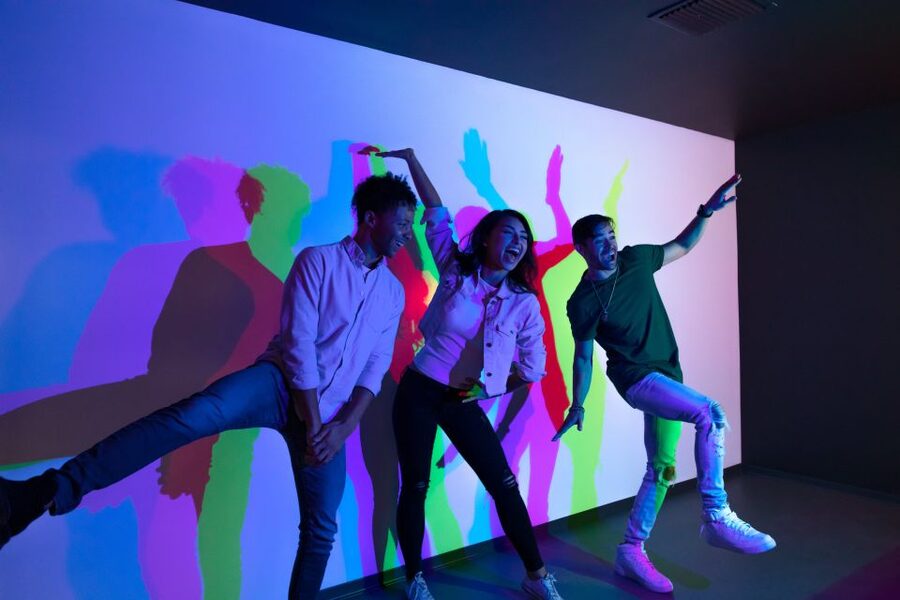
- Show up with a camera: lots of exhibits are designed for perspective photos.
- Plan for a shorter visit: many people finish in about an hour, though you can stretch it longer.
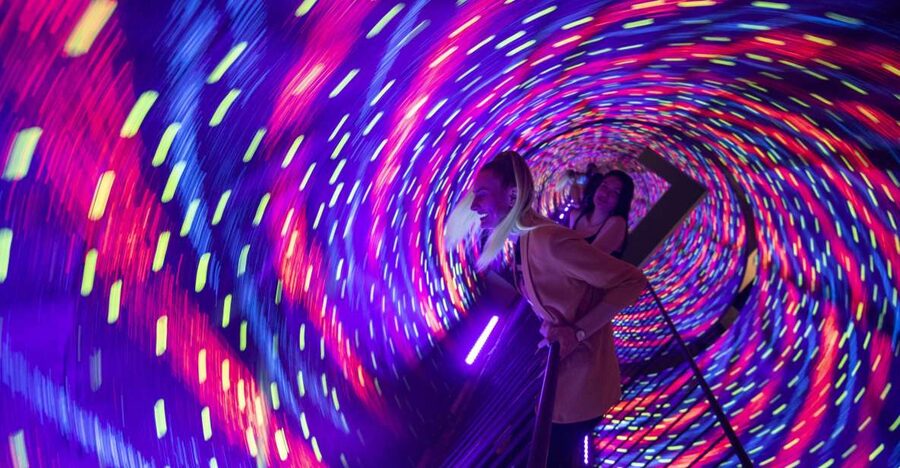
- Try the big sensory moments: the vortex tunnel and upside-down room are the headline experiences.
- No guide needed: you walk in, follow the flow, and enjoy at your own pace.
- Staff help with photos: friendly team members are on hand to help you get the shot.
- Dizziness can happen: some visual effects can make you feel a little woozy—go slowly.
Entering the Museum of Illusions in Seville: what your ticket actually buys
This ticket is straightforward: it’s your entry into the Museum of Illusions in Seville for one day. You’ll show your voucher at the desk at the Museo de las Ilusiones, then step into a sequence of rooms designed to challenge what you think you’re seeing.
What makes this museum work is the pacing. You’re not reading a long script or following a timed guided loop. You move from installation to installation and test your senses as you go. That’s a big deal for a city day in Seville, where heat, walking, and long museum lines can wear you down fast. Here, the atmosphere is lighter and playful, with lots of “try it again” energy.
Also, you’ll quickly notice it’s meant to be interactive. You don’t just look—you touch, stand in the right spot, and let your eyes do the rest. If you like activities that feel a little silly but still clever, you’re in the right place.
A few more Seville tours and experiences worth a look



Interactive illusion stations: optical tricks you can feel with your hands
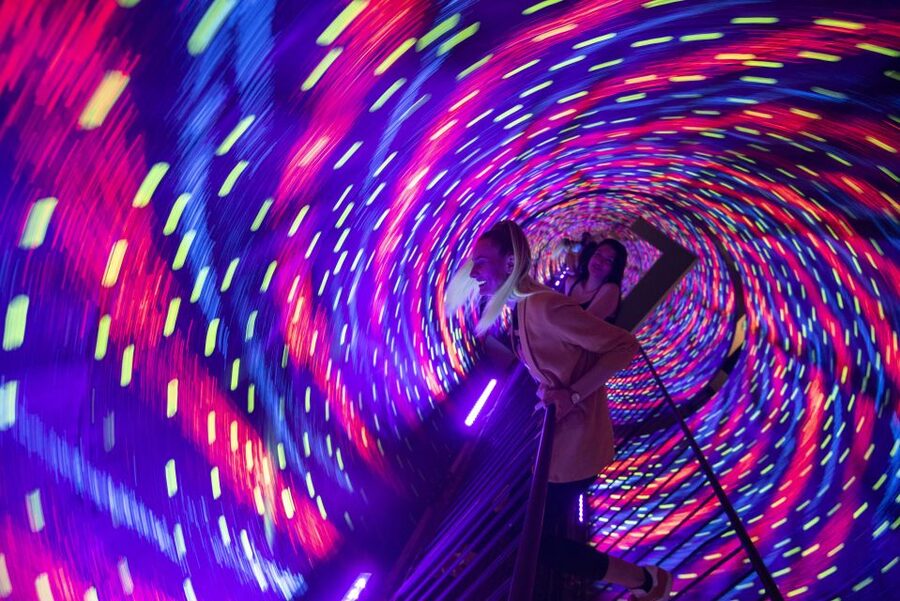
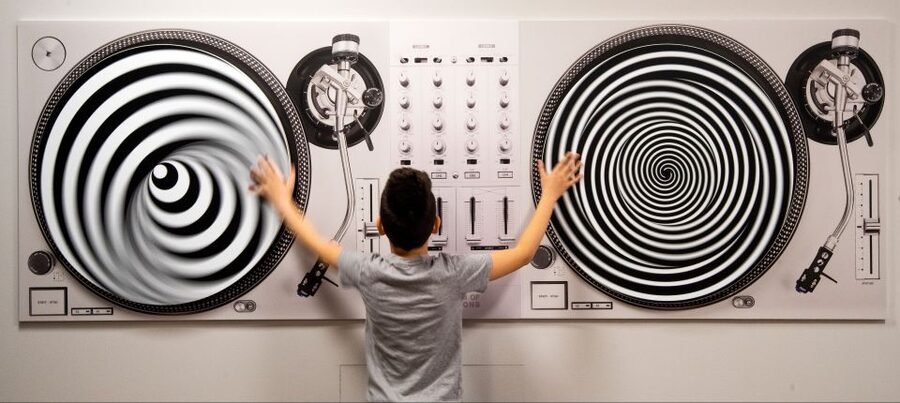
The core of your visit is a set of mind-bending exhibits that focus on perception. Based on what you’ll encounter, expect plenty of stations where your job is to observe closely, then try the same thing again and see how your brain changes the result.
A few styles show up repeatedly:
- Hands-on 3D puzzles that make you think in layers, not just from one flat view.
- Mirage and perception-style effects that play with expectation.
- Holograms and shifting visual elements, where the “this should be impossible” feeling is the point.
These are the installations where I think the museum’s value is strongest. They don’t require special knowledge. You don’t need to understand the physics to enjoy the moment where your eyes try to “fix” what they see. That’s also why it works well for mixed ages: one person is solving a puzzle, another is lining up a camera shot, and everyone is still part of the same fun.
One practical tip: take your time with the close-up parts. Some exhibits look obvious from a distance, but the effect is sharper once you notice small cues. Slow down for the “look closer” moments, even if you’re tempted to rush to the rooms.
The Upside Down Room: your sense of balance becomes the joke
If you want one installation to anchor your trip, it’s the Upside Down Room. This is the kind of experience that turns normal movement into a photo opportunity and a mental reset. The room is designed to make your eyes and inner ear feel out of sync, so you end up doing a lot of laughing—sometimes even if you’re trying to take a serious picture.
Why this matters: it’s one of the few exhibits that fully uses your body. You’re not just staring at an optical illusion. You’re interacting with it by moving, posing, and watching what looks wrong.
If you’re visiting with kids, this is usually the moment that turns uncertainty into excitement. If you’re visiting as adults, it’s still fun, but go in with the right mindset: expect it to feel a bit awkward at first. Then it clicks.
If you’re sensitive to dizzying visuals, take it easy here. You can always watch from the edges for a bit before you step in.
The Infinity Room and holograms: where photos feel like magic
Next, you’ll want to hit the exhibits that reward patience and good framing. The Infinity Room is designed to create that endless-looking effect, which makes it ideal for photography. You get the fun of thinking you’ve found a “real” portal, even though it’s all controlled by angles and reflections.
You’ll also see holograms—another category of illusion that’s often more satisfying up close than in quick snapshots. The trick is to spend a moment really watching. If you only glance, it can feel like a screen trick. If you focus, it feels like the museum is actively playing with your attention.
For your photos, don’t just press the shutter and walk away. Try a few positions:
- One shot from a normal stance
- One shot with your camera lower than you think you need
- One shot with someone else holding the frame slightly off-center
Even if you’re not a photography person, these installations make it easy. The goal isn’t perfection. The goal is proof that your camera can be tricked too.
Vortex tunnel and perspective games: testing your eyes with motion
A highlight for many people is the vortex tunnel. This is where motion and perception combine, and you can feel it in your body, not just your eyes. The effect can be intense enough that a little dizziness is part of the experience.
I like this kind of exhibit because it turns the museum into an activity, not a walk-through gallery. You’re committing to the illusion for a short moment, then stepping out and comparing how you feel versus what you saw.
If you’re planning your visit, consider doing the vortex after you’ve gotten warmed up. Early on, you’re still learning where the best angles are. After you’ve done a couple of rooms, you’ll be better prepared for the bigger sensory effects.
For the rest of your perspective games, keep your eye out for installations that work like camera traps—things where the illusion is stronger from one exact spot. Walk around a little, then commit. It’s faster than you think once you understand the pattern.
You can also read our reviews of more museum experiences in Seville

How long to plan: small museum, real time variation
The Museum of Illusions is not a huge space. That’s part of its charm—you can escape the Seville heat for a focused hour or so. But the tradeoff is that your visit length will depend on your pace.
From what you’ll see in typical visit patterns:
- Some people move through in about 40–45 minutes.
- Others spend 60–75 minutes taking photos and replaying the best moments.
- There are also visits closer to nearly two hours, especially when you’re repeating photo spots or letting the puzzles take longer.
So for planning, I’d set a baseline of about 60–90 minutes if you want a relaxed pace with photos. If you’re visiting with kids who want to repeat things (which is very normal here), stretch it closer to two hours.
If you want to avoid standing around, you’ll do best with a quieter moment. Busy times can slow you down because installations may require waiting for the right spot or photo line.
Value for $17: is it worth paying for an illusion museum?
At around $17 per person, this ticket sits in the “worth it if you’ll participate” category. It’s not priced like a huge landmark museum, so you shouldn’t treat it as a half-day education marathon. It’s more like an interactive show you can walk through.
Here’s the value logic that makes it work:
- You get a ticket-only entrance (no guide), so the money goes toward the installations themselves.
- The exhibits are built for short bursts of fun, which makes it a good use of indoor time.
- You’ll likely walk out with a bunch of photos, and the museum team is ready to help with that.
Is it overpriced for some people? It can feel that way if you expect a big, sprawling museum. A few visitors have noted it’s small and can be done quickly. That doesn’t mean the museum isn’t fun—it just means you should match your expectations to the format.
For value, ask yourself one question: do you like hands-on, visual experiences more than long explanations? If yes, the price makes sense.
Who should book: families, curious adults, and people needing an indoor break
This is a strong pick for:
- Families with kids: the exhibits are interactive, and the camera-friendly rooms keep kids motivated.
- Adults who enjoy playful challenges: you’ll have fun even without a guide because the museum is self-directed.
- People needing an indoor cooldown: it’s a practical change of pace from the outdoor walking.
If you’re traveling solo, you can still enjoy it, but you’ll have more fun if you can do photos together. Some installations are clearly designed for shared posing, and it’s easier when there’s another person to help you hold a framing position.
Practical tips for Seville: how to make the most of your visit
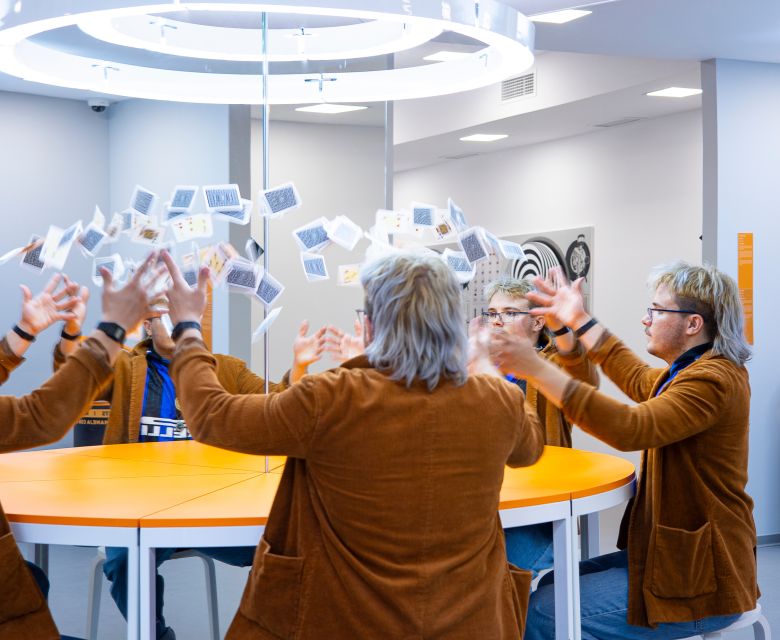
A few small moves can noticeably improve your experience.
Bring the basics:
- Bring a camera. This isn’t optional in spirit; it’s part of the design.
- Wear comfortable shoes. You’ll be standing and walking between rooms.
- Keep your expectations flexible. Some optical effects can make you feel slightly off, and that’s normal for this type of exhibit.
For pacing:
- Start with calmer interactive stations first, then move toward the more intense sensory rooms like the vortex or upside-down setup.
- If you hit a queue, don’t just wait in place. Take a couple of minutes to try another room and come back.
For photo help:
- The staff are described as friendly and helpful with taking pictures. If you want a specific shot, ask. They’re set up for that.
Should you book the Museum of Illusions ticket in Seville?
Yes, I think you should book if you want an indoor, low-stress activity that blends hands-on puzzles, hilarious camera angles, and a few sensory moments like the vortex tunnel and Upside Down Room. At $17, the value hinges on whether you’ll actually play along and take your time.
Don’t book if you’re looking for a long, large-scale museum experience or you hate anything that might make your senses feel a little scrambled. This place works best when you’re willing to be a bit silly and curious.
If you’re planning a Seville day and you want an activity that breaks up the walking and gives you instant fun, the Museum of Illusions is a solid choice.
FAQ
Where do I show my voucher for the Museum of Illusions in Seville?
Show your voucher at the Museo de las Ilusiones.
How much is the Seville Museum of Illusions ticket?
The price is listed as $17 per person.
How long is this experience valid for?
Your ticket is valid for 1 day.
Is a guide included with the ticket?
No guide is included. The visit is self-paced.
What languages are available at the host or greeter desk?
Spanish and English.
Is the museum wheelchair accessible?
Yes, it is wheelchair accessible.
What should I bring to the museum?
A camera is recommended.
What are the cancellation terms?
Free cancellation is available up to 24 hours in advance for a full refund.
Is there a pay-later option?
Yes. You can reserve now & pay later.