REVIEW · AMSTERDAM
Private Amsterdam Red Light District tour including sex museum
Book on Viator →Operated by Trigger Tours · Bookable on Viator
A normal Amsterdam walk gets a twist. This private Red Light District tour mixes street-level sights with history, and includes Sexmuseum Venustempel admission.
I love the personal attention from your guide and the way the tour stays respectful and factual, not pushy or gross. I also like that you don’t just stare at the street—you get landmark context, with stops near places like the Waag and Old Town buildings.
One thing to consider: you’ll walk, and the sex museum visit includes stairs. Wear comfy shoes, and if you need a slower pace, talk to your guide.
In This Review
- Key highlights at a glance
- Why a private Red Light District walk is worth it
- Meeting point and how to not waste time
- Stop 1: the Red Light District, with history and current reality
- Stop 2: Sexmuseum Amsterdam Venustempel (ticket included)
- The Old Town backstory: Dam and Amsterdam built on poles
- Pub The Ape: a wooden survivor after the great fire
- Waag and guild history: the city gate turned craft hub
- Smallest house and VOC storage: the surprise of tiny Amsterdam
- Condom shop stop since 1987: modern sex commerce, on display
- Group size, comfort, and what to wear
- Price and value: what you’re paying for
- Who should book this tour (and who might skip)
- Should you book this private Red Light District + Sexmuseum tour?
- FAQ
- FAQ
- Is this tour private?
- How long does the tour take?
- What is included besides the Red Light District walk?
- Is the tour offered in English?
- Where is the meeting point?
- Can I get a full refund if I cancel?
- Is it suitable for most people, and are service animals allowed?
Key highlights at a glance
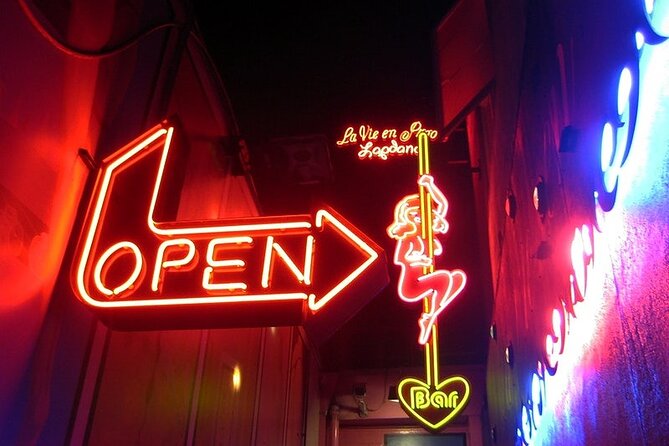
- Private guide, focused pace so you can ask questions without feeling rushed
- Respectful, non-judgmental storytelling about what’s happening in the Red Light District today
- Sexmuseum Venustempel admission included for a ticket that’s already handled
- Old Town detours that explain why this part of Amsterdam feels so historically heavy
- Optional tailoring to your interests and comfort level
- Local-history stops like Pub The Ape, the Waag, and the smallest house area
Why a private Red Light District walk is worth it
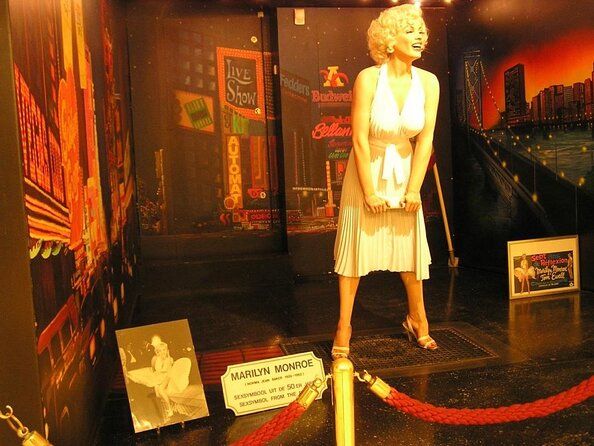
Amsterdam’s Red Light District can feel like sensory overload if you go in on your own. A private guide helps you make sense fast—what you’re seeing, why it’s there, and what’s off-limits. You get the best part of curiosity without the awkward guessing.
The strongest praise for this tour is how guides keep things respectful and clear. People who want history tend to walk away happier, because the tour doesn’t reduce the neighborhood to one topic. You also get a tone of conversation that focuses on the area’s reality, not on shock value.
This is also one of those places where a guide can help you avoid common missteps. Expect a briefing-style approach—what to do, what not to do, and how to move through the streets without being a disruption. If you want a calm, adult, educational vibe, this format fits.
You can also read our reviews of more private tours in Amsterdam

Meeting point and how to not waste time
You start at ParkBee Parking NH Collection Amsterdam Barbizon Palace, Prins Hendrikkade 59, 1012 AD Amsterdam. The tour ends back at the same meeting point. It’s near public transportation, which helps when you’re coordinating the rest of your day.
One practical tip: double-check your exact pin on the map before you show up. Some people find it a little tricky to locate the exact spot in a busy area, especially if you’re arriving right on time. Give yourself an extra 10–15 minutes so you can settle your group and start relaxed.
Also, since this is a walking-focused experience, think about your timing. If you’re doing canals or museums later, build in breathing room after the tour so you’re not sprinting across the city.
Stop 1: the Red Light District, with history and current reality
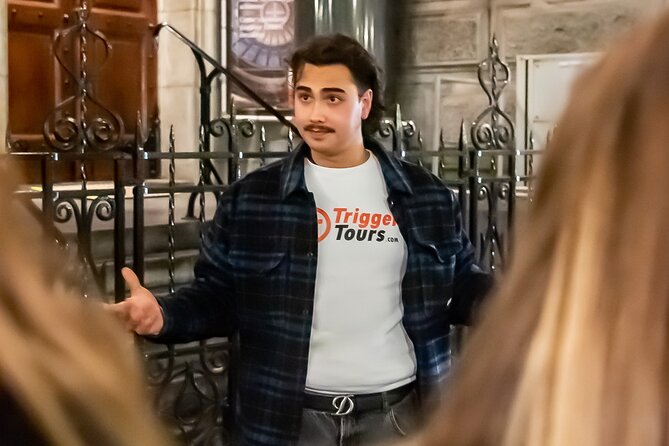
The main walk is built around the narrow streets and sights of the Red Light District, with your guide explaining both the history and the current situation. Instead of treating the area like a theme park, the tour frames it as a long-running part of Amsterdam’s economy and culture.
You should expect a guided route that shows you what there is to see—while also giving you context for what you’re looking at. Guides are often praised for making the information easy to understand and for using humor in a way that keeps things light without turning disrespectful.
If you can request a guide, names that show up repeatedly in the feedback include Robin, Kathryn, Andrea, Ari, Catherine, Kevin, Arri, and Aarre. The big pattern isn’t just that they know facts—it’s that they explain them clearly and keep the experience calm. One guide in particular is described as having a history-focused background and tailoring the pace for older guests, including finding a café when stairs were an issue.
What I like for you: a private setting means you can ask questions that you might hold back in a group. If you’re curious about how the neighborhood works today, or why it became what it is, this is where your guide earns the ticket price.
Possible drawback: if your goal is mostly street views with minimal talking, you might feel the tour is doing more history than you expected. The tour can be customized, but it’s still built as a storytelling walk.
Stop 2: Sexmuseum Amsterdam Venustempel (ticket included)
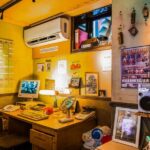
After the street walk, you head to Sexmuseum Amsterdam Venustempel. Admission is included, and the museum’s exhibits track erotica through different ages.
Plan on about 30 minutes here. That time window matters: it’s long enough to get the vibe and see several exhibits, but short enough that you’re not trapped inside for hours. Many people describe the museum visit as a unique, light and different half hour—also a nice contrast to the street experience.
One thing to take seriously: stairs. Feedback mentions that this museum can involve a multi-story walk up, which can be a problem if you have mobility limitations or want to avoid lots of stair climbing. If this applies to you, tell your guide early. The tour is private, and there’s at least one example of a guide adapting when someone needed a break.
Another real-world consideration: a few people found the museum less impressive than they hoped. That doesn’t mean it’s bad—it just means it’s not the kind of museum where every exhibit hits the same for every personality. If you go with the mindset of learning and seeing how Amsterdam packages the topic respectfully, you’re more likely to enjoy it.
The Old Town backstory: Dam and Amsterdam built on poles
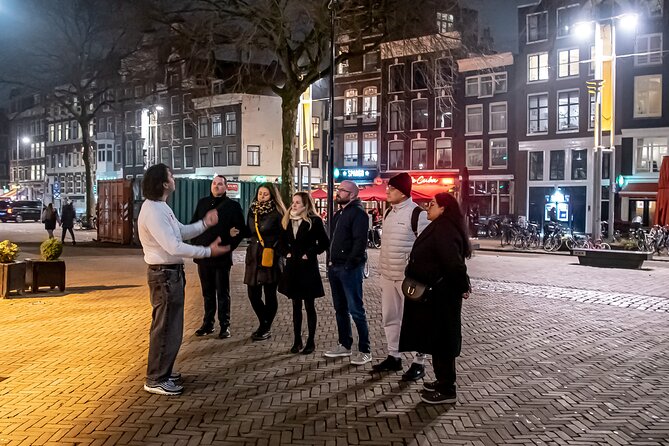
This tour doesn’t treat the neighborhood as a standalone attraction. You also get a stop around Dam, tied to the idea of Amsterdam as a city built on wood. Here’s the key detail your guide should explain as you move around: Amsterdam’s soil includes a thick layer of fen and clay, so many buildings are built on wooden poles driven down into a deeper sandy layer—about 11 meters.
You’ll also hear that this part of the Red Light area sits near the Old Town, meaning you’re in an older layer of the city where history has literally shaped the streets. That matters because it changes how you read the buildings: it’s not just scenery, it’s infrastructure and survival. Amsterdam’s growth required engineering, and the result is a city that feels like it’s been under construction forever (in a good way).
Why this is valuable for you: it helps you connect the dots between the present-day neighborhood and the physical city around it. Without that context, the Red Light District can feel like it appeared out of nowhere. With it, you get a sense of continuity.
You can also read our reviews of more museum experiences in Amsterdam





Pub The Ape: a wooden survivor after the great fire
As you walk, you’ll pass Pub The Ape (Int Aepjen in Dutch). This is a big deal for architecture nerds and casual history fans alike. It was built around 1540 and is one of the remaining wooden buildings in Amsterdam—described as one of two left.
Your guide should also connect it to the wider story of disasters and building rules. After the big fire in 1452, Amsterdam’s government moved toward brick facades. So when you stand near Pub The Ape, you’re seeing a structure that survived a turning point in how the city chose to build.
This stop is a reminder that the Red Light District isn’t only about sex and commerce. It’s also about what survived, what changed, and what got replaced—sometimes by fire, sometimes by policy, and sometimes by money.
Waag and guild history: the city gate turned craft hub
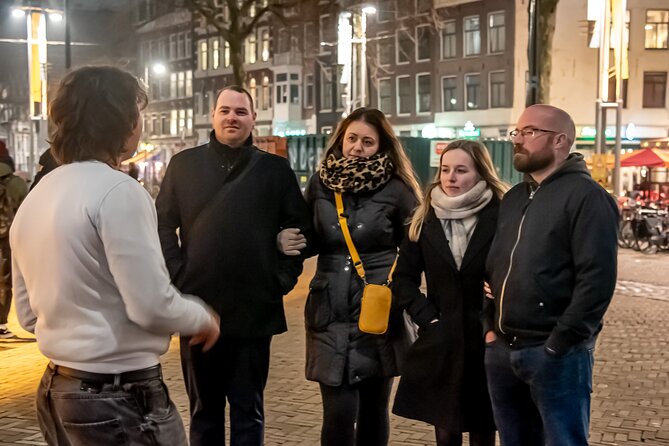
Another landmark you’ll likely see is the Waag, once one of Amsterdam’s city gates and part of the defensive wall. The Waag was built around the 1400s and is described as the second oldest building in Amsterdam.
Later, it stopped being a gate and became a place for crafts and organizations—guilds and craftsmen’s groups set up inside and around the square. Your guide’s job here is to translate that into something you can picture: a city that moved from protecting itself to organizing trade and work.
Why you’ll appreciate this: even if you’re not into architecture, this stop helps you understand the neighborhood’s role in Amsterdam’s commercial life. The Red Light District didn’t grow in a vacuum. Trade, guilds, and changing city functions fed the economy that surrounds you today.
Smallest house and VOC storage: the surprise of tiny Amsterdam
You’ll also hear about the smallest house in Amsterdam, built around the 1700s. It first served as storage for the VOC trading company, and later became a home where people lived for a long time.
This stop is short, but it’s one of those details that sticks with you. Amsterdam is famous for narrow structures and quirky details, but this one gives you a clear reason why the city looks the way it does: when land and building space are limited, life adapts.
And because the tour ties you back to the Old Town area, this isn’t just trivia. It’s another piece of the puzzle showing how Amsterdam kept packing people and functions into its limited footprint.
Condom shop stop since 1987: modern sex commerce, on display
One of the more modern-feeling stops is a condom shop described as the world’s first condom shop, in place since 1987. The point of the stop isn’t shock. It’s realism: the topic is present in the street-level economy in a visible, consumer way.
Your guide should mention what makes it distinctive—custom sizing for condoms and specialty options. It’s also a reminder that Amsterdam’s approach tends to be practical and public-facing. You’re not being asked to hide; you’re being taught how to look at the place with adult eyes.
If that makes you uncomfortable, this is where customization helps. A good guide adjusts the level of detail to match your comfort.
Group size, comfort, and what to wear
Because this is private, you can expect your guide to steer the pace. People often like private tours in tight, crowded streets because you’re not stuck following a slow group or a rigid schedule. Your guide can slow down for questions, and speed up if your group is already comfortable.
Still, the experience is walking-heavy. I’d plan on comfortable shoes and clothes you don’t mind adjusting to Amsterdam weather. If you’re sensitive to loud streets or close quarters, tell the guide early—this is exactly the kind of situation where a thoughtful route choice can help.
And since stairs can come up at the Sexmuseum, think about accessibility in your own way. Even if you’re fine with stairs, having a plan (rest breaks, water) makes the whole evening feel smoother.
Price and value: what you’re paying for
At $102.09 per person, you’re buying a private guide for about two hours, plus a built-in museum ticket for Sexmuseum Venustempel. The private part matters. In a neighborhood like this, the guide’s role is not just narration—it’s managing attention, tone, and where you stand and look.
You’re also getting a mix that many budget options don’t offer: the Red Light District portion plus Amsterdam history context with real landmarks nearby. If your main goal is history and respectful understanding, the value can feel strong because the tour isn’t one-note.
If your main goal is only sex-related sights, you might decide a different kind of tour fits better. But if you want a guided adult education with street context, this price stacks up well—especially with the museum ticket included.
Who should book this tour (and who might skip)
Book it if:
- you want a respectful, educational walk through the Red Light District
- you like when a guide connects street scenes to Amsterdam’s older city fabric
- you want private attention so you can ask questions without feeling on display
- you’re curious about the Sexmuseum and want that stop handled for you
You might skip or choose a different option if:
- you dislike walking or know stairs will be a challenge at the museum
- you want a more casual photo-walk with minimal history (this tour leans into context)
- you expect a “wow” museum experience above street storytelling—since the museum is only about 30 minutes, and opinions on its impact can vary
Should you book this private Red Light District + Sexmuseum tour?
If you’re looking for a safe-feeling, respectful way to understand this neighborhood, I think the private format is the key. The combination—Red Light District history plus Sexmuseum Venustempel with an included ticket—turns what could be awkward on your own into something structured and adult.
My recommendation hinges on one thing: your willingness to treat the subject matter seriously. If you want clear facts, good guidance, and a tour that mixes streets with Old Town landmarks like the Waag, Pub The Ape, and the smallest house area, this is a solid choice.
FAQ
FAQ
Is this tour private?
Yes. It’s a private tour/activity, so only your group participates.
How long does the tour take?
The tour is listed at about 2 hours, with the Sexmuseum stop included.
What is included besides the Red Light District walk?
Admission to Sexmuseum Amsterdam Venustempel is included.
Is the tour offered in English?
Yes, it’s offered in English.
Where is the meeting point?
The start is at ParkBee Parking NH Collection Amsterdam Barbizon Palace, Prins Hendrikkade 59, 1012 AD Amsterdam. It ends back at the meeting point.
Can I get a full refund if I cancel?
You can cancel up to 24 hours in advance for a full refund. Within 24 hours of the start time, the amount is not refunded.
Is it suitable for most people, and are service animals allowed?
Most travelers can participate, and service animals are allowed.