REVIEW · MADRID
Madrid: Afternoon Prado Museum Tour with Skip-the-Line Entry
Book on GetYourGuide →Operated by Satguru Experiences · Bookable on GetYourGuide
Prado can feel endless, until someone directs you. This afternoon tour gets you into the museum with skip-the-line access and an official guide, so you spend your energy on art instead of queues. I especially like how the small-group format keeps the pacing calm and lets you ask questions.
Two things I really like: first, the guide’s focus on major works (Goya, Velázquez, El Greco, Rubens) gives you a fast but meaningful overview. Second, guides like Blanca, Ruben, and Juan are repeatedly praised for making tough art concepts feel clear and even fun. The only possible drawback is time: 2 hours moves quickly, so you’ll want to plan a return visit if you like lingering wall-to-wall.
Key takeaways (what makes this tour worth your afternoon)
- Skip-the-line entry via a separate entrance to avoid wasting time at the door
- Official guide who keeps the museum manageable by choosing the right masterpieces
- A tight route featuring Goya, Velázquez (Las Meninas), El Greco (Orgaz), and Rubens
- Small-group pacing that feels relaxed rather than like a rush through rooms
- English-language tour with a guide who’s used to explaining art simply
- Real question time is more likely when the group stays small
In This Review
- Why an afternoon Prado tour works so well
- Meeting point at P.º del Prado, 11 (easy to find, easy to return)
- Skip-the-line entry: what you really gain
- The 2-hour flow: a museum route built for real viewing
- Goya first: The Third of May 1808 and the Black Paintings
- Velázquez and Las Meninas: perspective, reality, and court drama
- El Greco’s Burial of the Count of Orgaz: the spiritual meets the earthly
- Rubens and the Baroque punch: Descent from the Cross
- Price and value: is $67 worth 2 hours at the Prado?
- Who this tour suits best
- Practical tips for a smoother Prado afternoon
- Should you book this Prado afternoon tour?
- FAQ
- How long is the Prado museum tour?
- What does the price include?
- Where does the tour start and end?
- What skip-the-line access is provided?
- What language is the tour guide?
- Which artists and works are covered?
- Is the tour wheelchair accessible?
- Are there days when the tour does not run?
- What is the cancellation policy?
Why an afternoon Prado tour works so well
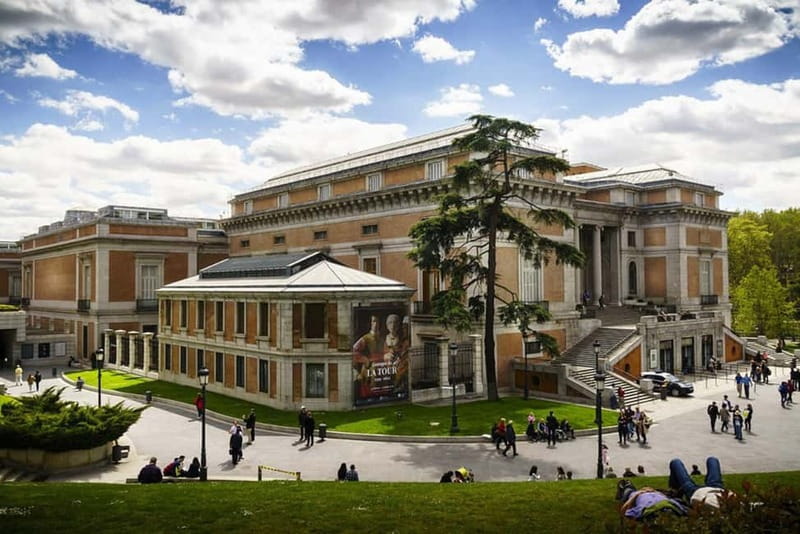
The Prado is the kind of place where you can accidentally burn half a day and still feel like you saw the highlights from the outside. A guided afternoon route helps you do something smarter: you get the museum’s biggest, most teachable works in a short window, with context that makes the paintings easier to read.
Also, an afternoon slot tends to feel less frantic than the first-morning rush. You still get the full experience of famous rooms and famous masterpieces, but your visit doesn’t start with the stress of an all-day plan. In 2 hours, you’re basically buying a guided “greatest hits” playlist—except the songs are oil paintings, and the lyrics are history.
Meeting point at P.º del Prado, 11 (easy to find, easy to return)
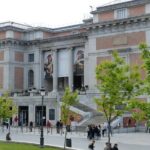
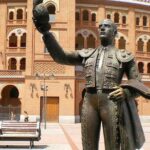
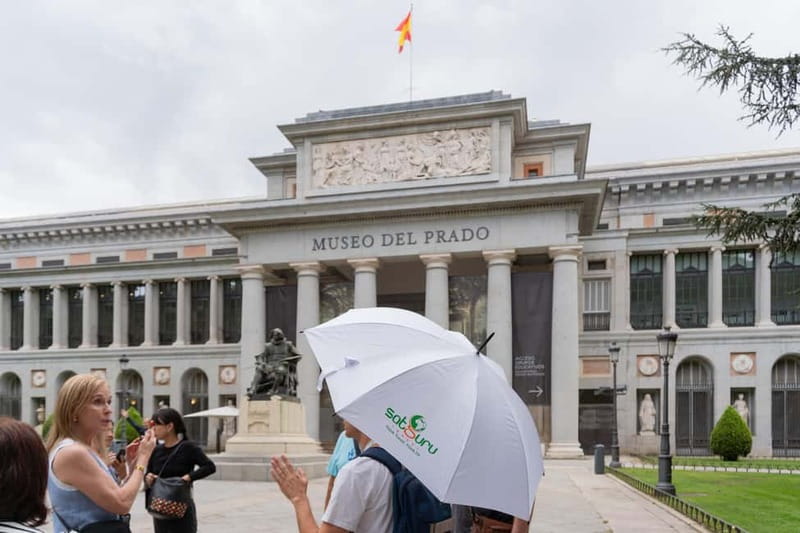
This tour starts at the Monument to Velázquez, Paseo del Prado 11 (P.º del Prado, 11, 28014 Madrid). That matters more than it sounds. Prado trips go smoothly when your meet-up point is on the main Prado corridor and your return is the same place—no complicated end-of-tour navigation.
The tour also builds in a practical courtesy detail: there’s a 10-minute waiting window. So you’ll want to arrive a few minutes early, especially if you’re walking in from a metro stop or you’re doing a quick coffee stop first. If you’re the type who likes to start stress-free, this is one of those small details that can save your whole evening.
You can also read our reviews of more museum experiences in Madrid


Skip-the-line entry: what you really gain
Skip-the-line tickets here are not just a convenience headline. A separate entrance means you can avoid the slow churn of people waiting to get in, and that changes the feel of the entire visit. Instead of spending your first 30 minutes trying to beat a queue, you’re already inside while your eyes are fresh and your attention is sharp.
That’s also why the 2-hour duration works. When entry is faster, the guide can use more of the time for actual looking and explanation. This is especially helpful at the Prado, where getting oriented on your own can be a trap. You may find yourself wandering by floor-plan logic instead of art logic. The guide fixes that.
The 2-hour flow: a museum route built for real viewing
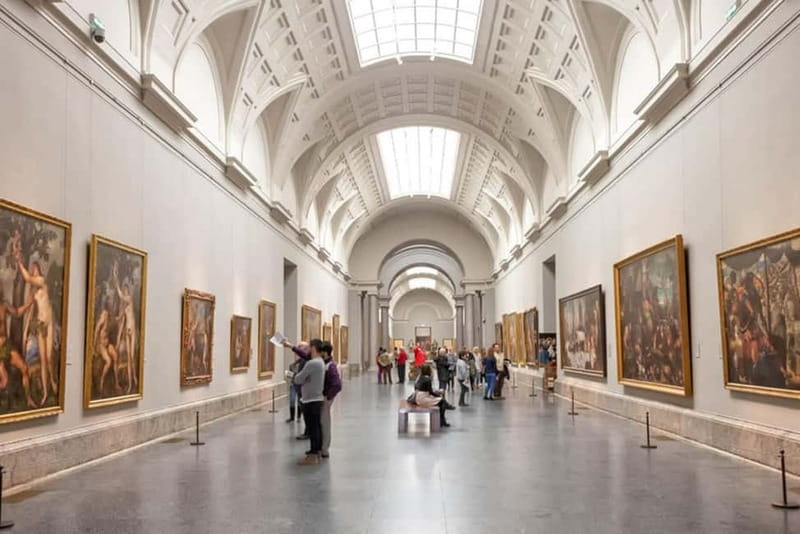
The plan is straightforward: you meet at P.º del Prado, 11, you enter the Museo del Prado with your skip-the-line access, and then you wrap up back at the meeting point. Inside, the tour is guided and structured—so you’re not expected to figure out where to go next.
In this kind of timed tour, the secret is the order. The Prado’s collections stretch across centuries, and without an order you can miss how artists influenced each other. A good route turns a huge building into a sequence you can actually follow.
The works included are big-name Spanish anchors plus a couple of “bridge” artists who connect Spanish painting to wider European art trends:
- Francisco de Goya
- Diego Velázquez
- El Greco
- Peter Paul Rubens
That mix is smart. You get Spain’s visual voice, but you also see how European Baroque and Renaissance styles fed into it.
Goya first: The Third of May 1808 and the Black Paintings
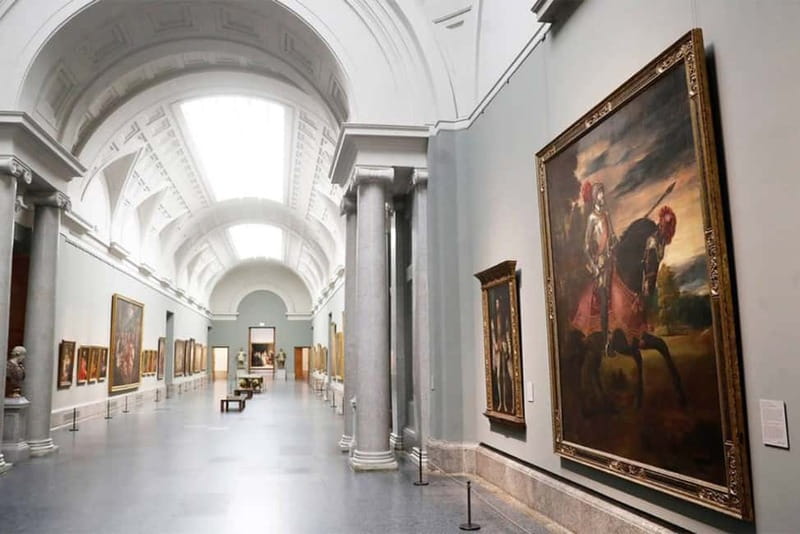
Starting with Goya is a strong choice because his paintings are emotional and readable even when you don’t know the background. You’ll see The Third of May 1808, a work that hits hard for obvious reasons—faces, tension, the sense of a moment caught in history. The guide’s job is to slow you down enough to see how Goya builds meaning with composition and expression, not just subject matter.
You’ll also spend time on the Black Paintings. These are the kind of images people often hear about but don’t always understand on first encounter. With a guide, you’re more likely to notice how the mood and the paint handling create that unsettling atmosphere.
If you enjoy art that feels like it’s talking back to you, this is where the Prado stops being a quiet museum and starts feeling like a place with nerves and stakes.
Velázquez and Las Meninas: perspective, reality, and court drama
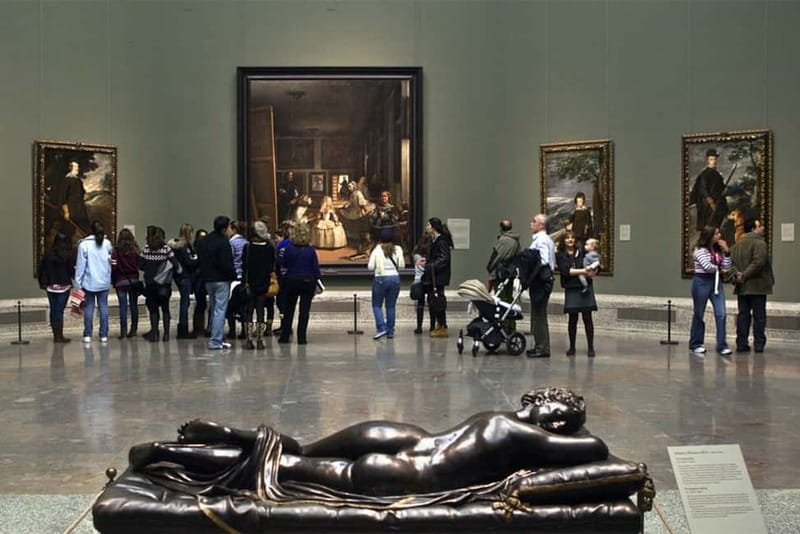
Next up is Velázquez’s Las Meninas. This painting confuses people in the best way. The scene includes layers of looking—who is watching whom, what’s reflected, what’s implied. You don’t need a PhD to appreciate it, but you do need a guide to point out the key moves that make the painting so talked-about.
This is where guides like Blanca are especially appreciated: she’s noted for keeping explanations light and approachable, and for pointing out “fun facts” that make the painting easier to track. Whether you speak only English or you’re mixing with Spanish, the guide’s pacing can help you focus on the details that matter rather than getting lost in the noise of a crowd.
The real value of Las Meninas in a tour like this is payoff. After you see it explained, you’ll walk away feeling like you understand why people keep returning to it.
A few more Madrid tours and experiences worth a look




El Greco’s Burial of the Count of Orgaz: the spiritual meets the earthly
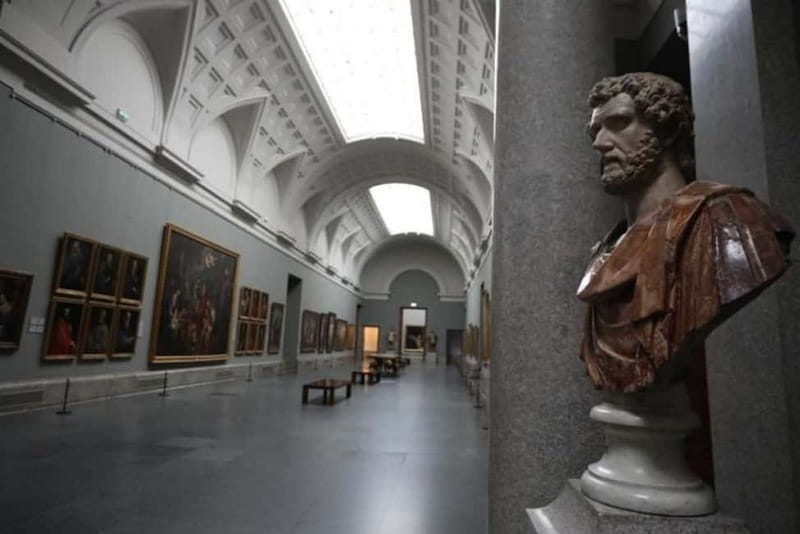
Then comes El Greco’s The Burial of the Count of Orgaz. This painting is about two worlds at once. You have the visible, human scale of the burial scene, and then the religious dimension that feels like it’s reaching upward.
The guide’s contribution here is interpretation. El Greco’s elongated figures and dramatic style can look strange until you understand what he’s trying to communicate. In this tour format, you don’t just get descriptions—you get a way to look so the symbolism lands.
If you like art that feels theatrical and symbolic rather than purely realistic, this is a great moment in the route. It also gives your Prado experience balance: Goya’s intensity, Velázquez’s puzzles, then El Greco’s spiritual drama.
Rubens and the Baroque punch: Descent from the Cross
Finally, you move into Peter Paul Rubens territory. The included themes mention Descent from the Cross, along with his strength in movement and storytelling. Rubens is a natural closer for a short tour because his compositions are readable fast: there’s action, emotion, and a sense that the painted bodies are doing something in time.
Rubens also helps you zoom out. His work shows how European Baroque energy travels through different schools and styles. Even if you only see a few works in a 2-hour window, the guide’s selection helps you connect the dots between Spanish painting and broader European trends.
Price and value: is $67 worth 2 hours at the Prado?
At $67 per person for a 2-hour guided visit, this is not a budget option—but it’s also not priced like a private museum concierge. The value comes from three things that are hard to recreate on your own:
- Skip-the-line entry (time savings at a major museum is real money in your vacation hours)
- An official guide (you’re paying for smart selection and clear interpretation)
- A focused route through the works most people go to the Prado to see
If you’re someone who likes learning as you look, the guide often pays for itself in satisfaction. If you’re the type who wants to wander and stay flexible, $67 might feel steep for a “highlights only” format.
The best match is clear: you want an efficient introduction, you don’t want to get stuck figuring out where to start, and you’d rather see fewer masterpieces well than more paintings without context.
Who this tour suits best
I think this tour is ideal if you:
- want a planned Prado visit without overwhelm
- like art history explained in plain language
- have limited time in Madrid but still want the big names
- enjoy asking questions and getting answers at the painting itself
It may be less ideal if you:
- want to spend hours in one room
- plan to read every label deeply (you’ll have to add time on your own)
- are building your day around unstructured roaming
Practical tips for a smoother Prado afternoon
A couple of small things can make your visit feel smoother.
- Wear comfortable shoes. The Prado can involve a lot of standing and turning, even on a guided route.
- Bring your own pace. The tour is timed, but if a painting grabs you, ask the guide to point out a detail you can return to when the group moves on.
- If you get a bilingual-style explanation (some guides handle English and Spanish in a single tour), listen for the moments where the guide slows down to clarify the key idea. That’s where the real learning happens.
Also, since the tour is focused on a short list of masterpieces, it’s smart to treat it like a kickoff. After you’ve seen Goya, Velázquez, El Greco, and Rubens through the guide’s lens, you’ll have better instincts for where to go next on your own.
Should you book this Prado afternoon tour?
Yes, if your goal is a high-quality, guided introduction that respects your time. This is a solid choice when you want skip-the-line entry and a guide who directs your eyes toward the works that actually anchor the museum’s story.
Book it especially if you’re traveling with mixed art interest in your group. A good guide can make the museum feel approachable, not intimidating. And with 2 hours, you’re guaranteed to leave with the feeling that you saw the Prado’s most famous ideas—not just walked through rooms.
If you have plenty of time in Madrid and you love slow museum wandering, you might still do this tour first and then come back later for the long version. Think of it as buying your bearings.
FAQ
How long is the Prado museum tour?
The tour lasts 2 hours.
What does the price include?
The price includes skip-the-line tickets to the Prado Museum and a tour guide.
Where does the tour start and end?
It starts at Monument to Velázquez, Paseo del Prado, 11, 28014 Madrid, Spain and ends back at the same meeting point (P.º del Prado, 11).
What skip-the-line access is provided?
You’ll use a separate entrance to skip the line.
What language is the tour guide?
The tour is in English.
Which artists and works are covered?
The tour focuses on major works by Goya, Velázquez, El Greco, and Rubens, including The Third of May 1808, Black Paintings, Las Meninas, The Burial of the Count of Orgaz, and Descent from the Cross.
Is the tour wheelchair accessible?
Yes, it is wheelchair accessible.
Are there days when the tour does not run?
It does not run on some holidays such as December 25 and January 1.
What is the cancellation policy?
You can cancel up to 24 hours in advance for a full refund.