REVIEW · KYOTO
Kyoto: Samurai Ninja Museum guided tour
Book on GetYourGuide →Operated by GLOBA Inc. · Bookable on GetYourGuide
Kyoto has always had a taste for legend, and this museum tour puts samurai and ninja stories into your hands instead of just on the wall. In about an hour, you’ll connect the history of these warrior traditions to real-looking gear and simple, practical demos you can actually try. It is fast, interactive, and built for first-timers who want a fun introduction without committing a whole day.
What I like most is the mix of hands-on experiences plus a live English guide who ties the demonstrations to Japanese history and culture. I also like that you get more than one activity, including a dress-up moment with a samurai helmet and a replica sword, plus a shuriken throwing experience.
One thing to consider: this is a single short visit, so if you’re hoping for an in-depth museum day on your own, you may feel slightly rushed. Also, if you were planning to buy a museum ticket anyway, double-check the overall value for your travel style before you book.
In This Review
- Key points worth your attention
- Samurai And Ninja In Kyoto: What You’re Paying For
- Getting In Smoothly: Skip-The-Line Museum Admission
- The Dress-Up Station: Samurai Helmet, Replica Sword, And Photos
- Katana Lesson Time: Learning The Basics Without Being A Pro
- Ninja Star Throwing: The Moment The Hour Feels Worth It
- Ninja Fukiya (Blowgun) And How The Guide Keeps It Grounded
- Your English-Speaking Guide: Why The Names Matter
- Price And Value: When $28 Feels Like A Bargain
- Logistics That Actually Affect Your Day
- Who Should Book This Kyoto Samurai Ninja Museum Tour
- Should You Book It?
- FAQ
- How long is the Kyoto Samurai Ninja Museum guided tour?
- What is included in the tour price?
- Is the guide available in English?
- Will I be able to skip the ticket line?
- What other hands-on activities are part of the experience?
- Is transportation to and from the museum included?
- What is the group size?
- Is the tour wheelchair accessible?
- Can I cancel and get a refund?
- Can I reserve without paying right away?
Key points worth your attention
- Small group feel: limited to 10 participants, with the activity noting a maximum of 30 travelers.
- Skip-the-line entry: you get museum admission as part of the tour setup.
- Dress-up that’s actually part of the learning: samurai helmet and replica sword included.
- Try-it-yourself ninja training: shuriken throwing plus ninja fukiya (blowgun) practice.
- Weapons lesson time: a katana lesson is part of the experience.
Samurai And Ninja In Kyoto: What You’re Paying For
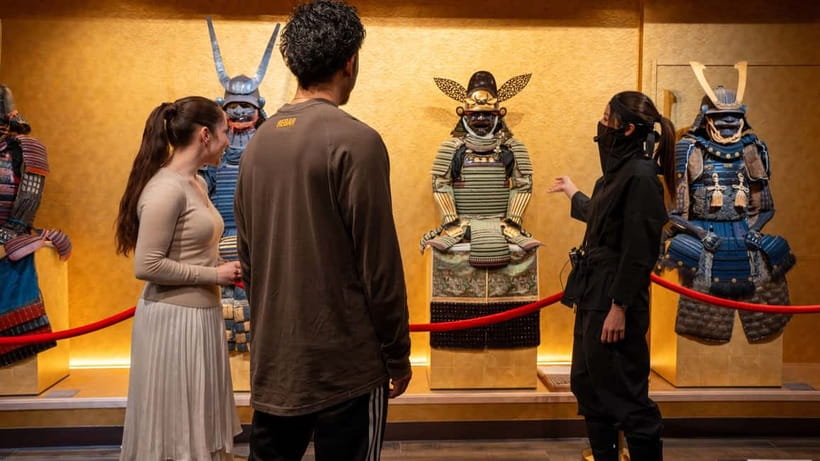
This is not a long lecture. It is a guided museum visit that’s designed around active stations, where the point is to understand the vibe of warrior culture by handling replicas and doing short demonstrations. The tour’s timing is the big clue: at 1 hour, it’s meant to be a highlight stop, not a full-day deep dive.
The price, listed at $28 per person, makes more sense when you compare it to the pieces you actually get. You’re not just buying admission; you also get a live English guide and multiple included activities. You’ll still want to budget for getting to the museum on your own, since transportation is not included.
This is a smart fit if you’re the type who remembers best when you do something with your body, not just read signage. If you prefer very quiet museums and long self-paced wandering, this tour style might feel a bit structured—but that structure is exactly why it works for many people.
You can also read our reviews of more tours and experiences in Kyoto.


Getting In Smoothly: Skip-The-Line Museum Admission
One practical win here is skip the ticket line. Kyoto can move at a lively pace, and lines can eat up your energy. Starting the tour with admission handled for you helps you spend your hour on the fun parts instead of waiting.
The museum itself is the core of the experience, and the guide keeps the visit organized around warrior themes. Since the tour includes the museum tour portion, you’re not left wondering what to do once you’re inside. You just follow the guide from station to station with the included activities as the center of gravity.
Also, you’ll want to plan to arrive ready to participate. This is the kind of tour where standing around to figure out what’s next is what you want to avoid. If you arrive a little early, you’ll feel more relaxed when the group begins.
The Dress-Up Station: Samurai Helmet, Replica Sword, And Photos
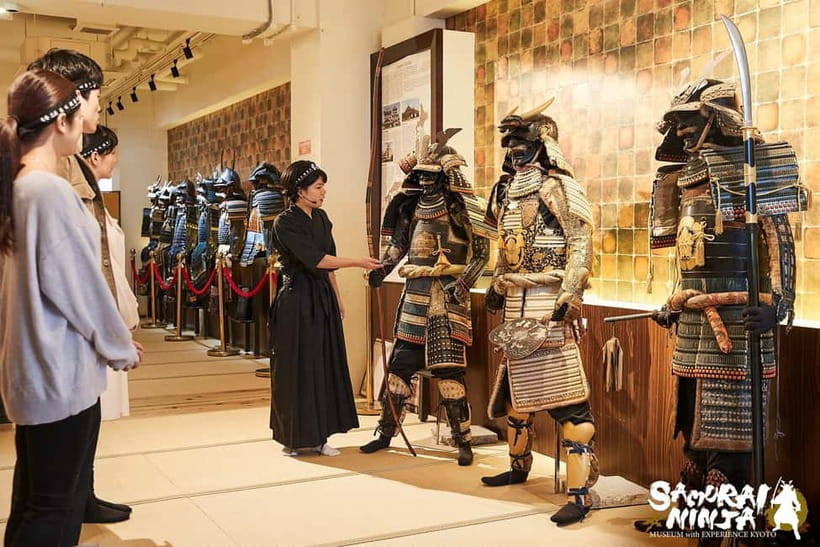
The dress-up part is a highlight for a reason. You’re not just trying on a costume; you’re stepping into a role that helps you understand why these warrior identities mattered. The tour includes dressing up like a samurai, plus wearing a real samurai helmet and holding a replica sword.
That hands-on roleplay matters because it turns a concept into a physical experience. Helmet weight, grip comfort, and how the posture changes when you hold a sword all make the history feel more real. It also creates instant photo opportunities, and the guide will typically keep things moving so you’re not waiting in long queues.
A small consideration: costume fitting and safety instructions take a few minutes. That means you should expect a bit of basic coordination and handling time, especially if the group is limited and everyone is rotating through stations.
Katana Lesson Time: Learning The Basics Without Being A Pro
The tour includes a katana lesson as part of the hands-on set of activities. You should think of this as a guided introduction rather than something meant to turn you into a sword instructor. It is focused on getting you comfortable with the concept, the role of the weapon, and how to handle the learning moment safely and correctly.
In practice, this is where the English guide becomes extra valuable. Many guides in this tour style are good at connecting the object to the broader cultural story: why these weapons existed, how they fit into a warrior toolkit, and what people believed about discipline and readiness. Names that often show up in guides for this tour include Miu, Aya, Mami, Sayo, Akiko, Ko, and Jukia.
If you want a memorable souvenir, this station can give you one without buying anything: a clear understanding of what you were seeing, plus the confidence of doing at least a small part yourself.
Ninja Star Throwing: The Moment The Hour Feels Worth It
The shuriken throwing experience is the activity that most people remember first. It is interactive, it’s easy to understand, and it has an obvious goal: throw the ninja star and see what happens.
What makes this part feel like good value is how it turns a legendary image into a repeatable action you can try. You’ll likely get guidance on stance and technique, then have a chance to throw as part of the tour flow. It’s fun, but it also teaches respect for the skill needed to use tools like these responsibly.
A practical tip: wear comfortable shoes and keep your sleeves and hair situation simple. You don’t need anything fancy; you just want to avoid distractions when it’s time to throw. If you’re with kids, this is usually the station that keeps attention locked in.
You can also read our reviews of more museum experiences in Kyoto

Ninja Fukiya (Blowgun) And How The Guide Keeps It Grounded
Another included experience is using a ninja fukiya, which is essentially a blowgun-style tool. This part tends to feel different from shuriken throwing because it shifts from throwing strength to controlled aiming and technique.
Even when the activities are simplified for a museum setting, this station helps you understand that ninja tools were not just about dramatic “stealth” vibes. They were practical instruments. In an hour, you won’t master anything like a historical practitioner would, but you can still walk away with a clearer picture of the variety of tools associated with this mythology.
This is also where a strong guide makes a real difference. The tour format is small-group, so you’re more likely to get explanations that are tailored to what your group is doing. If your guide is someone like Taka, Tera, Tepe, Aoi, or Miku, you’ll typically get a confident, clear pace with room for questions.
Your English-Speaking Guide: Why The Names Matter
This experience is only as good as the human who runs it, and the tour has a consistent strength: English instruction that stays connected to what you’re doing. Many guides associated with this tour are repeatedly praised for clear explanations and for engaging the audience.
Names you may see with frequent mentions include Mami, Miu, Aya, Sayo, Akiko, Ko, Miku, Taka, Tera, Jukia, Aoi, Taku, and Tepe. The pattern is that the best tours are interactive and answer your questions as the stations happen, rather than saving everything for the end.
Group size also supports this. With the tour described as limited to 10 participants (and with a noted maximum of 30 travelers), you usually get enough attention to make the experiences feel personal. That matters in a museum environment—too big a group can turn hands-on stations into a waiting game.
If you care about good communication, this is a major reason to choose this option over a purely self-guided museum visit.
Price And Value: When $28 Feels Like A Bargain
At $28, the value depends on how you’d otherwise spend your time. If you were only planning to enter the museum, you’d still be paying for admission somewhere. Here, the tour bundles admission with guide-led interpretation and multiple included activities: samurai dress-up, the shuriken throwing experience, and the ninja fukiya station, plus a katana lesson.
For many people, the biggest reason this feels worth it is that you get several “wow” moments inside one short timeframe. You’re not just watching; you’re doing and wearing, and you have a guide explaining the how and why.
One caution comes from a common type of disappointment: if you believe you are paying extra for something you could do on your own, the value can feel questionable. If you’re the kind of visitor who wants full control over your pace and content, you might prefer a self-guided museum visit. But if you want your hour to be purposeful, this tour price can make a lot of sense.
Logistics That Actually Affect Your Day
This is a 1-hour experience, so it’s best as a planned stop rather than a last-minute wander. You’ll want to check start times when you book, because the pacing is built around the guided flow.
Transportation to and from the museum is not included. That sounds obvious, but it matters in Kyoto where your routing can change quickly depending on where you’re staying. Give yourself a little buffer so you don’t arrive flustered.
The tour is also described as wheelchair accessible, which is a meaningful detail when you’re booking experiences that involve multiple stations. If mobility is a factor for you, this accessibility note is reassuring.
Who Should Book This Kyoto Samurai Ninja Museum Tour
I’d book it if you want a fun, structured introduction to samurai and ninja themes without spending half your day on research. It’s especially well suited for first-time visitors to Kyoto who want a high-impact activity that’s easy to fit into a busy itinerary.
It also works well if you enjoy interactive learning. The tour is built around practical try-it activities—dress-up with a real samurai helmet, replica sword handling, katana lesson time, shuriken throwing, and ninja fukiya use. That mix hits multiple interests at once.
If you dislike organized activities or you’re craving only a quiet, self-directed museum experience, you might find this too activity-heavy. But if you want your knowledge to stick because you did something, this one-hour format is a good match.
Should You Book It?
Yes, I think you should book if you want a short, guided, hands-on highlight in Kyoto. The included combination of museum entry, an English-speaking guide, dress-up with a real helmet and replica sword, and the shuriken throwing experience makes the $28 price feel more like an activity package than a basic ticket.
I’d skip it if your top priority is deep, slow museum wandering or if you’re already set on visiting and self-guiding the museum alone. In that case, you may feel like the structured format costs you flexibility.
If you’re on your first trip to Japan and you’d like a memorable warrior-themed stop that’s easy to do in an hour, this is one of the stronger choices for your time.
FAQ
How long is the Kyoto Samurai Ninja Museum guided tour?
The tour lasts 1 hour.
What is included in the tour price?
It includes the museum tour with a professional guide, a samurai costume, and the ninja star throwing experience. The experience also involves dress-up elements like wearing a real samurai helmet and holding a replica sword.
Is the guide available in English?
Yes, the live tour guide is English-speaking.
Will I be able to skip the ticket line?
Yes, skip the ticket line is included.
What other hands-on activities are part of the experience?
In addition to the shuriken throwing, the experience includes ninja fukiya use and a katana lesson, along with samurai dress-up (including a helmet and replica sword).
Is transportation to and from the museum included?
No, transportation to/from attractions is not included.
What is the group size?
The tour is described as a small group limited to 10 participants, and it also notes a maximum of 30 travelers.
Is the tour wheelchair accessible?
Yes, wheelchair accessible is listed.
Can I cancel and get a refund?
Free cancellation is offered up to 24 hours in advance for a full refund.
Can I reserve without paying right away?
Yes, there is a reserve now & pay later option.