
REVIEW · KYOTO
Skip the lines Basic Ticket at SAMURAI NINJA MUSEUM KYOTO
Book on Viator →Operated by Maikoya · Bookable on Viator
Samurai and ninjas, in just one hour. A small-group guide brings you through Kyoto’s Samurai Ninja Museum with hands-on trials and up-close weapon displays, including samurai armor and ninja star moments. It’s fast, fun, and very photo-ready, with explanations that connect the looks to Japan’s feudal era.
I especially like two things. First, the sword and costume photo ops feel built into the experience, not tacked on at the end. Second, the guide-led stories give context for how samurai and ninja fit into Japanese culture, not just a collection of props.
One consideration: the museum is small, so if your time slot runs crowded, the pacing can feel rushed and the space can get tight. That matters for anyone who wants to linger and study every object.
In This Review
- Quick Hits
- Entering the Samurai Ninja Museum in Central Kyoto
- How the Skip-the-Line Ticket Works (and What It Really Means)
- Museum Highlights: Weapons, a Samurai House, and Up-Close Displays
- Samurai Armor Trial: Katana Time and Armor-Photo Momentum
- Ninja Star Throw Competition: Controlled Fun With Real History Context
- Guides and Group Flow: Naromi, Raito, Saku, Jasmine, and Nobu
- Timing, Duration, and Practical Expectations for a 1-Hour Stop
- Price and Value: Is $28.52 Worth It?
- Who Should Book This Tour (and Who Might Not)
- Should You Book This Tour?
- FAQ
- How long is the Samurai Ninja Museum guided tour?
- What’s included with the basic ticket?
- Are there multiple time slots available?
- How big is the group?
- Is it suitable for children?
- What do I need to bring, and is transportation included?
- What happens if the weather is poor or I need to cancel?
Quick Hits
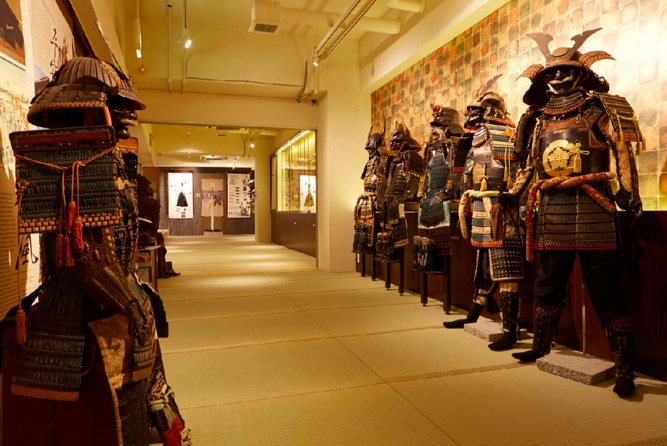
- Hands-on samurai armor trial with time to try on gear
- Ninja star (shuriken) throwing with a game-like competition feel
- Guided commentary that connects weapons to real cultural context
- Short visit window of about 1 hour, great for tight Kyoto days
- Photo-friendly swords and costumes, even for first-timers
Entering the Samurai Ninja Museum in Central Kyoto

This is the kind of activity that works well when you want something cultural without a whole afternoon commitment. The museum experience sits in central Kyoto and is described as easy to reach via public transportation. You’ll meet your guide and your small group at the Samurai Ninja Museum, then get ushered into the flow of the visit.
Finding it can be tricky at first. One clear theme from the experience is that you’ll want to rely on the directions you’re given (the museum is in a shopping-arcade area), and give yourself a few extra minutes so you don’t start stressed. Once you’re inside, the session moves quickly.
Also note one practical accessibility detail: there’s an elevator outage listed for a specific window (January 24, 2026 to February 19, 2026). If your visit falls in that period, expect that stairs may be more relevant, especially since the museum is described as split over two levels.
A few more Kyoto tours and experiences worth a look

How the Skip-the-Line Ticket Works (and What It Really Means)
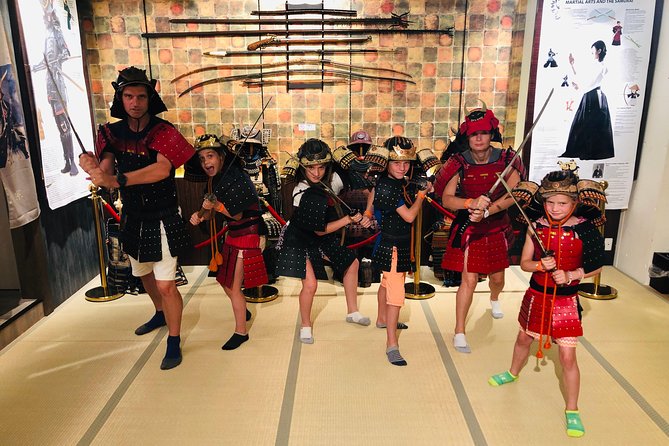
The ticket is sold as a skip-the-lines basic ticket, and you’ll enter according to your scheduled time slot. In real life, that usually means you avoid the longest general-admission chaos, but you’re still part of a guided group and you won’t instantly wander freely the moment you arrive.
What you can count on is a guided structure: meet your guide, get grouped, then move through the exhibits and activities as a unit. Some people can feel that this turns the experience into a quick “session” rather than a slow museum browse. If you’re the type who likes to read every placard for 30 minutes straight, plan your expectations around the short format.
The good news: it’s sold as a mobile ticket, so you don’t need to hunt for paper or worry about printing.
Museum Highlights: Weapons, a Samurai House, and Up-Close Displays
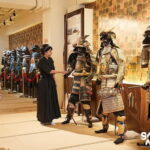
The core of the visit is a guided walk through the museum’s samurai-and-ninja setting. You’ll see ancient swords and other weapons up close, along with preserved items and a recreation of a samurai house. The goal isn’t to turn you into a historian in 60 minutes. It’s to help you understand what these figures meant in everyday life and in the larger feudal system.
Your guide explains the stories behind the look and the gear. That’s where the museum becomes more than a photo wall: you hear how samurai culture worked socially and politically, and you get a framework for what ninjas were associated with. Even if you only know the basics going in, you’ll leave with a clearer sense of roles, not just costumes.
There’s also a “small museum” feel. Multiple comments point out that the space isn’t huge and can be handled quickly. That can be a positive if you want an efficient stop, and a downside if you expected a large collection.
Samurai Armor Trial: Katana Time and Armor-Photo Momentum
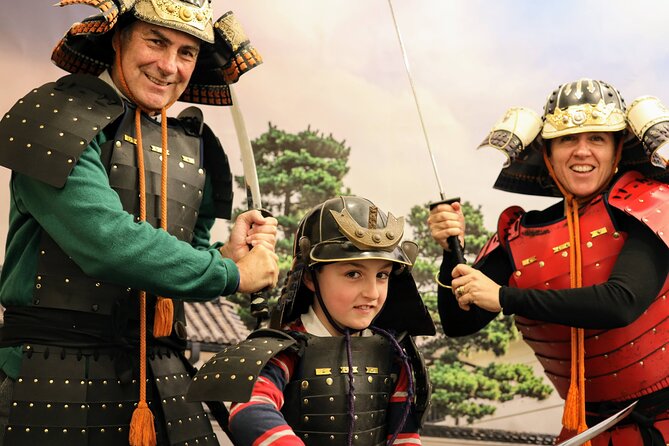
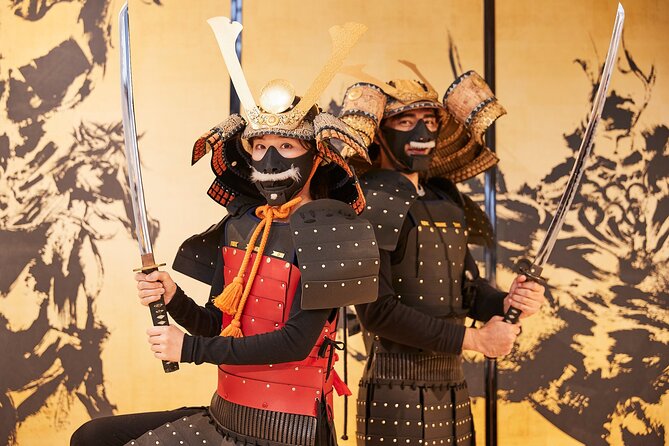
One of the most popular parts is the samurai armor trial. You’ll dress up in costume and get a chance to wear gear associated with samurai culture. Many sessions also include a katana or sword moment, with sword handling described as optional in the experience details.
This is one of those activities that makes sense even if your interest level is casual. Standing in armor changes the whole feeling of the place. The museum setup is designed so you can move from viewing to trying, and that turns “swords on display” into something physical.
Photo-wise, this is a big win. The time window is short, so you should treat it like a planned photo session. Aim for a couple of key shots rather than trying to capture everything at once. If your group gets crowded, you might have to accept fewer retakes than you’d like, so quick aiming helps.
One drawback to keep in mind: some visitors report that costumes or props can feel worn. That doesn’t make it unsafe (nothing in the provided info suggests unsafe equipment), but if you’re picky about condition and presentation, you may notice that this is a fun trial more than a museum-grade display.
Ninja Star Throw Competition: Controlled Fun With Real History Context
The ninja star throwing is the activity people remember. You’ll get a chance to throw shuriken (ninja stars) as part of a game-like competition. It’s hands-on, low-pressure, and it gives the visit a clear “action peak” after the sword-and-armor segment.
What I like about this part is how it’s framed. Instead of treating the shuriken as just a movie prop, the guide ties it back into ninja imagery and stories from the period. That helps the experience land for people who want a bit more meaning than pure spectacle.
This part is also family-friendly in a very practical way. Reviews mention kids loving the throwing segment, and it’s easy for adults to enjoy too. If you’re visiting with children, the throwing gives them a concrete moment to look forward to, and the photo backdrop/costume bits make it feel like a complete package.
Keep in mind crowding again: if the session is packed, the line-up for instructions and turns can compress your time. You might feel rushed. If you want slower pacing, choose a less busy time slot when you can.
You can also read our reviews of more museum experiences in Kyoto

Guides and Group Flow: Naromi, Raito, Saku, Jasmine, and Nobu
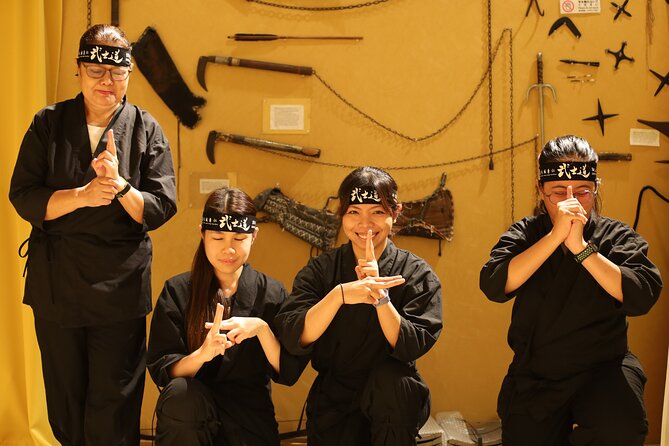
The quality of this kind of tour often comes down to the guide. In the provided feedback, several guide names show up with strong mentions: Naromi, Raito, Saku, Jasmine, and Nobu. The common thread is that the guides mix history with energy, then keep the group moving so everyone gets the hands-on moments.
You can also expect engagement that’s more lively than academic. One consistent theme is that the narration is “fun with facts,” not a long lecture. That’s perfect if you want to understand the basics quickly and keep moving. If you want deep sourcing, diagrams, and long-form analysis, you may find it too short for that.
Group size is listed in two places, which can affect the feel of your tour. The experience details mention a maximum of 30 travelers in one section, while another part notes a maximum of 15. Either way, it’s meant to be a small group, and that helps you get attention during the costume and throwing segments. If your time slot lands on the larger end, you’ll likely notice tighter space and less time to linger.
Timing, Duration, and Practical Expectations for a 1-Hour Stop
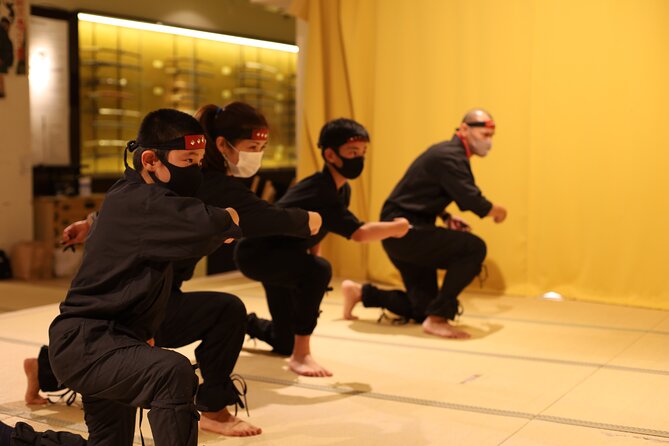
The experience runs about 1 hour. Some comments suggest it can stretch to around 1 to 1.5 hours depending on how quickly the group moves and how the activities play out. Either way, it’s a smart add-on day activity.
This short duration is part of the value. In Kyoto, you’re often balancing temples, neighborhoods, and long transit days. An hour that includes guided context plus hands-on activities keeps you from losing time to planning, and it prevents “museum fatigue.”
Your best strategy is to arrive with a clear mindset: you’re here for a guided sampler of samurai-and-ninja culture, not a full deep-dive museum crawl. If you go in expecting a compact experience with active moments, you’ll likely feel satisfied.
On the other hand, if what you really want is a large collection and lots of quiet time to read and examine objects, the small layout may disappoint. Some feedback calls out a lack of air-conditioning. So on hot days, bring water and plan for “active indoor time,” not leisurely strolling.
Price and Value: Is $28.52 Worth It?

At $28.52 per person, this isn’t a bargain like a street snack, but it also isn’t priced like a private cultural workshop. The value comes from three things you’re paying for together:
- A professional guide who gives context as you move through the museum
- A built-in hands-on package: costume time plus ninja star throwing
- A time-boxed experience that fits easily into a Kyoto schedule
If you’re traveling solo, the guided structure can feel extra helpful because you don’t have to figure out what to do first or how to interpret what you’re seeing. If you’re traveling as a family, it’s even easier to justify because kids get multiple interactive moments in a short time.
Where the price might feel less justified is if you’re expecting a big museum collection. The experience is designed around activities more than long exhibits. Think of it like a guided action tour with museum context, not a full-blown museum day pass.
Who Should Book This Tour (and Who Might Not)
This is a good match if you:
- Want a quick, guided introduction to samurai and ninja culture
- Like hands-on experiences like costume trials and shuriken throwing
- Prefer an hour-long activity over a half-day museum plan
- Are visiting Kyoto for the first time and want something different from temples and shrines
It may not be ideal if you:
- Want a large museum with lots of time to study artifacts
- Dislike crowded indoor spaces or hate waiting for group turns
- Expect pristine, museum-grade props and a slow pace
Also, children need to be accompanied by an adult. The throwing and dress-up elements seem to make this especially fun for kids who like interactive tasks.
Should You Book This Tour?
I’d book it if you want a short, guided samurai-and-ninja experience that mixes story with action. The armor trial and shuriken throwing are exactly the kind of hands-on moments that make Kyoto memories, and the guide narration gives the context so you’re not just collecting photos.
Skip it or choose your time carefully if you’re a “quiet museum reader” type. With the compact space and possible crowding, the experience can feel more like a fast, lively session than a slow, detailed museum visit. If that trade-off sounds okay to you, this is a fun use of one hour in Kyoto.
FAQ
How long is the Samurai Ninja Museum guided tour?
It runs about 1 hour (approx.). Some people may end up spending a bit longer depending on how the group moves through the activities.
What’s included with the basic ticket?
You get a professional guide, a samurai costume, and ninja star throw competition time. Admission is included as part of the experience, and there’s also samurai armor trial time with a katana/sword mentioned as part of the activity (optional).
Are there multiple time slots available?
Yes. The experience lists multiple time slots so you can fit it into your Kyoto schedule.
How big is the group?
The experience notes a maximum group size of 30 travelers in one section, and another note lists a maximum of 15 travelers. Either way, it’s designed to be a small-group tour.
Is it suitable for children?
Children must be accompanied by an adult. The experience is described as suitable for most participants, and the activities (especially ninja star throwing and dressing up) are a big part of why families enjoy it.
What do I need to bring, and is transportation included?
Transportation to and from the attraction is not included. You’ll make your own way to the Samurai Ninja Museum and meet the guide there, near public transportation.
What happens if the weather is poor or I need to cancel?
Free cancellation is available up to 24 hours in advance for a full refund. The experience requires good weather, and if it’s canceled due to poor weather you’ll be offered a different date or a full refund.