REVIEW · KRAKOW
Krakow: Rynek Underground Museum Skip-the-line Guided Tour
Book on GetYourGuide →Operated by excursions.city · Bookable on GetYourGuide
Kraków sounds different underground. This skip-the-line guided tour sends you beneath the Main Square area to see medieval streets, merchant stalls, and archaeological remains, brought to life by an expert guide. I especially like the 11th-century burial reconstructions and the way guides like Magna and Paulina turn coins, jewelry, and other finds into stories you can actually picture. The one catch: you need to arrive about 10 minutes early, because once the group leaves, latecomers can’t join.
You’ll spend roughly 1.5 hours walking nearly 4,000 square meters of underground paths while multimedia (films, touchscreens, and holograms) recreate daily life sounds and scenes. For larger groups, they provide headsets so you can hear the guide clearly. That combination makes a big difference if you prefer listening over reading.
This is a great pick if you want context fast, not a solo museum slog. Just note the tours run in one language at a time, so make sure you choose the right one when you book—especially if you’re traveling with someone who speaks a different language.
In This Review
- Key things that make this tour worth it
- Rynek Underground Museum: why this tour starts where most people never go
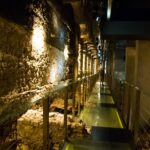
- What you actually see: medieval streets, stalls, and burial reconstructions
- Multimedia holograms and films: useful tech, not just flashing lights
- Walking with an expert guide: the difference between reading and understanding
- Headsets, group size, and hearing: practical tips so you don’t miss the commentary
- The route above ground feels different: St. Mary’s Basilica and the Cloth Hall after
- Timing and what to plan around
- Price and value: what $34 gets you (and why it’s not just admission)
- Who should book this tour, and who might prefer something else
- Should you book? My practical take
- FAQ
- How long is the Rynek Underground Museum skip-the-line guided tour?
- Does this tour include skip-the-line admission?
- What kinds of things will I see underground?
- Are headsets provided during the tour?
- What languages are offered for the live guide?
- How big is the group?
- Where do I meet for the tour?
- Is there free cancellation?
Key things that make this tour worth it
- Skip-the-line entry so you’re not stuck waiting when your time in Kraków is tight
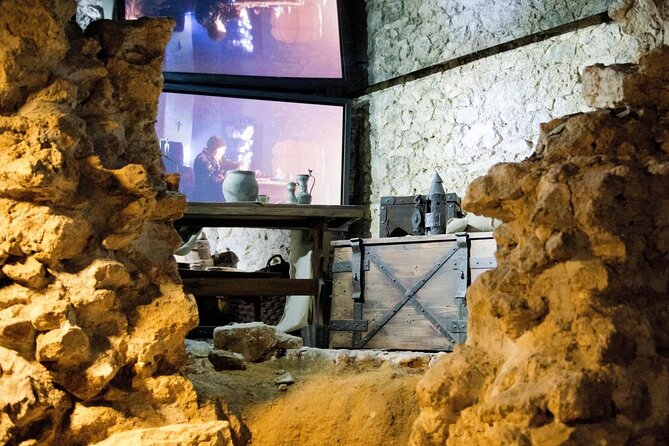
- 4,000 square meters underground with real archaeological remains and street traces
- Reconstructions plus artifacts including medieval burials, coins, and jewelry
- Films, touchscreens, and holograms that make the medieval setup feel clear
- Headsets for groups of 15+ to keep the commentary understandable
- Expert local storytelling, with guides named Chris, Magna, and Paulina standing out
Rynek Underground Museum: why this tour starts where most people never go
Most sightseeing in Kraków happens above ground. This tour does the opposite, which is the point. You step into a network of underground passages that sit under the city center, where excavations revealed layers of medieval life.
The best part is that you don’t just look at objects behind glass. You follow a guided route through remains of ancient streets and spaces that once hosted merchants and travelers. That creates a stronger sense of place than reading plaques ever will.
And when the medieval scene turns on—via holograms, films, and interactive displays—the museum stops feeling like a basement exhibit and starts feeling like a time machine you can walk through.
You can also read our reviews of more guided tours in Krakow

What you actually see: medieval streets, stalls, and burial reconstructions
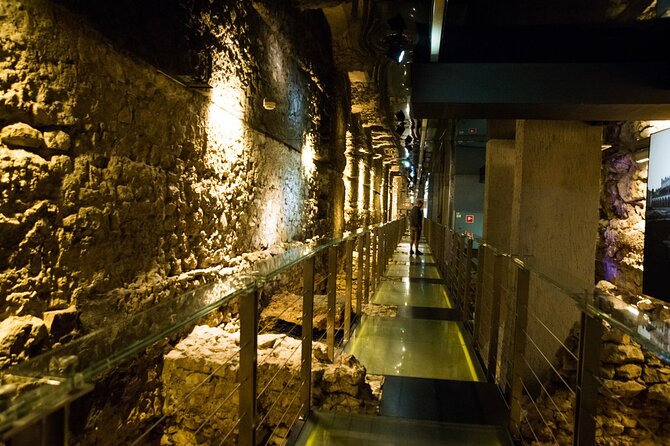
The core experience is a guided walk through nearly 4,000 square meters of underground paths. Along the route, you’ll see archaeological remains and the traces of old urban life, including areas connected to trade and everyday movement through the market square district.
A highlight is the reconstructions of 11th-century burials. Even if you’re not a history buff, reconstructions help your brain organize what you’re seeing: where people were placed, how burial spaces were laid out, and what archaeologists found that made the reconstruction possible.
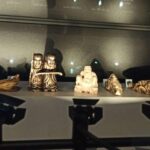
You also get a look at ancient street traces and spaces tied to commerce—merchant stalls, for example—so you can connect Kraków’s medieval economy to what’s physically present underground. The museum also shows artifacts like old coins and jewelry, which helps you shift from big-picture “history” to tangible details.
Your guide ties it together with stories about commerce, religion, and the changes revealed during excavations. That storytelling matters because the underground setting can otherwise feel like disconnected rooms and corridors.
Multimedia holograms and films: useful tech, not just flashing lights
The museum uses multimedia to recreate medieval atmosphere and activity. Expect installations such as holograms, touchscreens, and films that bring the past forward in a way that’s easy to follow.
One reason this works so well is that the media isn’t random. It’s paired with the physical spaces you’re standing in. When the story of trade and daily life is staged near merchant-stall remains, you get a clearer idea of what that area looked like and how people moved through it.
A real plus is the pacing. The tour is long enough for the site to make sense, but short enough that you’re not stuck under stressful museum fatigue for half a day. At about 1.5 hours total, it feels focused rather than exhausting.
If you like learning through visuals and sound cues, this museum format is a strong match. If you prefer pure archaeology and artifacts, it still helps because the tech explains context instead of replacing it.
Walking with an expert guide: the difference between reading and understanding
You’re here for the site, but the guide is what makes it click. An English (or other supported language) licensed expert guide turns the physical remains into a narrative with cause-and-effect: why certain places developed, what trade meant, and how excavations uncovered surprises.
The standout guides in the experience are the kind who can answer the question you didn’t know you had. People have singled out Magna, Paulina, and Chris for making the time feel like it jumped centuries. That’s not just charm—it’s practical teaching. You remember details because they’re attached to a story.
There’s also room for questions at the end, which is ideal if you’re the type who wants clarity before you move on. I like that because it turns the visit into an actual conversation, not a lecture you have to endure.
If you learn better by listening than by reading walls of text, a guided tour is often the smarter use of your time.
Headsets, group size, and hearing: practical tips so you don’t miss the commentary
This is one of those tours where logistics affect your enjoyment more than you’d expect. Groups are capped at 29 participants. For groups of 15+, the museum provides headsets, which can make the biggest difference for hearing the guide in underground spaces.
Even with headsets, audio can be tricky in museums with echoes and movement. If you’re someone who struggles to hear in quiet rooms, aim to position yourself where you can clearly face the guide. Don’t get stuck in the back if you know your hearing fades when you’re a few steps away.
Also remember: each tour is in one language. The site operates like that for a reason—everyone follows the same route with the same commentary. If you’re booking for a group with different language preferences, double-check you’re not accidentally choosing a language you don’t understand.
You can also read our reviews of more museum experiences in Krakow





The route above ground feels different: St. Mary’s Basilica and the Cloth Hall after
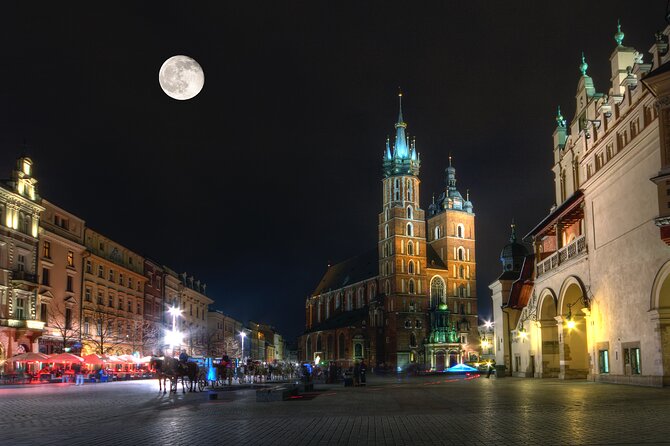
After you come back up, you’ll likely look at Kraków’s central square with new eyes. The museum ends with you returning to the Main Square, where St. Mary’s Basilica and the Cloth Hall dominate the skyline.
What changes is how you mentally stack the centuries. When you’ve walked the underground traces of medieval streets and trade spaces, the big landmarks above ground stop being just impressive buildings. They become the visible top layer of a city that has been rebuilt, traded, and reshaped many times.
That matters because Kraków’s center isn’t a single moment in time. It’s a layered footprint. This tour helps you understand that “under your feet” idea in a way that’s hard to get from photos.
Timing and what to plan around
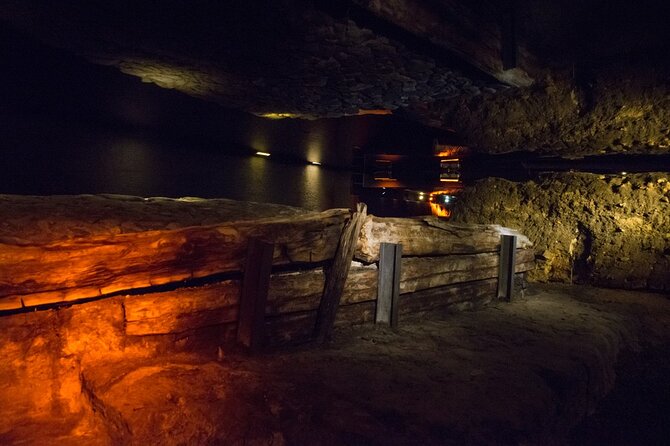
The tour runs about 90 minutes to 2 hours. That time includes the guided walk through the underground route and the multimedia stops along the way.
Plan to arrive early. They ask you to get there about 10 minutes before the start, and latecomers can’t join once the group has departed. That rule is worth treating seriously. Underground tours run on a schedule, and they’re not set up for waiting.
Meeting point can vary depending on the option you book, so check the exact pickup location in your confirmation and then give yourself a little buffer. In the center of Kraków, it’s easy to lose track of time while you’re looking at buildings you weren’t even planning to stop for.
Price and value: what $34 gets you (and why it’s not just admission)
At around $34 per person, this isn’t the cheapest museum option in Kraków. But it’s also not just a ticket to walk around.
Here’s what you’re paying for:
- Skip-the-line admission, so you avoid waiting and keep your day on track
- A licensed guide who explains what you’re seeing as you move through the route
- Multimedia interpretation (films, holograms, touchscreens) that’s easier to follow with narration
- Headsets for groups of 15+, which improves the experience
When you do the math of time saved plus guided interpretation, the cost becomes easier to justify—especially if you only have a day or two in Kraków’s center. If you’re the type who likes to understand why a place matters, not just see it, you’ll probably feel like the price is fair.
If you’re determined to wander museums alone with minimal guidance, you might skip the tour and read plaques instead. But if your goal is to leave with a clearer picture of medieval Kraków, the guided format is the value.
Who should book this tour, and who might prefer something else
Book it if you:
- Want a guided explanation of the medieval city under the Main Square
- Like interactive museum tools like touchscreens and holograms
- Learn well by listening and asking questions
- Prefer a structured route that makes the underground space easier to understand
You might choose a different option if you:
- Hate group tours and want total freedom to move at your own pace
- Expect a mostly “archaeology-only” experience with minimal multimedia support
- Are sensitive to hearing issues and don’t plan to position yourself well (headsets help for larger groups)
Should you book? My practical take
Yes, I’d book it if you’re spending time in Kraków’s center and want a fast, memorable way to understand what’s under the famous buildings. The combination of guided narration, reconstructions like the 11th-century burials, and multimedia devices that actually connect to what you’re standing next to makes this more than a quick stop.
If you’re on the fence, think about how you usually enjoy museums. If you tend to enjoy stories and context, this tour is the efficient route. If you like to read quietly and go at your own speed, you might be happier with a self-guided visit instead.
Either way, don’t leave it out. Kraków looks one way above ground. It tells a different story underground.
FAQ
How long is the Rynek Underground Museum skip-the-line guided tour?
The tour runs about 90 minutes to 2 hours.
Does this tour include skip-the-line admission?
Yes. Your ticket includes skip-the-line entry to the Rynek Underground Museum.
What kinds of things will I see underground?
You’ll explore underground paths with merchant stalls and archaeological remains, including reconstructions of 11th-century burials, traces of ancient streets, and artifacts such as old coins and jewelry. There are also multimedia installations like holograms, touchscreens, and films.
Are headsets provided during the tour?
Headsets are provided for groups of 15 or more, to help everyone hear the commentary clearly.
What languages are offered for the live guide?
The live tour guide is available in English, German, French, Italian, Spanish, and Polish. The tour is only offered in one language at a time.
How big is the group?
Each tour is limited to a maximum of 29 participants.
Where do I meet for the tour?
The meeting point may vary depending on the option booked, so it’s important to check the meeting location for your specific reservation.
Is there free cancellation?
Yes, free cancellation is available up to 24 hours in advance for a full refund.