REVIEW · STOCKHOLM
Entrance ticket to The Viking Museum
Book on Viator →Operated by The Viking Museum · Bookable on Viator
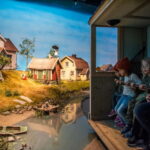
A Viking story in 1 to 2 hours. The Viking Museum turns archaeology into a hands-on visit with films, projections, sound effects, and Viking-clad guides who answer your questions. It’s an easy way to get the Viking Age story without piecing it together yourself.
My favorite part is the mix of multilingual audio and real artifacts—so you can follow along in English while still seeing the physical objects up close. The Ragnfrid’s saga ride also gives you a clear, scene-by-scene sense of raids, travel, and Norse myth. One thing to consider: the museum is relatively small and can feel story-driven, with a decent amount of reading and a short ride that may not land for tweens or teens.
In This Review
- Key points to know before you go
- Ticket price and what $22.68 really buys you
- Where the experience starts: exhibits that feel like a story, not a warehouse
- The main event: Ragnfrid’s saga at Frösala Farm
- Getting the most out of the guides and Q&A moments
- Inside the Viking world: artifacts, replicas, and the “feel” factor
- Time plan: how to fit it into a Stockholm museum day
- Photos, gift shop, and the café break
- Who should book this Viking Museum entry ticket
- Price and value: when it feels worth it vs when it doesn’t
- Should you book this Viking Museum entry ticket?
- FAQ
- How long does the Viking Museum visit take?
- What does the ticket include?
- What language options are available?
- Is the ticket mobile?
- Do I get confirmation after booking?
- Can I cancel for a full refund?
- Are service animals allowed?
- Is it near public transportation?
- How far in advance do most people book?
Key points to know before you go
- Mobile ticket convenience so you can plan a time slot and skip ticket-hunting
- Audio in multiple languages with the experience offered in English
- Guides in Viking gear who’ll talk and take questions as you move through the exhibits
- Ragnfrid’s saga journey (about 11 minutes) that connects myth with daily life
- Good value for a short stop if you want Vikings without committing half a day
Ticket price and what $22.68 really buys you
At about $22.68 per person, this entry ticket is priced like a museum visit, not a full-day attraction. The big value move here is time: you’re not hunting for language help or guidance after you arrive. You show up, use your ticket, and get straight into the exhibits and the main guided story experience.
You’re also getting more than display cases. The museum uses movies and projections plus a sound-heavy setting to create atmosphere. That matters in Stockholm, where you’ll likely stack museum days with other stops. A 1 to 2 hour window is realistic for most people, and the format helps you stay oriented even if Vikings are new to you.
Still, consider the trade-off. This is not a huge “wander for hours” archaeology museum. It’s compact, and it leans into narration and storytelling. If you’re craving lots of deep, scholarly artifacts with minimal performance, you might leave wanting more. On the flip side, if you like guided flow and you want your questions answered, it works well.
A few more Stockholm tours and experiences worth a look



Where the experience starts: exhibits that feel like a story, not a warehouse
The Viking Museum is built around a strong sense of direction. You’re pulled into the Viking Age through environments designed for impact—sound effects, lighting, and projection scenes—paired with archaeological objects. That combination is what makes it easier than many museums: you’re not just reading labels. You’re watching the context form around you.
You’ll see how Viking life is presented across different themes: raids and journeys, ship building know-how, and everyday farm life. The museum also weaves Norse mythology throughout, aiming to show how myth and historical life can overlap.
One practical tip: give yourself enough time to slow down in the artifact areas. Even though the museum moves along quickly, the “real object” parts are where you’ll pick up the details that make the story feel grounded. The more you look at the artifacts while the story is fresh, the more it sticks.
The main event: Ragnfrid’s saga at Frösala Farm
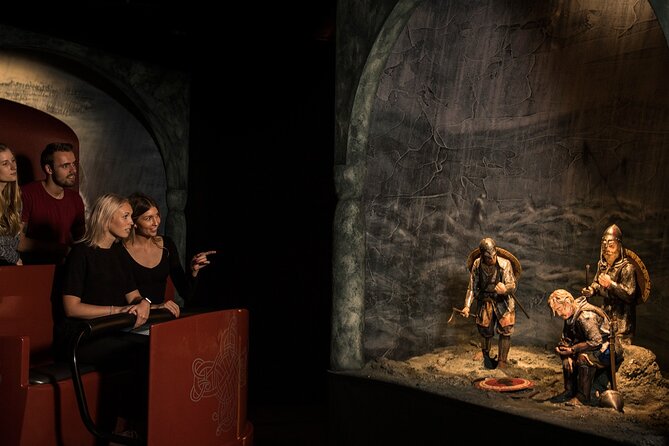
The star experience is Ragnfrid’s saga, a journey told by Ragnfrid herself. It’s described as an 11-minute ride that moves through key scenes from the Viking Age.
Here’s what you can expect the story to cover:
- The journey starts at Frösala Farm with Ragnfrid and her husband Harald
- You then move through episodes showing plundering in the west
- And you see the slave trade in the east
The format uses light, sound, and atmospheric staging to make those story beats feel immediate. The museum’s goal is to connect myth with what people actually built and did—so you’re not just hearing legends. You’re being shown how those legends might map onto lived realities.
What I like about it is the clarity. If you’ve never studied Vikings, the story gives you a simple timeline: where the characters are, what’s happening, and why ships and travel matter. If you already know Viking history, it’s still helpful as a “reset.” You get a quick mental model you can use while you look at the rest of the exhibits.
What to watch for: the ride is the museum’s biggest structured chunk, and it’s very much an entertainment-style presentation. One visitor called the ride not great and wished for more time elsewhere. Translation: if you dislike story rides and prefer pure artifacts, you might feel the balance is off.
Getting the most out of the guides and Q&A moments
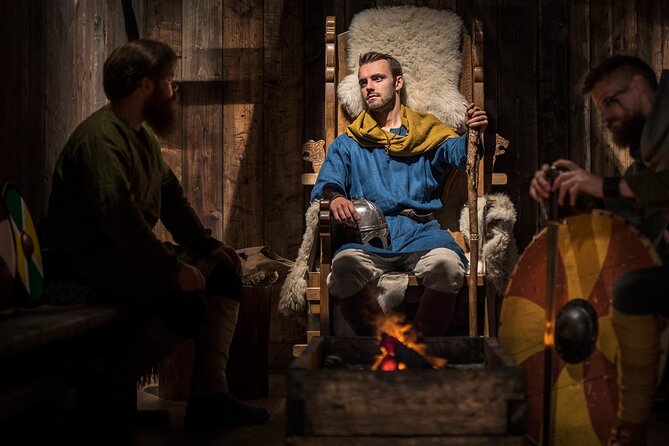
A major reason the visit earns strong ratings is the human factor. You don’t just wander past displays. Guides dressed in Viking gear are positioned to answer questions as you go.
This is where you can turn a general museum into your own mini class. I’d come prepared with 2 or 3 questions, not ten. For example:
- How do we know what we know about ship building?
- What parts of Norse mythology are more likely “myth” and what parts might reflect real social beliefs?
- How did farm life connect to raiding and travel?
That Q&A energy is also useful because the museum blends myth and history. If you’re trying to separate legend from evidence, it’s a good place to ask. It’s also where you can get context that you won’t get from reading panels alone.
One small consideration: the experience is still compact. That means you’re likely balancing conversation with movement through exhibits. If you’re the kind of visitor who loves long explanations at every stop, you may want to take it slower where guides are most available.
Inside the Viking world: artifacts, replicas, and the “feel” factor
Even when the museum leans into performance, it keeps one foot on the ground with archaeology. You’ll encounter actual Viking artifacts and relics alongside replicas that help you picture daily life.
The museum’s wording emphasizes exploration with your senses—meaning it tries to get beyond flat reading. In practice, that looks like a blend of:
- Visual scenes you can track as you move
- Sound design that sets the mood
- Replicas that help you imagine tools, spaces, and routines
That approach can be a hit for families and first-timers. But it also creates a different experience than classic museum-only stops. If you love museums for quiet contemplation, you may find the sound and staging a lot. If you love storytelling and context, it’s exactly the style you want.
A practical strategy: start with the story sections, then come back to the artifact displays while you’re still in “Viking mode.” You’ll interpret objects better when your brain already has a Viking timeline.
You can also read our reviews of more museum experiences in Stockholm






Time plan: how to fit it into a Stockholm museum day
You’re looking at 1 to 2 hours on average. Many people can do the full thing in about an hour, especially if they’re comfortable moving at a quick museum pace. If you like to read every panel and stop for photos, count closer to 90 minutes.
To make it smooth, I suggest this rhythm:
- Spend the first part getting your bearings in the exhibit areas
- Hit the Ragnfrid’s saga ride at a time that won’t stress your schedule
- Use the guide/Q&A moments before you go too far ahead
- Leave a little buffer at the end for photos and the shop/café area
Also, this is the kind of museum where audio helps. If you’re using English, lean on the multilingual audio guide and don’t feel guilty about pausing—your understanding will improve.
Photos, gift shop, and the café break
This museum is good for photos, mainly because so much of it is staged with dramatic lighting and built environments. If you like taking pictures but hate spending 30 minutes hunting for the best angles, you’ll probably appreciate that it’s packed with photo-friendly moments.
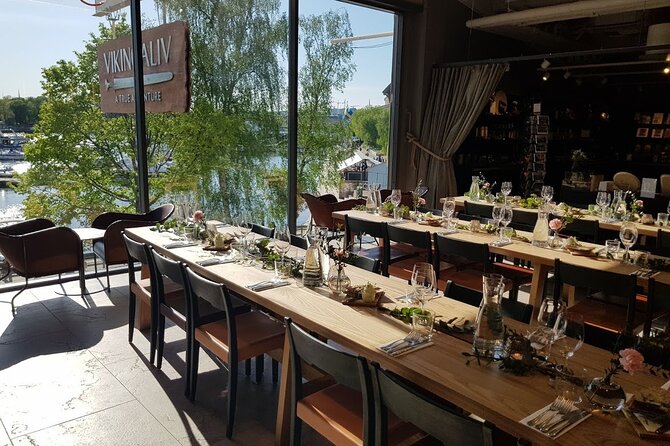
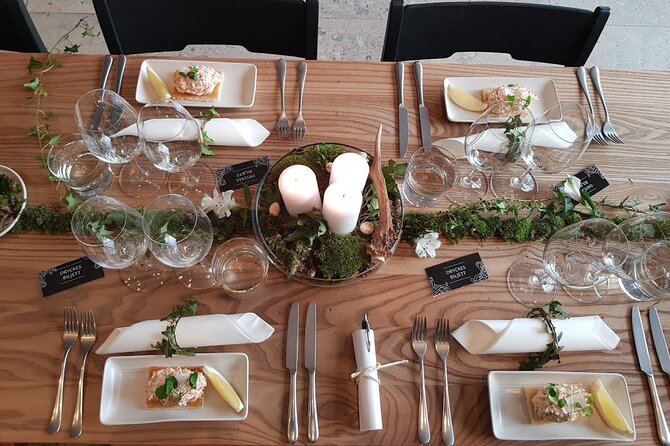
The café is also a nice way to keep the visit from ending on an empty stomach. One of the most repeated practical notes is to try the reindeer meatballs. If you want a simple Swedish break without leaving the museum complex, this is your easy win.
Then there’s the gift shop. Even when you’re not a “buy souvenirs” person, it can be worth a quick look for themed items related to the saga and Viking motifs.
Who should book this Viking Museum entry ticket
This is a strong fit if:
- You want Viking history presented clearly and fast
- You like guided storytelling more than text-heavy museum wandering
- You’ll ask questions and benefit from guide conversation
- You’re traveling with kids who can handle a short ride and some reading
It might be less ideal if:
- You’re a teen who hates anything that feels cheesy or overly storybook
- You want maximum artifact quantity over staged presentation
- You’re already a serious Viking nerd and want deep, technical detail with minimal narration
Also, consider your timing. The museum is commonly booked about 26 days in advance on average. If you’re visiting in high season or on a tight schedule, booking ahead can reduce stress even if the actual visit time is short.
Price and value: when it feels worth it vs when it doesn’t
Let’s be practical. At $22.68, the question isn’t whether it’s cheap. The question is whether you’ll get at least one of these value wins:
Value win #1: You save time. Prebooked entry helps you keep your Stockholm day moving.
Value win #2: You get interpretation. The audio guide plus the guide Q&A is doing real work for you. It’s not just labels.
Value win #3: You get atmosphere. The mix of projections, sound, and the Ragnfrid ride makes the Viking Age feel like a living world.
When you might feel it’s not worth it: if you’re expecting a large collection with lots of historical depth in artifact form, you could come away wanting more. One visitor even compared it unfavorably with another major museum and said they would have preferred more time there. That’s a hint that the Viking Museum works best as a focused stop, not as the centerpiece for someone who wants the most content per hour.
Should you book this Viking Museum entry ticket?
Yes, if you want a short, high-energy Viking stop with English-friendly audio, real artifacts, and a story ride that gives you a framework for understanding Viking life. It’s a particularly good choice when you don’t want to build a Viking itinerary from scratch.
Maybe not, if you hate guided rides, dislike presentation-heavy museums, or you’re traveling with older kids who might tune out. In that case, you could still enjoy the artifacts and the guides, but you should know the tone is strongly narrative.
If you’re on the fence, here’s my simple decision rule: if you can handle a compact museum with guided storytelling in about an hour to two, book it. If you want a long, quiet, artifact-first experience, consider allocating your time elsewhere.
FAQ
How long does the Viking Museum visit take?
The experience is listed at about 1 to 2 hours.
What does the ticket include?
Your admission ticket to The Viking Museum is included with the booking.
What language options are available?
The experience is offered in English, and there’s a multilingual audio guide.
Is the ticket mobile?
Yes, this is a mobile ticket.
Do I get confirmation after booking?
You’ll receive confirmation at the time of booking.
Can I cancel for a full refund?
Yes. You can cancel up to 24 hours in advance for a full refund.
Are service animals allowed?
Yes, service animals are allowed.
Is it near public transportation?
Yes, it is near public transportation.
How far in advance do most people book?
On average, it’s booked about 26 days in advance.