REVIEW · ATHENS
Athens: Museum of Cycladic Art Entry Ticket
Book on GetYourGuide →Operated by Museum of Cycladic Art · Bookable on GetYourGuide
Ancient marble, big stories. The Museum of Cycladic Art is a rare Athens stop where you can jump from early Aegean life to later Greek and Cypriot art without getting bored or lost in pure dates. I like how the ticket gives you access to permanent collections across multiple floors, so you can build your own pace.
My favorite part is the chance to see those Cycladic marble figurines and related works in context, including pieces dated to around 2300 BC. I also really appreciated the museum’s layout and the fact that it’s easy to take your time; you don’t feel rushed just to get through one highlight wall.
One caution: construction or renovation noise can pop up. If you’re sensitive to sound, it’s smart to bring earplugs and plan for a calmer route when possible.
In This Review
- Key things to know before you go
- Athens’ Museum of Cycladic Art: what your ticket really buys
- Cycladic marble figurines from 2300 BC: the main event
- How the museum tells the Aegean and Cyprus story through artifacts
- Ancient Greek Art galleries: city-states, society, and what changed over time
- Classical Athens on the 4th floor: everyday life, not just big names
- A practical self-guided route across four floors
- Timing, crowds, and how long you actually need
- Cycladic Café: a break that fits the museum rhythm
- Price and value near Syntagma
- Who should book this ticket?
- Should you book this Athens Museum of Cycladic Art ticket?
- FAQ
- Where do I enter the Museum of Cycladic Art?
- How long is the ticket valid?
- How much does the Athens Museum of Cycladic Art ticket cost?
- What is included with the ticket?
- Is a guided tour included?
- What collections and topics can I expect to see?
- What is special about the 2nd and 4th floors?
- Can I bring food and drinks?
- Is the museum wheelchair accessible?
- Can I get a refund if my plans change?
Key things to know before you go
- 2300 BC Cycladic marble figurines: the signature works are front and center
- Four floors of permanent collections: Ancient Greek Art, plus Ancient Cypriot Art, and more
- 2nd-floor overview and 4th-floor everyday life: the museum frames the story for you
- Clio Muse QR code tour support: handy if you like guided context without joining a group
- Cycladic Café on site: a place to refuel, but outside food and drinks are not allowed
Athens’ Museum of Cycladic Art: what your ticket really buys
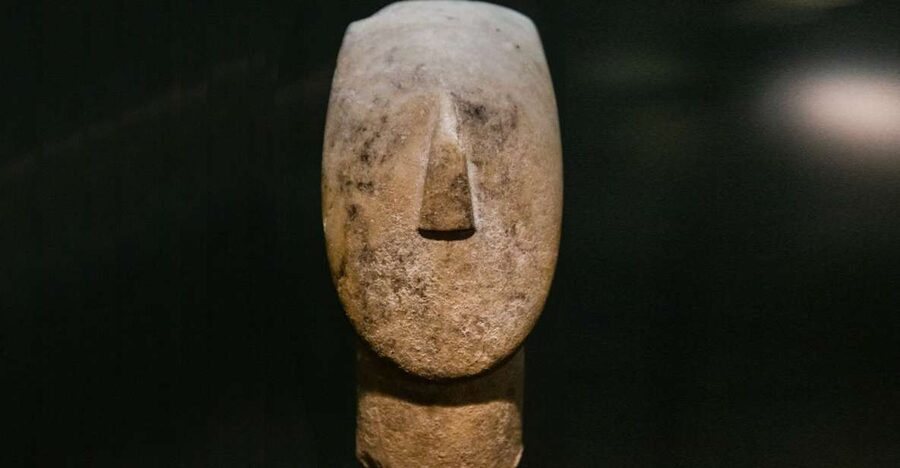
This is a straightforward entry ticket to the permanent collections. That matters, because it’s designed for independent exploring, not for a fixed group itinerary. In other words, you’re free to spend more time with the art styles that pull you in, whether that’s the sculptural Cycladic forms, painted pottery, or the later material culture of Cyprus and Greece.
Your ticket also includes free WiFi and Clio Muse Tours with a QR code. That QR code element is a nice middle ground if you want some guidance but don’t want to lock yourself to a time slot. You can check what’s available onsite, then decide how much reading or listening you actually want.
With the museum set up across multiple levels, you’ll get a “museum day” feeling even if you only plan for a couple of hours. Many visitors find they can do the permanent exhibitions at an easy pace in about 1.5–2 hours, especially if you skip the slowest rooms and focus on the main galleries.
A few more Athens tours and experiences worth a look


Cycladic marble figurines from 2300 BC: the main event
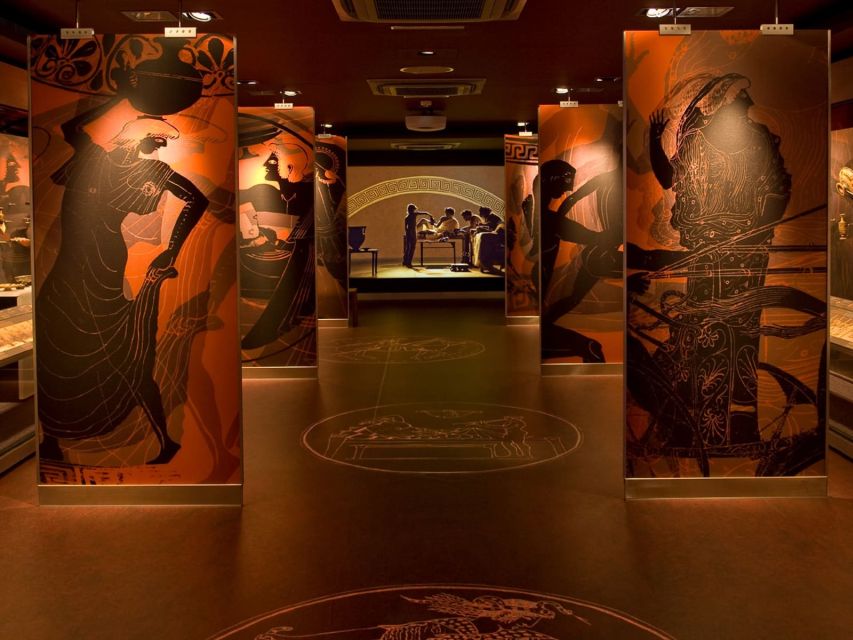
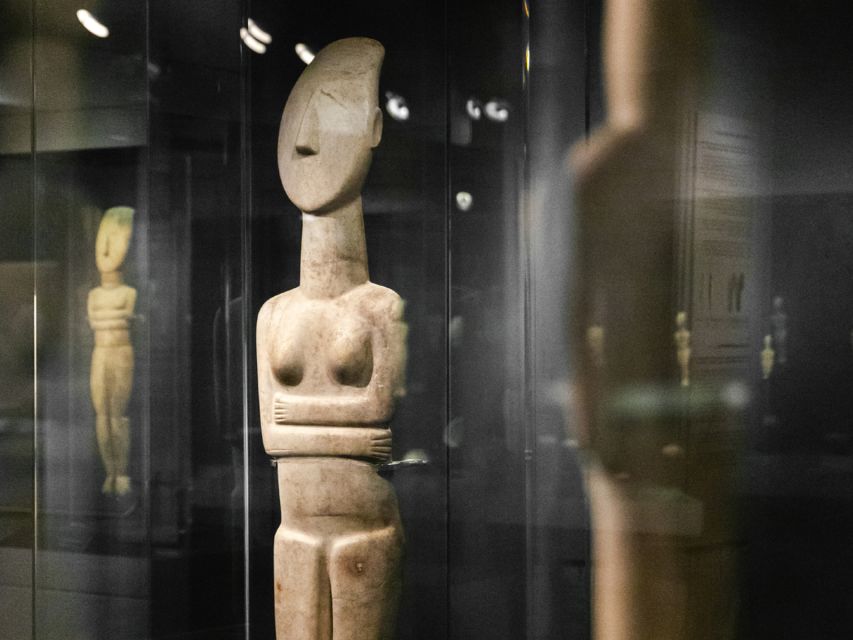
If you’ve heard about Cycladic art, you’ve probably heard about the marble figurines. This museum puts the focus where it belongs. You can admire works made with real craftsmanship—marble pieces and iconic figurines dated to about 2300 BC, tied to the Early Bronze Age culture in the central Aegean.
What makes them more interesting than a quick photo stop is how the museum treats them as part of a system: art, everyday life, and what people valued. You’re not only looking at one style; you’re seeing how tools, weapons, pottery, and other artifacts connect to the same world that produced those sculptures.
A practical tip: when you hit a group of figurines, slow down and compare shapes and proportions. Even without getting technical, you’ll start noticing how artists repeated certain themes and then varied details. That’s the kind of visual thinking that turns a “pretty objects” visit into a “oh, I get what they were doing” visit.
How the museum tells the Aegean and Cyprus story through artifacts
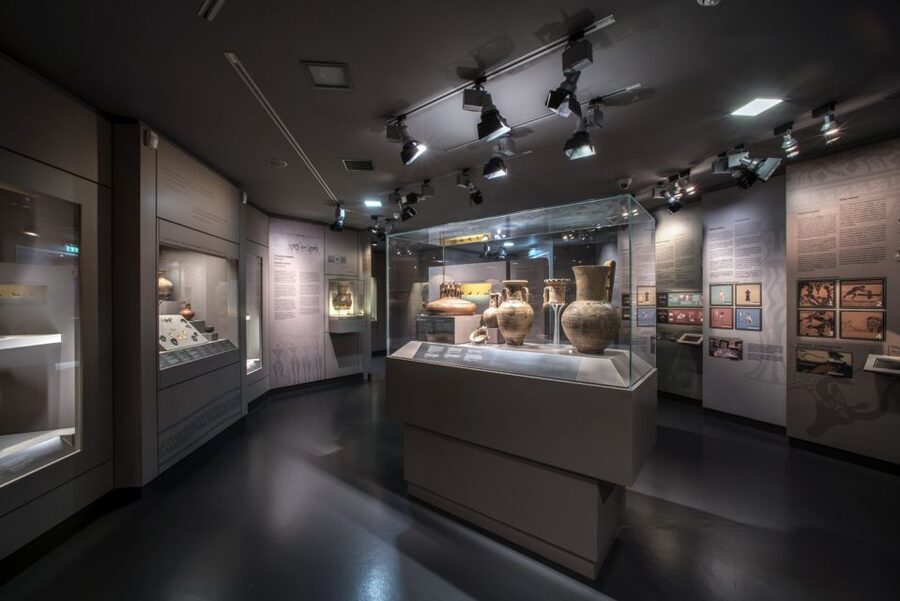
The museum’s real strength is that it doesn’t treat Cycladic art as a single island curiosity. It frames the Aegean and Cypriot experience as a shared Mediterranean story, with different traditions interacting over time.
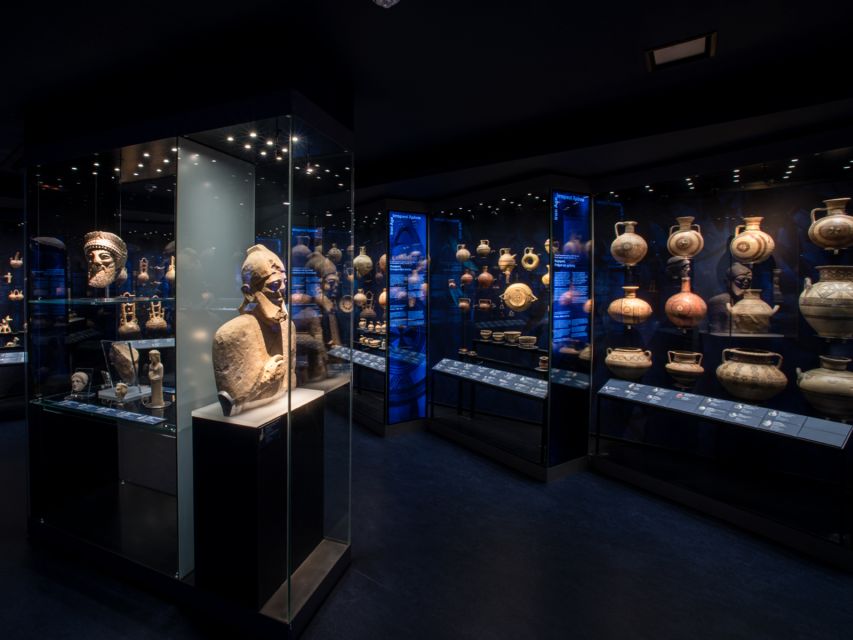
As you move through the collections, you’ll see artifacts that cover both artistic form and practical use—examples include tools, weapons, pottery, and ceramics tied to phases of Cycladic island culture in the Early Bronze Age. Then the museum expands into later periods with Ancient Greek Art materials—things like painted vases, terracotta figurines, bronze vessels, stone sculptures, coins, gold jewelry, and glass items.
You’ll also get Ancient Cypriot Art, including prehistoric figurines plus Archaic and Classical sculpture, inscriptions, bronzes, coins, gold jewelry, impressive glasswork, and ceramics spanning from the 4th millennium BC to medieval times. The museum’s point here is cultural mixing: Cypriot art combined elements associated with local traditions and influences often linked to Greek, Egyptian, and Near Eastern currents.
For you, that means the visit is more satisfying than a one-style museum day. You can follow “materials” (marble, bronze, glass), or you can follow “people” (what their objects suggest about beliefs and daily activity).
Ancient Greek Art galleries: city-states, society, and what changed over time
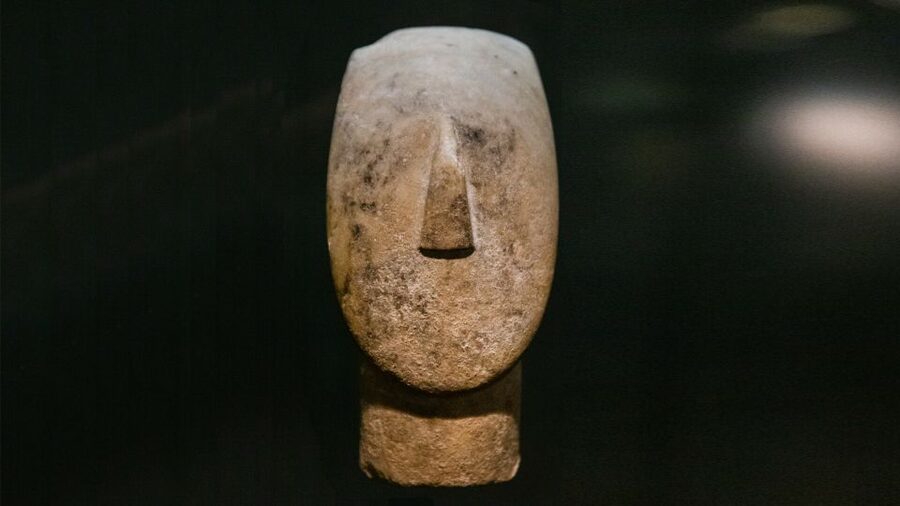
The Ancient Greek Art collection covers a broad time range, from the 2nd millennium BC all the way to the 4th century AD. That’s a lot of ground, so the museum gives you structure with floor-by-floor themes.
On the 2nd floor, you get a comprehensive overview of historical, artistic, and technological developments across ancient Greek history. This is the spot to go when you want your visit to feel like learning, not just wandering. The helpful part is that the museum connects changes in society to changes in art-making, so the collection reads like a timeline instead of random rooms.
As you keep moving, you’ll also see how Greek city-states and society develop. Even if you don’t know the timeline yet, the museum gives enough context to help you place what you’re looking at.
Classical Athens on the 4th floor: everyday life, not just big names
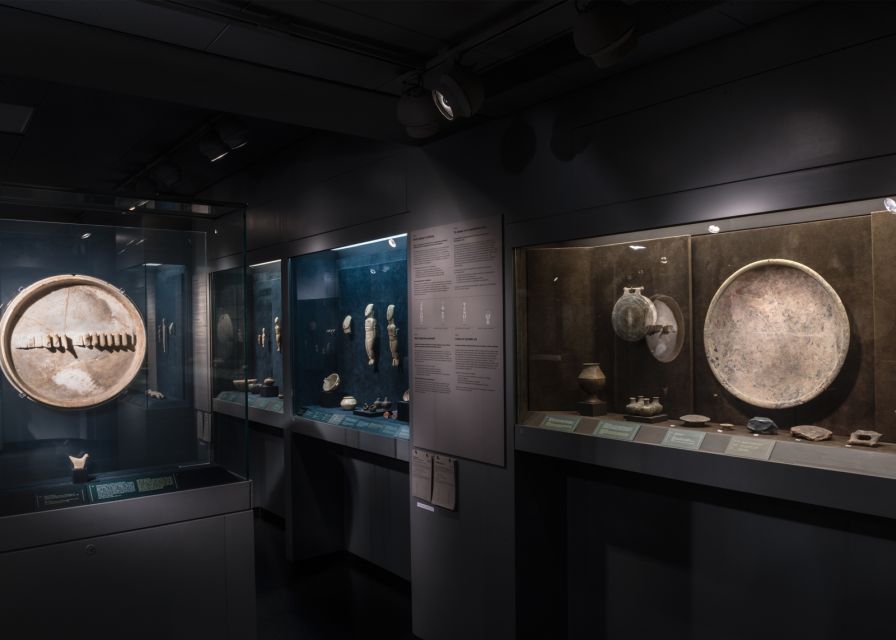
On the 4th floor, the museum shifts into a more day-to-day perspective with a vivid glance at everyday life in Classical Athens. This is a smart balance to pair with the earlier, more abstract-feeling prehistoric art.
If you’re the type who gets bored when museums only show high-level achievements, this floor helps. Everyday life artifacts (and the way they’re presented) give you a more grounded view of what people owned, valued, and used.
It also helps you connect the dots between eras. You start to see continuity: art and material culture changing in style, yes, but still tied to real routines and real social structures.
You can also read our reviews of more museum experiences in Athens




A practical self-guided route across four floors
This is the kind of museum where your best plan is a simple one: pick a starting point, then work your way through at your own speed. The museum runs on multiple levels, so your “route” is mostly about effort and attention span.
If stairs are a concern, I’d consider starting from the highest level and working down. There’s a logic to this: it can reduce the number of tiring up-and-down segments. Plus, you can begin with the 4th floor everyday life theme, then let the museum’s overview floors fill in the background as you go.
On the other hand, if you’re comfortable with walking and you prefer to understand the big story first, you might start near the 2nd-floor overview and then branch into the more focused collection spaces as you descend.
One real-world warning: guidance tools aren’t always perfect for every room. The museum includes Clio Muse Tours with a QR code, and the experience may also include audio or numbered exhibit support in certain areas. Still, not every space is guaranteed to work the same way, and it can feel fiddly if you try to locate everything by app search.
My best advice: use the QR code support when you want context, but don’t turn it into a scavenger hunt. The permanent collections are arranged so you can get a lot just by reading labels and comparing objects.
Timing, crowds, and how long you actually need
This ticket is valid for one day, but you don’t need a full day to enjoy the museum. Many people comfortably cover the permanent exhibitions in about 1.5–2 hours, especially if you’re selective and don’t try to read every single label at full speed.
The museum is also designed in a way that tends to keep things manageable. If you like calm looking, you’ll likely appreciate that the layout supports a slower pace without feeling like you’re trapped in a long corridor.
If you want to leave with more than snapshots, plan for at least one “pause moment” per floor theme:
- one pause in the Cycladic sculpture area (figurines and marble forms)
- one pause in the overview area (how the story is structured)
- one pause in the Classical Athens everyday-life concept
That tiny structure prevents you from rushing and helps you remember what you saw.
Cycladic Café: a break that fits the museum rhythm
Yes, there’s food onsite. The Cycladic Café is described as a calm stop where you can enjoy Cycladic flavors made from natural products and virgin ingredients.
But here’s the practical thing: food and drinks are not allowed inside the museum spaces as a rule. So if you want a snack or a drink, use the café rather than bringing your own.
In my opinion, that works nicely. You get a real break without derailing your focus. Also, because the café exists in the flow of the visit, you’re less likely to time your break badly and end up feeling rushed when you sit down.
If you’re visiting mid-day in Athens, the café can be a relief—especially if you’re spending time on multiple floors and want a breather.
Price and value near Syntagma
At about $14 per person for entry to the permanent collections, this ticket tends to be good value if you like museums that explain as they show. You’re paying for access to a lot of different material types: marble figurines, painted vases, terracotta works, bronze vessels, coins, gold jewelry, and glass items, plus Cypriot ceramics and sculptures.
That variety matters. A narrower museum can feel like one idea stretched out across rooms. This one feels more like a set of interconnected chapters. You can spend your time where your curiosity is strongest, then still walk away with a sense of how the Aegean and Cyprus fit together historically.
Logistics are also convenient. The entry point is at the main entrance, about a five-minute walk from Syntagma square and the Syntagma Metro station. That’s helpful if you’re planning a museum afternoon around the central Athens area rather than dedicating an entire half-day to commuting.
One more practical consideration: check conditions before you arrive. There can be periods of renovation or construction that add noise. It doesn’t ruin the museum, but it can affect how long you want to stay.
Who should book this ticket?
This experience is a strong fit if:
- you’re curious about Cycladic art beyond photos and want to see the objects up close
- you like museums that connect art to history and technology, not just style
- you want a self-guided visit that still provides structure through panels and QR support
It may be a tougher sell for very young kids. The focus is art and artifacts, and some families may find it less kid-friendly unless your children are already into museums and labels.
If you’re doing Athens for a first or second trip, this works well as a “smart contrast” to archaeological sites. You get the stories of prehistoric and ancient material culture without only chasing ruins.
Should you book this Athens Museum of Cycladic Art ticket?
Book it if you want a museum day with real variety—Cycladic marble figurines, Ancient Greek Art materials across centuries, and Ancient Cypriot Art with cultural mixing. At roughly $14, you’re buying flexible time, QR-based context, and a chance to see some of the most iconic Cycladic works in a structured setting.
Skip—or at least adjust expectations—if you’re highly sensitive to construction noise and you won’t tolerate interruptions. Also consider the museum’s pacing: it’s not built around quick hits. If you hate reading labels, you may still enjoy the objects, but you’ll miss part of what makes this collection satisfying.
If you like museum logic, slow viewing, and art that comes with context, this is an easy yes.
FAQ
Where do I enter the Museum of Cycladic Art?
Enter at the main entrance. It’s about a five-minute walk from Syntagma square and the Syntagma Metro station.
How long is the ticket valid?
The ticket is valid for one day. Check availability to see starting times.
How much does the Athens Museum of Cycladic Art ticket cost?
The price is listed at $14 per person.
What is included with the ticket?
Entry to the museum’s permanent collections is included, along with free WiFi and Clio Muse Tours with a QR code.
Is a guided tour included?
No. A guided tour is not included.
What collections and topics can I expect to see?
You can see Cycladic art such as marble carvings and figurines from the Early Bronze Age, plus Ancient Greek Art spanning from the 2nd millennium BC to the 4th century AD, and Ancient Cypriot Art from the 4th millennium BC to Medieval times.
What is special about the 2nd and 4th floors?
The 2nd floor offers an overview of historical, artistic, and technological developments in ancient Greek history. The 4th floor offers a glance at everyday life in Classical Athens.
Can I bring food and drinks?
No. Food and drinks are not allowed.
Is the museum wheelchair accessible?
Yes, the museum is wheelchair accessible.
Can I get a refund if my plans change?
Yes. You can cancel up to 24 hours in advance for a full refund.