REVIEW · ATHENS
Acropolis of Athens, Ancient Agora and the Agora Museum Tour
Book on Viator →Operated by Athens Walking Tours · Bookable on Viator
Athens becomes crystal clear when someone guides you. This tour strings together the Acropolis and the Ancient Agora so you don’t just look at stones—you understand what they meant and why they were placed exactly where they are. You also get a smoother on-site flow thanks to skip-the-ticket-line style entry, which matters with Athens security lines.
My two favorite parts are the way the guide turns the monuments into a story you can actually picture, and the fact that you finish with the Agora so the city feels lived-in, not just monumental. One thing to consider: the Acropolis entry is strict, and you cannot expect the group to wait for latecomers, so build in time for security and keep your start-time stress low.
In This Review
- Quick hits (what makes this tour worth your time)
- Why This Acropolis-and-Agora Combo Works So Well
- Price and What You Actually Get for $67.58
- Meeting Point and the 10:30 Start: How to Avoid a Stress Spiral
- Stop 1: Acropolis First, With the Key Monuments in a Logical Walk
- Parthenon Time: Use the View to Understand the Plan
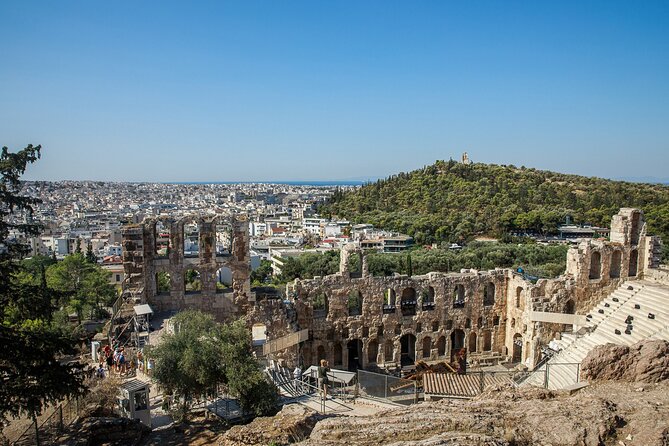
- Dionysus Theater and Herod Atticus Odeon: What to Watch for on the Hill
- Stop 3: Ancient Agora of Athens and the City-Logic You’ll Feel
- Agora Museum: Quick Context to Lock in What You Just Saw
- What to Bring (and What Not to Bring) for a Smooth Walk
- Group Size, Guides, and Why the Right Pace Matters
- Pickpockets and City Reality: A Quick Safety Note
- Who Should Book This Tour (and Who Might Prefer a Different Style)
- Should You Book This Acropolis and Ancient Agora Tour?
- FAQ
- Is the tour in English?
- How long is the tour?
- Where do I meet, and when does it start?
- Are entrance tickets included in the price?
- Do I need to bring ID?
- What is the biggest scheduling challenge on this tour?
- Does the tour run in bad weather?
- Is there a stroller policy?
Quick hits (what makes this tour worth your time)
- Skip-the-ticket-line style entry helps you spend energy on ruins, not queues.
- Licensed local guides are consistently praised for clear explanations and pacing that works in heat.
- Acropolis + Ancient Agora in one run gives you the full “religion, politics, everyday life” picture.
- Monuments like Dionysus Theater and Herod Atticus Odeon show up as real places, not trivia.
- Agora Museum stop is short on purpose, so you get context without getting stuck too long.
- Watch the details: security checks can run 30+ minutes in peak season, and strollers aren’t allowed on-site.
Why This Acropolis-and-Agora Combo Works So Well
The Acropolis is the headline, but the Ancient Agora is the supporting cast that makes the headline make sense. You’ll see the civic heartbeat of Athens—where people gathered, debated, traded, and organized daily life—right after the big religious and ceremonial center on the hill.
I like that this tour doesn’t treat the Agora as an afterthought. It’s built to connect ideas: how a city state functioned, what public spaces were for, and why certain buildings mattered beyond their architectural beauty.
Also, the guide approach is built around clarity. Expect “look at this, then here’s why it was here” moments, plus plenty of chances to ask questions while you’re still standing in front of the evidence.
You can also read our reviews of more museum experiences in Athens



Price and What You Actually Get for $67.58
At $67.58 per person, this tour is mainly paying for expert guidance and time-efficient site access, not for site entry. The tour includes a local licensed guide, an Athens guide magazine, and an Athens map.
Entrance fees are not included (depending on the option you choose), and you’ll need valid ID or a passport to prove age and nationality at the sites. That sounds minor, but it can make a difference if you forget the document on a day packed with security checks.
So the value depends on how you handle tickets. If you line everything up correctly ahead of time, you’re buying less hassle and better direction. If you don’t, you can end up stuck in the wrong queue or delayed at entry—exactly what you’re trying to avoid.
Meeting Point and the 10:30 Start: How to Avoid a Stress Spiral
You meet at Dionysiou Areopagitou 3, Athina 117 42 with a 10:30 am start. Public transportation is nearby, which helps, since getting in and out matters on a walking-heavy day.
Plan around airport-style security. You should expect up to 30+ minutes in peak season, even if everything else runs on time. And once the Acropolis entry window hits, the group can’t wait for latecomers, so I’d treat this like a “show up early” day, not a “roll in right at the minute” day.
The tour runs rain or shine. That’s great for planning, but it also means you’ll want shoes with grip and clothes that won’t soak through if the weather turns.
Stop 1: Acropolis First, With the Key Monuments in a Logical Walk
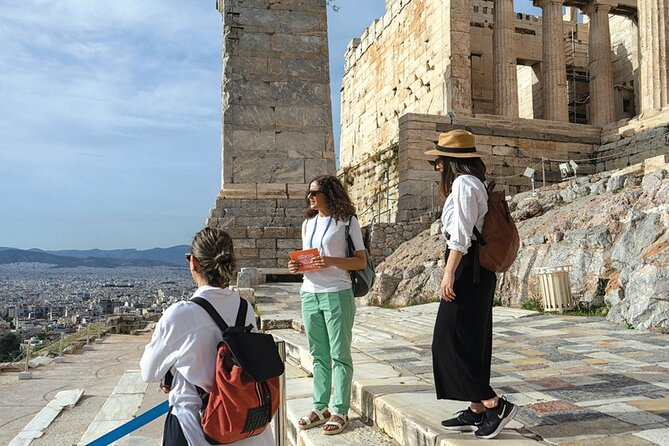
Starting at the Acropolis right after the tour begins is smart because you’re hitting the highest-demand site while your group energy is freshest. The route is built to cover the big monuments—like the Parthenon and the Temple of Nike—plus theater-related landmarks such as Dionysus Theater and the Herod Atticus Odeon.
You’ll also spend real time learning how the pieces relate. Instead of bouncing from one photo spot to the next, the guide connects what you’re seeing to the role it played in Athens. That makes the complex site feel more ordered, even when crowds and slopes make it chaotic.
Even better, the guides are known for adjusting pace and finding shade when possible. You’ll hear lots of historical context, but you’ll also get practical “what to notice right now” direction so you’re not just listening while trudging uphill.
Parthenon Time: Use the View to Understand the Plan
You get a focused look at the Parthenon. From here, the city layout and positioning start to click, and it’s easier to grasp why the Acropolis looked like the center of gravity for ancient Athens.
One practical tip: take photos when the light is best, then stay for the explanation. The “why” sticks better while you’re still oriented on the structure and its surrounding vantage points.





Dionysus Theater and Herod Atticus Odeon: What to Watch for on the Hill
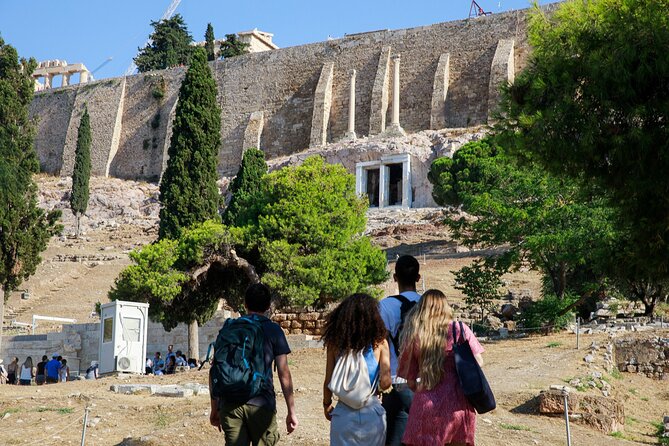
This tour specifically calls out the theater landmarks—Dionysus Theater and Herod Atticus Odeon—and that’s one of the reasons it’s more than the usual Acropolis checklist.
Here’s what you’ll benefit from: the guide helps you see these spaces as cultural technology, not just ruins. Watch how performance spaces were tied to civic identity and public life, and pay attention to how the views and acoustics would have shaped what audiences experienced.
This is also where the pace can feel “sporty.” Expect ramps and steps, plus some steep ground. If you tend to get winded climbing, take your time and keep your water handy.
Stop 3: Ancient Agora of Athens and the City-Logic You’ll Feel
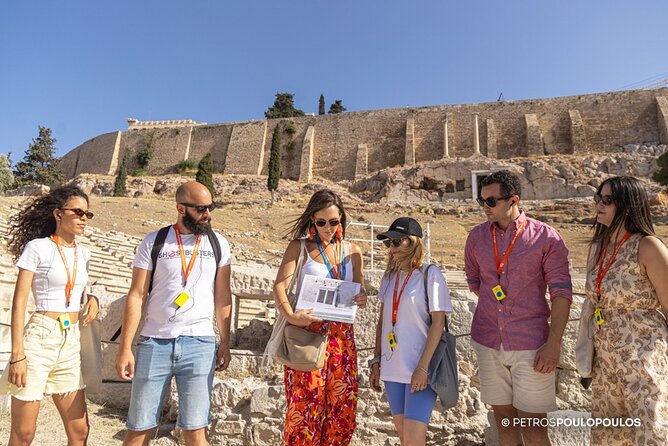
After the Acropolis, the walk brings you to Adrianou 24, Athens 105 55, the Ancient Agora. This shift is exactly what most first-time visitors need: you move from the monumental hill to the everyday core where Athens worked.
What I love about the Agora is that it’s less about one building stealing the show and more about the layout telling you how people moved through public space. You’ll learn what the area was for—where civic and social life overlapped—and that turns ruins into a functioning city map.
You’ll also get the feeling that democracy wasn’t an abstract idea. It lived in places. The guide makes those connections while you’re standing among the remnants.
Agora Museum: Quick Context to Lock in What You Just Saw
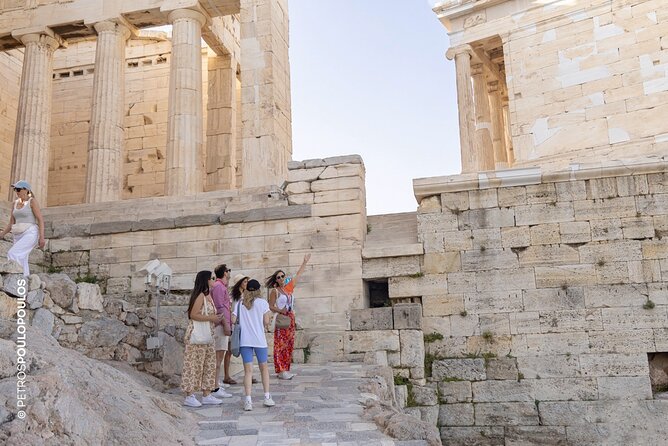
You’ll visit the Museum of the Ancient Agora for about 30 minutes. The goal here isn’t a long museum day—it’s to give you just enough context to interpret the site more accurately when you look back at the structures.
Short stops can be a blessing. If you’re tired from walking, you won’t lose the whole day to indoor pacing. And with the museum content paired to the surrounding ruins, your understanding tends to stick better than if you only “read later.”
One caution: the museum can have renovations and closures. If that happens on your date, you’ll want to lean harder on the outdoor explanations and take your time observing the Agora layout.
What to Bring (and What Not to Bring) for a Smooth Walk

This is a walking tour that involves climbs. I’d plan like you’re going hiking in old stone country.
Bring:
- Sturdy shoes with grip (the stone can be slippery)
- Plenty of water—seriously, bring more than you think you need
- Sun protection (hat/sunscreen) because heat can build fast
Skip:
- Baby strollers on the Acropolis archaeological site (they’re not allowed)
- Anything you’re hoping to stash, since there’s no cloakroom at the side entrance used to enter
If you’re traveling with a baby, the guidance is to use a baby pouch instead of a stroller. That single detail can save your day.
Group Size, Guides, and Why the Right Pace Matters
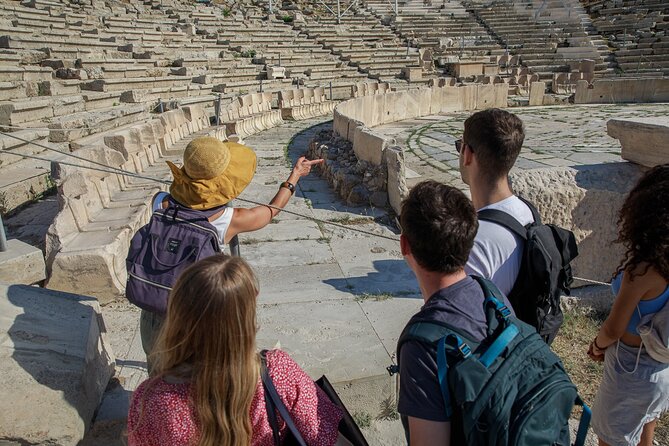
The group is capped at 24 travelers, which is a sweet spot for a walking sites tour. You get enough people for energy, but not so many that you’re fighting to hear the guide.
The guide quality is a standout theme. People consistently praise guides for being patient, helpful, and able to connect the monuments to how we live now. Names that show up in excellent-feedback stories include Pam, Gina, Tina, Helen, Eli, Daphne, Hermes, Angeliki, Stavros, and Nikos.
If you’ve ever visited Athens alone, you know how easy it is to miss the meaning. With a guide, you’re not stuck guessing what you’re looking at. You’re given a framework, and then you can build your own experience on top of it.
Pickpockets and City Reality: A Quick Safety Note
Even on a “classic sites” day, Athens has pickpockets—especially around crowds. Keep your essentials organized and avoid leaving phones and wallets loose in easy-access pockets.
This is one of those common-sense rules that doesn’t ruin the trip. It just helps you avoid a problem you don’t want to deal with mid-exploration.
Who Should Book This Tour (and Who Might Prefer a Different Style)
This tour fits you if you want a guided route that covers both the hill and the city center in one go. It’s also ideal if you want a clear narrative so Athens feels connected instead of random.
You might want to think twice if you:
- Prefer a slower pace with more free time at each monument
- Don’t enjoy steep walks and steps (the Acropolis part is demanding)
- Want a longer museum experience; the Agora Museum stop is brief by design
Should You Book This Acropolis and Ancient Agora Tour?
I think you should book if you want the most value from a short Athens stay and you like understanding what you’re seeing. The combination of Acropolis + Agora is the key: you get the ceremonial center and the civic engine, and your brain makes fewer “wait, what is this?” connections.
Book it with confidence if you’re willing to plan for tickets and timing. The biggest risk isn’t the quality—it’s the day’s friction: strict entry times, security lines, heat, and lots of walking.
If you’re the type who enjoys photos, you’ll still get time for that. Just don’t treat the tour like a sprint. Listen for what the guide points out, then take your pictures while you’re oriented.
FAQ
Is the tour in English?
Yes, this tour is offered in English.
How long is the tour?
It runs about 4 hours.
Where do I meet, and when does it start?
The meeting point is Dionysiou Areopagitou 3, Athina 117 42, Greece, and the start time is 10:30 am.
Are entrance tickets included in the price?
Entrance fees are not included. Depending on the ticket option you choose, you must purchase tickets separately or follow the voucher instructions.
Do I need to bring ID?
Yes. A valid ID or passport is required to prove age and nationality at the sites.
What is the biggest scheduling challenge on this tour?
Acropolis entry times are strict, and the group can’t wait for latecomers. You should also expect airport-style security checks, especially in peak season.
Does the tour run in bad weather?
Yes. It operates in all weather conditions, so dress appropriately.
Is there a stroller policy?
Baby strollers are not allowed on the Acropolis archaeological site, and there’s no cloakroom at the side entrance. A baby pouch is recommended.