REVIEW · ROME
Vatican Museums & Sistine Chapel Skip-the-Line Entry Tickets
Book on GetYourGuide →Operated by Dream Awaits Tours · Bookable on GetYourGuide
The Vatican can feel like a test of stamina, but this ticket makes it calmer. You get skip-the-line entry and a self-guided route through Vatican Museums and the Sistine Chapel, timed for about 3 hours. I like the way you start in the quieter courtyards and work forward through major rooms without being locked to a group pace, and you end with time built in for Michelangelo’s Pietà in St. Peter’s Basilica.
Two things I really like: the separate entrance that helps you avoid the slow snaking crowds, and the freedom to spend extra moments with what actually grabs you (instead of rushing for photos). The main drawback to watch for is the temporary closure of the Sistine Chapel—if entry is restricted on your date, the experience can feel less complete than you expected.
In This Review
- Key Highlights You’ll Feel Immediately
- Skip-the-Line Entrance: Beating the Vatican Crowd, One Gate at a Time
- Your 3-Hour Self-Guided Route (What “Self-Paced” Really Means)
- Pine Courtyard Views: Your Calm Start Before the Art Starts Moving
- Belvedere Torso and the Courtyard-to-Gallery Rhythm
- Gallery of Maps and the Candelabra Gallery: Art With a Side of Wonder
- Pio Clementino Rooms: Ancient Icons Like Laocoön and His Sons
- Tapestry Gallery and the Raphael Rooms: When Painting Becomes the Main Event
- Sistine Chapel: Michelangelo’s Frescoes and the Closure Reality
- After the Chapel: Vatican Corridors and the St. Peter’s Basilica Finish
- Price and Value: Is $84.96 Worth It for a 3-Hour Visit?
- What to Know Before You Go: Shoes, Bags, Dress, and Photo Rules
- Who This Ticket Works Best For (and Who Should Skip It)
- Final Decision: Should You Book This Vatican + Sistine Ticket?
- FAQ
- How long does the Vatican Museums and Sistine Chapel visit take?
- Is this ticket guided or self-guided?
- What’s included with the ticket?
- Can I take photos in the Vatican Museums?
- What items can I bring, and what gets checked?
- Is there a dress code?
- Is the experience suitable for mobility impairments?
Key Highlights You’ll Feel Immediately
- Skip-the-line access into the Vatican Museums and Sistine Chapel using a separate entrance
- Self-paced wandering through courtyards, galleries, and the Raphael Rooms with no guided narration
- Must-see stops like the Belvedere Torso, Gallery of Maps, Pio Clementino Rooms, and School of Athens
- Sistine Chapel artwork focus on Michelangelo frescoes, including Creation of Adam and The Last Judgment
- Time for St. Peter’s Basilica finale, including Michelangelo’s Pietà and Bernini’s Baldacchino
- Simple help in English from a host/greeter (English is listed as the language)
Skip-the-Line Entrance: Beating the Vatican Crowd, One Gate at a Time
The biggest reason to book a skip-the-line ticket here is simple: your time matters. You’ll enter through a separate entrance rather than waiting in the big public queue, which makes the whole day feel less stressful right from the start.
One practical note: you’re expected to be at the meeting point 15 minutes before your scheduled time. That buffer matters because it helps you get checked in and pointed in the right direction before the museum flow changes.
Also, the ticket is designed for self-paced exploration, not a guided tour. You’ll have host assistance for the day, but once you step inside, you navigate the route on your own. For me, that’s a big plus—especially in a place like the Vatican where attention spans vary wildly.
A few more Rome tours and experiences worth a look
Your 3-Hour Self-Guided Route (What “Self-Paced” Really Means)
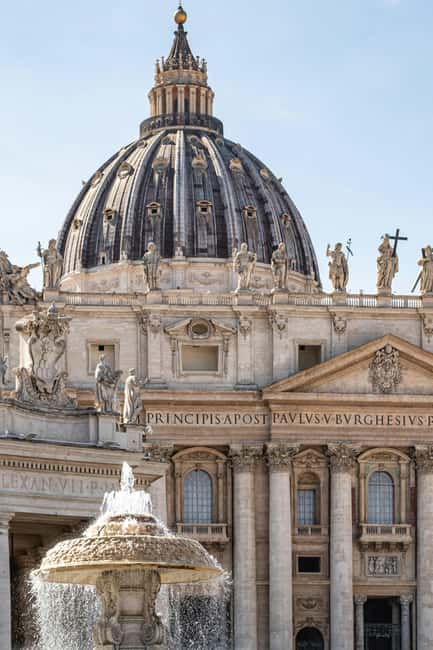
The listed duration is about 3 hours, and that’s the number you should plan around. It’s long enough to hit the highlights, but not long enough to wander every side room the way you might in a small museum.
So here’s the move: treat the route like a guided checklist you control. You’ll follow a logical path through the museums—courtyards, galleries, and key rooms—then move to the Sistine Chapel area, and finally toward St. Peter’s Basilica.
This format is ideal when you want maximum “wow” per minute. It’s less ideal if you want slow, meandering museum time. With limited hours, you’ll likely feel like you’re choosing where to linger.
Pine Courtyard Views: Your Calm Start Before the Art Starts Moving
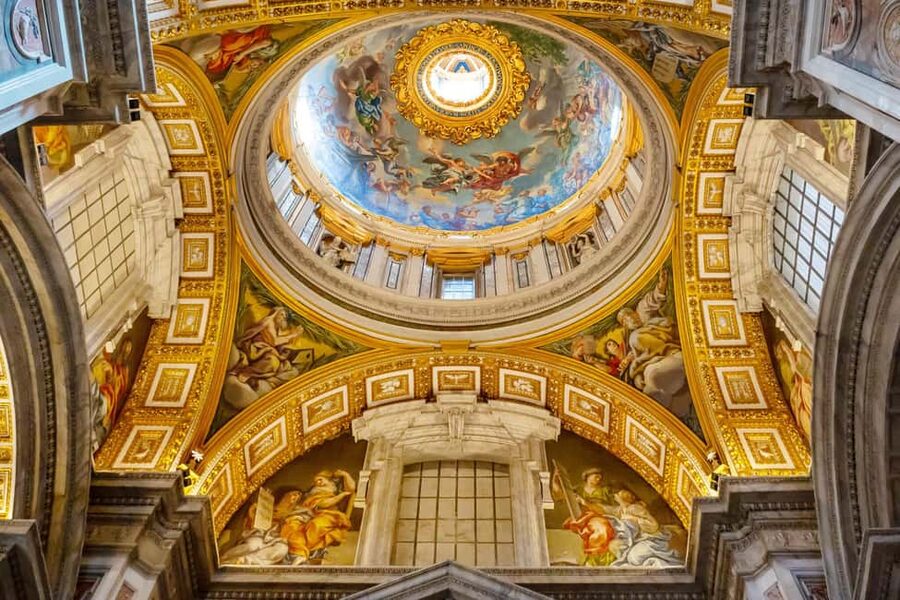
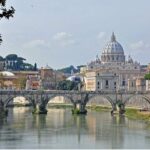
You begin in the Pine Courtyard. Even if you’re not the type to care about courtyards, this one helps. It’s a transitional space where you can orient yourself and get that first visual connection to St. Peter’s Dome.
Then you move on to the next courtyard, the Belvedere Courtyard, where the mood shifts from calm to “I’m standing in art history.” If you’re the type who likes to build momentum, this opening helps you do it without rushing your senses.
If you show up expecting a straight sprint through galleries, you’ll be happy you get this early reset. Courtyard time here isn’t just scenic—it’s a mental warm-up.
Belvedere Torso and the Courtyard-to-Gallery Rhythm
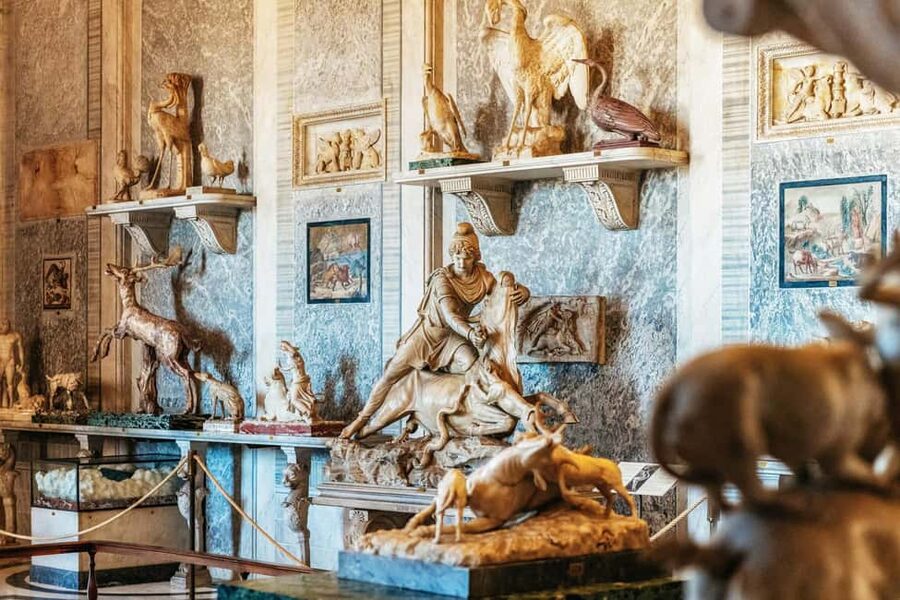
In the Belvedere Courtyard, you’ll see the famous Belvedere Torso. The point of this stop isn’t just that it’s famous—it’s that it’s the kind of sculpture that influenced artists for generations. It’s one of those objects where you can suddenly understand why people keep referencing it.
From here, the route naturally leads into rooms and galleries where the Vatican’s collecting style shows up: ancient sculpture, Renaissance painting, and decorative artistry all in one continuous walk. The pacing works because it keeps changing the “type” of visual experience—stone, then paint, then decorative arts.
Drawback-wise, courtyards can also make you feel like you’re still “waiting for the real stuff.” But once you enter the galleries after Belvedere, the payoff is immediate.
Gallery of Maps and the Candelabra Gallery: Art With a Side of Wonder
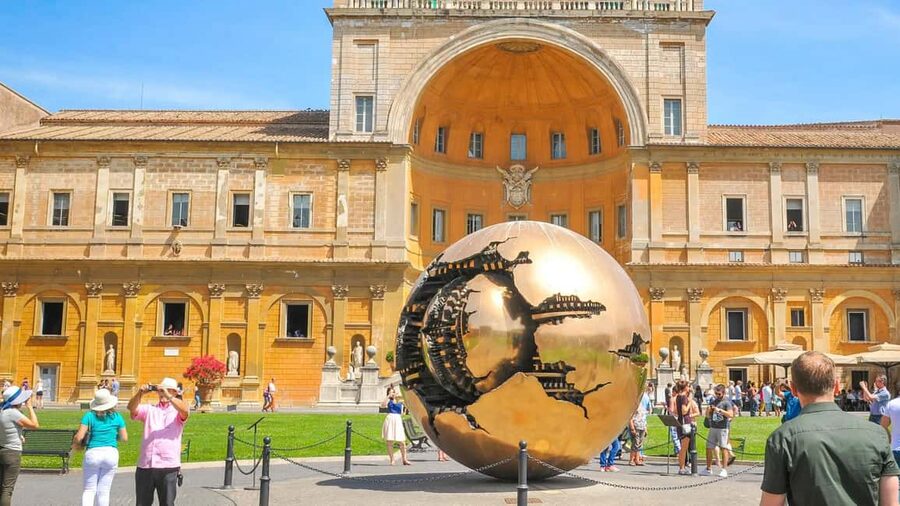
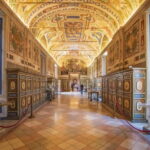
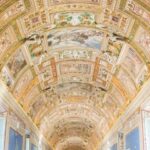
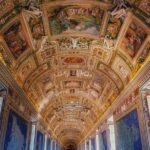
Next you’ll visit the Gallery of Maps. You get beautifully painted maps of Italy’s regions from the 16th century—a reminder that the Vatican’s world isn’t just religious art. This room is also visually satisfying because it blends information with decoration.
After that, the route continues to the Candelabra Gallery. Even if you only have a limited time window, this stop helps you feel how the Vatican treats space like a designed experience, not just a container for objects.
For practical visiting: these rooms are popular. You’ll want a quick plan for what you want to see first, because once the flow thickens, it’s harder to move freely.
You can also read our reviews of more museum experiences in Rome
Pio Clementino Rooms: Ancient Icons Like Laocoön and His Sons
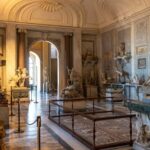
The Pio Clementino Rooms are where ancient sculpture really steals the spotlight. One of the iconic works listed is Laocoön and His Sons.
This is a room category that rewards standing still. The sculptures aren’t meant to be skimmed from a distance. Even in a quick visit, give yourself a minute to take in the scale and emotion, because that’s where the impact lands.
I also like that this stop breaks up the painting-heavy expectation many people have. If you’re coming just for Michelangelo and Raphael, these ancient rooms keep you from getting tunnel vision.
Tapestry Gallery and the Raphael Rooms: When Painting Becomes the Main Event
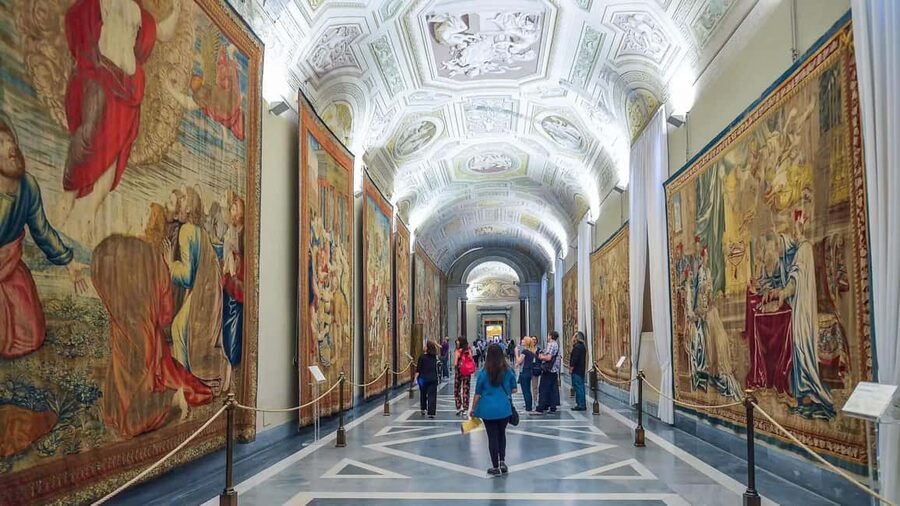
After the ancient rooms, you’ll pass through the Tapestry Gallery, where intricately woven masterpieces are on display. This is a nice change of pace. It’s not the easiest thing to appreciate in a fast walk, but it’s a welcome visual “texture break.”
Then you reach the Raphael Rooms. This is where the Renaissance really takes over. You’ll specifically see Raphael’s frescoes, including The School of Athens.
What makes these rooms so valuable in a self-guided format is that you can control your gaze. You can step close for details, then step back to see the whole composition. Without a timed narration, you can follow your own curiosity—whether that’s architecture, figures, or symbolic connections.
If you only have a short visit, these rooms are a smart “priority spend” because they deliver the kind of recognizable masterpieces that stick in memory.
Sistine Chapel: Michelangelo’s Frescoes and the Closure Reality
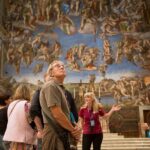
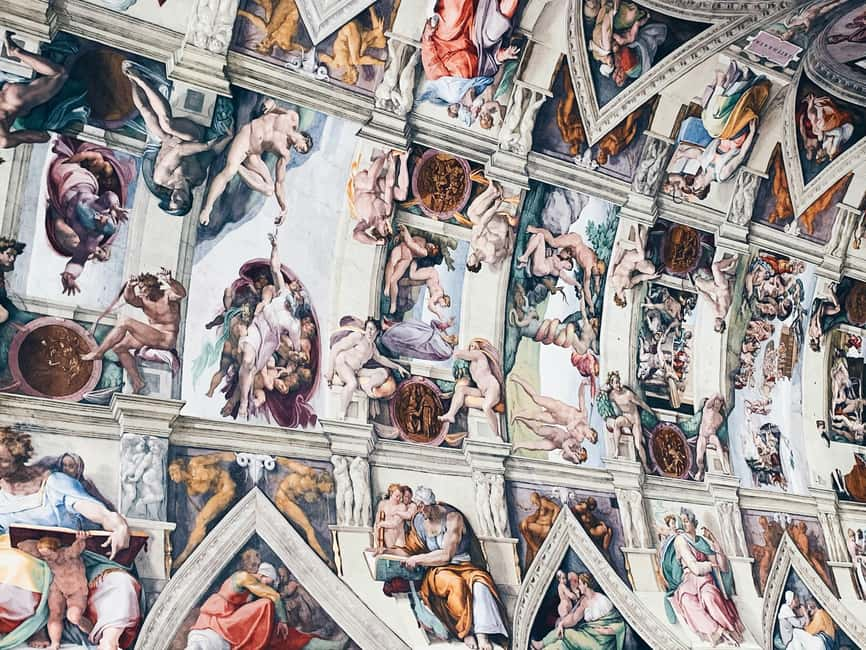
The Sistine Chapel is the centerpiece. You can marvel at Michelangelo’s celebrated frescoes: Creation of Adam and The Last Judgment. Around that, you’ll find works by Renaissance artists like Botticelli and Ghirlandaio.
Here’s the big consideration: the provided info includes a temporary closure of the Sistine Chapel. That means you should plan for the possibility that access may be limited on your visit date. If your ticket assumes full chapel viewing, that uncertainty is the one thing I’d treat as the deal-breaker.
So, how do you protect yourself? Keep your expectations flexible. If the chapel is accessible, you’ll get the experience many people come for. If it isn’t, at least you’ve still walked through major museum rooms and key Raphael spaces before reaching that point.
Also remember: flash photography is not allowed inside the museums. If you’re using a phone camera, keep it distraction-free—no bright bursts.
After the Chapel: Vatican Corridors and the St. Peter’s Basilica Finish
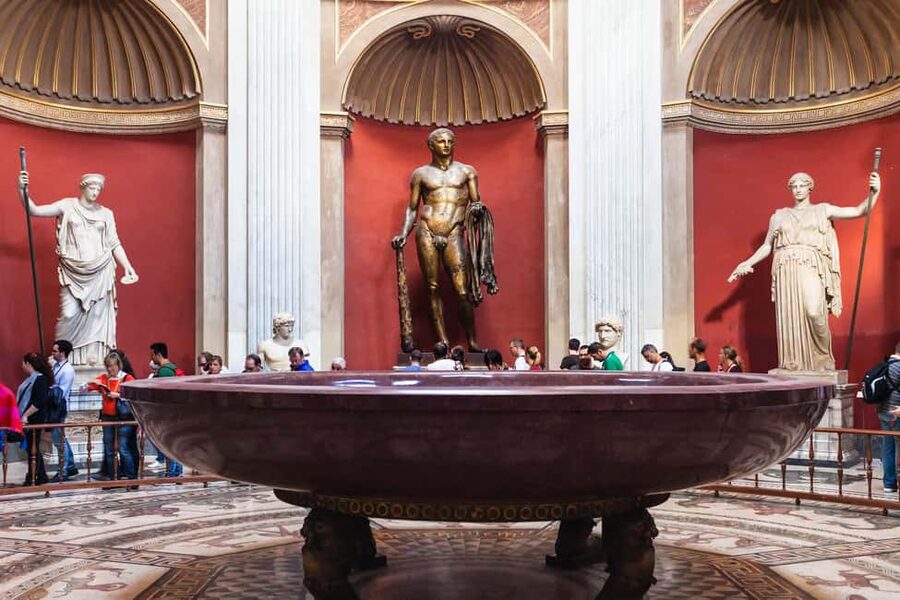
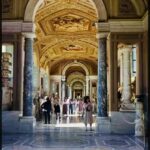
After the Sistine Chapel, the route continues through Vatican corridors with the freedom to explore both major attractions and lesser-known spots filled with unique artworks and historical treasures.
That corridor segment matters more than you might think. It’s your chance to slow down slightly and catch details you might miss if everything was scheduled into a strict guided sequence.
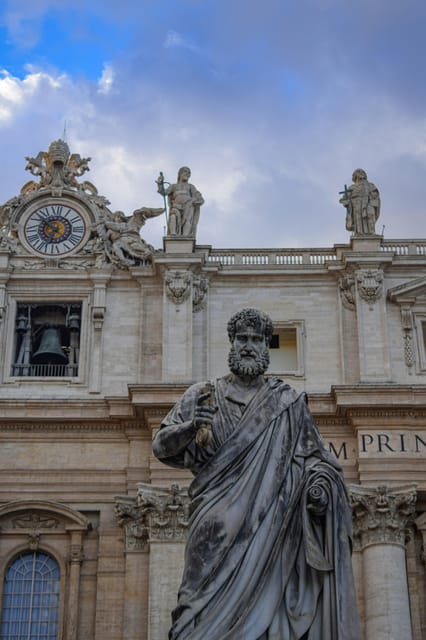
Next comes the end point toward St. Peter’s Basilica. The experience description says it concludes with a skip-the-line entrance to St. Peter’s Basilica, where you can see Michelangelo’s Pietà, Bernini’s Baldacchino, and the basilica’s intricate mosaics and sculptures.
One confusing bit you should not ignore: the information also lists St Peters Basilica under not included. Since you’re seeing two different signals, it’s worth verifying what your ticket gives you for the basilica entry and how that fits into your 3-hour window.
In a nutshell: if you do get basilica access as described, it’s a powerful finale. If not, your main win is still the Vatican Museums and Sistine Chapel portion.
Price and Value: Is $84.96 Worth It for a 3-Hour Visit?
At $84.96 per person, you’re paying primarily for two things: skip-the-line entry and a structured, time-efficient path through top attractions. That price can feel steep if you’re the type who enjoys slow, free-form browsing.
But if your goal is to see major works—Belvedere Torso, Gallery of Maps, Pio Clementino Rooms, Raphael Rooms—and still make it to the Sistine Chapel and beyond, the value shifts. The Vatican punishes wasted time with crowds, and skip-the-line helps you convert paid entry into actual sightseeing hours.
The other value factor is the Sistine Chapel closure note. If access is restricted on your date, the price-to-experience match might feel off, especially since the experience name leans heavily on Sistine Chapel viewing. The smart approach is to book if you’re comfortable with that risk, and to verify the chapel status close to your visit.
What to Know Before You Go: Shoes, Bags, Dress, and Photo Rules
These visits have rules, and knowing them ahead of time saves you from delays at the worst moment.
- Wear comfortable shoes. You’ll be on your feet for a while, moving room to room.
- Flash photography is not allowed. Keep your camera use quiet and simple.
- Backpacks, large bags, and umbrellas must be checked into the cloakroom.
- Modest dress is required for entry into some sites. If you’re visiting in warmer weather, plan light layers that still meet that expectation.
- The experience is not suitable for those with mobility impairments (this is listed clearly).
If you want the day to feel smooth, travel light. Smaller bags move faster through the check process.
Who This Ticket Works Best For (and Who Should Skip It)
This is a strong choice if you want:
- Skip-the-line entry and fast access to the Vatican Museums
- A self-guided visit where you can spend extra time on the pieces that grab you
- A structured route that includes major names like Michelangelo and Raphael
It’s less ideal if:
- You need step-free access or you have mobility limitations
- You want a long, unhurried museum day (the 3-hour duration is tighter than people expect)
- You’re counting on guaranteed Sistine Chapel viewing despite the temporary closure warning
Also, if you’re feeling anxious about logistics, the presence of an English-speaking host/greeter can help you get set quickly. Some English-speaking help is specifically noted, including a mention of Lydia as a helpful guide for getting in smoothly.
Final Decision: Should You Book This Vatican + Sistine Ticket?
If your top priority is to see the Vatican Museums and reach the Sistine Chapel with less waiting, this ticket is easy to justify. The self-guided format is a good match for people who like to control their pace, and the route includes enough major works that you won’t leave feeling like you missed the point.
The one reason to hesitate is the Sistine Chapel closure risk. If your trip can’t flex at all, consider alternatives or double-check chapel access before committing.
If you can handle that uncertainty and you want a fast, high-impact visit, book it. This is one of the better ways to turn limited time into big art memories.
FAQ
How long does the Vatican Museums and Sistine Chapel visit take?
The duration listed is about 3 hours. Starting times vary, so you’ll need to check availability for the slot you want.
Is this ticket guided or self-guided?
It’s self-paced. A host/greeter provides day-of assistance, but it’s not listed as a guided tour.
What’s included with the ticket?
You get skip-the-line entrance tickets and access to the Vatican Museums and Sistine Chapel, plus host assistance on the day.
Can I take photos in the Vatican Museums?
Flash photography is not allowed inside the museums.
What items can I bring, and what gets checked?
Backpacks, large bags, and umbrellas must be checked into the cloakroom.
Is there a dress code?
Modest dress is required for entry into some sites.
Is the experience suitable for mobility impairments?
No, it is not suitable for those with mobility impairments.