
REVIEW · SARAJEVO
Tunnel Museum: Bosnian & Yugoslav Wars Tour with War Veteran
Book on Viator →Operated by Dream Balkans Travel · Bookable on Viator
A tunnel saved Sarajevo’s daily life under siege. This 4-hour English tour strings together the major Siege of Sarajevo sites, with special focus on the War Tunnel Museum and the people who kept the city supplied. I love the air-conditioned car/minivan ride between stops (easy on the feet), and I also like how the guide connects the dots so street corners make sense. One drawback: this is intense, heavy history, and a few stops are emotionally difficult.
You start near Ferhadija, in the heart of Sarajevo, and you’ll move through a mix of front-line sights, memorials, and viewpoints that help you understand how the siege worked in real space. If you’re the type who wants more than dates—if you want how everyday life turned into a war—this tour is built for you.
The pace is steady rather than rushed, and the route is best suited to anyone with moderate physical fitness. You’re doing a handful of walking segments around viewpoints and cemeteries, plus time inside the tunnel museum’s longer presentation.
In This Review
- Key points before you go
- Meeting on Ferhadija: how the tour sets the siege story up
- Markale, the Eternal Flame, and Sniper Alley: reading the siege on real streets
- A quick museum stop and the Sarajevo Haggadah connection
- Sarajevo War Tunnel Museum: Sarajevo Rose, the film, and the one-hour presentation
- Trebević: hotel restaurant 8 and the siege-line mountain views
- Jewish Cemetery Sarajevo: tombstones, bullet stories, and stećak influence
- Yellow Fortress: old Ottoman views toward Soldiers Cemetery and the first president’s resting place
- The guide factor: why war-veteran style storytelling is the real value
- Price and Logistics: what $36.28 buys (and what you should budget extra)
- Who should book this Siege of Sarajevo tour
- Should you book the Tunnel of Hope siege tour?
- FAQ
- How long is the tour?
- Is the tour offered in English?
- Is hotel pickup included?
- Do I need to pay for the War Tunnel Museum separately?
- Where does the tour start and end?
- How many people are in the group?
Key points before you go
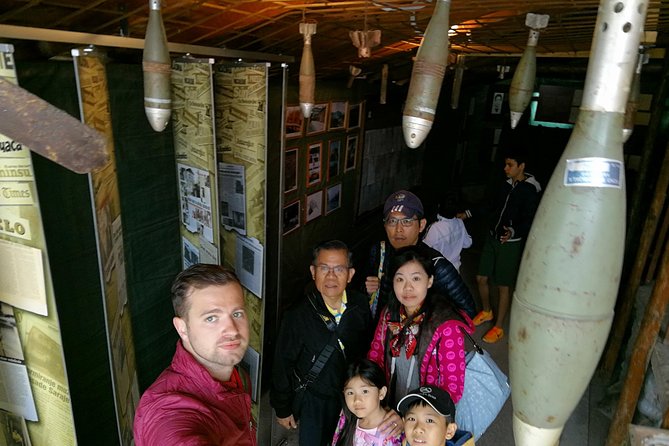
- War Tunnel Museum with a long presentation: you’ll see a short film, then a one-hour program that explains the tunnel’s role.
- Street-level siege sites: Markale, the Eternal Flame, and the sniper-stretch called Sniper Alley are explained in context.
- Trebević viewpoints that match the danger: you get panoramic views from positions tied to the siege line.
- Small group feel: the tour caps at 20 people, and many rides happen in a small van setup.
- More than war-only stops: Sarajevo’s memorials and communities show up alongside military history.
- Tunnel museum admission is extra: the tour includes guiding and transport, but the tunnel ticket is not listed as included.
Meeting on Ferhadija: how the tour sets the siege story up
The tour begins around the Ferhadija pedestrian area, right by the Sarajevo Meeting of Cultures landmark. After a quick intro, your driver-guide leads you to the vehicle and you’re off right away, which matters because it keeps the story from feeling like a checklist.
During the ride—about 25–30 minutes—you get an orientation to the war theme and key buildings you’ll later hear referenced again. This is a smart move for first-timers: when the short movie starts at the tunnel museum, you’re not starting from zero. You already recognize some of what the guide described along the route.
You can also read our reviews of more museum experiences in Sarajevo
- Fall of Yugoslavia, Sarajevo War Tour with Tunnel of Hope Museum and Frontlines
★ 5.0 · 1,314 reviews
Markale, the Eternal Flame, and Sniper Alley: reading the siege on real streets
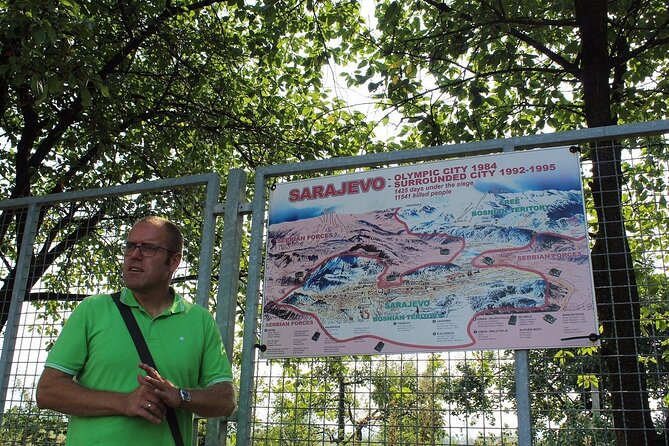
The tour’s city drive is where you start learning to see how the siege shaped daily movement. You’ll stop at several well-known places and your guide ties each one to what civilians faced.
Markale massacres are explained as two separate bombardments during the Siege of Sarajevo, with civilians targeted. It’s the kind of stop that forces you to understand that this wasn’t abstract warfare; it was violence aimed at ordinary people trying to live through it.
Next comes the Eternal Flame memorial, dedicated on April 6, 1946. It honors both military and civilian victims of the Second World War in Sarajevo, which helps widen the frame beyond the early-1990s conflict. If you’ve only heard about Bosnia in the context of the 1992 war, this gives you a fuller timeline of what Sarajevo has had to absorb and remember.
Then you reach Sniper Alley, an informal name tied mainly to Zmaja od Bosne Street and Meša Selimović Boulevard. In practical terms, your guide helps you understand why those streets were dangerous: high-rise buildings gave shooters wide fields of fire, and the boulevard connected industrial zones to the Old Town. That connection is key. When you know where people needed to go, it’s easier to grasp why civilians felt trapped moving through certain corridors.
A useful tip: take a moment at these stops to look both directions along the street. Your brain wants to picture a battle line. The guide pushes you to picture something harder—where people walked to work, to food, to safety, and how that movement became a threat.
A quick museum stop and the Sarajevo Haggadah connection
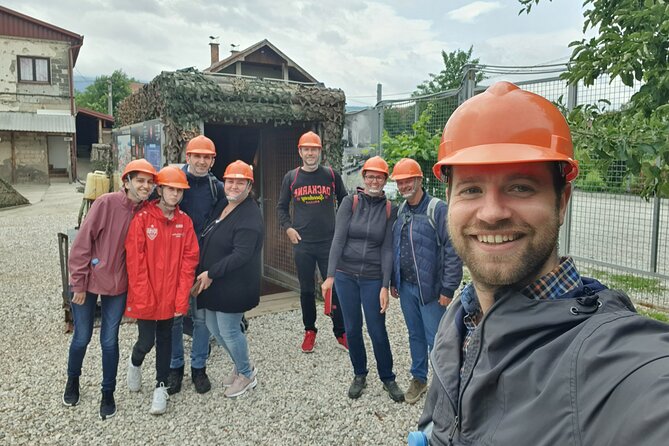
One of the early stops includes a museum context that covers archaeology, art history, ethnology, geography, history, and natural history. The big name here is the Sarajevo Haggadah, described as an illuminated manuscript and the oldest Sephardic Jewish document in the world, issued in Barcelona around 1350, and held by this museum.
Why does that matter on a war tour? Because Sarajevo isn’t only a siege map. It’s a layered city—religions, cultures, and generations—before the guns. This kind of stop gives you a reminder that the fight you’re learning about happened inside a much bigger human story.
It’s also a good breather in the middle of heavy material: you shift from battle patterns to the long sweep of cultural memory.
Sarajevo War Tunnel Museum: Sarajevo Rose, the film, and the one-hour presentation
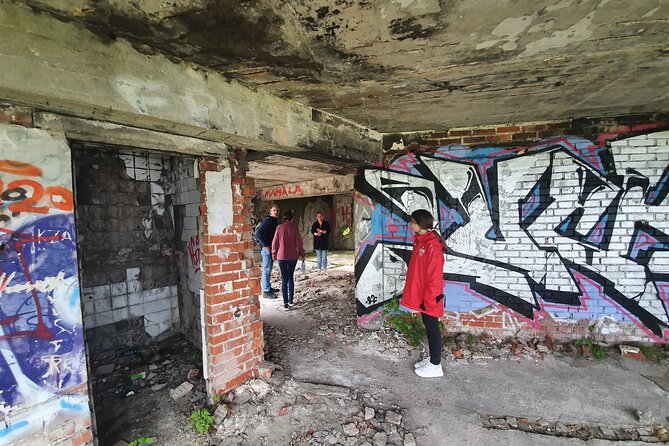
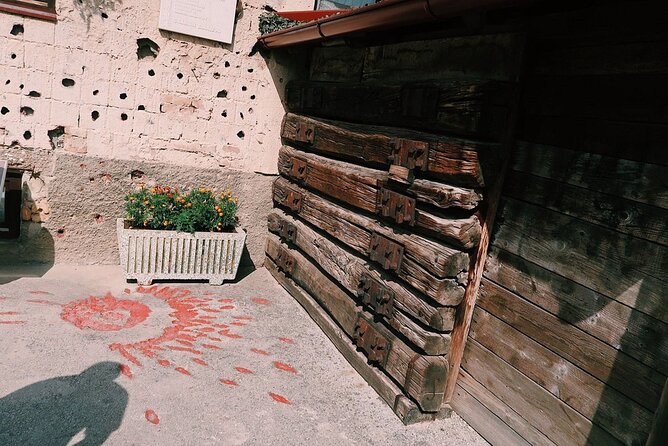
After your drive through the city’s siege-relevant sights, you arrive at the Sarajevo War Tunnel site. Before you go in, you’ll be pointed to a famous marker in front of the entrance called Sarajevo Rose.
Then comes the museum sequence that most people remember most clearly: you watch a short movie first, and then you sit through a one-hour presentation focused on the fall of Yugoslavia, and how the war spread across Slovenia, Croatia, and Bosnia and Herzegovina, followed by the tunnel’s creation and importance.
This ordering helps. The film gives you the emotional and historical momentum. The longer presentation then gives you structure—how and why the tunnel mattered for survival when Sarajevo was surrounded.
What’s especially valuable is that the tunnel isn’t presented as a single heroic fact. Your guide’s earlier route themes feed into the museum content, so you’re less likely to walk away with a vague impression and more likely to understand the tunnel as a practical answer to a specific problem: access to supplies and people in a city that was cut off.
Practical note: since the tunnel museum ticket is not included in the tour price, budget for it separately so you’re not surprised on arrival.
Trebević: hotel restaurant 8 and the siege-line mountain views
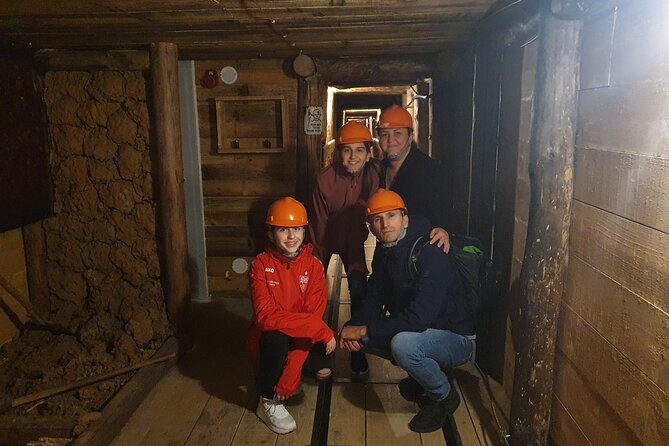
Once you leave the tunnel, the tour moves to Trebević, the closest mountain to central Sarajevo and described as a first line during the siege. This is a viewpoint stop, but it’s not casual sightseeing. You’ll have the chance to see and walk on the terrace area of hotel restaurant 8, and you’ll get panoramic views back over Sarajevo.
The key detail your guide emphasizes is why those views mattered: they align with main positions of the enemy army. Looking out is one thing. Understanding that the sightline is also a weapon makes the scene feel very different.
If you’re traveling in cold or hot weather, plan accordingly. Trebević views are worth it, but the conditions can change quickly once you’re up the mountain.
Jewish Cemetery Sarajevo: tombstones, bullet stories, and stećak influence
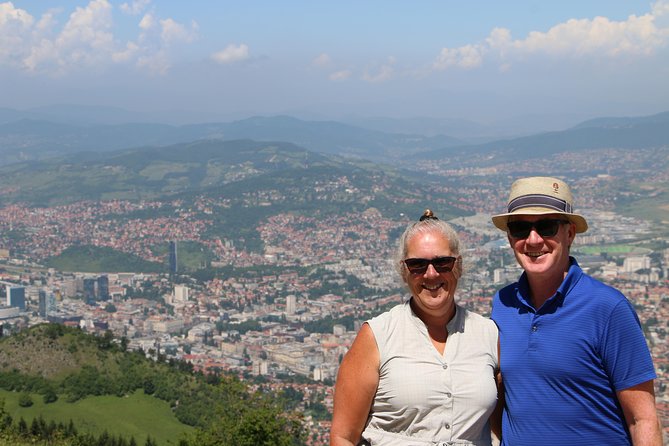
Under Trebević Mountain sits Jewish Cemetery Sarajevo, described as the second largest Jewish cemetery in Europe. This stop is short, but it’s powerful, especially if you pause and read what’s around you.
The cemetery is known for unique shaped tombstones, influenced in shape by medieval Bosnian tombstones called stećak. That blend of local tradition and Jewish community history is a reminder again that Sarajevo’s story isn’t only military.
This is the kind of stop that rewards a slower pace. Even though the visit is brief, you’ll get more from it if you give yourself time to look at the stone shapes and how the place holds memory.
Yellow Fortress: old Ottoman views toward Soldiers Cemetery and the first president’s resting place
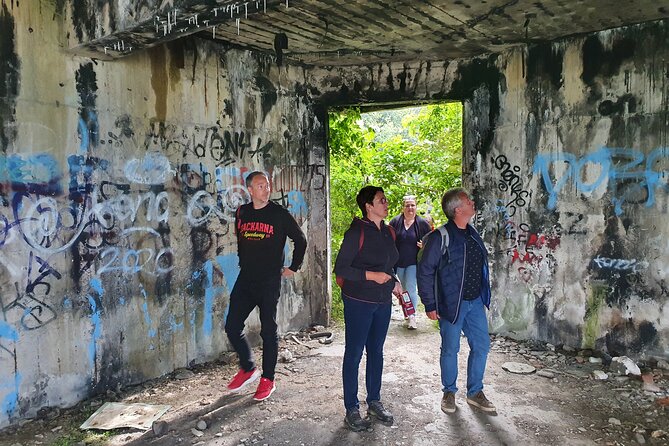
From the Jewish cemetery, you head toward Sarajevo’s Old Ottoman area to visit the Yellow Fortress. Here, you’re guided to viewpoints where you can see Soldiers Cemetery and the resting place of the first Bosnian president.
Like Trebević, this isn’t just a view card. It’s a perspective point that ties geography to remembrance. When you can actually see the areas referenced, the story becomes easier to keep in your head later.
And because the fort is in the older part of town, the atmosphere shifts from museum-style explanation to a more organic street-and-stone Sarajevo feel.
The guide factor: why war-veteran style storytelling is the real value
This tour’s most praised element is the human one: the guide isn’t simply reciting dates. Multiple guides connected to the tour include frontline or war-experience perspectives, such as Adis and Ibrahim in the stories shared, plus other names like Adnan, Mustafa, Haris, Enes, and Asim.
That’s why the city stops land harder. You get small details that explain how normal life became war life: where TV reporters stayed, how defense and later rebuilding worked, and what it felt like to live through uncertainty.
One practical takeaway for you: bring your questions. The format is built for engagement, and the guide’s ability to answer makes a difference, especially when you’re trying to understand a conflict that can feel complicated from afar.
Price and Logistics: what $36.28 buys (and what you should budget extra)
The tour is priced at $36.28 per person and runs about 4 hours. That price, in your favor, includes the driver/guide and transport by air-conditioned car/minivan, plus a hotel pickup option if you’re staying outside Old Town.
What’s not included is listed as food and the hotel drop-off, and importantly, the War Tunnel Museum admission ticket is not included. So your total on-the-ground cost depends on tunnel ticket pricing and any meals you choose.
Still, even with the extra tunnel admission, this is good value if you want more than a drive-by. You’re paying for a guided story across multiple key siege sites, plus a longer museum presentation time. And with a group maximum of 20, you’re unlikely to feel like a nameless number.
Who should book this Siege of Sarajevo tour
Book it if:
- You want to understand how the siege worked in real places, not just history facts.
- You care about the Tunnel of Hope story and how it affected survival.
- You like small-group, Q-and-A friendly guiding, especially with guides who share firsthand perspectives.
Consider skipping it if:
- You prefer lighter sightseeing. This tour covers mass violence and targeted civilian attacks.
- You struggle with moderate walking around cemeteries and viewpoints. The tour notes moderate physical fitness, and you’ll want to feel comfortable on foot.
If you’re traveling with older kids or teens, keep in mind children must be accompanied by an adult, and this content is intense.
Should you book the Tunnel of Hope siege tour?
If you’re coming to Sarajevo and you only have a short time, I’d strongly consider this. It uses smart pacing: city orientation first, then the tunnel museum where everything clicks, then viewpoints where the geography stops being theory.
Just go in with the right mindset. This is a place where memory and sorrow are part of the scenery. If that’s what you want—clear context, strong guiding, and a story that makes Sarajevo’s siege feel real—then booking is an easy yes.
FAQ
How long is the tour?
It’s about 4 hours.
Is the tour offered in English?
Yes, it’s offered in English.
Is hotel pickup included?
Hotel pickup is included if you’re staying outside the Old Town of Sarajevo.
Do I need to pay for the War Tunnel Museum separately?
Yes. The War Tunnel Museum admission ticket is listed as not included.
Where does the tour start and end?
It starts at Velika avlija Laure Papo Bahorete 2, Sarajevo, and it ends back at the same meeting point.
How many people are in the group?
The tour has a maximum of 20 travelers.
You Might Also Enjoy

More Museum Experiences in Sarajevo
- Fall of Yugoslavia, Sarajevo War Tour with Tunnel of Hope Museum and Frontlines
★ 5.0 · 1,314 reviews
More Tours in Sarajevo
- Fall of Yugoslavia, Sarajevo War Tour with Tunnel of Hope Museum and Frontlines
★ 5.0 · 1,314 reviews
More Tour Reviews in Sarajevo
- Fall of Yugoslavia, Sarajevo War Tour with Tunnel of Hope Museum and Frontlines
★ 5.0 · 1,314 reviews
Not for you? Here's more nearby things to do in Sarajevo we have reviewed
- Fall of Yugoslavia, Sarajevo War Tour with Tunnel of Hope Museum and Frontlines
★ 5.0 · 1,314 reviews