REVIEW · ROME
Vatican Museums: Reserved Access Entry Ticket & Audio Guide
Book on GetYourGuide →Operated by Gray Line I Love Rome · Bookable on GetYourGuide
One museum can swallow your whole day. That is why this reserved-entry Vatican Museums ticket is so appealing: you skip the long queue and use an audio guide to move at your own speed. I like the exclusive reserved access (you enter on your selected time slot) and the included 10-language audio guide, which helps you make sense of what you are actually looking at. The main catch is simple: you still have to follow the Vatican entry rules, and if the Sistine Chapel is inaccessible for reasons beyond control, you will not get a partial refund.
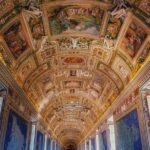
This is also a smart fit for Rome travelers who want “big art” without a rushed guided march. You get access to up to 54 galleries on your schedule for about 4 hours, with major stops like the Sistine Chapel and Michelangelo’s The Final Judgement, the Pio Clementino Museum, and the Candelabra Gallery all on the inside radar. Just note it is not set up for wheelchair users, so plan accordingly.
If you want the Vatican Museums experience, but you hate wasting hours in lines, this is the kind of ticket you should seriously consider.
In This Review
- Key things to know before you go
- Skipping the long line at the Vatican Museums (and why it matters)
- Your 4-hour self-paced flow inside 54 galleries
- The audio guide in 10 languages: how to make it work for you
- Raphael Rooms and the Vatican picture galleries (where names start to matter)
- Michelangelo’s Sistine Chapel ceiling and The Final Judgement
- Pio Clementino Museum and the Candelabra Gallery: sculpture that makes you slow down
- How to get there: Bar Caffetteria L’Ottagono meeting point and timing
- Price and value: is $62 for a skip-the-line ticket fair?
- Who this reserved entry ticket is best for
- Should you book this Vatican Museums reserved-access ticket?
- FAQ
- How long is the Vatican Museums reserved access ticket experience?
- What is included with the ticket?
- Do I need to pick a specific entry time?
- Where do I meet for ticket redemption?
- What do I need to bring on the day of the tour?
- Is transportation included?
- Is the tour wheelchair accessible?
- What happens if the Sistine Chapel is inaccessible?
Key things to know before you go
- Reserved entry time, line-free start: You skip the ticket line thanks to your pre-arranged entry slot.
- About 4 hours of self-paced exploring: You can choose your priorities instead of following a fixed group rhythm.
- Sistine Chapel and The Final Judgement: This is one of the biggest “musts” inside the Museums.
- Pio Clementino Museum and the Candelabra Gallery: Both are classic stops for sculpture lovers.
- Audio guide in 10 languages: English, French, German, Spanish, Italian, plus Japanese, Korean, Chinese, Russian, and Portuguese.
Skipping the long line at the Vatican Museums (and why it matters)
The Vatican Museums are famous for two things: world-class art and lines that can feel endless. The value here is that you do not have to spend your best energy standing around while other people are walking through. With this ticket, your entry is handled through exclusive reserved access, and you go in at the time you select when booking.
That detail matters more than it sounds. The Museums are huge, and 4 hours goes fast once you are inside. If you lose time waiting, you end up skimming. With reserved entry, you can actually use your time to see the big works you came for, rather than just collecting distant glimpses.
You will also like that you can pick a morning or afternoon slot. If you are a morning person, you can start early. If you prefer slower mornings, you can choose an afternoon entry and still get your Vatican Museums fix without feeling like your whole day is gone.
A few more Rome tours and experiences worth a look
Your 4-hour self-paced flow inside 54 galleries
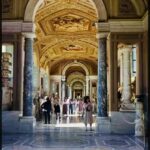
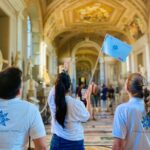
This is not a guided group tour with a live guide leading you step by step. It is self-paced entry with an audio guide (and a built-in audio program you will want to use). In practical terms, you walk when you want, pause when something catches your eye, and jump toward the big highlights you care about.
The Museums span up to 54 galleries, and the “I will see everything” plan is not realistic. So the smart move is to decide what “worth it” means for you. If you love sculpture, you will naturally spend time with the ancient collections. If you love painting, you will want to prioritize the picture galleries and Raphael Rooms. If you like variety, you can hop between ancient art and more modern religious works.
Here is what you can expect thematically, which helps you navigate without feeling lost:
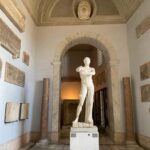
- Ancient Roman and Greek sculpture: statuary is a major focus throughout.
- Etruscan collection: a distinct layer of pre-Roman Italian history.
- Ancient Egypt artifacts: a surprising and often popular contrast to classical art.
- A huge picture selection: including the Pinacoteca Vaticana.
The best part of self-paced exploring is control. You can spend extra time near the works that truly pull you in, and you can skip sections that do not do much for you. In a place this dense, that freedom is a big deal.
The audio guide in 10 languages: how to make it work for you
The included audio guide is one of the strongest reasons to book this option. It comes in 10 languages: Italian, English, French, German, Spanish, Japanese, Korean, Chinese, Russian, and Portuguese. That means you will have the context you need, even if your Roman history knowledge is rusty.
Here is how I’d use it so it actually changes your experience instead of just filling silence:
- Start the audio early so the first rooms click for you.
- When you reach a highlight like the Raphael Rooms or the Sistine Chapel approach areas, pay attention to what the guide is explaining about the art, not just what it is naming.
- If you feel tempted to speed up, pause anyway for one explanation that matches what you are looking at. That is usually what turns “cool art” into “I understand why this matters.”
Because it is audio-led and you are on your own schedule, the guide becomes your pacing tool. In 4 hours, you cannot do everything, but you can absolutely do the most important parts with meaning.
Raphael Rooms and the Vatican picture galleries (where names start to matter)
If you care about paintings, the Museums deliver serious star power. You have access to the Pinacoteca Vaticana (the Vatican’s picture collection), which includes works by major artists such as Leonardo da Vinci, Michelangelo, Caravaggio, Raphael, and Giotto.
Even if you only recognize a few names, the real payoff is learning how these artists fit into the Vatican’s larger world: power, faith, patronage, and artistic technique all meeting in one building. When you add the audio guide, you are not just collecting famous names—you are understanding what you are seeing and why those works became reference points.
If your taste runs toward variety, there is also the Modern Religious Art collection, with works by artists listed including Vincent van Gogh, Paul Gauguin, Marc Chagall, Paul Klee, Salvador Dalí, and Pablo Picasso. That is a fascinating contrast if you assume the Vatican only covers ancient Rome and Renaissance masterpieces. The emotional tone and style change a lot from room to room, and it keeps the visit from feeling one-note.
This is also where you should watch your time. Because the Vatican Museums are so broad, picture galleries can quietly eat your 4 hours. If you only have a half-day, choose a target lane: sculpture-heavy, painting-heavy, or “a bit of everything.” Audio helps you sample deeply enough without overshooting your schedule.
Michelangelo’s Sistine Chapel ceiling and The Final Judgement
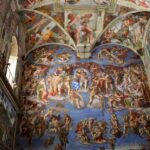
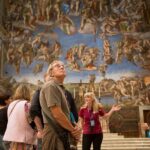
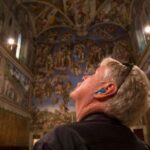
The Sistine Chapel is the big finish for many people, and for good reason. This reserved-entry experience includes access to the Sistine Chapel and highlights Michelangelo’s The Final Judgement.
The practical point: plan to treat the Sistine area like a priority, not a wander-through. The Chapel is a focal point inside the Museums, and it is the kind of place where small details matter. Since you have about 4 hours, you will want to keep your pace steady so you do not arrive at the Chapel area feeling rushed.
There is also an important caution: if the Sistine Chapel is not accessible for reasons beyond control, there is no partial refund. That is not something you can control as a visitor, but it is worth keeping in mind when you are deciding whether you want this ticket.
If you are flexible in your expectations and you understand that access can vary, this is still one of the best ways to experience the Vatican art highlights without burning hours elsewhere.
You can also read our reviews of more guided tours in Rome
Pio Clementino Museum and the Candelabra Gallery: sculpture that makes you slow down
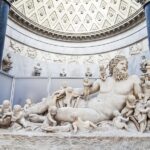
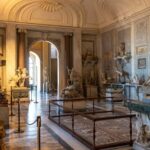
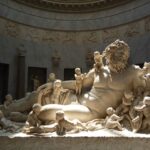
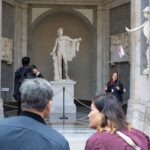
If you like art you can almost walk around, the Pio Clementino Museum is a major reason to be excited. This part of the Vatican Museums is known for its classical sculpture vibe—something about the scale and arrangement makes you feel like you are seeing an exhibition designed around the human figure.
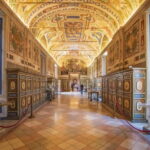
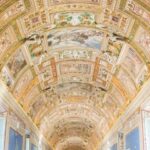
Then there is the Candelabra Gallery, another highlighted stop. Even without you memorizing every detail, galleries like this do something simple: they make you slow down. You start looking at composition, not just subject. That matters because in a huge complex, the “wow” moments often depend on how you physically move through the space and how the exhibits frame your attention.
In a 4-hour window, these are the kinds of stops you should treat as anchor points. If you love sculpture, spending time here gives your visit weight. If you do not care as much about sculpture, you can still use audio to connect what you see to the broader Vatican collections, so it does not feel like filler.
How to get there: Bar Caffetteria L’Ottagono meeting point and timing
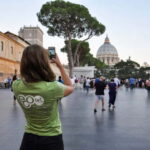
Your meeting point is Bar Caffetteria L’Ottagono in Piazza del Risorgimento, about 400 meters from Metro Line A at Ottaviano. You are asked to be there 15 minutes before your entry time for ticket redemption.
This is not a “show up whenever” situation. The Vatican Museums operate on timed access, and late arrival can lead to extra costs or complications, since it may affect your ability to use the entry slot you booked.
My practical advice: build in buffer time. Even if you know Rome well, trains, sidewalks, and street crossings can still throw off your schedule. Arriving early also reduces stress when you are trying to get organized on the move.
And yes, you should bring the basics. You need your passport or valid ID card. You will either print your voucher or show it to the tour personnel, but either way, do not arrive without the correct ID.
Price and value: is $62 for a skip-the-line ticket fair?
At $62 per person, this is not the cheapest way into the Vatican Museums. But it can be a fair value if you are buying time and clarity, not just entry.
Here is the value logic:
- You are paying for reserved access that helps you avoid hours in line. In a half-day visit, that time saved is the difference between “barely saw the big stuff” and “actually got to the highlights.”
- You also get an audio guide in 10 languages, so you are not paying extra for interpretation. That matters because the Vatican is not just pretty objects. It is a system of art, symbolism, and cultural context.
- The visit is set up to be self-paced, which is ideal if you like to stop, look longer, and avoid the feeling of being rushed.
If you already plan to arrive very early and you are comfortable navigating without any interpretation help, you might see the Museums anyway. But most people do not arrive at the Vatican feeling like they want to solve logistics and art background at the same time. This ticket is designed to cut through both.
The real question is simple: do you value time and an audio guide enough to justify the price? If yes, it is likely worth it.
Who this reserved entry ticket is best for
This experience fits best if you:
- Want to skip ticket lines and start exploring quickly
- Prefer self-paced wandering with structure from audio guidance
- Care about both famous highlights (Sistine Chapel, The Final Judgement) and broader collections (ancient sculpture, Egypt, Etruscan pieces, major paintings)
- Plan to spend a focused half-day rather than losing the whole day to queues
It might not suit you if:
- You need a wheelchair-accessible option, since it is noted as not suitable for wheelchair users
- You are looking for a live, in-person tour guide (this option is ticket + audio)
Also, if you are traveling with family, the audio guide can be a practical advantage because it lets each person move at their own pace while still hearing helpful context.
Should you book this Vatican Museums reserved-access ticket?
I’d book it if you want the Vatican Museums without the line-drama, and you are the kind of traveler who likes to choose what to focus on once inside. The combination of reserved entry time and a 10-language audio guide is exactly what turns a short visit into something meaningful.
If you are the type who can handle slow starts and you do not care much about art context, you could try other entry options. But if you want to get in, get to the highlights, and feel like you understand what you are seeing as you go, this is a solid choice.
If your visit depends heavily on Sistine Chapel access, keep the no-partial-refund note in mind. Otherwise, this ticket is a strong way to make a huge museum feel manageable.
FAQ
How long is the Vatican Museums reserved access ticket experience?
The duration is listed as 4 hours.
What is included with the ticket?
You get tickets to the Vatican Museums with Reserved Access and an audio guide in 10 languages.
Do I need to pick a specific entry time?
Yes. The time of entry is the one selected when booking.
Where do I meet for ticket redemption?
Meet at Bar Caffetteria L’Ottagono in Piazza del Risorgimento, which is about 400 meters from Metro Line A at Ottaviano. Arrive 15 minutes before your entry time.
What do I need to bring on the day of the tour?
You must bring your original passport or a valid ID card. You should also print the voucher or show it to the tour personnel.
Is transportation included?
No. Transportation is not included.
Is the tour wheelchair accessible?
No. It is not suitable for wheelchair users.
What happens if the Sistine Chapel is inaccessible?
If the Sistine Chapel is not accessible for reasons beyond control, no partial refund is provided.