REVIEW · ROME
Rome: Vatican Museum and Sistine Chapel Tour
Book on GetYourGuide →Operated by gids in rome · Bookable on GetYourGuide
You’ll walk the Vatican with a plan. This Dutch-guided tour is built for speed and understanding, from the Vatican Museums to Michelangelo’s ceiling in the Sistine Chapel. I especially love how the route spotlights big-name works and lesser-known rooms like the Hall of the Animals and the Gallery of Maps, and how the guide explains what you’re seeing so the Sistine Chapel feels personal. One real consideration: the experience is about 3 hours, so it can feel a bit long if you’re traveling with younger kids, and the headset setup may not work perfectly for everyone.
After the museums, you’ll descend the imposing Scala Regia toward Saint Peter’s Square, then get help finding your way through the basilica entry area on your own. You’re not left guessing in the swirl of crowds, and you still get free time to explore Saint Peter’s Basilica whenever you’re ready. The tour language is Dutch, so it’s ideal if you prefer a guide who can answer your questions clearly in that language.
For the price, you’re paying for two things that matter in Rome: time saved and interpretation. At $130.28 per person for a skip-the-line visit with headsets and a professional Dutch guide, it’s a strong value if you’d otherwise spend your morning queueing or reading cold labels.
In This Review
- Key things to know before you go
- Meeting at Caffè Vaticano: easy start, clear directions
- Skip-the-line Vatican Museums: why the timing is the real value
- The museum route: Carriage Gallery to the Gallery of Maps
- Carriage Gallery, aka the Garage of the Pope
- Staircase of Momo and the Hall of the Animals
- Laocoon Group and Torso of the Belvedere
- Bath of Nero
- Flemish Tapestries from the school of Rafael
- Gallery of Maps: a geography lesson you’ll feel
- The Sistine Chapel: Creation and Last Judgment in 20 minutes
- Exiting through Scala Regia, Bronze Gate, and the Swiss Guards
- Saint Peter’s Basilica: free entry, Porta Santa, and dome views
- Dress code and rules: what to pack so you don’t get turned away
- Price and logistics: is $130.28 worth it?
- Who should book this Vatican and Sistine tour
- Should you book this tour?
- FAQ
- How long is the Vatican Museum and Sistine Chapel tour?
- Is the Sistine Chapel included in the tour?
- Does this tour include Saint Peter’s Basilica?
- What language is the guide?
- Where do I meet the guide?
- What should I wear and bring?
- Is this tour suitable for mobility impairments?
Key things to know before you go
- Skip-the-line access saves your morning and keeps the pace from turning into a waiting game.
- Headsets are included, which matters in the big, echoing museum halls.
- Sistine Chapel time is short (20 minutes), but the guide’s storytelling makes it count.
- Museum highlights are practical, with stops that lead to the most famous sights without feeling random.
- You end at Saint Peter’s Square with guidance on where to go next for Saint Peter’s Basilica.
Meeting at Caffè Vaticano: easy start, clear directions
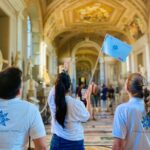
The meeting point is Viale Vaticano 100, right at the top of the steps next to Caffè Vaticano, opposite the Musei Vaticani entrance. Your guide holds a sign with the tour operator’s name, which makes the start simple even if you’re arriving stressed or slightly late.
Plan for a little walking to get into position. Vatican-area streets can be busy, and it’s smart to arrive early enough to settle your bag situation and check your clothing before you join the group.
Also, bring the basics you’ll need for security and entry: passport or ID, comfortable shoes, and a camera if you want photos in the areas where allowed. Sunglasses help too, especially if you step into bright daylight right after museum interiors.
You can also read our reviews of more museum experiences in Rome
Skip-the-line Vatican Museums: why the timing is the real value
This tour is designed to move. You spend about 2.17 hours in the Vatican Museums with a guide, which is long enough to hit major highlights without losing the group to wandering.
The big advantage is the skip-the-line access. In the Vatican, lines aren’t just annoying; they eat the time you could spend actually looking. When your tour is timed well and you’re not stuck at the entrance, you can stay mentally fresh for the big emotional payoff: the Sistine Chapel.
You’ll also get headsets, which help you keep up as the group flows from room to room. One thing to watch: if you’re sensitive to audio quality or you’re in a noisy area with lots of echo, you might find the headset setup less than perfect. Still, having it available is better than relying on shouting over crowds.
The museum route: Carriage Gallery to the Gallery of Maps
The Vatican Museums can feel like a maze if you go on your own. The tour turns the maze into a sequence—clear stops, clear transitions, and context for what matters most.
Here’s what the guide leads you through, and what each stop is good for:
Carriage Gallery, aka the Garage of the Pope
You’ll see the Carriage Gallery, often nicknamed the Garage of the Pope because of the Popemobile presence here. Even if you’re not a vehicle person, it’s a memorable break from pure marble sculpture and a reminder that this complex is still active, not just museum-still-life.
Staircase of Momo and the Hall of the Animals
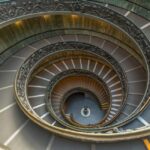
The Staircase of Momo helps break up the route and adds drama as you move through the building’s flow. Then you’ll reach the Hall of the Animals, a fun shift in tone that makes the museum experience feel less like a straight line through one style of art.
Laocoon Group and Torso of the Belvedere
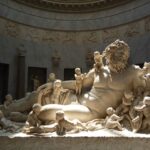
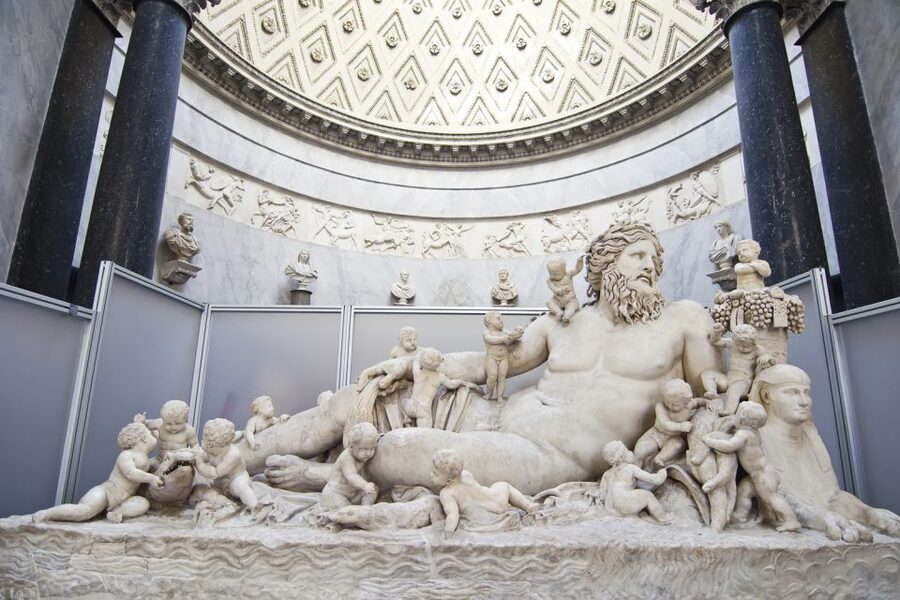
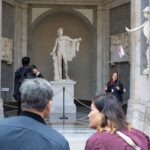
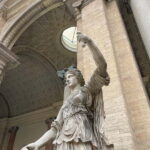
These are the kind of works that look familiar only because you’ve seen photos. Seeing them in person changes the effect—scale and detail are the whole story here. The guide helps you read what you’re looking at instead of treating them like just another room with statues.
Bath of Nero
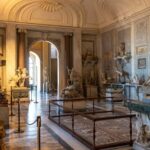
The Bath of Nero is a standout section if you like seeing how different eras and functions overlap in one space. It’s not just about decoration; it’s about understanding how Rome’s story is layered into the museum setting.
Flemish Tapestries from the school of Rafael
You’ll also pass through the Gallery of Flemish Tapestries, linked to designs by the school of Rafael. Tapestries deserve time because they’re made to be viewed as scenes with depth and texture. This stop gives you a change of pace without losing the art focus.
Gallery of Maps: a geography lesson you’ll feel
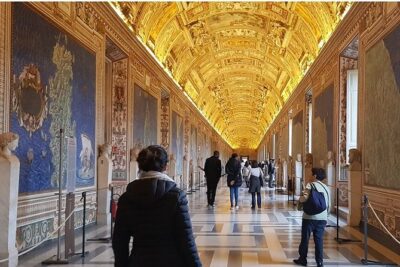
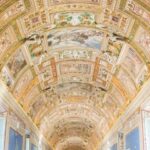
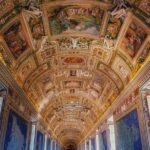
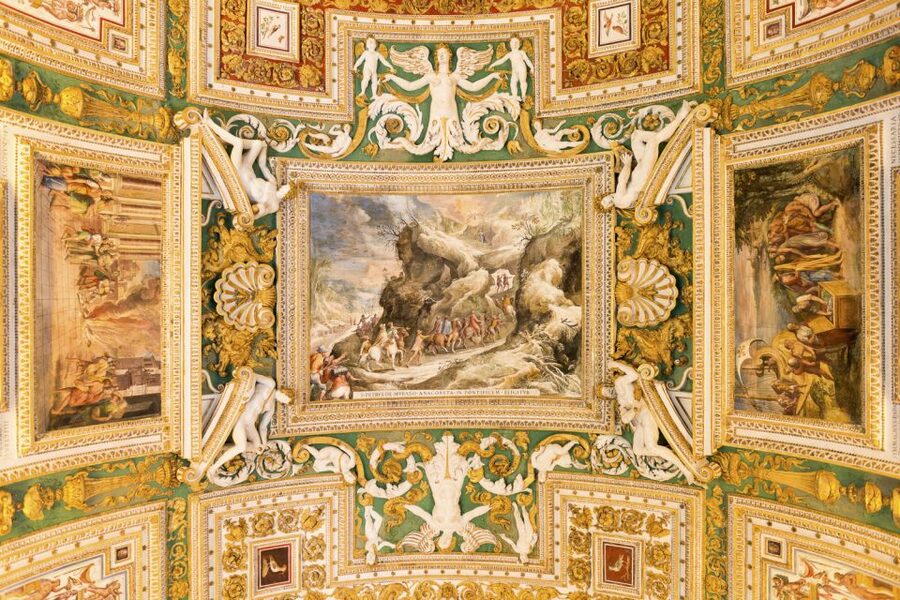
The Gallery of Maps is a major highlight of the route. It’s not only pretty; it’s a way to connect geography, politics, and the Renaissance obsession with mapping the known world. If you like museums that teach while they entertain, this is one of the moments you’ll remember.
The Sistine Chapel: Creation and Last Judgment in 20 minutes
Then comes the heart of it: the Sistine Chapel. Your visit is about 20 minutes, so the key is not to treat it like a quick photo stop. Let the guide’s explanation shape how you look.
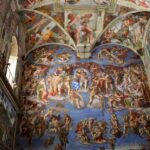
Michelangelo’s ceiling is the big moment. You’ll see the Creation Story, a ceiling work with more than 300 figures across over 500m². That scale is hard to grasp until you’re standing there. The guide also frames the meaning behind what you’re seeing, which helps you spot patterns instead of just appreciating the art for its fame.
The tour also addresses the altar wall painting known as The Last Judgment, completed in 1541. When you know there are two major phases of Michelangelo’s work here, the chapel stops feeling like one image and starts feeling like a long conversation.
You’ll also hear context about the chapel as a place where important Church events take place, including the conclave connection. Even if you’re not traveling for religion, that fact gives the room extra weight.
Important note: you won’t have time to linger forever. The chapel is controlled, and the group has to move. But if you arrive with a sense of curiosity and trust the guide’s direction, 20 minutes can feel like the right amount.
Exiting through Scala Regia, Bronze Gate, and the Swiss Guards
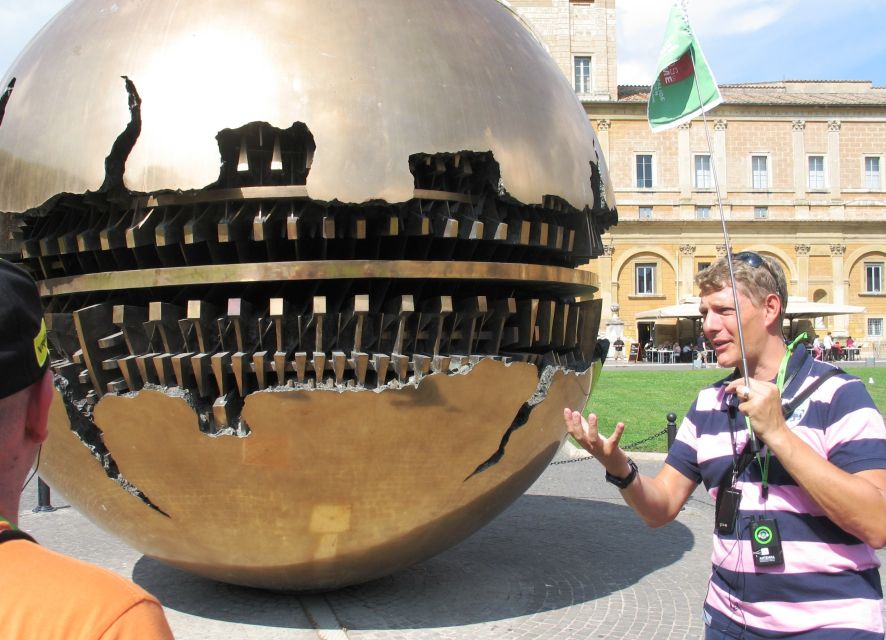
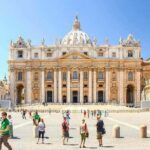
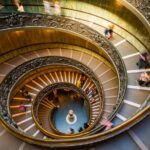
After the Sistine Chapel, you’ll leave the museums via the Scala Regia and continue toward Saint Peter’s Square.
The Scala Regia is imposing on purpose. It’s the kind of stair approach that makes you straighten your posture because the architecture is doing the storytelling. This is a clever way to shift from interior art appreciation to exterior awe.
You’ll also reach the Bronze Gate, where you stand close enough to see the Swiss Guards. This isn’t a deep cultural lesson by itself, but it’s a memorable moment because it’s so visually distinct and so tightly associated with the Vatican’s identity.
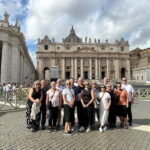
When you finish, your guide bids you farewell in the square and helps you find the route toward security so you can explore the basilica on your own.
Saint Peter’s Basilica: free entry, Porta Santa, and dome views
This specific tour does not include a guided visit inside Saint Peter’s Basilica. Still, you get meaningful help to continue your day.
Here’s the practical part: entrance is free, and you enter via the Porta Santa. Your guide shows you the direction to the metal detectors so you can proceed without getting stuck trying to figure out the flow.
If you want the best payoff from your basilica visit, plan for the dome view. The tip is simple: buy your ticket on the spot at the ticket office. That’s one of those Rome decisions that’s easier when you’re already there and can read the lines and timing.
Also, keep your expectations realistic. Basilica space is massive, and you may not see everything. That’s fine. The key is having a clear next step after the tour ends, and this one gives you that.
Dress code and rules: what to pack so you don’t get turned away
The Vatican is strict in a way that can ruin your day if you ignore it. For the church dress code, no bare shoulders are allowed for ladies wearing shorts and skirts down to the knee. For men, shorts must also be to the knee or you’ll need long pants.
Think of your clothing as your ticket. If you show up too casual, you might end up borrowing or adjusting at the last minute.
Other practical rules to note:
- No flash photography.
- No luggage or large bags.
- No pets.
- No weapons or sharp objects.
- No sleeveless shirts.
- Avoid umbrellas or selfie sticks as long objects are not permitted.
- Keep your bag light enough to pass security smoothly.
Wear comfortable shoes. The Vatican is a walking and standing test disguised as culture.
And one more honest detail: this tour is not suitable for people with mobility impairments, so if walking longer distances or handling stairs is an issue for you, look for a different format.
Price and logistics: is $130.28 worth it?
$130.28 per person sounds steep at first—until you price the time and effort this avoids.
You’re paying for:
- Skip-the-line tickets (so you don’t spend your morning queued at the entrance)
- Headsets (so the guide’s explanations are audible)
- A professional Dutch-speaking guide
- A guided route that hits major museum highlights and then gets you into the Sistine Chapel
If you’re the type who likes the art more when someone points out what to notice, this becomes good value fast. The guide’s role matters because the Vatican is full of famous works that can blur together if you only read captions.
On the other hand, if you’re fluent in Dutch? Actually, the language matters here: this tour is in Dutch. If Dutch isn’t a good fit for you, you’ll likely lose the benefit of the storytelling, which is the main reason to book a guided format.
Also, remember what’s not included: Saint Peter’s Basilica visit is not part of the tour. You can still go in for free afterward, but you’re doing it on your own rather than with the same guide and group pacing.
Who should book this Vatican and Sistine tour
This tour is a great match if:
- You want a guided understanding of the Vatican Museums and the Sistine Chapel rather than a self-guided shuffle
- You speak Dutch and prefer listening to a guide in that language
- You care about pacing and don’t want to lose hours to lines
- You like context: Michelangelo’s two major works here, the significance of the setting, and how the rooms connect
It may be less ideal if you have small kids who need more frequent breaks, because the total experience runs about 3 hours and you’ll be moving through packed areas.
If you’re traveling with anyone who struggles with stairs or long standing times, it’s also not the right pick since it’s not suitable for mobility impairments.
Should you book this tour?
Yes, I’d book it if you’re choosing between a solo ticket and a guided format for the Vatican Museums and Sistine Chapel.
The strongest reasons are the skip-the-line access and the way the route is structured: you go through meaningful museum stops, then hit the Sistine Chapel with time-limited focus, then end in the exact area that makes the next step easy for Saint Peter’s Basilica.
The smart move is to arrive ready: dress code squared away, light bag, comfortable shoes, and a plan to continue in the basilica after the tour ends. With that, you get the most emotional payoff for your morning without spending it stuck in a queue.
If Dutch is a problem for you, consider a tour in your preferred language. And if audio quality is critical, keep in mind the headset setup may not feel perfect for every ear in loud spaces.
FAQ
How long is the Vatican Museum and Sistine Chapel tour?
The total duration is about 3 hours, including approximately 2.17 hours in the Vatican Museums and about 20 minutes in the Sistine Chapel.
Is the Sistine Chapel included in the tour?
Yes. You’ll visit the Sistine Chapel as part of the tour.
Does this tour include Saint Peter’s Basilica?
No, the tour does not include a guided visit to Saint Peter’s Basilica. However, the guide shows you the way to the security area so you can explore the basilica on your own afterward.
What language is the guide?
The guide speaks Dutch.
Where do I meet the guide?
You meet at Viale Vaticano 100 at the top of the steps next to Caffè Vaticano, opposite the entrance of the Musei Vaticani. The guide holds a sign with the tour operator’s name.
What should I wear and bring?
Bring your passport or ID card, comfortable shoes, sunglasses, and a camera. Follow the church dress code: no bare shoulders, and for shorts, keep them to the knee (ladies’ skirts should be down to the knee as well).
Is this tour suitable for mobility impairments?
No. It’s listed as not suitable for people with mobility impairments.