If you want the Vatican without the chaos, this helps. It’s a private route through the Vatican Museums, the Sistine Chapel, and then St. Peter’s Basilica, with fast-track entry so you spend more time looking and less time waiting.
I like two big things right away: first, the skip-the-line setup means you start strong, not trapped in the first wave of crowds. Second, the itinerary threads in quieter, high-impact moments—like the Cortile della Pigna and the artwork in the Pinacoteca—so the day feels more like smart choosing than museum overload.
One consideration: even with a private guide, this is still the Vatican and it can be warm, crowded, and fast-moving. If you’re hoping for a slow, reverent linger everywhere, you’ll need to politely steer the pace early.
In This Review
- Key Highlights I’d Plan Around
- Skip-the-Line Entry and Pickup: Where This Tour Earns Its Money
- Entering the Vatican Museums: Belvedere Courtyard and the Sculpture Stories
- Cortile della Pigna and Pomodoro’s Sphere: The Stops That Feel Personal
- The Fast Museum Rooms: Maps, Candelabras, and Tapestries (Yes, Even the Short Stops)
- Sistine Chapel: Plan for Timing, Not Just Admiration
- The Pinacoteca Stop: Renaissance Painting Without Detours
- St. Peter’s Basilica With a Shortcut: Pietà, Bernini, and the Column Plan
- How Much Is $381.10 Really Worth? (And When It Might Not Be)
- Pace, Breaks, and What to Tell Your Guide Up Front
- Should You Book This Private Vatican Museums Tour?
- FAQ
- How long is the private tour?
- Is hotel pickup available?
- Where does the tour start and end?
- Does this tour include skip-the-line tickets?
- What major places are included during the day?
- Is the Pinacoteca included?
- What should I wear for entry?
- What happens if St. Peter’s Basilica or the Sistine Chapel close for ceremonies?
Key Highlights I’d Plan Around
- Skip-the-line entry into the Vatican Museums to reduce your time stuck in queues
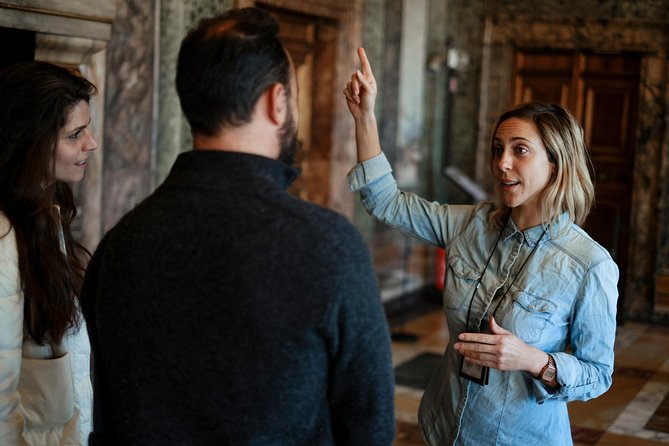
- A Blue Badge private guide for a focused, story-driven route
- Sistine Chapel + Pinacoteca access built into the same outing (no extra logistics)
- “In-between” stops like Cortile della Pigna and the Sphere within a Sphere artwork that most tours race past
- Shortcut access toward St. Peter’s Basilica, including major sights like Bernini’s Baldachin and Michelangelo’s Pietà
- Optional pickup and drop-off (luxury option includes both; comfort includes pickup)
Skip-the-Line Entry and Pickup: Where This Tour Earns Its Money
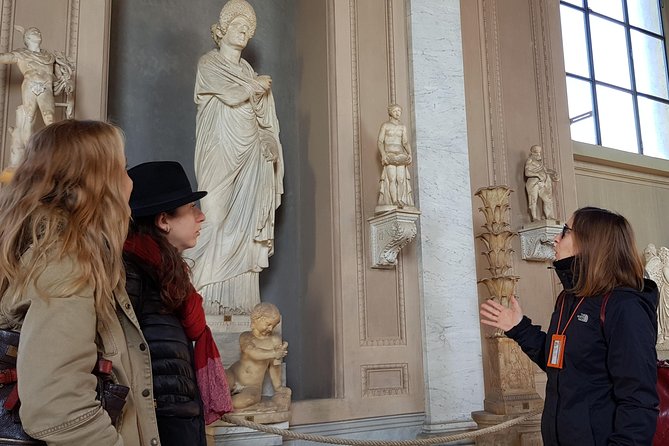
The Vatican Museums are famous for two things: world-class art and long lines. This tour attacks the first problem. You get skip-the-line tickets, and you’re paired with a professional licensed Blue Badge guide for a private walking experience. In practical terms, that means less standing around while other people shuffle forward in the same direction.
Then there’s the transportation piece. If you pick the Comfort option, you get pickup from central accommodations within the Aurelian Walls. Choose the Luxury option and you add drop-off after the tour (from Piazza San Pietro back to your accommodation area). That matters more than it sounds in Rome, because once you’re done at the Basilica area, you’ll want to get out of the “tourist traffic” fast.
Before you go, plan for timing reality. You’re asked to be ready at 9:45 AM, and the Vatican security process can take time—allow at least 20 minutes for checks. Also note that schedules can shift last-minute due to ceremonies, restoration work, or special events.
You can also read our reviews of more private tours in Rome
Entering the Vatican Museums: Belvedere Courtyard and the Sculpture Stories
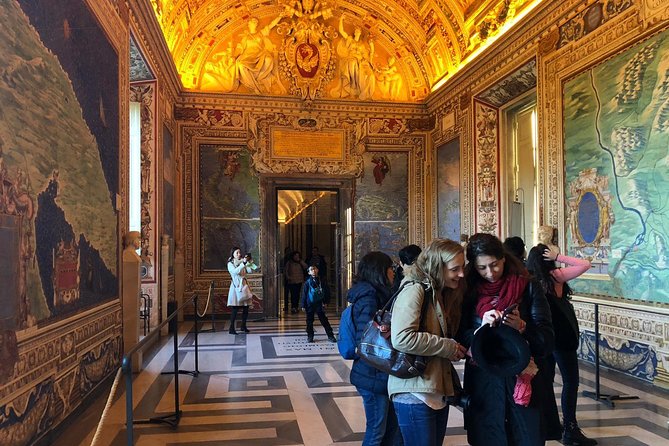
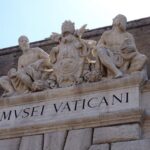
You start at the Vatican Museums area and settle into a route that mixes the blockbuster works with pieces that feel calmer. The tour block for the Museums is about 2 hours, with admission included.
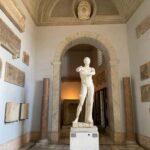
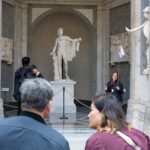
One of the first “wow, slow down” zones is the Belvedere Courtyard—an open-air pause where you can reset after lines and crowds. From there, your guide typically pushes you through rooms with major sculpture and Renaissance echoes, including the Laocoön and the Belvedere Torso. These are not just famous names on a map. They’re the kind of sculpture that explains why artists like Michelangelo kept going back to classical forms.
If you care about art in context, the guide’s job here is huge: the Vatican can feel like thousands of items with no thread. A good guide turns it into a story you can follow—style, symbolism, and why certain works mattered to later artists.
Possible drawback to plan for: this part is still very visual and very packed. Even as a private group, you’ll be moving room to room. Wear shoes that don’t punish you after 90 minutes of walking.
Cortile della Pigna and Pomodoro’s Sphere: The Stops That Feel Personal
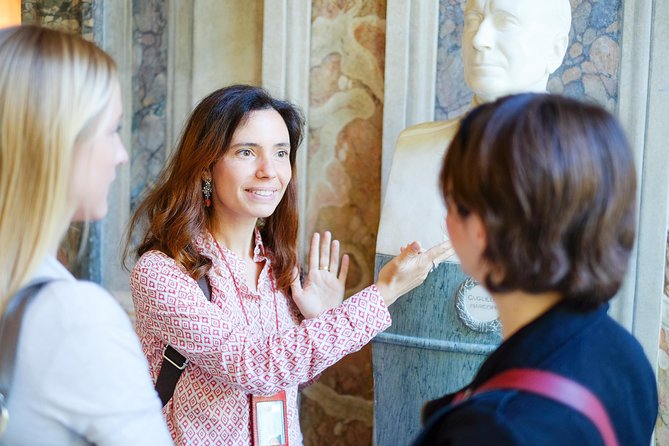
Some of the best moments on this tour aren’t the biggest-ticket headlines. They’re the in-between sights that slow your breathing.
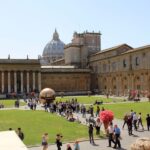
The Cortile della Pigna—the Court of the Pine Cone—is one of those. It’s named after a colossal bronze pine cone from Ancient Rome, and the space itself sits in a calmer pocket between parts of the Vatican Museums and the Apostolic Palace. If you’ve been battling crowd noise, this courtyard can feel like a reset button.
Another stop that stands out is Sphere within a Sphere, the bronze work by Arnaldo Pomodoro. It’s a strong mix of visual trick and symbolism: a big gold sphere containing a smaller, textured one. The light shifts across it, so it doesn’t read the same way twice. It’s the kind of piece that makes the Vatican feel less like a checklist and more like a place where contemporary questions can sit alongside ancient ones.
The Fast Museum Rooms: Maps, Candelabras, and Tapestries (Yes, Even the Short Stops)
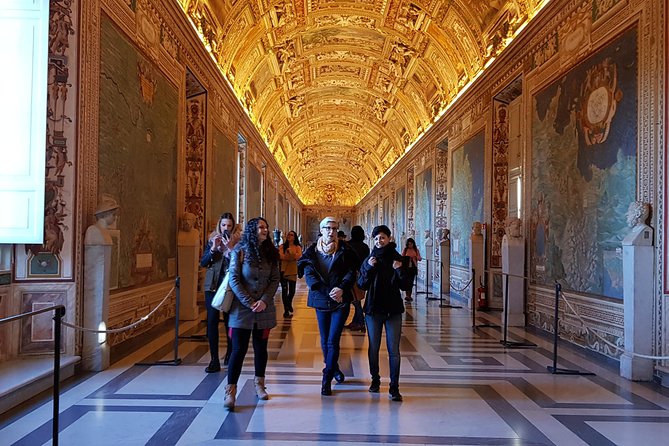
After the main sculpture flow, the itinerary continues with shorter time blocks—by design. In a place this large, “quick” doesn’t mean “unimportant.” It means you’re getting the most meaningful slices without spending your whole day trying to find the next room.
You’ll also pass through or spend time at:
- Gallery of Tapestries: 15th and 16th-century woven scenes connected to biblical and historical storytelling, inspired by designs associated with Raphael’s school.
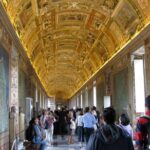
- Galleria delle Carte Geografiche (Gallery of Maps): painted topographical maps of Italy, about 120 meters long, created in the 16th century under Pope Gregory XIII.
- Gallery of the Candelabras: Greek and Roman statues, sarcophagi, and reliefs, including the large marble candelabra that helps divide the space into thematic sections.
Here’s how I’d think about these stops: they’re not just “extras.” They expand what the Vatican Museums are doing. You’re not only looking at religious art. You’re also seeing how the Vatican collected world knowledge, visual storytelling, and the appearance of power through craft.
A practical note: because some of these rooms are time-boxed (minutes, not hours), if you’re the type who wants to read every placard and stare at details, you’ll want your guide’s pacing to match your style. If your group has strong preferences, tell the guide early.
Sistine Chapel: Plan for Timing, Not Just Admiration
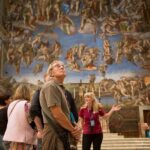
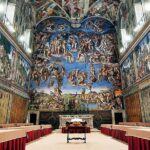
The tour includes the Sistine Chapel, with time set at about 20 minutes. That’s enough to experience the scale and take in the ceiling frescoes by Michelangelo, while also leaving room to see the chapel in context.
Also remember where the Sistine Chapel sits in the whole system of the Vatican. It’s known for official papal ceremonies in the past and for being the setting for conclaves. Even if you’re mostly there for art, that ceremonial weight changes how the space feels.
Dress code matters here. For the Vatican, plan on no shorts or sleeveless tops, and aim to cover knees and shoulders for both men and women. If you’re unsure, bring a light layer you can manage quickly.
One smart tip: if crowds make it hard to see clearly, ask your guide where to stand for the best view. With a private group, your guide can often help you find a workable vantage.
You can also read our reviews of more museum experiences in Rome
The Pinacoteca Stop: Renaissance Painting Without Detours
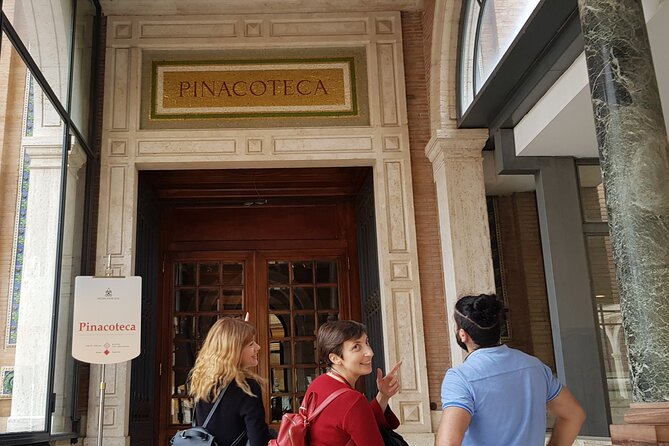
Right near the Sistine Chapel and Raphael-related rooms, the itinerary includes access to the Pinacoteca (described as the Vatican’s collection of contemporary art). This is a big deal for anyone who wants more than ceiling frescoes.
The tour highlights include:
- Giotto (noted as a pioneering Renaissance work)
- Raphael’s last masterpiece
- Rome’s only Leonardo da Vinci painting (as stated for this stop)
- Caravaggio pieces
What I like about stacking this into your tour is that it gives you range. You’re not only seeing religious grand statements. You’re also moving through major turning points in European painting—more human emotion, more technique, more variety in style.
The time here is about 20 minutes, so again, it’s not meant to replace a museum day. It’s meant to point you at the strongest works so you leave with real takeaways, not random impressions.
St. Peter’s Basilica With a Shortcut: Pietà, Bernini, and the Column Plan
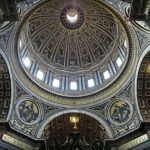
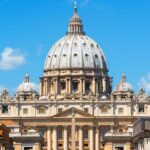
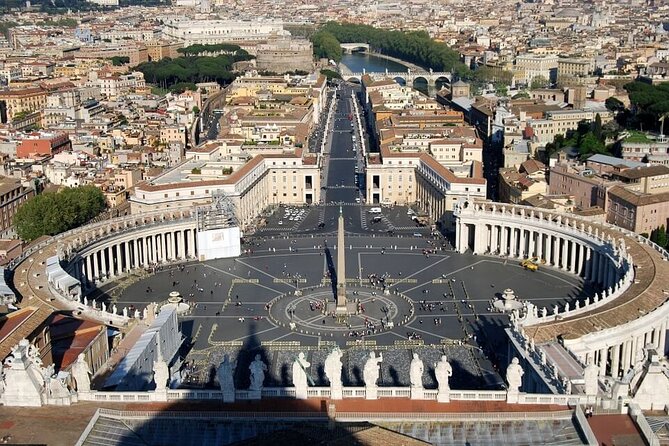
You finish at St. Peter’s Basilica area with about 20 minutes included, and there’s a shortcut to St. Peter’s Basilica (free access) built into the flow.
Inside, the tour focuses on the sights people most want to see, including:
- Michelangelo’s Pietà
- The tomb of Saint John Paul II (Karol Wojtyla)
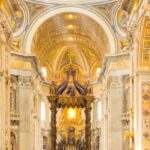
- Bernini’s Baldachin, the bronze canopy over the high altar
- The dramatic elliptical architectural space with 284 Doric columns, laid out during the pontificates of Alexander VII and Clement IX
This is also where your guide’s navigation matters. St. Peter’s is huge, and it’s easy to feel lost. Having someone who directs your steps makes it feel more like a guided route through key visual anchors instead of wandering in marble.
One logistical reality: St. Peter’s Basilica and the Sistine Chapel may close last-minute due to ceremonies. If that happens, the plan includes an extended Vatican Museums tour to help you keep the day productive.
How Much Is $381.10 Really Worth? (And When It Might Not Be)
At $381.10 per person, this is not a budget tour. So the value question is simple: what are you buying besides access?
You’re buying:
- A private guide (so you can ask questions and set priorities)
- Skip-the-line tickets (time saved in the busiest place in Rome)
- Admission and access included for the museum components
- Pinacoteca access included in the same tour block
- Optional pickup and drop-off depending on the option you choose
- A structured route that targets major works plus several stops that add variety
Now, where it might not be worth it: if you’re the kind of traveler who’s happy to wait in line and doesn’t care about pacing, a larger group tour can cost less. The difference is mainly about comfort and efficiency. Private is for when you want less stress and more control.
Also keep your expectations aligned with the time. A 3.5-hour format means you’re seeing highlights, not every room. If you want to spend long, quiet time in every masterpiece, you may feel constrained by the schedule and crowd flow.
Pace, Breaks, and What to Tell Your Guide Up Front
This is where private tours can shine or fall flat, depending on how you manage the day.
If you have mobility needs, the data you provided includes examples of guides arranging seating and helping people navigate stairs and rest stops. That doesn’t mean the Vatican is easy for everyone, but it does mean your guide can work with your situation.
On the flip side, a couple of experiences point to the same lesson: private does not automatically mean slow. If you want more time in the Sistine Chapel area, or you need restroom breaks, say so early. Ask for short pauses instead of waiting until you’re already moving too fast.
And yes—heat can change everything. If you’re visiting in summer or on a muggy day, plan hydration and pace accordingly. Comfortable shoes are not optional here.
Should You Book This Private Vatican Museums Tour?
Book it if:
- You want skip-the-line convenience and a guide to structure the day.
- You care about more than the biggest headlines—like adding Cortile della Pigna, Pomodoro’s Sphere within a Sphere, and the Pinacoteca works.
- You prefer pickup (and ideally drop-off) because the end location near St. Peter’s can be awkward to navigate.
Maybe skip it (or consider a cheaper group option) if:
- You’re highly price-sensitive and okay doing more waiting.
- You need a slow museum day with lots of unplanned stops and long stays in every room.
My bottom line: this tour is built for efficiency with taste—fast entry, strong art priorities, and enough variety to keep the day from turning into one long room-to-room blur. If that matches your style, it’s a very solid way to handle the Vatican.
FAQ
How long is the private tour?
The experience lasts about 3 hours 30 minutes.
Is hotel pickup available?
Yes. Pickup is offered from centrally located accommodations within the Aurelian Walls. The Comfort option includes pickup, and the Luxury option includes pickup and drop-off.
Where does the tour start and end?
The meeting point is Caffè Vaticano, Viale Vaticano 100, 00192 Rome. The tour ends at Saint Peter’s Square, Piazza San Pietro, 00120.
Does this tour include skip-the-line tickets?
Yes. Skip-the-line tickets are included.
What major places are included during the day?
You visit the Vatican Museums, including the Sistine Chapel, and you also go to St. Peter’s Basilica.
Is the Pinacoteca included?
Yes. Access to the Pinacoteca Art Gallery is included.
What should I wear for entry?
Dress appropriately for worship places and museums. No shorts or sleeveless tops. Cover knees and shoulders for both genders.
What happens if St. Peter’s Basilica or the Sistine Chapel close for ceremonies?
The tour notes that closures can happen last-minute. If that occurs, you may receive an extended Vatican Museums tour instead.