REVIEW · MADRID
Prado Museum in Madrid – Guided tour in Italian without queuing up
Book on GetYourGuide →Operated by Todo Tours Gestion SL · Bookable on GetYourGuide
A big museum, a long line, one smart move: skip-the-line access. This guided Prado visit in Italian is built for people who want the highlights and the meaning, not just a quick stroll. You’ll get an expert guide explaining how Spanish masters shaped European art, plus major works from centuries of creativity.
I like that you spend your time looking at the art that actually drives the Prado’s story—Velázquez, Bosch, Goya, and more—guided with context and technique. The main drawback is simple: this is a 1.5-hour sampler, so if you want hours alone in every gallery room, you may find the pace a bit structured.
In This Review
- Key takeaways before you go
- Skip-the-Line Access That Actually Changes Your Visit
- Meeting Next to the Goya Statue (Blue Umbrella Tip)
- 1.5 Hours in Italian: What This Time Window Gives You
- What You’ll See: Prado Highlights Built Around European Art History
- Velázquez’s Las Meninas: Why It’s More Than a Famous Title
- Bosch’s Garden of Earthly Delights: Learning to Read an Over-the-Top World
- The “Spanish Masters Shaping Europe” Angle
- Caravaggio in Madrid: David and Goliath
- Raphael, El Greco, and Goya: The European Mix Comes Together
- How the Guide Makes Paintings Feel Like Stories (Not Just Objects)
- Prado Value: Is $50 for a 1.5-Hour Guided Tour a Good Deal?
- Who This Tour Best Fits (And Who Might Prefer Something Else)
- Practical Notes That Help You Enjoy It More
- Should You Book This Prado Tour?
- FAQ
- How long is the Prado Museum guided tour?
- Does this tour include skip-the-line entry?
- What language is the guided tour in?
- Where do we meet the guide?
- Where does the tour end?
- Is there free cancellation?
- Is the tour wheelchair accessible?
Key takeaways before you go
- Skip-the-line entry means less waiting and more time with the paintings you came for
- Italian live guide keeps the explanations focused and story-driven
- Top masterpieces included like Velázquez’s Las Meninas and Bosch’s Garden of Earthly Delights
- A broader European lens from Raphael and El Greco to Caravaggio and Goya
- Museum backstory included, including how the Prado’s construction was ordered by Charles III
- Wheelchair accessible so more visitors can enjoy the same core route
Skip-the-Line Access That Actually Changes Your Visit
The Prado can be a “great museum, frustrating logistics” kind of place. Even if you’re motivated, waiting in a line eats the most precious thing you have in Madrid: time. With the preferential ticket, the big win is that you avoid the long queues for immediate access, using a separate entrance tied to this tour.
For me, that matters because the Prado is not just one room. You’re choosing a route among many halls, so every minute you save from standing outside is a minute you can put into looking closely at brushwork, subject choices, and the drama in the scenes. And because this is a guided experience, that saved time gets used on the works most likely to make the whole museum click.
You can also read our reviews of more guided tours in Madrid

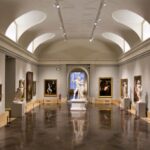

Meeting Next to the Goya Statue (Blue Umbrella Tip)
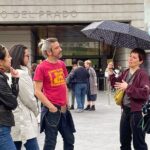
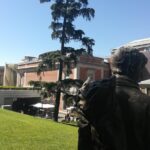
Your tour starts with a clear rendezvous: the guide is waiting next to the Goya statue with a blue umbrella from Todo Tours. That’s handy because the Prado area can feel busy and confusing, especially when you’re trying to match a meeting spot to a time window.
You’ll also want to arrive early enough to get your bearings before the group forms. Once you’re with the guide, the tour ends back at the meeting point, so you’re not left guessing how to get out or where to regroup later.
1.5 Hours in Italian: What This Time Window Gives You
This tour lasts 1.5 hours, and starting times depend on availability. It’s long enough to see the major masterpieces and still get meaningful explanations—short enough that it doesn’t swallow your whole day.
Because the tour is live and in Italian, your experience will depend on how comfortable you are with the language. If you’re an Italian speaker (or you follow art vocabulary easily), you’ll likely enjoy the pace and the way the guide connects the works to the bigger European story. If Italian is new for you, you can still enjoy the paintings, but the commentary will be the part you’ll need to listen for in order to fully benefit.
What You’ll See: Prado Highlights Built Around European Art History
The Prado houses nearly 3,000 works from the 14th to 19th centuries, and this tour is designed to focus your attention on the masterpieces that explain why the museum matters. You won’t try to “cover everything.” Instead, you’ll get the key artworks that anchor the history of European painting—especially how Spanish artists and collectors shaped wider trends.
The guide doesn’t just point and name. You can expect explanations that cover techniques, inspirations, and historical context. That approach is valuable because the Prado’s famous paintings can look like static images if you only treat them as photos. When you understand why an artist chose a pose, a lighting style, or a symbolic detail, the same scene becomes easier to read.
Velázquez’s Las Meninas: Why It’s More Than a Famous Title
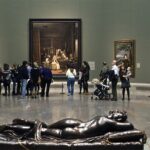
Las Meninas is one of those works people rush to see—and then stand in front of silently, hoping the painting will explain itself. In a guided setting, you get the help you actually need: the guide ties the work to its moment in art history and helps you notice the things that make it challenging and rewarding.
On this tour, Las Meninas is part of the major route, so it’s not treated like a random stop. You’ll have a chance to look, then hear how the painting works on multiple levels—composition, perspective, and the idea of who is being represented. That’s the difference between seeing a “big name painting” and understanding why it became a benchmark.
You can also read our reviews of more museum experiences in Madrid



Bosch’s Garden of Earthly Delights: Learning to Read an Over-the-Top World
Bosch’s Garden of Earthly Delights can feel like sensory overload at first glance. That’s normal. The painting is packed, layered, and strange on purpose, and it’s exactly the kind of work where context makes a huge difference.
With a guide, you’ll be able to slow down and interpret what you’re seeing rather than just absorbing the shock value. You’ll also get the historical framing that helps explain why Bosch’s imagery stuck in European imagination. This is a good stop if you’re new to art history, because the guide can translate the symbols into something you can actually track.
The “Spanish Masters Shaping Europe” Angle
A key theme of this tour is how Spanish masters shaped European art history. That framing is useful because it prevents the Prado from feeling like a list of famous artists. Instead, it becomes a story about influence—who learned what, how styles spread, and why certain themes show up again and again.
If you like your museum visits to connect art to people and power—patrons, politics, and cultural taste—this tour’s approach should fit you well. The guide’s job is to make the Prado’s chronology feel less like memorization and more like understanding.
Caravaggio in Madrid: David and Goliath
Caravaggio’s David and Goliath is included on the route, and that’s a smart choice for a short tour. Caravaggio’s art is all about intensity—dramatic lighting, strong emotion, and a realism that grabs you by the collar.
In a guided visit, you don’t just learn that it’s famous. You learn how it’s built. The guide is set up to talk about techniques and inspirations, so you can look at the painting and recognize the choices that create the tension. For many visitors, Caravaggio is the “aha” moment where European art history stops feeling like a lecture and starts feeling like drama.
Raphael, El Greco, and Goya: The European Mix Comes Together
One of the most satisfying parts of this tour is that it doesn’t box you into “Spanish only.” You’ll see major works connected to Raphael, El Greco, and Goya, plus other European masters included in the Prado’s core collection.
Here’s why that matters: the Prado is famous, but it’s also a bridge. It shows how ideas moved across borders—how artists borrowed methods, competed with styles, and reinterpreted religious, political, and myth-making themes.
The guide also covers the broader museum story. One standout piece of context you’ll hear is an account of the museum’s construction ordered by Charles III. That kind of detail can sound like trivia until you connect it to why the collection exists in the way it does. It helps you understand the Prado as a cultural project, not just a building filled with paintings.
How the Guide Makes Paintings Feel Like Stories (Not Just Objects)
The best thing about this tour is the way the guide links each masterpiece to a bigger explanation. You get live commentary that focuses on technique and historical context, so you’re not left guessing what to look for.
If you’re worried about getting stuck in a long, dry monologue, the guidance style from the experience’s standout guide name—Loreta—is worth noting. Loreta is described as prepared, clear, and passionate, with an ability to explain even complex ideas in simple terms. That kind of teaching style matters because it keeps you engaged and helps the museum feel less intimidating.
You also get a tour rhythm that stays attentive to the group. That’s not a small thing at the Prado. If a guide loses the group, people drift, and the whole experience becomes scattered. With a consistent pace, you get to see more than just famous works—you get to actually understand them.
Prado Value: Is $50 for a 1.5-Hour Guided Tour a Good Deal?
At $50 per person for about 1.5 hours, the value depends on what you’re trying to get out of the Prado. If your plan is to wander independently and you’ll likely spend time in lines, the “skip-the-line through a separate entrance” element can be the biggest value lever.
You’re also paying for something that’s hard to replicate on your own: an expert guide who can point out what matters. The Prado is big, but the guided focus turns your visit into a curated experience without the need to decode everything yourself.
Add in that this is a live Italian tour with skip-the-line entry and you get a clear package: less waiting, more looking, and a structured route through the most important masterpieces. For art lovers who want depth without committing to a half-day, this price can make a lot of sense.
Who This Tour Best Fits (And Who Might Prefer Something Else)
This tour is a strong match if you fall into one of these buckets:
- You want the Prado’s biggest paintings and explanations in a short, guided route
- You’re curious about Spanish art but also want the European connections
- You’re an art novice who prefers clear guidance over self-guided guesswork
- You value time and don’t want to spend your morning trapped in a line
It may be less ideal if you’re the type who wants to slow down and linger in front of every single canvas in the same room for a long stretch. This tour is designed for a focused highlight experience, not a full “I’ll stay here for hours” day.
The good news is that you can use this visit as your foundation. Once the masterpieces are mapped in your mind, you’ll understand where to return on your own later.
Practical Notes That Help You Enjoy It More
- Expect Italian commentary throughout, and plan around your comfort with the language.
- Confirm starting times when you check availability, since they can vary.
- Use the meeting spot as your anchor: next to the Goya statue, with the blue umbrella.
- Since the tour ends back at the meeting point, it’s easy to plan what you do next in Madrid.
And for anyone concerned about movement: the activity is wheelchair accessible, which is important for planning a museum day with fewer surprises.
Should You Book This Prado Tour?
If your goal is a high-impact Prado visit—big masterpieces, real explanations, and no line stress—then I’d book it. The combination of skip-the-line entry, a professional live guide, and a focused 1.5-hour route is built for efficiency without feeling like you’re rushing through art.
I’d especially recommend it if you want to understand why these paintings matter, not just see their titles. The museum can overwhelm you if you let it. This tour gives you a guided structure, a European-art framework, and practical context you can carry with you as you explore.
FAQ
How long is the Prado Museum guided tour?
The tour lasts 1.5 hours. Starting times depend on availability.
Does this tour include skip-the-line entry?
Yes. You get skip-the-line tickets for the Prado Museum, using a separate entrance.
What language is the guided tour in?
The live tour guide speaks Italian.
Where do we meet the guide?
Meet the guide next to the Goya statue. The guide will be holding a blue umbrella from Todo Tours.
Where does the tour end?
The activity ends back at the meeting point.
Is there free cancellation?
Yes. Free cancellation is offered up to 24 hours in advance for a full refund.
Is the tour wheelchair accessible?
Yes. The activity is wheelchair accessible.
If you tell me your travel dates and whether you prefer Spanish or Italian museum commentary, I can help you decide if this timing and language fit your day in Madrid.