REVIEW · SEKI
Seki: Samurai Knife Making Experience at the Knife Museum
Book on GetYourGuide →Operated by MOST JAPAN · Bookable on GetYourGuide
Seki’s knife workshop hits different. You’re not just watching blade making—you’re hands-on at G. Sakai’s workshop and then you actually test your knife right away on fresh vegetables. What I love most is the way the day moves from crafting (polish, sharpen, engrave) to proof (the cut), with guides like Hiro plus instructors Sumi and Yoshi keeping it calm and clear. One consideration: the process takes time, so you may run over the day’s posted pace.
I also liked the built-in culture layer. You get to see how blades fit into Seki’s knife-making world through the Knife Museum, then you shift into samurai sword context at the Seki Swordsmith Museum. It feels like the work and the meaning are connected, not separate “tour stops.” The only trade-off is you should plan your schedule around a full day rather than squeezing in much else.
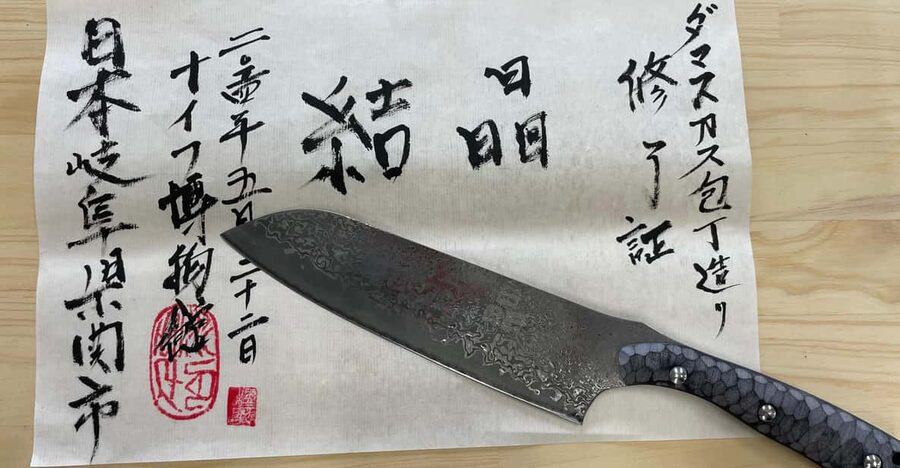
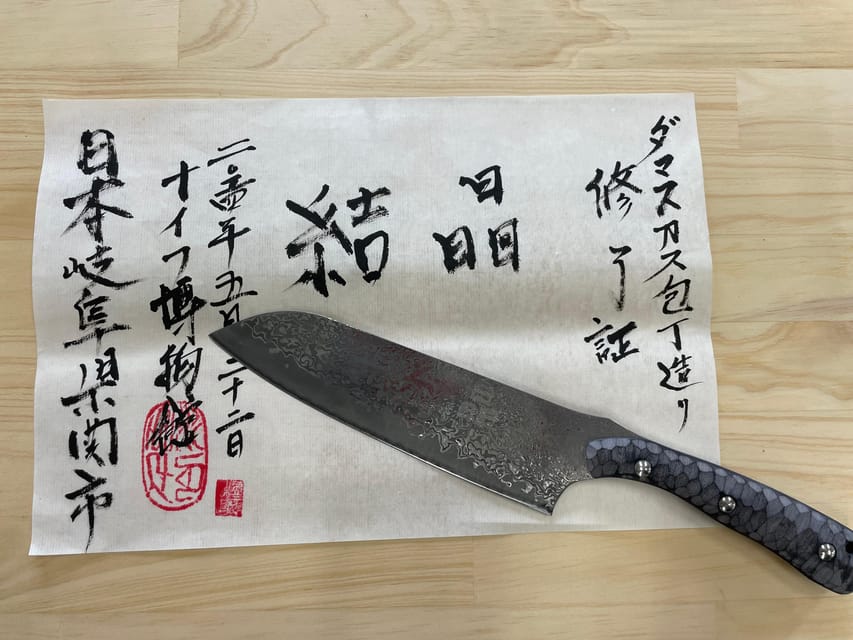
If you want a souvenir, this is that—but also more. You’ll leave with a limited-edition mini gift and certificate, and you’ll walk away proud of something useful.
In This Review
- Key moments that make this day worth it
- Why Seki in Gifu beats a quick stop for knife lovers
- Getting from Sekitomioka Station to the G. Sakai Knife Museum
- Inside G. Sakai’s workshop: what you actually do with your hands
- Polishing, etching, assembling, sharpening: the slow craft you’ll remember
- The cut test on fresh vegetables: where the knife earns its keep
- Knife Museum time: rare blades and the “how this exists” lesson
- Seki Swordsmith Museum: samurai sword history in plain human terms
- Lunch in Seki: Japanese food after you earn your appetite
- Your keepsakes: the knife, plus the little extras that make it feel real
- Price and value: is $322 per person fair for a full-day craft?
- Who should book this (and who should skip it)
- A simple day plan you can picture before you go
- Should you book the Seki knife-making experience?
Key moments that make this day worth it
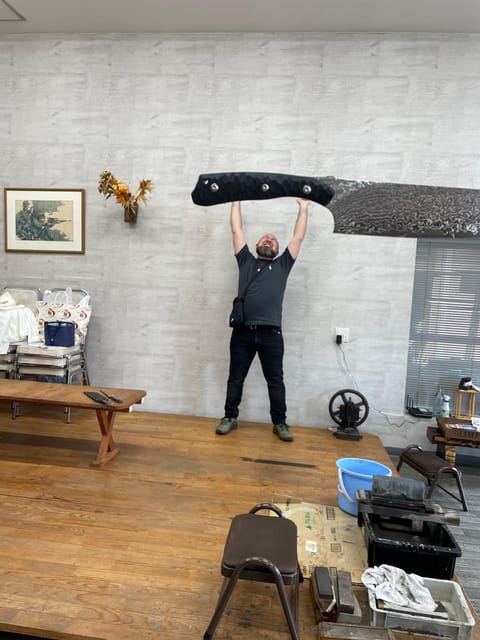
- Your own personalized kitchen knife made from a Damascus-style set of blanks
- Name engraving using special techniques for kanji/kana-style writing
- Cut test on fresh vegetables to check feel and performance
- Knife Museum browsing with rare, unique blades and a serious collection
- Swordsmith Museum context on Japanese swords and Seki’s role
- Japanese lunch after the workshop (often sushi or eel, depending on the day)
Why Seki in Gifu beats a quick stop for knife lovers
Seki City, in Gifu Prefecture on Honshu, is known as a serious hub for cutlery. It’s not just branding; the region has long been tied to sword-and-knife craftsmanship. The city is also easy enough to reach for a day trip from Kyoto—about 1.5 to 2 hours by train—so you can add this without relocating.
What makes Seki special for you is the combination of “make it” and “understand it.” Many experiences end at the workshop bench. Here, you also get museum time so you can place your knife in the bigger story: how Seki’s craft tradition grew, how swords relate to knife culture, and why polishing and sharpness matter so much.
And yes, there’s a practical reason this kind of day tour works: your hands learn what your brain can’t. Once you’ve polished and sharpened with guidance, terms like sharpness, edge geometry, and finish stop being abstract. They become something you can feel.
Getting from Sekitomioka Station to the G. Sakai Knife Museum
You meet at Sekitomioka Station, with pickup by car for the workshop route. The session starts when your train arrives around 10:06 AM, so the day runs efficiently from the first minutes. Since the group is small—limited to 5 participants—you’re not stuck waiting your turn or split into a big crowd.
This first transfer matters more than you’d think. In a place like Seki, you’re likely to be off the main tourist routes. A driver and an English guide like Hiro help you get there with less stress, so you can focus on the experience instead of navigation.
A quick practical note: wear something you can concentrate in. Even though you’re not doing a blacksmith marathon, you will be working through multiple stages—polish, etch/engrave, assemble, sharpen—so comfort helps.
Inside G. Sakai’s workshop: what you actually do with your hands
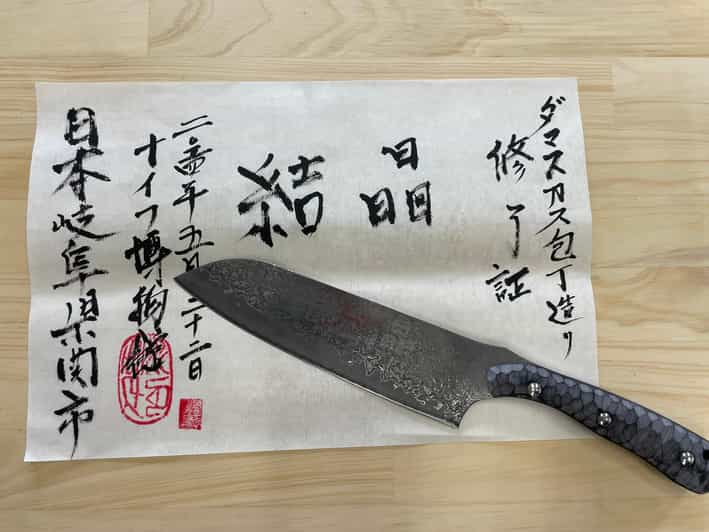
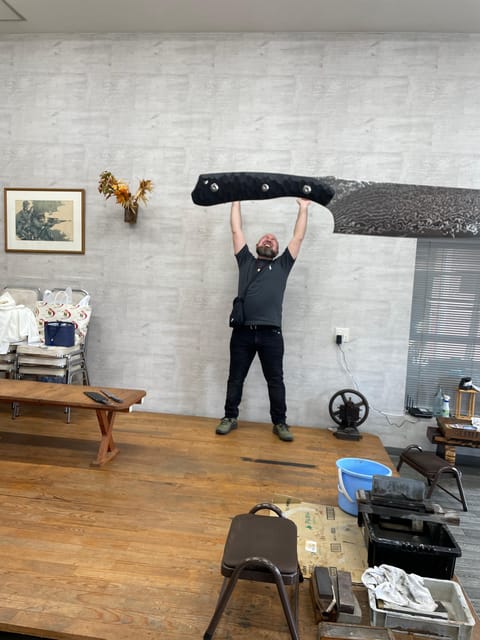
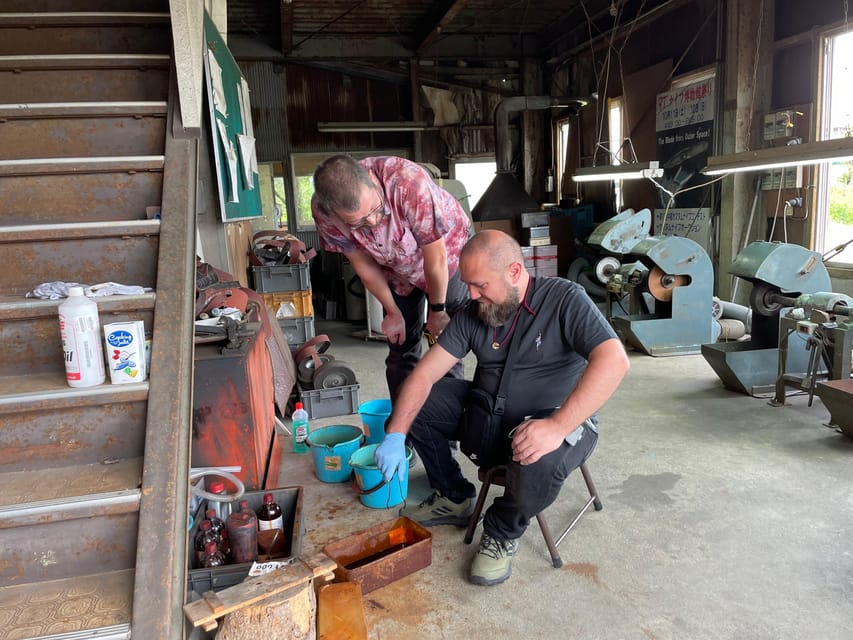
At the G. Sakai Knife Museum, you join a guided session and workshop that lasts about 2.5 hours. This is the heart of the day: you make a personalized Damascus kitchen knife from start to finish, with a master craftsman who has decades of knife-making experience.
The workshop flow is not rushed. In the best moments of the day, instructors like Sumi and Yoshi guide you step-by-step so you understand what each stage changes. From what you’ll be taught, polishing isn’t just cosmetic—it affects how the blade feels in your hand and how it performs when cutting.
You’ll also etch or engrave your name on the blade using a special technique. Several participants specifically mentioned learning to write their names in kanji (and sometimes kana), including attention to what the characters mean. If you’ve ever wanted a keepsake that isn’t just stamped on a tag, this part is why the knife feels personal.
One more detail that helps you set expectations: you’re working with a set of options (blanks/styles) rather than creating something totally freeform. Some participants noted there aren’t endless varieties. Still, within those choices, you get to craft a knife that’s truly yours.
Polishing, etching, assembling, sharpening: the slow craft you’ll remember
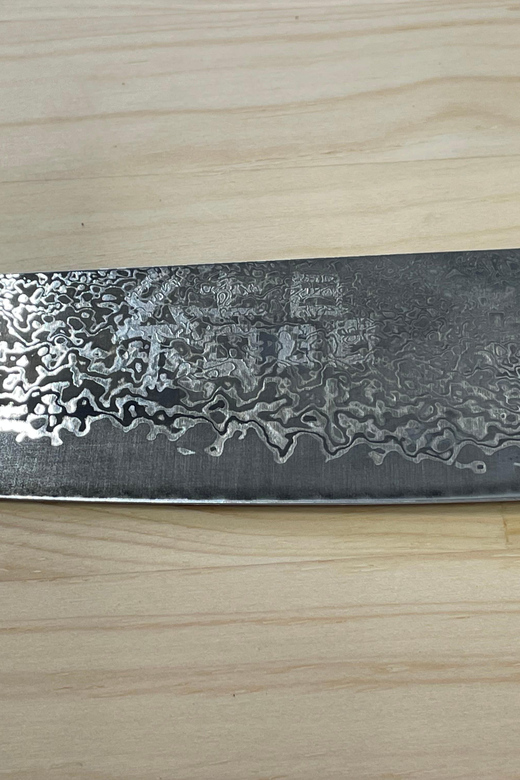
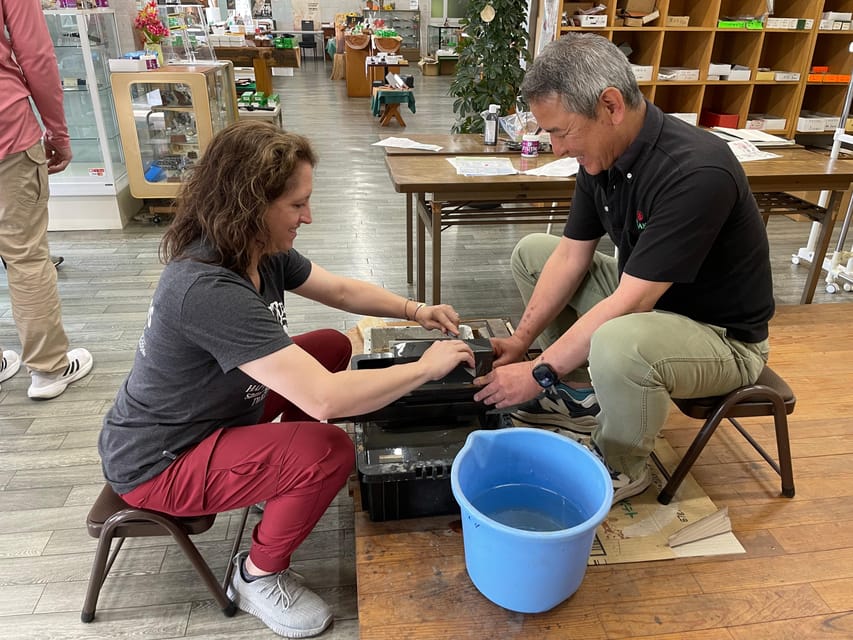
This is where the day becomes more than a “tour.” You’ll go through multiple stages: sharpening guidance, polishing time, and the name transfer/engraving process. You’re not just assembling pieces—you’re learning the mindset behind making sharp tools.
Sumi and Yoshi (and Hiro as the guide) also help with pace and language support. More than one person mentioned clear English and patience during instruction, plus lots of encouragement. That matters because knife work is fine-control work. If you feel rushed or intimidated, you lose the point of doing it.
Also: the process is long enough that you should treat it as the main event of your trip day. Some people ran over the quoted schedule. Plan a relaxed rhythm for the rest of the afternoon so you don’t feel like you’re chasing clocks.
The cut test on fresh vegetables: where the knife earns its keep
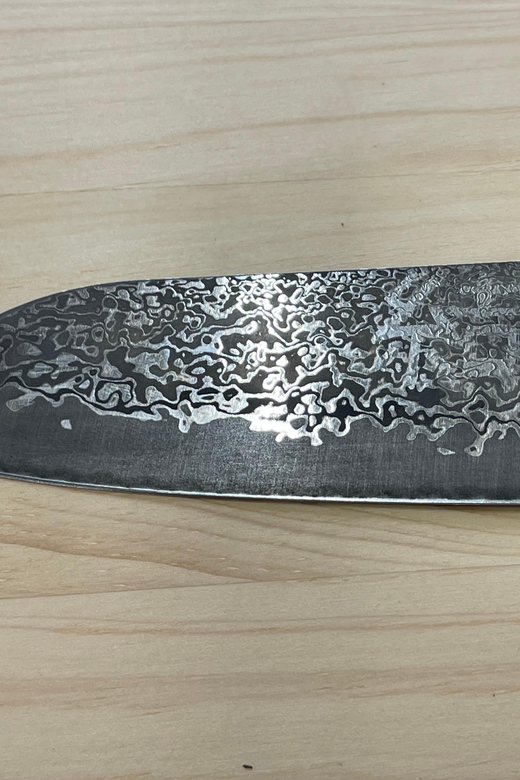
After you finish shaping, polishing, and sharpening, you test your knife using fresh vegetables. This is one of the most satisfying parts of the whole day because it turns “crafting” into “results.”
Think of it as quality control. You can look at a blade and assume it’s sharp. Then you cut. When a knife slices easily and feels balanced through the cut, you immediately understand why chefs care about sharpness and why a good finish isn’t just pretty.
You’ll likely be surprised by the performance. Even if you’ve used kitchen knives your whole life, a freshly sharpened, personally made blade feels different—lighter, more precise, and more satisfying. It’s also proof you can bring home: you’re leaving with something that works, not just something that looks good on a shelf.
Knife Museum time: rare blades and the “how this exists” lesson
Once you’re done with the hands-on bench work, you move into museum viewing at the G. Sakai Knife Museum. This is a smart pairing: your knife-making experience gives you context, so the collection makes sense instead of feeling like random display cases.
You’ll see a range of knives, including unique and rare pieces. In one participant’s note, the shop area was impressive, spanning everything from small pocket-sized knives to bigger kitchen and hunting styles. That matters for value: you can compare what you made versus what professionals and collectors buy.
If you care about authenticity and not just souvenirs, take the museum moment seriously. Look for differences in finish, shape, and blade feel. After your workshop, you’ll notice details that would be invisible earlier in the day.
Seki Swordsmith Museum: samurai sword history in plain human terms
After lunch, you visit the Seki Swordsmith Museum (also described as a blacksmith/swordsmith stop). This part shifts from knives-as-tools to swords-as-culture. The focus is on Japanese sword and samurai sword history, plus Seki City’s place in the tradition.
What I like about this segment for you: it gives meaning to the techniques. A kitchen knife isn’t a katana, but the craft mindset—materials, forging tradition, and respect for steel—connects them. You’ll likely find yourself thinking about why certain finishing choices exist and what they’re meant to do.
Some people also specifically mentioned the thrill of seeing swords made and the chance to talk with katana experts about questions. Even if you don’t go deep on sword specifics, you’ll walk away with a clearer mental map of how blades moved across Japanese life—from armor and status to everyday cutting tools.
Lunch in Seki: Japanese food after you earn your appetite
Lunch is included, and it’s at a local restaurant in Seki right after the knife-making portion. You’ll get about 1 hour for the meal. This timing is perfect: you’re hungry, but you’re still in “maker mode,” so the day feels like a single story.
The lunch described in the experience notes is authentic Japanese cuisine. Based on participant comments, sushi is a highlight (often made by a sushi master), and some days you may have options that include eel. One person mentioned choosing between multiple lunch types, so don’t be shy about selecting what sounds best to you.
Practical tip: eat slowly. Your brain will be buzzing from the craft work. Taking time with the meal helps the whole day sink in.
Your keepsakes: the knife, plus the little extras that make it feel real
The centerpiece is your personalized knife, and you should treat it like a real purchase: it’s made for use, not just decoration. Your name is included on the blade, and you also learn sharpening technique so you can maintain it later.
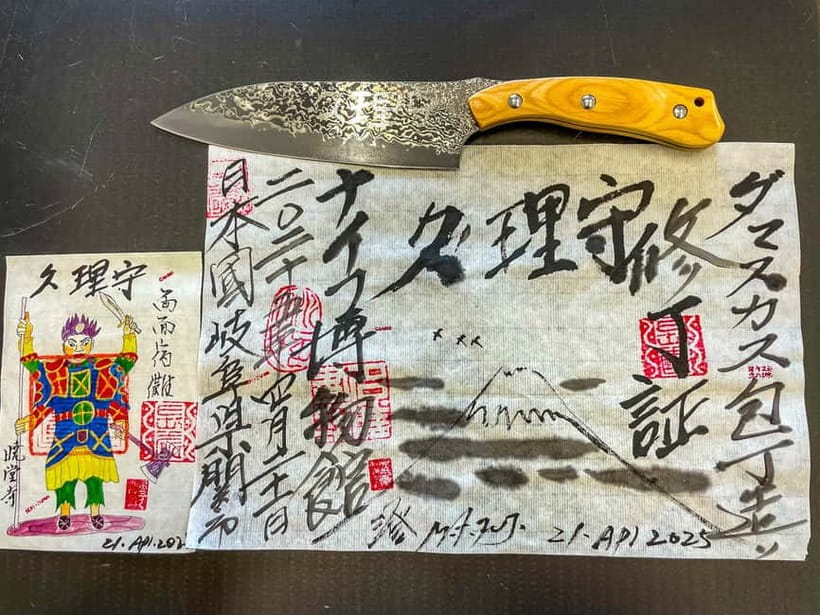
You’ll take home a limited-edition mini knife gift and a certificate. Some participants also reported extra gifts like key rings and even sumi-e-style picture art matched to knife motifs. Those small additions matter because they turn the day into a memory you can touch again later.
Value-wise, this is a big part of why the day costs what it costs. You’re paying for trained instruction, materials, museum access, translation support, and a guided day designed around your finished product—not just an entry ticket and a photo op.
Price and value: is $322 per person fair for a full-day craft?
At about $322 per person for a 1-day experience, you’re paying for several things at once:
- A real workshop guided by instructors (with your hands doing the work)
- A take-home knife set that’s personalized and tested
- Museum entry for both knife and sword contexts
- An included lunch
- Transportation support and an English guide
Compared to typical day tours, the cost is higher than a simple sightseeing circuit. But for what you get, it doesn’t feel like you’re paying only for access. You’re paying for expertise and time—because teaching polishing, etching/engraving, sharpening, and safe instruction takes effort.
That said, you should be honest with yourself: this isn’t for people who want a quick look and out. If you mainly want photos, or you dislike hands-on activities, the price may feel heavy. If you’re the type who loves learning with your body, this feels like a strong use of travel money.
Who should book this (and who should skip it)
This is a great match if you’re:
- A foodie who likes craft tools that actually cut well
- A culture seeker who wants context, not just a workshop photo
- Someone who enjoys learning by doing, especially with patient coaching
- You like the idea of writing your name in kanji/kana and carrying that forward
It’s not suitable for children under 18 (so this one is mainly for adults and older teens). Also, if you’re tight on time and hate delays, remember the workshop can run longer than the posted timeline.
A simple day plan you can picture before you go
If you like mental checklists, here’s the rhythm of the day as it unfolds:
- Morning meeting at Sekitomioka Station with car pickup and guide coordination
- Workshop at G. Sakai where you make your personalized Damascus kitchen knife
- Lunch at a local Japanese restaurant (often sushi or eel options)
- Swordsmith museum visit to learn about samurai sword history in Seki
- Return to Sekitomioka Station after the museum stop
That structure is part of the value. Your knife-making isn’t isolated—it leads naturally into museum interpretation.
Should you book the Seki knife-making experience?
I’d book it if you want one of those rare travel days where your souvenir is also a skill. A personally made, sharp, working kitchen knife is the kind of memory you can use every week at home. The museum add-ons also make sure you don’t leave with only an object—you leave with understanding.
Skip it if your ideal day is effortless sightseeing with minimal time commitment. This is hands-on, step-based, and longer than you might expect, so plan for a full day and a steady pace.
If you want authenticity, real craftsmanship, and a take-home item that feels earned, this Seki experience is a strong choice.