REVIEW · LANZAROTE
Museo Atlantico for non-certified divers
Book on Viator →Operated by Dive College Lanzarote · Bookable on Viator
First-time scuba has a lot of nerves built in, and this is a rare way to channel them. You get a beginner-friendly scuba try plus a guided underwater visit to Museo Atlántico, the famous sculpture museum that’s the only one of its kind in Europe.
What I like most is the step-by-step coaching and the way instructors keep you calm, even if you’re worried you won’t manage. I also love the “you’re actually there” payoff: the museum experience feels special because you’re swimming alongside the sculptures, not just looking at pictures.
The one thing to consider is that this is still about equalizing your ears and handling basic scuba skills under supervision. If you struggle with that (or you arrive stressed), you may find the pace and control are less forgiving than you’d hope.
In This Review
- Key highlights at a glance
- Museo Atlántico is the reason to go if you’re a first-timer
- Timing and meeting: the calm start at 10:00
- Shore welcome, gear check, and the “don’t panic” briefing
- Pool training: why this matters more than people think
- Getting to the museum: the boat ride is part of the experience
- The in-water visit: beginner depth, strict supervision, real control
- Museo Atlántico itself: what you’ll likely see and how the pace feels
- Safety and the medical questionnaire you must take seriously
- If you’re worried about ears: your equalization plan starts before you arrive
- Comfort tips that make the day easier
- Photos and souvenirs: ask how the process works
- Price and value: what you get for about $192.29
- Who this is best for (and who should think twice)
- Should you book Museo Atlántico for non-certified participants?
- FAQ
- Do I need a scuba certification to join this experience?
- How many people are in the group?
- What time does the experience start, and how long does it last?
- Is pickup included from Playa Blanca?
- Is the tour offered in English?
- What’s the minimum age?
- Do I need to complete a health questionnaire?
- How soon can I fly after the program?
- What happens if weather is bad?
Key highlights at a glance
- Max-7 group size for close attention in the water
- Pool practice first so you learn the basics before the open sea
- Playa Blanca transfers included so you’re not figuring out logistics
- Guided underwater sculpture museum built for a supervised beginner depth
- English available, plus staff who often work with multiple languages
Museo Atlántico is the reason to go if you’re a first-timer
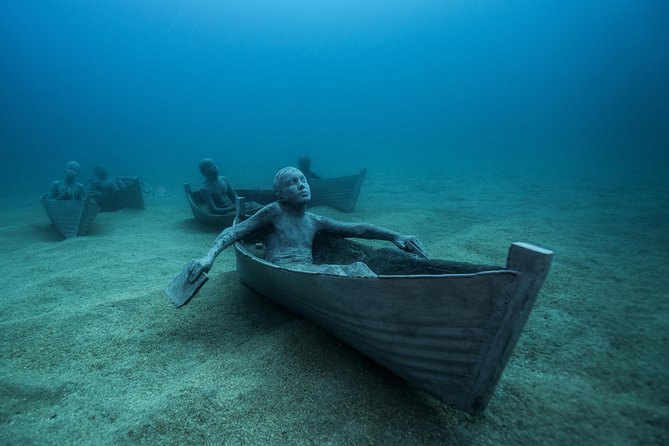
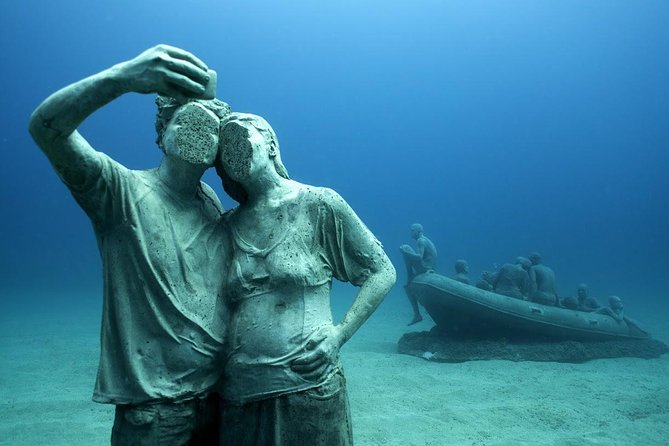
Museo Atlántico is the headline. This underwater sculpture museum is a rare attraction, and it’s exactly the kind of “only in this place” experience that makes Lanzarote feel like more than beaches and volcano views.
The key is that the day is set up for beginners. You don’t just get dropped into the ocean. You’ll get instruction, practice, and then a supervised underwater visit at a depth appropriate for learning, so the focus stays on comfort and safety while you still get that wow factor.
You can also read our reviews of more tours and experiences in Lanzarote.
Timing and meeting: the calm start at 10:00
The day begins at 10:00 at the scuba school by Centro Comercial La Mulata in Playa Blanca. Transfers are included from the area, but your exact pickup time depends on where you’re staying, so you’ll want to be ready for that message after booking.
The schedule is designed so you can ease into the experience. You start with welcome and safety basics, then do training before heading out by boat. The boat departure is at 12:00, which matters because it sets expectations: you’re not spending the whole day underwater, but you are getting a structured, beginner-safe flow.
Shore welcome, gear check, and the “don’t panic” briefing
Before anyone gets in the water, you’ll receive a warm welcome and an easy introduction to the basics of scuba. The vibe here is practical. Expect a safety briefing first, then clear guidance on how the equipment works and what you need to do once you’re submerged.
This is where patience really counts, and it shows in the way instructors handle nervous first-timers. Names you might hear from past groups include Martha and Maliny, both praised for staying calm and supportive when nerves run high. Marco also stands out as a very steady guide, and it’s the kind of crew you want for a first attempt.
Pool training: why this matters more than people think
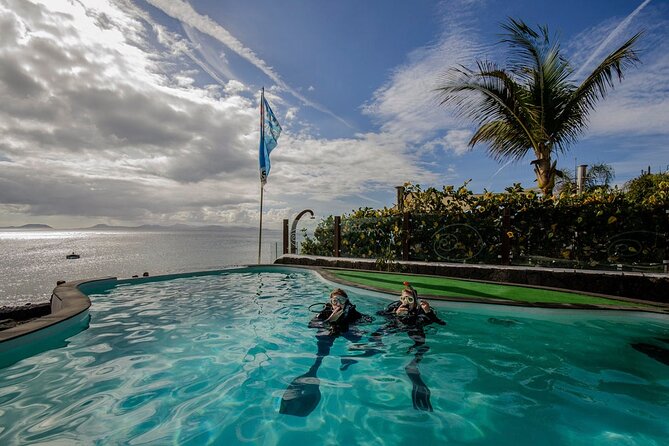
You’ll do pool practice before the ocean portion. This isn’t just “practice for practice’s sake.” It’s the fastest way to build confidence with the basics, like breathing through the regulator and getting comfortable with equipment in your hands and on your body.
For your body, pool training helps you avoid that surprise moment of thinking, Wait, this feels harder than I expected. For your brain, it gives you a routine. Once you’ve done the motions once in a controlled setting, the open water feels less like a test and more like a continuation.
Getting to the museum: the boat ride is part of the experience
After the shore training and a short break, you head out by boat at 12:00 toward Museo Atlántico. You’ll be underwater shortly, but the boat portion is still part of the day’s rhythm.
It’s also one of the pleasant reality checks. You’ll be kitted up with other divers around you, and the whole setting helps you settle in. One review-style detail you can take seriously: it’s not just stressful logistics. People have described the boat ride itself as enjoyable, even before the underwater part begins.
The in-water visit: beginner depth, strict supervision, real control
Once you’re in the water, you’re guided directly by instructors. The experience is specifically set for people without prior certification. That means you should expect a structured pace, guided movements, and close monitoring rather than free exploration.
Depth varies by conditions and how you’re doing, but beginner participants have reported reaching around 12–14 meters in past sessions. The point isn’t the number. The point is that you should be able to equalize and handle the basics at a depth that instructors consider suitable for learning.
Group size is capped at seven participants, which helps a lot. With fewer people, you get more attention. That matters when you’re trying to stay relaxed and remember what you were taught moments earlier.
Museo Atlántico itself: what you’ll likely see and how the pace feels
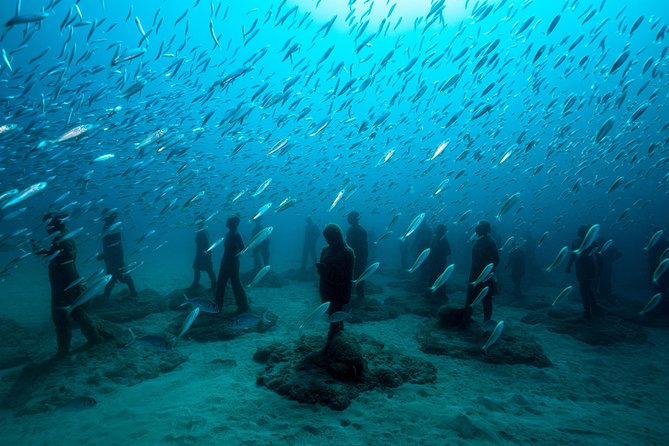
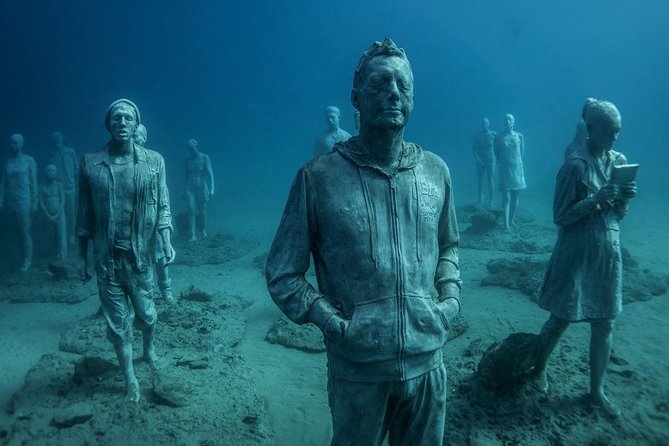
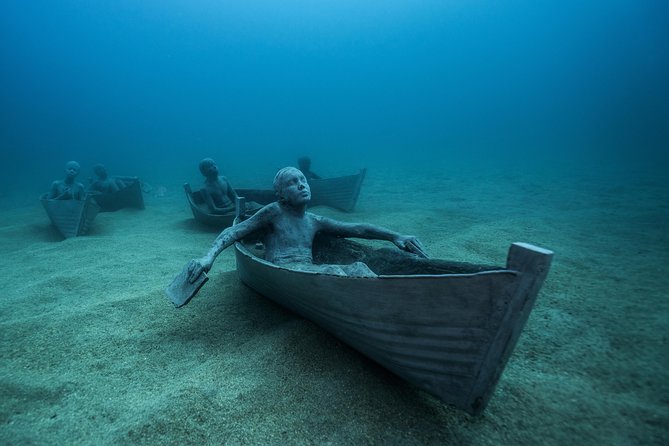
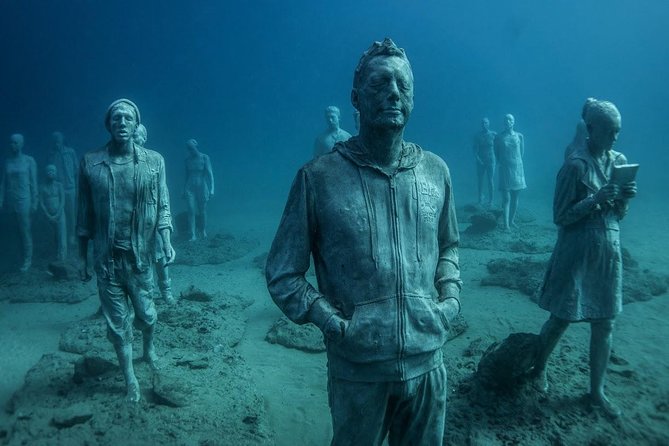
The underwater museum is built around sculptures placed underwater, and your guided visit takes you among them. The museum is described as mysterious and breathtaking, and people have connected strongly with the meaning of the figures because you see them up close, not at a museum wall distance.
You may also see marine life. Past groups reported lots of fish, and there’s even an example of an octopus being spotted. If you like wildlife, keep your expectations flexible. Underwater visibility and animal behavior can change day to day.
One practical thing to know: the museum time can feel like it moves fast. In one negative account, the museum portion was described as too rushed to really take in every statue. I can’t guarantee the same pace every day, but it’s a fair consideration. If you’re the type who needs slow, long looks and lots of floating time, you may find this format more controlled than you hoped.
Safety and the medical questionnaire you must take seriously
This experience requires a health questionnaire before you can dive, and confirmation is handled at booking. The general idea is simple: if you have conditions that affect breathing or circulation, or you have medical issues that make scuba unsafe, you may be turned back.
Asthma and heart conditions are specifically mentioned as examples where you should consult a doctor. Another review also notes the questionnaire can include ear-related issues and medication questions, so don’t assume it’s only about the obvious categories.
Then there’s the timing rule after the program: you should wait at least 18 hours before taking a flight. That’s not a “nice to know.” It’s a key planning item, especially if you’re on a tight travel schedule between islands or onward to the mainland.
If you’re worried about ears: your equalization plan starts before you arrive
Ear equalization is the big unknown for many first-timers. Even if you’re excited about the sculptures, you still need your ears to cooperate so you can descend comfortably and stay relaxed enough to manage equalization.
If you’ve had recurring sinus issues, ear infections, or you’ve struggled equalizing on airplanes or swimming, it’s worth talking to a dive medical professional before you spend the money. The negative account I saw also described people being unable to continue when equalizing didn’t work, which is a real risk you should plan around emotionally.
Comfort tips that make the day easier
You’re going to be in gear, on a boat, and then in the water. That means comfort choices matter.
- Wear footwear that’s easy to walk in to the water and back from it. One suggestion from a past participant was bringing a basket to carry slippers or flip-flops safely.
- Eat beforehand and plan to sleep well. One enthusiastic review framed it as a challenging experience and stressed being fueled and rested.
These aren’t just minor habits. They affect how steady you feel during training and how smoothly your first in-water session goes.
Photos and souvenirs: ask how the process works
There’s at least one mention of a staff member taking good photographs, such as Steve. That suggests photos can be part of the experience.
But since the exact photo process isn’t detailed in the basics, it’s smart to ask on the day of the experience how you’ll view images and whether there’s time to review before anything is finalized. If photos matter to you, you don’t want surprises when you’re tired after the water.
Price and value: what you get for about $192.29
At $192.29 per person, this isn’t a budget-only activity. But it’s also not just a ticket to see an attraction. You’re paying for the full structure that makes Museo Atlántico accessible to non-certified participants.
Here’s what that value usually includes in this format:
- beginner coaching and safety briefing
- pool training before the open sea
- instructor-led supervision in the water
- guided access to the Museo Atlántico underwater sculptures
- transfers from Playa Blanca
For $192.29, you’re buying time with trained instructors and a rare underwater museum experience. If you were to do a basic skills course plus an independent museum visit, your total cost and stress could be higher. On the flip side, if you’re expecting a longer, deeper learning course (not just a try), this can feel expensive for what’s essentially a first-attempt structure.
Who this is best for (and who should think twice)
This fits best if you:
- want a first scuba try with close attention
- like the idea of combining training with a world-famous underwater sculpture museum
- are okay following instructions and keeping a calm, cooperative mindset in the water
It may not fit as well if you:
- expect lots of free time to linger at each sculpture
- have a history of ear pressure problems and equalization struggles
- want a full certification-style skills progression during this single half-day format
Should you book Museo Atlántico for non-certified participants?
I’d book it if you want a structured first scuba experience that leads somewhere genuinely unusual. The combination of small-group attention, pool training, and the Museo Atlántico payoff is hard to beat for value in Lanzarote.
But make your decision with two realities in mind. First, this is still learning under conditions where equalizing matters. Second, the museum visit may feel time-boxed, so go in expecting guided highlights more than a slow, quiet underwater wander.
FAQ
Do I need a scuba certification to join this experience?
No certification is required. It’s designed for beginners and non-certified participants, with step-by-step guidance.
How many people are in the group?
The experience has a maximum of 7 travelers, which helps keep the instruction personal.
What time does the experience start, and how long does it last?
It starts at 10:00 am at the meeting point and runs for about 3 hours (approx.).
Is pickup included from Playa Blanca?
Yes. Transfers to and from Playa Blanca are included, and your exact pickup time depends on your location. You’ll get details after booking.
Is the tour offered in English?
Yes, the experience is offered in English.
What’s the minimum age?
The minimum age is 10 years.
Do I need to complete a health questionnaire?
Yes. All participants must complete a health questionnaire before diving, and some medical conditions may prevent you from diving, so consult your doctor if you have concerns.
How soon can I fly after the program?
You should wait at least 18 hours before taking a flight after the program.
What happens if weather is bad?
The experience requires good weather. If it’s canceled due to poor weather, you’ll be offered a different date or a full refund.