REVIEW · SAN GIMIGNANO
San Gimignano Cathedral & Museum of Sacred Art Entry Ticket
Book on GetYourGuide →Operated by GetYourGuide Tours & Tickets GmbH · Bookable on GetYourGuide
Medieval art in San Gimignano has a way of grabbing you. This ticket gets you into the San Gimignano Cathedral and the Museum of Sacred Art, with a physical audio guide that helps you read what you’re seeing. I especially love how the cathedral interior is lined wall-to-wall with frescoes, turning the whole space into a storybook you can follow.
The other big win for me is the mix of famous artists and very specific visual details—think Lippo and Federico Memmi on the New Testament wall, and Bartolo di Fredi on the Old Testament side. The one consideration: even if you pre-book, you still need to exchange your voucher at the ticket office in Piazza Pecori before you enter.
In This Review
- Key Things to Know Before You Go
- San Gimignano Cathedral: Why This Church Is Worth Your Time
- Ticket + Audio Guide: What You Actually Get
- Finding the Ticket Office in Piazza Pecori
- Stepping Inside: Columns, Vaults, and Medieval Color
- The New Testament Fresco Cycle on the Right Wall
- The Old Testament Fresco Cycle on the Left Wall
- Santa Fina Chapel: The Renaissance Chapter You Don’t Expect
- Museum of Sacred Art: A Good Pairing With the Cathedral
- Timing and Flow: How to Make This Feel Like a Real Visit
- Price and Value: Is an $11 Ticket Fair?
- Who Should Book This Cathedral Entry Ticket
- Should You Book This Ticket?
- FAQ
- Where is the ticket office for voucher exchange?
- Does this ticket include an audio guide?
- What languages are available for the audio guide?
- How long should I plan for this visit?
- Is the cathedral visit wheelchair accessible?
- How much does the ticket cost?
- Is there free cancellation?
- Can I reserve first and pay later?
- Does the ticket also include the Museum of Sacred Art?
Key Things to Know Before You Go

- Frescoes cover the whole church interior, so a guide matters more than you’d expect.
- Lippo and Federico Memmi paint the New Testament cycle on the right wall.
- Bartolo di Fredi painted the Old Testament stories in 1367 on the left wall.
- Santa Fina Chapel is a Renaissance highlight made by Giuliano da Maiano, Benedetto da Maiano, and Domenico Ghirlandaio.
- Your ticket includes a physical audio guide (multiple languages) to make sense of it fast.
San Gimignano Cathedral: Why This Church Is Worth Your Time
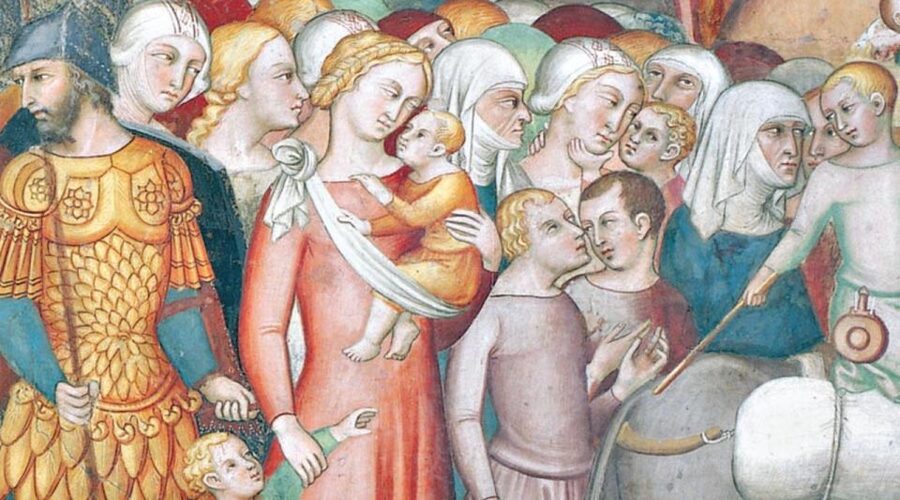
San Gimignano’s cathedral isn’t just impressive from the outside. Inside, the building feels like it was designed to show you religious art in full narrative mode, with fresco cycles that cover both sides of the church.
What I like most is that you don’t have to be an art historian to enjoy it. The audio guide helps you connect scenes to the big biblical themes, so you’re not standing there squinting at paint and guessing what you’re looking at.
If you’re already wandering through San Gimignano’s medieval lanes, this is the kind of stop that gives your walk meaning. It’s also a good choice when you want something indoor and structured, especially if you hit a warm day or a changeable one.
Ticket + Audio Guide: What You Actually Get
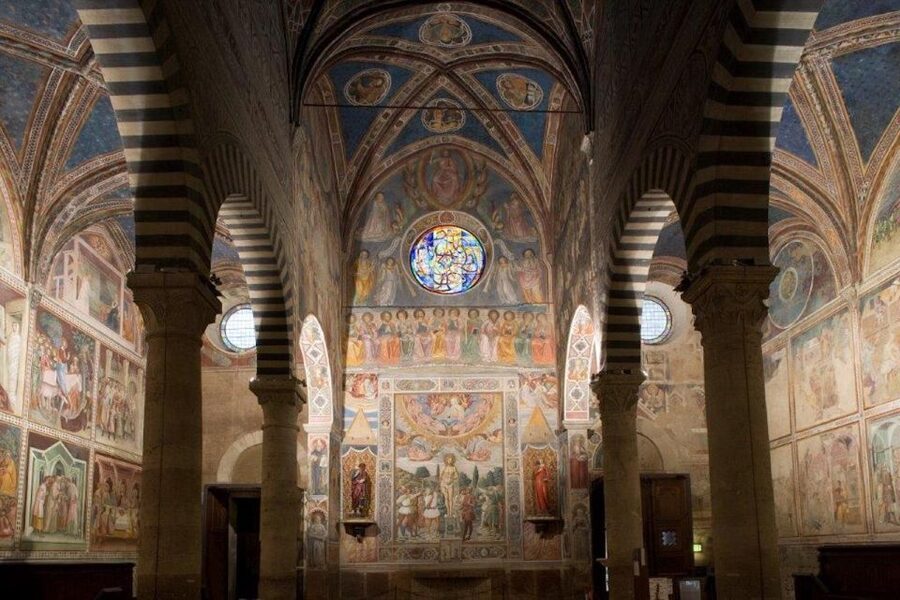
This experience is simple on paper: entry to San Gimignano Cathedral plus access included by the same ticket to the Museum of Sacred Art. You also get a complimentary physical audio guide available in English, French, German, Italian, Russian, and Spanish.
The audio guide part matters. Medieval churches can feel like a lot at once—columns, arches, vaults, frescoes, chapels, decorations. With the guide, you can move through at your pace and still understand what each major artwork is telling you.
Plan for a 1-day visit window, with starting times based on availability. That’s helpful because it means you can fit this into your day without turning it into a complicated scheduling project.
Finding the Ticket Office in Piazza Pecori
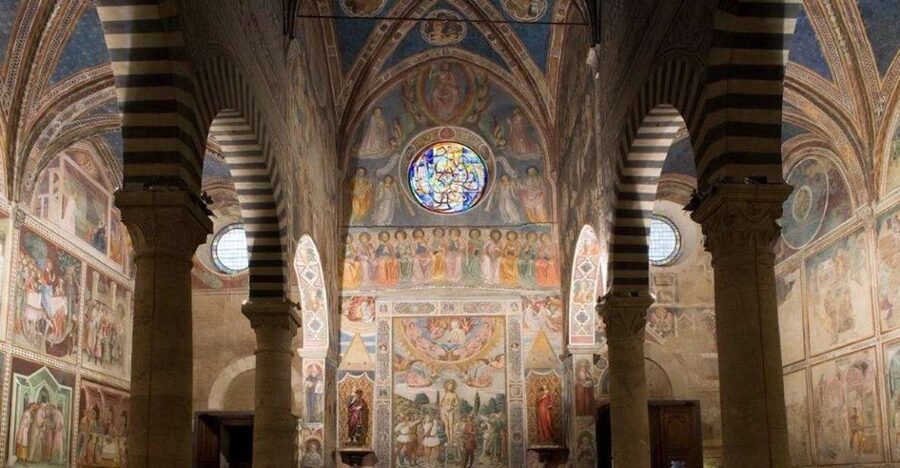
You’ll exchange your voucher at the ticketing office in Piazza Pecori, located on the left of the San Gimignano Duomo. I like that the meeting point is straightforward, and it reduces the “where do we start?” stress.
Here’s the practical tip: give yourself a little buffer. Even with a pre-booked ticket, you still have to trade the voucher for the right entry setup on-site. One quick stop at the desk saves you from the annoying moment of realizing you’re holding the wrong paper.
Once exchanged, you’re ready to step into the cathedral interior with your audio guide in hand.
Stepping Inside: Columns, Vaults, and Medieval Color
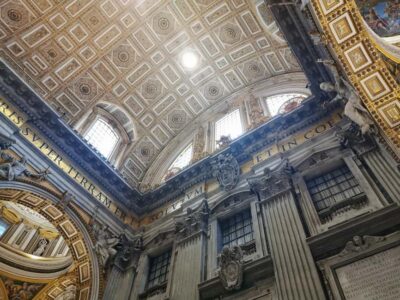
The cathedral experience starts immediately. As soon as you enter, you’re hit with the visual rhythm of the space—especially the 14 Tuscan stone columns inside, including 10 round columns and 4 octagonal ones. It’s not just architecture for architecture’s sake; it helps you read the nave and side areas as zones where art is placed for a reason.
Then come the medieval decorative touches. You’ll notice polychrome decorations typical of medieval churches, including a painted-blue cross vault and striped motifs on the intrados of arches separating the nave from the aisles. These details are easy to miss if you rush, but slow down for a moment and they start to make sense as part of the overall visual program.
If you like places where the building itself is part of the story, this is a strong stop. It’s not only paintings on walls; the whole interior is tuned for looking.
The New Testament Fresco Cycle on the Right Wall
One of the most praised parts of the visit is the fresco work itself, and the right wall is where the New Testament cycle comes in.
The standout here is that this cycle is a masterpiece by Lippo and Federico Memmi. The audio guide helps you connect individual scenes to the larger sequence, so you can follow the logic of the narrative instead of treating each panel as an isolated picture.
I also love how this side feels like it’s built for attention. You’re naturally pulled along the wall as the scenes unfold, and the architecture helps keep your viewing anchored rather than scattered.
If you want a quick way to enjoy it: choose a couple of scenes you’re curious about, then use the audio guide to find their context. You’ll get more out of the art than you would by trying to absorb everything at once.
The Old Testament Fresco Cycle on the Left Wall
On the left wall, the church continues the storytelling with Stories of the Old Testament, painted in 1367 by Bartolo di Fredi.
What makes this set especially satisfying is the time detail. Knowing the date gives you a better sense of how these images belong to a specific moment in medieval Tuscan painting—something you can feel when you look at the style and how the scenes are organized.
The audio guide can also help you spot how the Old and New Testament narratives echo each other. That’s the big payoff: you start seeing the church’s art as a unified message rather than separate decorations.
If you’re short on time, don’t try to see every single figure. Focus on the main scenes and let the guide fill in the rest. It’s the difference between rushing through and actually learning what you’re looking at.
Santa Fina Chapel: The Renaissance Chapter You Don’t Expect
After the big medieval fresco cycles, the cathedral holds a different kind of highlight: the Chapel of Santa Fina. This is a precious Renaissance jewel within the cathedral.
The reason it’s such a memorable moment is the three-artist collaboration. The chapel involved:
- architect Giuliano da Maiano
- sculptor Benedetto da Maiano
- painter Domenico Ghirlandaio
This matters because the chapel isn’t just one medium. You get architecture, sculpture, and painting working together around devotion to San Gimignano’s best-loved saint, Santa Fina.
If you love the shift from medieval storytelling to Renaissance artistry, this chapel is your proof that the cathedral is layered in time. It’s also a good place to reset your eyes after staring at fresco walls for a while.
Museum of Sacred Art: A Good Pairing With the Cathedral
Your ticket also includes entry to the Museum of Sacred Art. Even if you focus mostly on the church itself, having a museum component is a smart addition.
Why it works: cathedral frescoes show the big narratives and ideals. A sacred art museum tends to give you context for objects and themes related to worship and devotion, helping you connect the dots between what you saw painted on the walls and what people used in real life.
Because the specific museum contents aren’t listed in the details you provided, I’ll keep expectations grounded: plan to use it as supporting context rather than a totally separate highlight competing with the church. If you have energy, it’s a worthwhile add-on that rounds out your visit.
Timing and Flow: How to Make This Feel Like a Real Visit
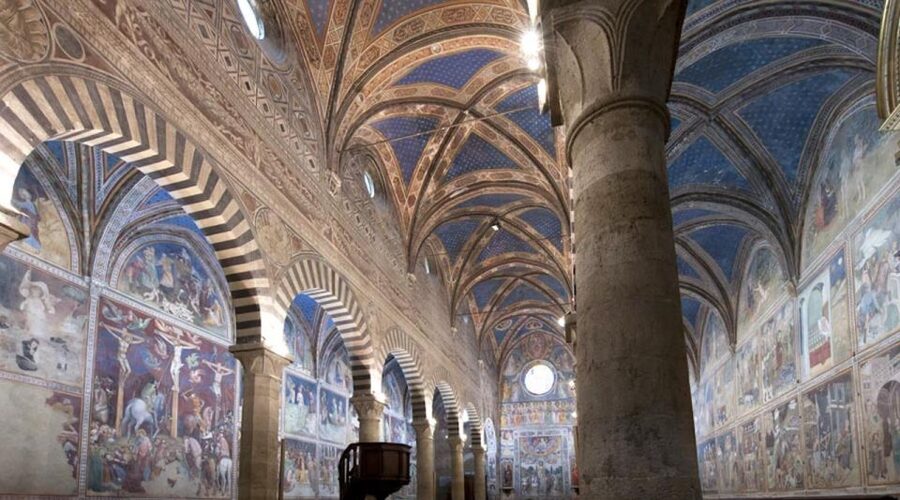
You have a 1-day window, and starting times depend on availability. To make the cathedral experience feel satisfying, I’d treat it like a focused half-day or a steady hour-and-a-half stop, not a five-minute check.
A useful flow is:
- Exchange voucher at the ticket office in Piazza Pecori.
- Start inside with your audio guide so the frescoes land quickly.
- Do the big New Testament and Old Testament walls with the guide turned on.
- Finish with Santa Fina Chapel while your attention is still sharp.
This order works because you’ll have the chapel feel like a reward after the main fresco cycles. Also, the cathedral’s details can be hard to take in if you do them in the wrong mental order. Audio first, chapel last, gives you a clean arc.
Price and Value: Is an $11 Ticket Fair?
The price is listed as $11 per person, with a €1.5 booking fee included in the details you were given. On its own, that doesn’t sound like much—yet it’s a full cathedral experience plus an audio guide and museum entry.
Here’s why that price feels fair: the audio guide is complimentary and available in several languages, which means the visit isn’t just about access. It’s about understanding. Frescoes like the Memmi work and Bartolo di Fredi’s 1367 cycle are much easier to appreciate when you know what you’re seeing.
Add in that the visit is wheelchair accessible and that the time commitment is manageable (1 day / timed entry), and you get a good value-to-effort ratio. This isn’t a long tour package; it’s a meaningful cultural stop with the right support.
If you’re comparing options, the key question isn’t whether it’s cheap. It’s whether you’ll actually use the guide. If you will, the value is strong.
Who Should Book This Cathedral Entry Ticket
This is ideal if you:
- like medieval art that tells stories, not just decorative images
- want an easy plan in a walkable town like San Gimignano
- appreciate art names and want to connect them to what’s on the walls
- prefer a visit you can pace yourself with a physical audio guide
It also works well for couples, small groups, and solo travelers who don’t want to join a big moving group. The cathedral is structured enough that you can do it calmly, and your guide helps keep you oriented.
If you dislike audio guides or you prefer zero structure, you might find the cathedral a bit overwhelming. But if you’re even slightly curious about what the fresco cycles are saying, this ticket does the heavy lifting.
Should You Book This Ticket?
Yes—book it if you want your cathedral visit to be meaningful instead of just scenic. The biggest reason is simple: you get the audio guide that helps you actually read the fresco cycles, including the Memmi New Testament work and Bartolo di Fredi’s 1367 Old Testament scenes. And the bonus of Santa Fina Chapel with three major Renaissance artists makes the visit feel like more than a single-style museum stop.
If the idea of exchanging a voucher on-site stresses you out, plan a few extra minutes and you’ll be fine. Once you do that, you’ll get one of San Gimignano’s most important interiors in a format that’s easy to manage.
FAQ
Where is the ticket office for voucher exchange?
You exchange your voucher at the ticketing office in Piazza Pecori, on the left of the San Gimignano Duomo.
Does this ticket include an audio guide?
Yes. The ticket includes a complimentary physical audio guide for the San Gimignano Cathedral.
What languages are available for the audio guide?
The audio guide is available in English, French, German, Italian, Russian, and Spanish.
How long should I plan for this visit?
The duration is listed as 1 day, with starting times based on availability.
Is the cathedral visit wheelchair accessible?
Yes, the experience is listed as wheelchair accessible.
How much does the ticket cost?
The price is listed as $11 per person, and there is a €1.5 booking fee included in the details provided.
Is there free cancellation?
Yes. You can cancel up to 24 hours in advance for a full refund.
Can I reserve first and pay later?
Yes. The option Reserve now & pay later is listed.
Does the ticket also include the Museum of Sacred Art?
Yes. The experience is titled as a Cathedral & Museum of Sacred Art entry ticket, so museum entry is included with the same ticket.