REVIEW · ROME
Guided tour of the Vatican Museums and Sistine Chapel in Spanish
Book on Viator →Operated by EnRoma.com · Bookable on Viator
Three hours, two Sistine-level hits. This Spanish guided tour is designed to get you inside the Vatican Museums and the Sistine Chapel with guided context and smart crowd-handling. I especially like the Spanish guide plus the headphones, which makes the art explanations feel organized even when it is packed. The big trade-off: the Vatican is the Vatican—expect tight pacing, and you may not get long, uninterrupted moments in every room.
You start at Viale Giulio Cesare, 138 and finish in Saint Peter’s Square, and the whole flow is built for adults and general visitors, not for strollers or mobility-adapted routes. I also like that it uses a mobile ticket and a small group size (max 20), so you are not stuck feeling lost in a giant mob. Just be ready for the dress and bag rules, because security can be strict.
In This Review
- Key things I’d zero in on
- Spanish-Guided Vatican: What this tour does well right away
- Meeting point at Viale Giulio Cesare and how the 3-hour plan runs
- Sistine Chapel stop: 20 minutes and one non-negotiable rule
- Vatican Museums highlights: Pineapple Courtyard to Maps, Candelabra, and more
- A reality check on pace
- Crowds and the value of a small group
- Dress code, what you can carry, and limits to plan around
- Price and value: what $110.47 buys you at the Vatican
- A note on minors
- Who this Spanish Vatican tour fits best (and who should think twice)
- Guides and what makes the narration pay off
- Should you book this tour?
- FAQ
- FAQ
- Is the guide on this tour in Spanish?
- How long is the tour?
- What is the group size?
- Does the tour include tickets to the Vatican Museums and Sistine Chapel?
- Are there queues to get in?
- Where does the tour start and end?
- What rules should I follow for visiting the Sistine Chapel?
- Is transportation or lunch included?
- What is the cancellation policy?
- Is this itinerary accessible for strollers or mobility difficulties?
Key things I’d zero in on
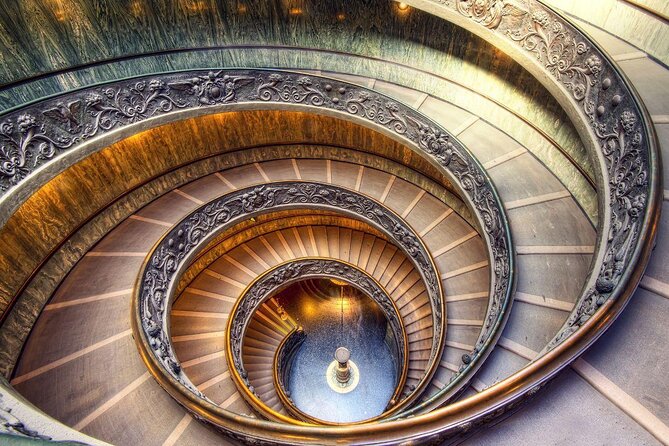
- Spanish guide + headphones so you can actually hear the story while moving
- Small group (max 20) for more control than the big buses
- Skip-the-queue entry to help you avoid the worst lines into the Museums
- Sistine Chapel stop first (about 20 minutes) so you hit the main draw early
- Vatican Museums highlights: Pineapple Courtyard, Laocoön, Maps, Tapestries, and possibly the Raphael Rooms
Spanish-Guided Vatican: What this tour does well right away
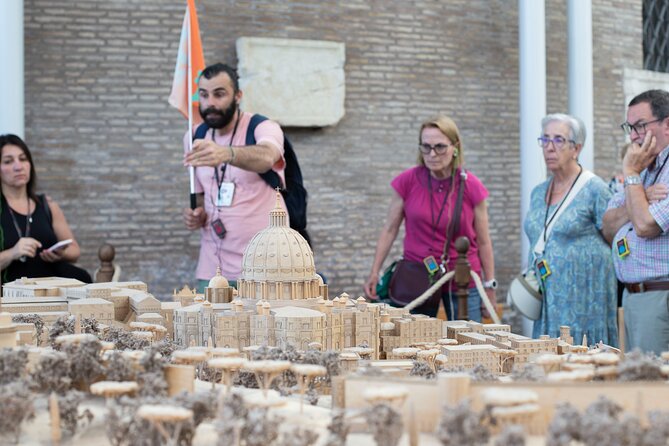
If you are aiming for the classic Vatican highlights, this tour has a practical rhythm. You get a focused Sistine Chapel stop, then you move into the Vatican Museums for the big gallery sequence. It is not trying to be a slow art history seminar. It is trying to get you the highest-impact sights in the time window available.
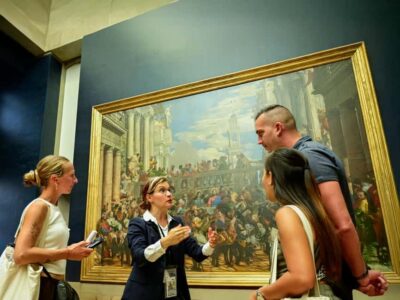
The Spanish narration matters more than you might think. In a place like this, you are surrounded by famous works, but the real payoff is connecting what you are seeing to what the Church and Renaissance artists were trying to communicate. With headphones, you do not have to crane your neck or compete with the crowd. You can stay oriented.
The small group size also helps. Even with security lines and bottlenecks, max 20 people means the guide can regroup you and keep the pace from turning into chaos.
You can also read our reviews of more guided tours in Rome
Meeting point at Viale Giulio Cesare and how the 3-hour plan runs
The tour starts at Viale Giulio Cesare, 138, 00192 Roma RM and ends at Saint Peter’s Square, Piazza San Pietro, 00120 Città del Vaticano. That end point is useful: once you are done, you can walk around the square on your own without needing to find a new meeting spot.
The duration is listed at about 3 hours, with two main segments: roughly 20 minutes in the Sistine Chapel and about 2 hours 30 minutes in the Vatican Museums. The timing is tight by design. Think of it like a guided highlight reel, not a leisurely walk where you can stop for 15 minutes at every single masterpiece.
You do not get transportation to the meeting point, so plan to arrive on your own by public transit or taxi. The tour info also says the start point is near public transportation, which is exactly what you want in Rome, where getting anywhere on time is half the game.
Sistine Chapel stop: 20 minutes and one non-negotiable rule
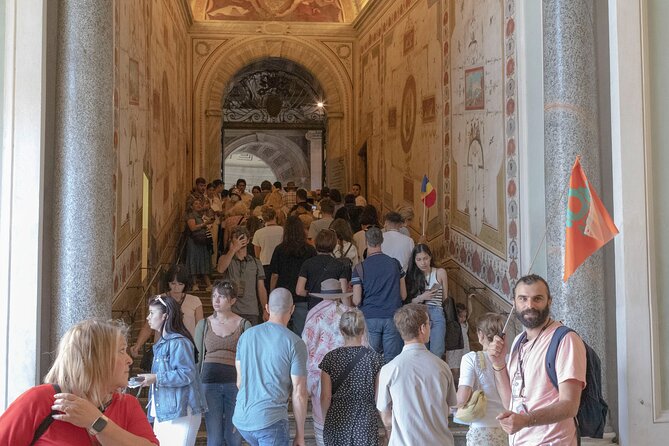
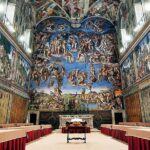
The first stop is the Sistine Chapel, with admission included and an allotted about 20 minutes. That time slice is short, but it is built around reality: the chapel is one of the most controlled spaces in the Vatican, and the flow of visitors does not allow much lounging.
Here is what you should do with those 20 minutes. Spend your first moments looking before reading. Take in the overall ceiling fresco program, then pick one or two areas to focus on (Creation scenes are a common favorite, and the Judgment imagery is the other big gravitational pull). With a guide explaining the story and symbolism, you will likely understand what you are seeing far faster than if you only rely on your own guidebook.
One key thing: this is a place of worship. Your clothing has to comply with the rules provided:
- wear long skirts or long pants
- wear covered shoulders
If you show up dressed casually, you can lose time right at the start. That is time you cannot replace later.
Also, because it is a guided group with a fixed stop, you will not get the luxury of wandering in circles looking for a perfect angle. Go for the big view first, then adjust once you understand where the story is going.
Vatican Museums highlights: Pineapple Courtyard to Maps, Candelabra, and more
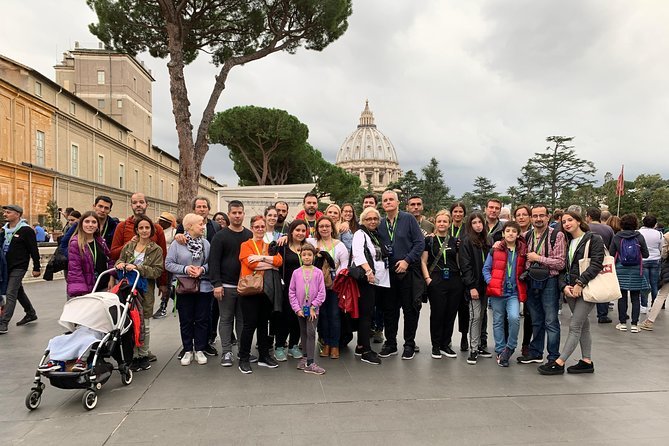
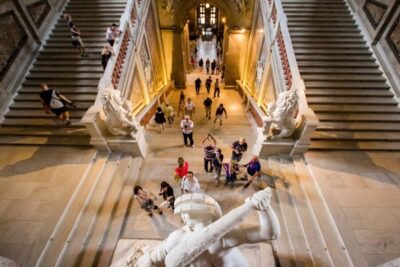
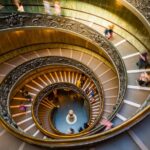
After the Sistine Chapel, you transition into the Vatican Museums for roughly 2 hours 30 minutes. This is the part of the tour where you get the most “wow per minute,” but you also have the most risk of feeling rushed. The upside is that the itinerary is organized around major set pieces.
A few named highlights you can expect:
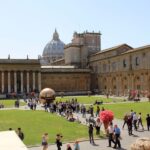
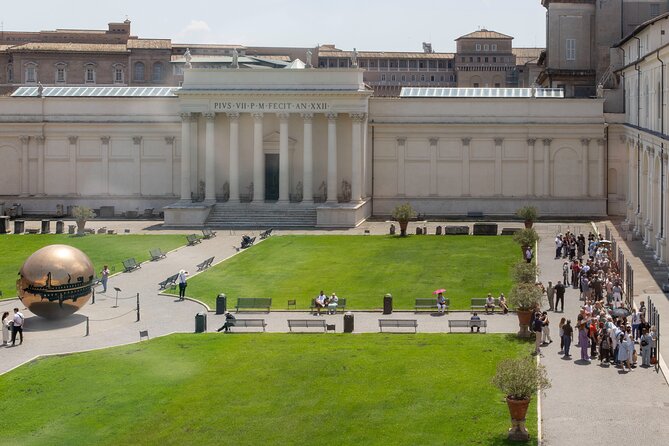
- Pineapple Courtyard: an iconic courtyard view that sets the tone for the collections inside.
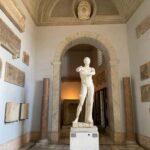
- Laocoön and related ancient sculpture: this is where the classical art impact hits hard, especially if you have ever seen reproductions but not the real scale.
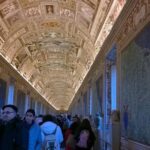
- Gallery of Candelabra: long, dramatic rooms that make you feel like you are walking through a stage set.
- Maps Gallery: famous for the map concept and the visual density of details.
- Tapestries: large works that reward attention, even when you are moving quickly.
- Raphael Rooms (Raffaello Stays) when visitor flow allows: this is the type of add-on that can be fantastic if you get in, but it is not guaranteed if the crowds force the itinerary to tighten.
The “when flow allows” note is important. In practice, it means you should enjoy what you see without building your entire day around one last room. If you do not get to the Raphael Rooms, you still leave having hit the big named galleries the tour is built around.
A reality check on pace
In a building this large, even a well-run group can end up in crowd corridors. The best way to cope is to decide what you want most from each gallery section:
- If you want symbolism, listen first, look second.
- If you want artistry, look first, then let the guide connect the dots.
- If you want photos, do quick snapshots during the guide’s explanations, then commit to looking when it is time to pause.
You can also read our reviews of more museum experiences in Rome
Crowds and the value of a small group
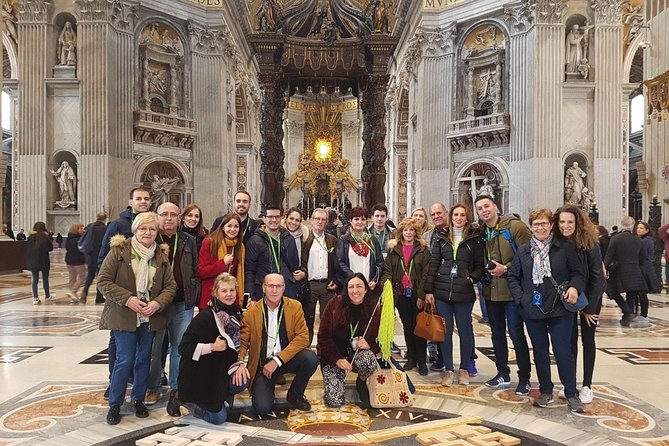
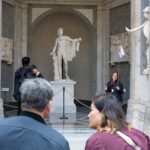
The Vatican Museums are famously packed, and this tour does not magically remove that fact. What it can do is reduce the worst friction points. The tour explicitly promises entrances without queues, which is a huge deal here. Time saved before you even start walking is time you can spend actually seeing.
Also, the guide’s job in this kind of environment is not only interpretation. It is crowd choreography. Several people who took this Spanish-guided version highlight that the guides can manage large groups effectively, keeping things moving without losing control of the narrative.
Still, be honest about the potential downside. If you are the type who needs 30 minutes to feel fully satisfied at each stop, you may end up feeling like you are being pushed along. That shows up in feedback patterns: some people loved the Sistine Chapel time, but thought the rest of the Museums felt like a rushed cattle drive.
You can counter that by treating the tour as a framework. Use it to learn what to notice, then, if you want more, plan a little extra time afterward to return to one or two galleries on your own. Ending in Saint Peter’s Square is handy for this kind of add-on day.
Dress code, what you can carry, and limits to plan around
This tour lists clear rules for places of worship and security:
- wear long skirts or pants and covered shoulders
- large umbrellas are not allowed
- oversized backpacks are not allowed
- sharp objects are not allowed
If you travel with a big daypack, consider swapping to something compact or wearable with a low profile. Even if you do not hit a total refusal, extra bag checks can cause delays. And delays are painful when you are on a timed tour structure.
Mobility and stroller note: the itinerary does not follow routes adapted for people with mobility difficulties or for young children using a stroller. If you need accessibility support, you should not count on this route being optimized for that.
Price and value: what $110.47 buys you at the Vatican
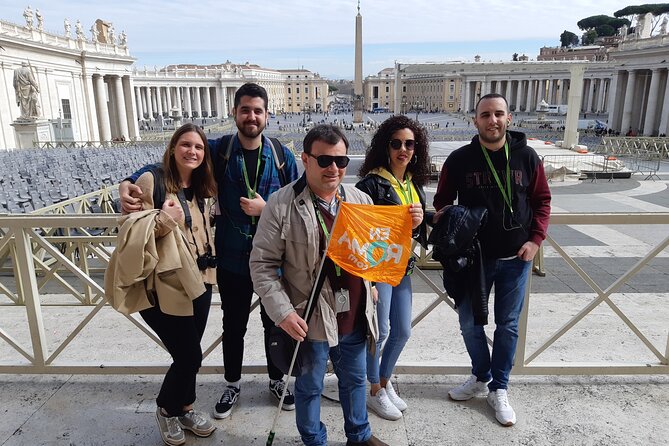
At $110.47 per person, this is not a budget activity. But it includes several things that matter in the Vatican:
- a professional Spanish guide
- headphones so you can hear comfortably
- tailless/skip-the-queue style entry
- tickets are included for the Sistine Chapel and Vatican Museums
- small group format (max 20)
The biggest value driver is time. When you reduce long queue time, you buy back the only resource you cannot restock: your attention and your stamina. In a place where crowds are the enemy of concentration, “skip the queues” can be the difference between enjoying the art and feeling like you are just surviving hallways.
It is also priced with structure in mind. The tour is about 3 hours, with defined stops. If you attempted to DIY this alone, you would still face timed entries, lines, and figuring out what to prioritize. Paying for a guide is paying for direction.
A note on minors
The info mentions special prices for minors. If you are traveling with kids, this can help make the math work compared to paying adult pricing across the board.
Who this Spanish Vatican tour fits best (and who should think twice)
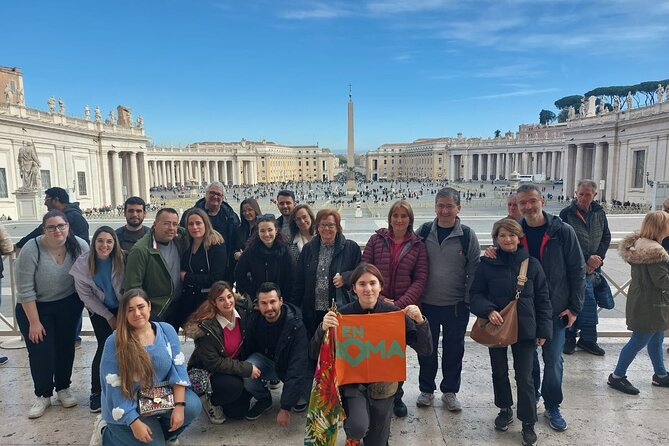
This tour is a strong fit if:
- you want the main Vatican icons in one organized pass
- you prefer explanations in Spanish
- you like small group guidance rather than large bus herding
- you are okay with a guided pace in exchange for skip-the-queue entry
It may be a weaker fit if:
- you hate crowd pressure and need very slow, quiet viewing
- you want to linger for long periods without moving with the group
- you rely on an itinerary designed for stroller-friendly or mobility-adapted routes (this one is not listed that way)
If you are somewhere in the middle, you can still make it work by setting your expectations: treat the tour as your guided map and then decide how much extra time you want after.
Guides and what makes the narration pay off
Even without seeing your guide in advance, the setup is built for good storytelling: Spanish commentary plus headphones plus a structured route through the named museum areas. People who have done this kind of tour in Spanish speak highly of guides such as Juan-Miguel, Elena, Francesca, and Monica for historical context and crowd management.
That matters because the Vatican’s art can feel like disconnected rooms if nobody tells you where to look and why. A good guide helps you understand what you are seeing quickly, so your eyes get to do the fun part.
Should you book this tour?
Yes, you should strongly consider booking if you want a high-impact Vatican day in Spanish, appreciate headphones, and you want to avoid long queue time. The small group size and the ticket-included plan make it feel like you are paying for real time and real guidance, not just access.
I would only hesitate if your ideal museum experience is slow, quiet, and flexible. The chapel gets about 20 minutes, and the Museums are about 2.5 hours in a set flow. You can still see a lot, but you cannot treat it like a museum you roam freely for hours.
If you decide to book, show up on time (or a few minutes early). This tour starts at the indicated time, and being late can shrink your experience immediately.
FAQ
FAQ
Is the guide on this tour in Spanish?
Yes. The tour includes a guide in Spanish.
How long is the tour?
The duration is listed at about 3 hours.
What is the group size?
The tour has a maximum of 20 travelers.
Does the tour include tickets to the Vatican Museums and Sistine Chapel?
Yes. Admission tickets are included for the Sistine Chapel and the Vatican Museums.
Are there queues to get in?
The tour states you can access with entrances without queues and you will be able to avoid the long queues that form to enter the Vatican Museums.
Where does the tour start and end?
It starts at Viale Giulio Cesare, 138, 00192 Roma RM, Italy and ends at Saint Peter’s Square (Piazza San Pietro, 00120 Città del Vaticano).
What rules should I follow for visiting the Sistine Chapel?
You should wear long skirts or long pants and covered shoulders. The tour also notes restrictions on large umbrellas, oversized backpacks, and sharp objects.
Is transportation or lunch included?
No. Transportation to the meeting point and lunch are not included.
What is the cancellation policy?
You can cancel for a full refund if you cancel at least 24 hours in advance. If you cancel less than 24 hours before the start time, you do not receive a refund.
Is this itinerary accessible for strollers or mobility difficulties?
The info says the itinerary does not follow routes adapted for people with mobility difficulties or for young children using a stroller.