
REVIEW · CHICAGO
Field Museum of Natural History All-Access Pass
Book on Viator →Operated by Field Museum - Chicago · Bookable on Viator
Sue is the star.
The Field Museum All-Access Pass is a smart way to see a lot of Chicago’s best natural history in one visit, without locking yourself into one rigid schedule. You get free docent-led tours each day and access to all the ticketed exhibitions, and you can pick your entry time and visit length so you’re not racing the clock. One watch-out: the 3D movie costs extra, and you’ll want to arrive earlier if you plan to fit it in.
If you’re into big-ticket exhibits, this pass is built for you. You’ll start with dinosaur power (SUE, the most complete T. rex) and then move into major themed worlds like Inside Ancient Egypt with mummies and 5,000-year-old hieroglyphics, plus Underground Adventure where you explore as if you’re 1/100th your size. The downside is simple: this is a huge museum, and some halls lean more toward viewing than hands-on play, so you’ll need a plan to avoid museum fatigue.
In This Review
- Key things to know before you go
- Field Museum All-Access Pass: a good way to buy time
- Price and Logistics: what you pay for at $41
- Choosing your entry time: early gives you options
- Meeting point and where the museum fits in Chicago
- Stop 1: the Field Museum halls, from SUE to the big themes
- SUE and the dinosaur moment everyone notices
- Inside Ancient Egypt: mummies plus written history
- Underground Adventure: scale as the trick
- Hall of Gems and Hall of Jades: a reset with color
- Ancient Americas: a long arc through time
- Dinosaur Hall: Evolving Planet and the “everything together” feeling
- What your All-Access Pass covers (and what costs extra)
- Free docent-led tours: the shortcut to understanding
- How long should you plan? (Most people need more than they think)
- Dining and breaks: don’t let food timing derail your day
- Who should book this pass, and who should be choosy
- Should you book the Field Museum All-Access Pass?
- FAQ
- What’s included with the Field Museum All-Access Pass?
- Is the 3D movie included?
- Can I choose my entry time?
- How long can I stay with the pass?
- What are the museum hours?
- When do last entries happen for special and general areas?
- Where do I meet for the experience?
- What’s the group size limit?
- Are there museum maps or guides in multiple languages?
- Can I cancel, and what’s the deadline?
Key things to know before you go
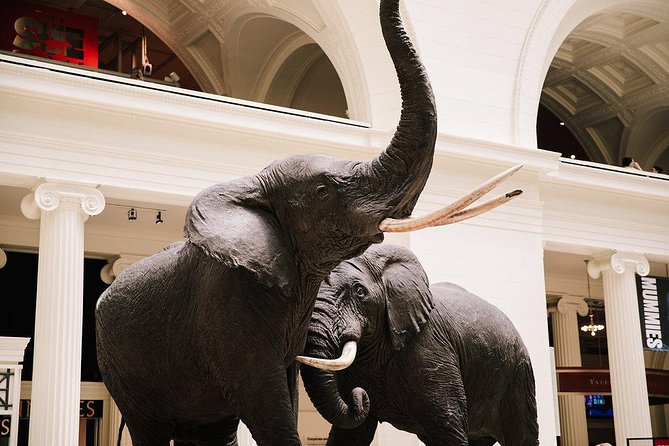
- SUE the T. rex anchors the dinosaur experience and sets the tone right away
- Free docent-led tours help you get context fast, even when you’re self-guiding
- Inside Ancient Egypt pairs mummies with old writing you can actually spend time on
- Underground Adventure turns scale into the gimmick, in a good way
- Hall of Gems and Hall of Jades add real variety beyond dinosaurs
- Hall highlights can be diorama-heavy, so focus based on what you care about
Field Museum All-Access Pass: a good way to buy time
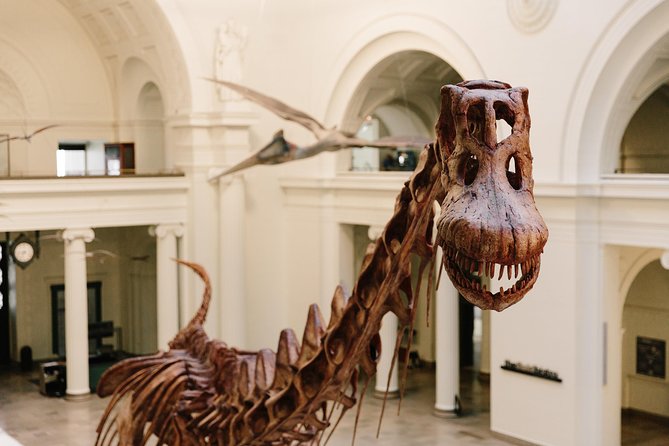
The Field Museum is the kind of place where one ticket can turn into a whole day, and sometimes more. That’s exactly why the All-Access Pass approach works: it’s designed so you’re not stuck wondering which extra exhibits you’re missing. With this pass, you get access to all ticketed exhibitions, and you can choose how long you want to stay, from about 1 hour up to roughly 8 hours.
I like this style of visit because it respects real life. If you’re traveling with kids, you can aim for the highlights and still have a satisfying morning. If you’re on a solo mission, you can linger through dinosaurs, ancient cultures, and natural history without feeling like you’re wasting paid access.
Just remember, the museum is big. Even with an all-in pass, you’ll have to make peace with the fact that you might not see everything in one sitting.
You can also read our reviews of more historical tours in Chicago

Price and Logistics: what you pay for at $41

At $41 per person, this pass isn’t just a “general admission plus.” It’s built around value that shows up in two places: ticketed exhibitions and docent-led tours. The included access matters because the Field Museum runs special and ticketed experiences in addition to core halls. If you’re aiming to see the top themed areas and not skip the paid extras, the All-Access Pass can feel like the practical choice.
The logistics are straightforward, but don’t ignore one detail: you’ll have to exchange your voucher for the actual pass when you arrive. That exchange can mean a short line and a tiny, easy-to-misplace slip of paper. Keep it in the same pocket as your phone, not in the bottom of your bag where it becomes a scavenger hunt.
Also note the museum hours: 9:00 AM to 5:00 PM daily. Last entry times matter because you don’t want to show up late and discover you missed the time-limited parts of the day:
- Last special exhibition entry: 3:30 PM
- Last general admission entry: 4:00 PM
Choosing your entry time: early gives you options
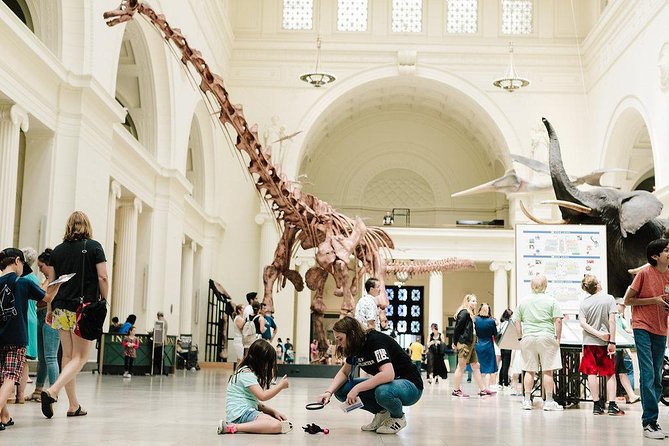
This pass lets you pick an entry time and decide how long to stay. I’d treat early entry as the default strategy, especially if you care about the 3D film. The 3D movie isn’t included; it’s an extra charge, and reserving a time is recommended, with an arrival window suggested from 9:00 AM to 12:00 PM.
Even if you skip the 3D movie, early entry helps in a less dramatic way: you start with fresh legs and more daylight time to explore outside the museum too. The Field Museum sits on Chicago’s Museum Campus, so you can make it part of a bigger area plan instead of a one-building trip.
One more practical point: the venue is open all week, so you can aim for your best day based on your trip schedule rather than hunting for a specific weekday.
Meeting point and where the museum fits in Chicago
You’ll start at Field Museum, 1400 S Lake Shore Dr, Chicago, IL 60605. The experience ends back at the same meeting point, so plan around a full museum stop, not a quick drop-in.
This location is a big plus. It’s near public transportation, and it’s also one of the easiest museum stops to pair with other Museum Campus sights. Plus, the Field Museum has dining facilities and performance opportunities, and you’ll get that Lake Michigan / downtown Chicago skyline view when you take breaks.
In other words: you’re not only paying for exhibits. You’re paying for a day-trip setting that feels built for sightseeing, not just waiting inside rooms.
Stop 1: the Field Museum halls, from SUE to the big themes
Your “tour” here is basically a guided structure around one main stop: the Field Museum. Think of it like this: you enter with a pass, then you pick your flow through the major themed areas.
The good news is that the museum is organized enough that you can make smart choices without feeling lost for long. Maps and highlights guides are available in English, Spanish, French, German, Italian, Mandarin Chinese, Japanese, Korean, Polish, and Portuguese. That’s helpful if you’re traveling with someone who prefers a particular language.
If you want an easy plan, anchor your day with the biggest draws first, then work outward. That reduces the odds you’ll hit your least-favorite halls with your energy already gone.
You can also read our reviews of more museum experiences in Chicago






SUE and the dinosaur moment everyone notices
You can’t miss the dinosaur magnet here. The Field Museum is home to SUE, described as the most complete T. rex. In practice, SUE is the exhibit that pulls everyone in, from little kids pointing at teeth to adults who want to read every label.
What I like about starting with SUE is that it sets expectations. You immediately get a sense of the museum’s scale—massive halls, high-quality displays, and the kind of presentation that makes you slow down. Even if you’re not a dinosaur person, SUE is hard to treat like background noise.
If you do have dinosaur lovers in your group, build the rest of the day around the Dinosaur Hall area. One review specifically flagged the Dinosaur Hall experience as a true standout, and this museum really leans into dinosaurs as a central theme.
Inside Ancient Egypt: mummies plus written history
After dinosaurs, Inside Ancient Egypt is a strong second stop because it shifts the tone from prehistoric creatures to human history. This area includes 23 Egyptian mummies and 5,000-year-old hieroglyphics.
I like that combination. Mummies alone can feel like a single-theme stop. Add the hieroglyphics, and suddenly you’re spending time with context: how people wrote, recorded, and remembered. It’s also a good area for people who want something calmer after a loud, high-energy dinosaur moment.
If you’re short on time, spend your limited minutes in the Egypt space strategically. Don’t try to rush every case. Pick one or two areas and read slowly. The payoff is in the details.
Underground Adventure: scale as the trick
Underground Adventure takes a different approach. You explore a subterranean world by shrinking to 1/100th of your natural size.
That’s exactly the kind of idea that works in a museum: it turns imagination into a physical experience, not just a flat display. Even if you’re mostly a label reader, scale-based exhibits tend to keep you engaged.
One caution I’d give based on what’s included with this pass: the extra experiences aren’t all equally fun for everyone. Some parts of the museum’s extra programming can lean toward dioramas and observation rather than hands-on interaction. If you know you prefer practical, moving exhibits, you’ll want to prioritize the core dinosaur and Egypt areas first, then decide how much time to spend underground.
Hall of Gems and Hall of Jades: a reset with color
The Hall of Gems and the Hall of Jades are where the museum shows its range. These spaces help break up the day so you’re not stuck in the same style of exhibit for hours.
The Hall of Jades gets specific credit: one of the largest collections of Chinese jade in North America. That makes it more than a pretty room. If you like crafted objects, this is the kind of exhibit where you can slow down and compare pieces.
The Hall of Gems also works well for groups because it’s easy to find something interesting even if you’re not a specialist. You can point at stones, discuss how they look, and then let the museum’s explanations do the heavy lifting.
Ancient Americas: a long arc through time
If you want the museum to do more than entertain, the Ancient Americas section is the place to look. It takes you through 13,000 years of history, from ice age mammoth hunters to the temples of the Incas and Aztecs.
This is a good way to balance your day. After dinosaurs and Egypt, you get a different continent, different civilizations, and a broader sense of how humans adapted to changing environments over millennia.
If your schedule is tight, don’t try to read everything from end to end. Instead, choose a single time period and then use the transitions to understand the larger story.
Dinosaur Hall: Evolving Planet and the “everything together” feeling
Back on dinosaur territory, the Dinosaur Hall area is described as newly renovated, with Evolving Planet as part of the experience. The idea is that giant sloths, woolly mammoths, and dinosaurs mingle in one place, which makes the hall feel more like a world than a single timeline display.
I like this setup because it encourages comparison. It’s not only about one animal species. It’s about change—what lived together, what disappeared, and how life shifted across time.
What your All-Access Pass covers (and what costs extra)
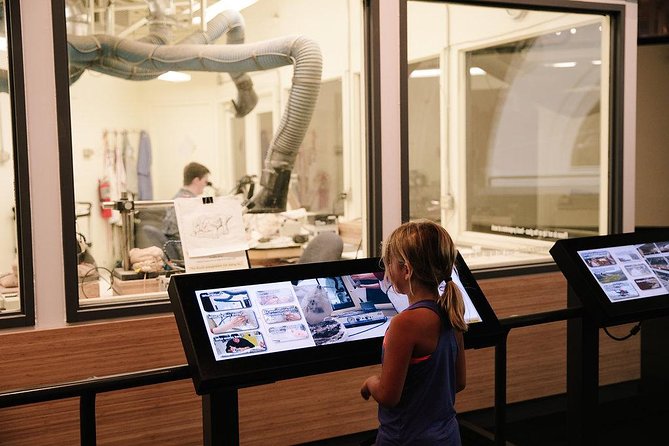
Here’s the clean breakdown of what’s included versus not:
Included
- Free daily docent-led tours
- Access to all ticketed exhibitions
Not included
- The 3D movie (extra charge, availability-based)
There’s also practical timing guidance for the 3D movie: it’s recommended to arrive early between 9:00 AM and 12:00 PM to reserve your time. Even if you plan to skip the 3D show, that early arrival window still helps you start with the exhibits that need the most attention.
Also remember: your museum entry has last-call rules. If you’re hoping to catch special exhibitions, aim to be inside well before 3:30 PM. If you arrive late, you might still see plenty, but you won’t have the full range.
Free docent-led tours: the shortcut to understanding
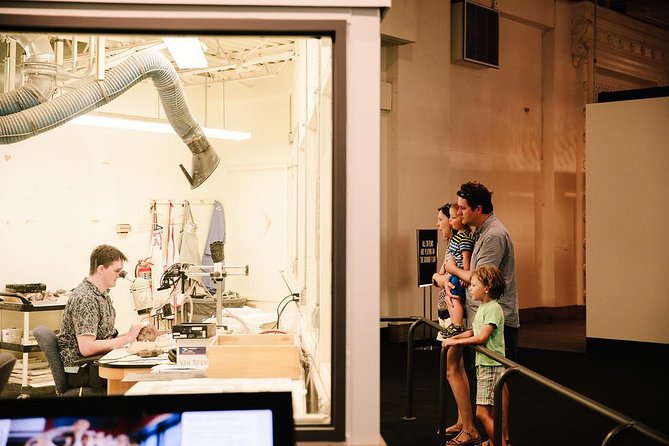
I’d treat the docent tours as your way to get value out of a big building. The pass includes free docent-led tours each day, and those are one of the easiest ways to turn a museum visit from random walking into real learning without signing up for a paid guided program.
Docent quality can vary, but the structure is the same: you’re getting explanations designed for visitors, not for specialists. It’s also a good time to ask questions you might not bother reading on the wall labels.
If you want the most from the tours, go early and plan to attend at least one. And if you’re worried about not getting a specific guide assigned on arrival, it’s smart to ask right away so you’re not waiting later in the day when your energy is lower.
How long should you plan? (Most people need more than they think)
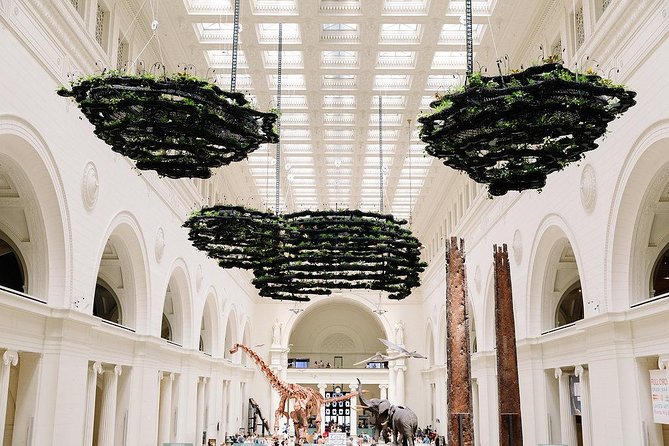
The pass is designed to work for short or long visits: about 1 to 8 hours. In real terms, I’d plan around your goals:
- If you’re chasing dinosaurs and Egypt only: 2.5 to 4 hours can work, especially if you move efficiently.
- If you want gems, jades, ancient Americas, plus at least one extra exhibit: expect closer to half a day to a full day.
- If you want to do a 3D movie and take breaks without rushing: you’ll likely want a full day.
One review mentioned spending almost 4 hours and still not seeing everything, and another suggested you should be ready to spend more than 6 hours. That matches the museum’s scale: you can enjoy it without rushing, but you shouldn’t assume you’ll finish quickly.
Good news: there are water bottle refill stations, which helps if you’re staying longer.
Dining and breaks: don’t let food timing derail your day
The Field Museum has dining facilities. That’s convenient, because you can step out, reset, and return without losing your place on the route.
But plan for prices. Some reviews call the bistro area extremely overpriced, while also noting it’s decent and family-friendly. Translation: eat if you need to, but don’t treat the café like a budget meal.
A smart rhythm is to schedule your first snack break mid-morning, then either do lunch in the museum or bring outside snacks if that’s your style. Either way, use breaks to avoid that tired, label-blur feeling that hits after long indoor walking.
Who should book this pass, and who should be choosy
This All-Access Pass fits best if you want variety without decision fatigue. It’s also great if you like having docent tours as a built-in learning layer.
Book it if:
- You’re a first-time visitor and want the big highlights in one day
- You want dinosaurs, Ancient Egypt, and themed halls beyond just fossils
- You like museums that reward slow reading and comparing objects
Be choosy if:
- You mostly want hands-on interaction. Some areas lean more toward viewing than doing.
- You have strict time limits and don’t want to spend the day walking. The museum is huge, and even with an all-access pass, you still need time.
- You’re not interested in extra ticketed experiences. The pass includes ticketed exhibitions, so it makes the most sense if you’ll actually use them.
Should you book the Field Museum All-Access Pass?
I’d book this pass if your goal is a full Field Museum day with minimal stress about what’s included. At $41, the value is in the combined access to ticketed exhibitions plus free docent-led tours, which is exactly what you want when the museum’s size can otherwise swallow your plans.
Skip it or simplify your plan if you already know you’ll only care about one or two themed areas. In that case, you might not use the included ticketed extras. But if you’re the type who likes to wander with intention—dinosaurs in front, then Egypt, then something unexpected—this pass makes the day easier and more satisfying.
FAQ
What’s included with the Field Museum All-Access Pass?
You get free daily docent-led tours and access to all ticketed exhibitions.
Is the 3D movie included?
No. The 3D movie is an extra charge and depends on availability.
Can I choose my entry time?
Yes. You pick an entry time and decide how long you want to visit.
How long can I stay with the pass?
It’s listed as approximately 1 to 8 hours.
What are the museum hours?
The Field Museum is open 9:00 AM to 5:00 PM daily.
When do last entries happen for special and general areas?
Last special exhibition entry is 3:30 PM, and last general admission entry is 4:00 PM.
Where do I meet for the experience?
The meeting point is the Field Museum at 1400 S Lake Shore Dr, Chicago, IL 60605.
What’s the group size limit?
The group size is capped at a maximum of 15.
Are there museum maps or guides in multiple languages?
Yes. Museum maps and highlights guides are available in multiple languages, including English, Spanish, French, German, Italian, Mandarin Chinese, Japanese, Korean, Polish, and Portuguese.
Can I cancel, and what’s the deadline?
You can cancel up to 24 hours in advance for a full refund.