REVIEW · PANORAMA MESDAG
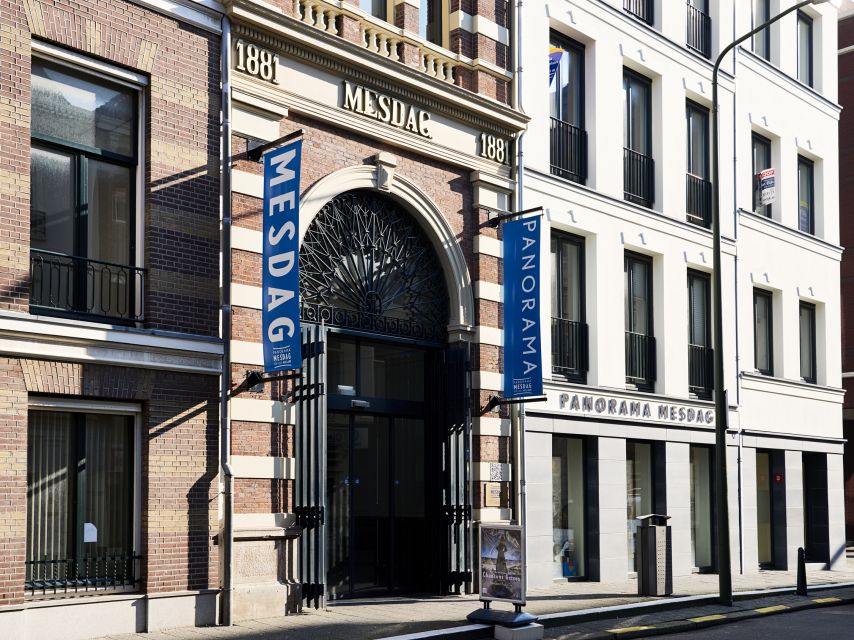
The Hague: Panorama Mesdag Museum Entry Ticket
Book on GetYourGuide →Operated by Panorama Mesdag · Bookable on GetYourGuide
Panorama painting can sound like a gimmick. Here, it feels more like a trick your eyes actually fall for—Panorama Mesdag is a huge circular canvas, and you stand in the middle of it to look around 360°. I especially loved the way the museum helps you spot the optical illusion (it’s clever, and it works), and the emotional punch of the Scheveningen view painted for 1881. One consideration: this is a lot of looking at art in one space, so if you need lots of variety hour to hour, you might want to pair it with another nearby stop.
You’ll get entry to the museum plus an included audio guide, so you’re not stuck guessing what you’re seeing. After you take in the panorama from the observation deck, you’ll also have time for the permanent collection and a temporary exhibition inside the same visit.
In This Review
- Key highlights to look for
- Europe’s largest circular painting: what the experience really feels like
- The panorama deck: your 360° moment (and why standing matters)
- The optical illusion: how panorama painting creates depth
- Audio guide strategy: make it work while you’re standing there
- Beyond the circle: permanent collection and a temporary exhibition
- Price and value: is $18 worth one hour?
- What to bring (and what to skip)
- Timing your visit in a real day: how to get the most out of the hour
- Who should book this (and who might not)
- Should you book Panorama Mesdag? My honest take
- FAQ
- How long is the Panorama Mesdag entry experience?
- How much is the ticket?
- Is an audio guide included, and what languages are available?
- What should I bring with me?
- Are pets allowed inside the museum?
- Is this experience suitable for people with mobility impairments?
- Can I cancel if my plans change?
Key highlights to look for
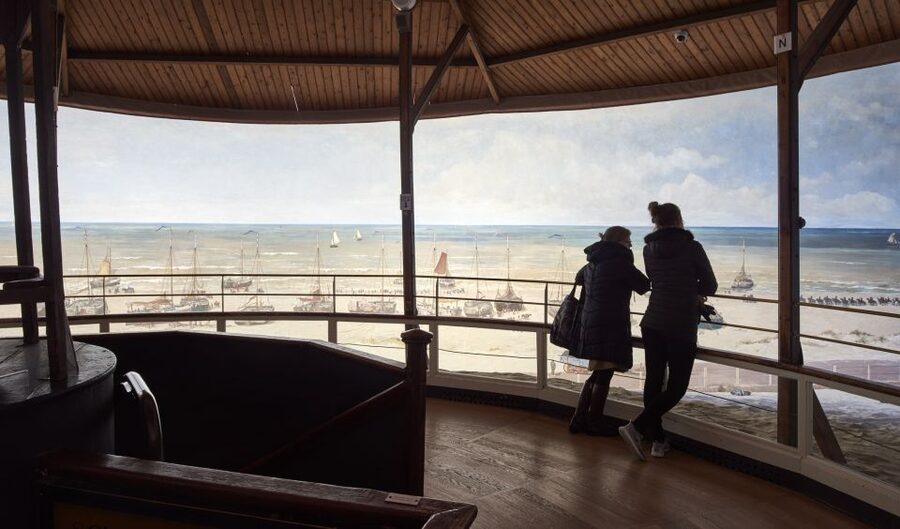
- Stand at the exact center for the full 360° illusion effect
- Scheveningen 1881 views of sea, dunes, and the fishermen’s village
- The changing light effect, which makes the panorama feel different moment to moment
- Audio guide callouts tied to what you’re looking at right now
- Optics 101 for how panorama art creates believable depth
- Permanent collection + a temporary exhibition to round out the hour
Europe’s largest circular painting: what the experience really feels like
You’re paying for a visual effect, yes—but the best part is how it changes your perception. The museum is built so you can stand in the middle and look around in a full circle, like you’re inside a moment in time. That’s the headline claim: the biggest painting in the Netherlands, and Europe’s largest circular canvas. In practice, the payoff is simpler. You look up, you look left, you look right, and suddenly a flat painting starts behaving like a real scene.
The view is of Scheveningen from 1881—sea, dunes, and an older version of the beach world, before today’s skyline takes over the horizon. You’re seeing the coast as Hendrik Willem Mesdag painted it, including fishermen’s village details and the sense of the area shifting toward beach life. If you’ve ever wondered why some art feels strangely lifelike, this is one of the most direct answers you can get in The Hague.
I also like that the museum doesn’t only lean on the novelty. It’s not just a photo-op circle. You’re given an audio guide, and you’re led through highlights so you understand what you’re looking for rather than just staring and hoping your brain fills in the gaps.
Possible drawback: it’s not a “wander forever” museum. The core experience is concentrated, and you’ll get more out of it if you’re willing to pause and watch your own eye tricks happen. If you expect a fast-moving checklist of rooms, plan a little patience.
The panorama deck: your 360° moment (and why standing matters)
When you enter, the main event is the observation deck where you can see the panorama painting all around you. The arrangement is intentional: the illusion works because you’re positioned where the painting is designed to be viewed. So yes—get yourself into the center zone instead of hanging back like you’re afraid of heights or crowds. Think of it as the museum’s “proper seat.” You’ll feel the effect more strongly when you’re in the right spot.
From there, you take in a 360° view of the coast. You’ll be watching the sea line, the dunes, and the older fishermen’s village landscape, plus the way The Hague city starts to encroach in the painting’s backdrop. The description highlights that the incidence of light changes from moment to moment, and you can feel that. Lighting is part of the illusion engine here. Even when the painting stays still, the way it reads to your eyes can shift as your gaze and the room light change.
This is where that “I thought it would be a gimmick” reaction turns around. The optical effect doesn’t ask for blind faith. It plays with your expectations of horizon, distance, and depth cues. The museum makes it easier to notice the mechanics, so it turns into something you learn to see, not something you simply passively experience.
The optical illusion: how panorama painting creates depth
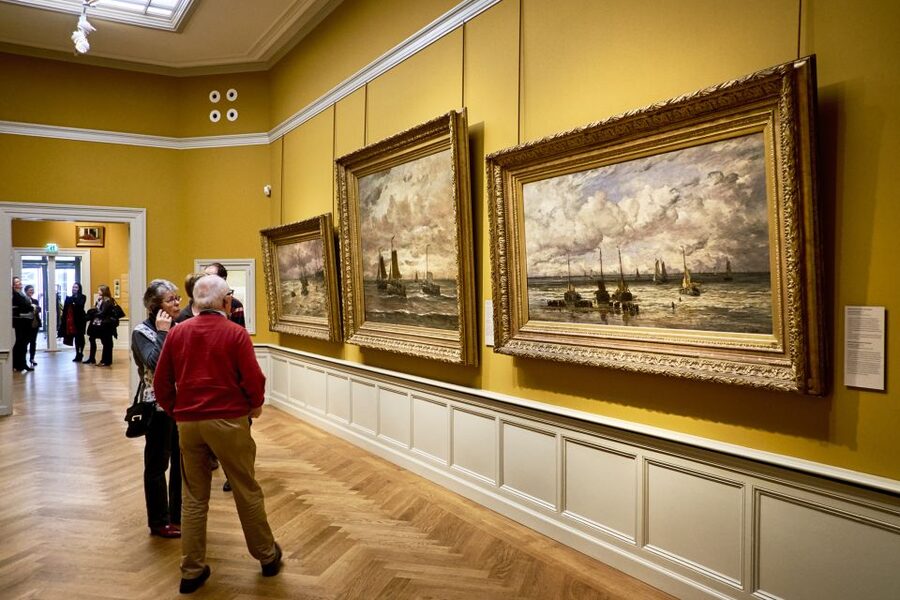
Panorama art works by tricking you into accepting a curved view as a natural world. The huge circular canvas wraps around you, so the horizon line and perspective cues don’t behave like they do in a normal painting on a flat wall. Your brain tries to stitch the scene into a coherent environment, and the geometry does a lot of the work.
What I like here is that you’re not left in the dark about what’s happening. You’ll learn about the illusion of panorama painting during your visit. The audio guide helps you connect the “wow” with an actual explanation—why the scene feels like you’re in it and why it keeps reading differently as you move your head.
This matters for two reasons:
- It helps you enjoy the museum more, because you’re not guessing what details are “important.”
- It gives you a new way to look at painted scenes afterward. Even if you never see another panorama museum, you’ll start noticing the same tricks in other visual art.
If you’re the type who likes practical context instead of just vibes, this is a big plus.
Audio guide strategy: make it work while you’re standing there
You get an audio guide with your ticket. It’s included, and it covers highlights of Museum Panorama Mesdag. You’ll have multiple languages available—Dutch, English, German, French, and Spanish—so you can match it to your comfort level.
Here’s the simple way to use it well:
- Listen before you start wandering your gaze around the panorama deck.
- Then pause and look for what the audio mentions. Don’t just let the narration run in the background.
- If you catch a detail that clicks, stay with it for 20–30 seconds. That’s usually enough time for the illusion to “settle” in your brain.
The museum also expects you to bring headphones. That’s important. If you forget, you’ll waste time figuring it out on-site, and you may not get the smooth, guided experience the ticket is built around.
The audio guide is what turns this from a one-time wow into a more meaningful visit.
Beyond the circle: permanent collection and a temporary exhibition
Your visit isn’t only the main panorama. After (or alongside) the central deck time, you’ll also have access to the permanent collection and a temporary exhibition.
That matters because it changes the shape of the hour. If the panorama is the optical centerpiece, the extra rooms give you context and variety. You’re not trapped in one visual loop. Instead, you get a chance to step back, see other works, and think about why this panorama mattered enough to keep it around long-term.
Even from the reviews, a theme shows up: people are moved not just by the technique, but by the care behind it. One comment points out how clear it is that Mesdag and his wife loved Scheveningen, and that the panorama’s preservation after their deaths is part of what makes it poignant. You don’t have to “study” that story to feel it, but having a bit of museum context helps the emotional reaction land.
This is also a good moment to slow down. If your first reaction is pure wonder, step away from the deck briefly and let the rest of the museum reset your head.
Price and value: is $18 worth one hour?
At about $18 per person for entry with an included audio guide, you’re paying for a very specific kind of experience: standing inside Europe’s largest circular canvas and being guided through what you’re seeing.
Is it a bargain? It depends on what you like.
- If you enjoy art that plays with perception—visual puzzles, perspective tricks, “wait, that can’t be flat” moments—this is strong value. You get a full 360° experience in a short time.
- If you mostly want hands-on activities or lots of walking between unrelated rooms, you might find it pricey for a single core attraction.
But one-hour duration helps the value equation. You’re not committing half a day. You can fit it in on a day when you’re also doing seaside The Hague sights nearby, or you can build a “culture-and-coast” route without burning your whole schedule.
For me, the $18 price feels reasonable because the ticket includes the audio guide and because the museum is built around a one-of-a-kind viewing setup. You can’t easily replicate this kind of perspective trick anywhere else.
What to bring (and what to skip)
This is a small, practical list, and it matters.
Bring:
- Headphones for the included audio guide.
Don’t bring:
- Pets are not allowed (assistance dogs are allowed).
One more note: the experience is not suitable for people with mobility impairments, according to the information provided. If mobility is a concern, you’ll want to think carefully before booking.
Timing your visit in a real day: how to get the most out of the hour
The listed duration is 1 hour, but starting times can vary—so check what’s available when you book. That’s typical for museum entry slots tied to on-site flow.
Inside, think in phases:
- Deck time: prioritize your 360° viewing and use the audio guide to focus on highlights.
- Look for “meaning” details: the museum is trying to get you past the wow and into specific elements of the 1881 Scheveningen scene.
- Permanent + temporary spaces: use this to reset and broaden the context so the visit sticks.
If you’re short on time, you can still do the core properly by concentrating on the deck and taking only the most relevant parts of the rest of the museum. If you have a little extra patience, you’ll get more from the permanent collection and temporary exhibition because they help the panorama feel less like a one-minute trick and more like a preserved piece of cultural memory.
Who should book this (and who might not)
I’d book Panorama Mesdag if you:
- like optical tricks and perspective games (even if you’re skeptical at first)
- want a memorable “wow” that doesn’t require long travel
- enjoy learning while you look, thanks to the audio guide
- care about how art preserves a place in time—Scheveningen in 1881, not the present-day postcard version
You might reconsider if you:
- want lots of interactive exhibits or a highly varied route of many different activities
- need a museum designed for mobility access
- prefer your art in small doses rather than focused, sustained viewing in one main setting
Should you book Panorama Mesdag? My honest take
If you can spare an hour in The Hague, I think it’s a strong booking. For $18, you get entry plus an audio guide, and you’re stepping into a viewing setup that’s genuinely hard to fake elsewhere. The biggest reason to go is the feeling that a flat painting becomes a believable environment—and the museum helps you understand the illusion, not just witness it.
Book it if you enjoy being guided, watching your perceptions shift, and spending a little time with the version of Scheveningen Mesdag saw in 1881. Skip it only if you dislike single-scope attractions where most of your time is spent looking at one master experience.
FAQ
How long is the Panorama Mesdag entry experience?
It’s listed as a 1-hour visit. Starting times can vary, so check availability when you book.
How much is the ticket?
The price is $18 per person.
Is an audio guide included, and what languages are available?
Yes. The audio guide is included, and it’s available in Dutch, English, German, French, and Spanish.
What should I bring with me?
Bring headphones so you can use the included audio guide.
Are pets allowed inside the museum?
Pets are not allowed. Assistance dogs are allowed.
Is this experience suitable for people with mobility impairments?
It’s not suitable for people with mobility impairments, based on the provided information.
Can I cancel if my plans change?
There’s free cancellation up to 24 hours in advance for a full refund.