REVIEW · ROME
Early Vatican Museums & Sistine Chapel Small Group Tour
Book on Viator →Operated by Through Eternity Tours · Bookable on Viator
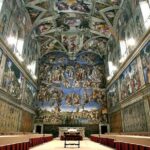
Beat the Vatican stampede at 7:35. This early start gives you early access into the Vatican Museums about an hour before most visitors, so the place feels less like a squeeze and more like a story. With a small group and an English-speaking guide, you’ll move through the sites that define Vatican power and taste, from classic art halls to the Sistine ceiling.
I especially like two things. First, the tour hits the big visual moments—Raphael Rooms, the Hall of Maps, ancient sculpture, and the courtyard stops—without pretending you can see everything in one morning. Second, the small-group format (max 12) plus headsets for groups of 6+ helps you stay connected to the guide instead of just following the crowd.
The main drawback is time pressure. You get a short Sistine Chapel visit, and the museum route involves plenty of walking and staircases. If you’re hoping for a quick, two-stop Vatican day, this highlights-focused tour may feel like a lot.
In This Review
- Key takeaways before you go
- Early Vatican access starts your Rome day the smart way
- Meeting at Viale Giulio Cesare: how to avoid the first stress spiral
- Vatican Museums route: what you actually see in the 3-hour block
- Rooms of Raphael: where art turns into a political message
- Hall of Maps: the surprise “wow” stop
- Ancient Sculpture Gallery and the courtyard rhythm
- Sistine Chapel in 15 minutes: how to make the most of a short stop
- St Peter’s Basilica after the museum: escorted start, self-paced continuation
- Small group size and headsets: why this tour feels easier than big groups
- Price and value: is $183.90 a smart spend?
- Who should book this Vatican Museums and Sistine Chapel tour
- Should you book this early Vatican tour?
Key takeaways before you go
- Early access changes everything: you’re entering while the Vatican is still “quiet-loud,” not full-on packed
- Highlights, not everything: you’ll see major rooms, but you won’t have leisurely freedom to wander
- Small group (up to 12): easier listening, easier movement, less chaos at photo points
- Headsets for groups 6+: you hear the guide clearly, even in busier sections
- Sistine Chapel time is short by design: plan to focus, not skim
- Escorted entry into St Peter’s Basilica: you get an organized start, then can continue on your own
Early Vatican access starts your Rome day the smart way
The Vatican is one of those places where timing is basically your ticket. Starting at 7:35am means you’re not battling peak lines and peak energy. You’ll feel the difference immediately once you’re inside the museum route—people are still filtering in, and there’s room to listen.
This is also one of the best setups for first-timers. The Vatican Museums can feel like an endless art warehouse unless someone helps you connect what you’re seeing to why it matters. Here, your guide keeps the focus on context: who commissioned what, what the Pope wanted people to notice, and how the art supports the bigger story.
You can also read our reviews of more museum experiences in Rome
Meeting at Viale Giulio Cesare: how to avoid the first stress spiral
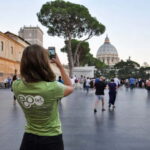
Your meeting point is Viale Giulio Cesare, 237, 00192 Roma RM. The start time is 7:35am, and you’re expected to arrive 10 minutes early because the group can’t wait for late arrivals. This is not a “show up whenever” situation—your whole entry timing depends on everyone being on schedule.
A practical note: this tour is a walking tour with steps and staircases. Wear comfortable shoes you’ve already tested, and bring a water bottle. The Vatican route is long enough that you’ll appreciate having both.
If anyone in your group has mobility concerns, tell the operator when you book so they can try to accommodate you. And keep an eye on updates—during the Jubilee, some monuments may be under restoration, and you may receive messages about changes.
Vatican Museums route: what you actually see in the 3-hour block
You get admission included for the Vatican Museums, and the pacing is built around early access and crowd control. Expect a guided flow through several signature areas rather than a slow museum stroll.
Rooms of Raphael: where art turns into a political message
One of the biggest highlights is the Rooms of Raphael. These are the spaces most people imagine when they think of Vatican art, but what makes them more rewarding is what a good guide can explain while you’re standing there. You’ll move through the rooms with the bigger themes in mind—religious storytelling, authority, and symbolism that shows up again and again in Vatican iconography.
There is one reality check, though. The tour notes that on days with crowding and crowd-direction changes, you may not be able to make the Raphael Rooms within the planned time. It’s not the tour being “bad”—it’s how the Vatican handles movement. If Raphael Rooms are your absolute must, it’s worth going in with flexibility.
Hall of Maps: the surprise “wow” stop
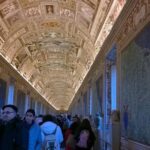
Next comes the Hall of Maps, which many visitors don’t expect to be as striking as it is. The concept is simple: you’re looking at a visual representation of the world, but inside a Vatican context. It’s a room where you can feel how geography becomes power when it’s framed by the Church.
This is also a good spot for slow attention. You’ll likely get enough guided context to make the details feel less random.

Ancient Sculpture Gallery and the courtyard rhythm
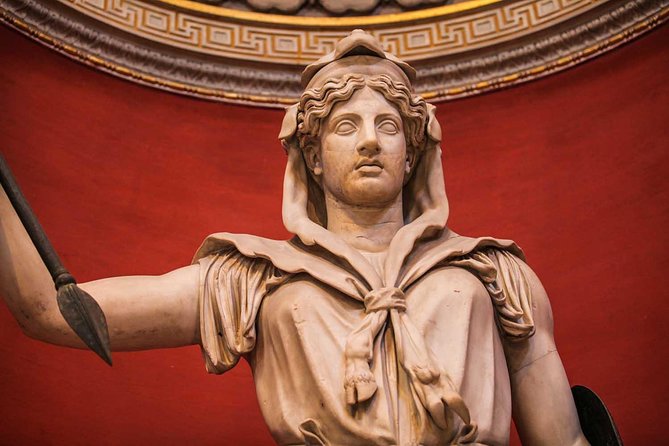
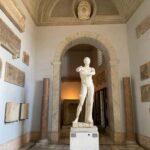
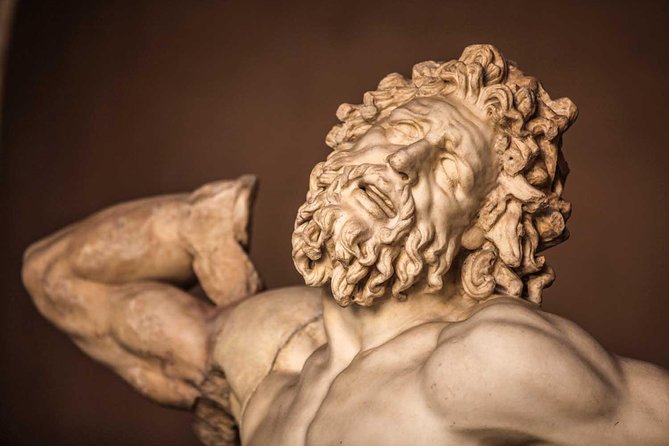
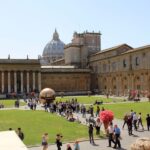
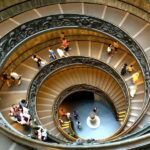
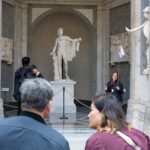
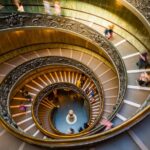
You’ll also pass through areas like the Ancient Sculpture Gallery and then break up the indoor intensity with courtyard spaces. Two listed outdoors/transition stops are the Belvedere Courtyard and the Cortile della Pigna. Courtyard breaks matter because they give your eyes a rest—and because they reduce the “all museum, all the time” feeling.
The Cortile della Pigna stop is brief (15 minutes), but it’s the kind of place where you get a quick breath and a sense of Vatican-scale space. Even when time is tight, the courtyard stops help the tour feel structured instead of chaotic.
Sistine Chapel in 15 minutes: how to make the most of a short stop
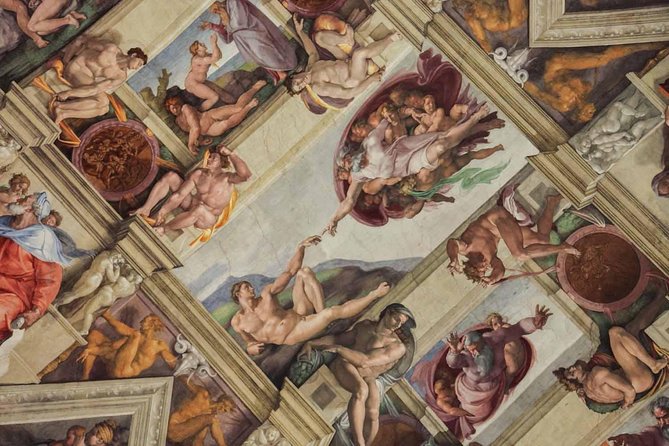
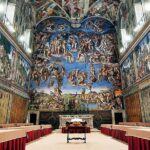
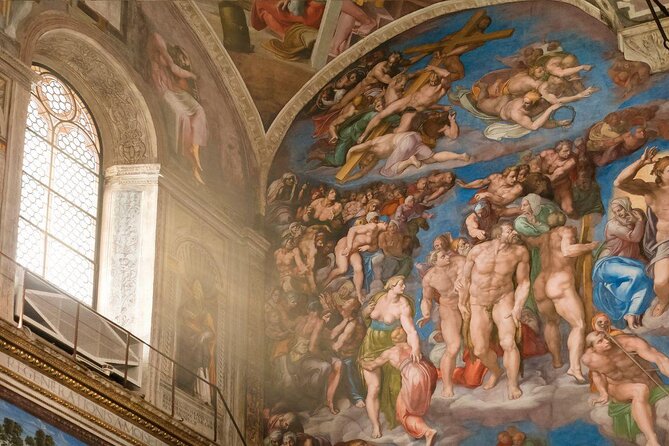
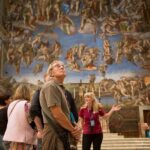
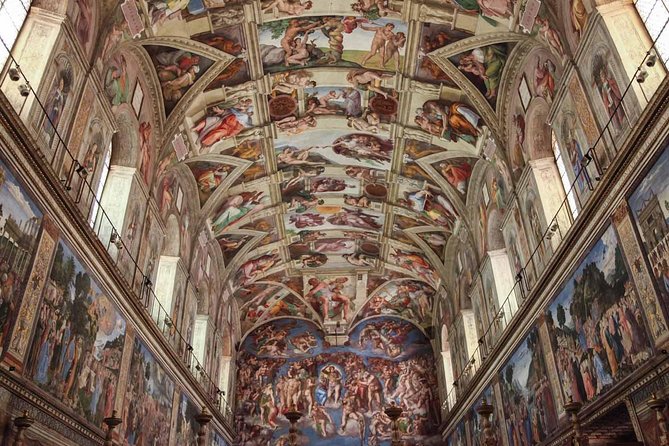
The Sistine Chapel stop is listed at 15 minutes, and it’s admission included. That’s enough time to see what you came for—especially when you enter earlier and avoid some of the worst crowd pressure.
You should go in with a plan for your attention. Pick one or two things you want to look for, like the overall ceiling composition or specific scenes that you’ve seen in books or online. When time is short, you don’t want to spend it trying to figure out what everything is.
This is also where guide quality shows. The Vatican doesn’t need extra spectacle—it needs interpretation. Many guides can talk about details; a great guide makes you see the structure and meaning behind the images. If you’re sensitive to hearing speech clearly, headsets help, but you still want to be positioned well in the group so you can hear over the room.
St Peter’s Basilica after the museum: escorted start, self-paced continuation
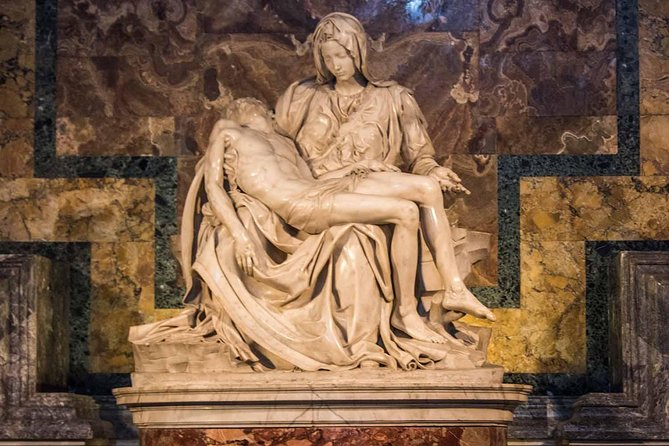
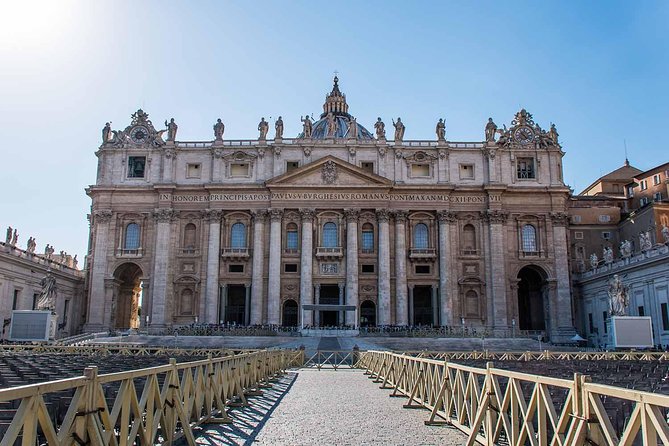
At the end of the tour, you’ll be taken to St Peter’s Square and you’ll have escorted entrance to St Peter’s Basilica. After that, you can go in on your own accord to continue your visit.
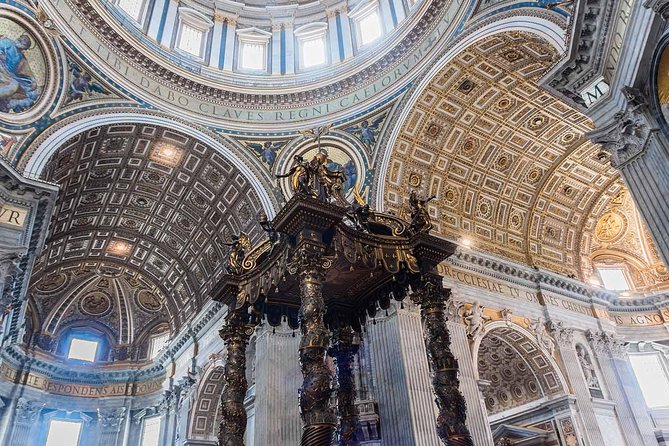
This setup is valuable because it prevents the “I finally got inside, now what?” feeling. You get a guided introduction and then freedom to explore at your own pace. One important caution: St Peter’s Basilica can have unscheduled closings or late openings for religious ceremonies. The tour notes that there are no refunds for last-minute closures, but your guide will still provide an introduction so you know what you’re seeing when you do get access.
Also keep in mind the tour includes a disclaimer that if you reserve within 72 hours, access to the Basilica cannot be guaranteed due to ticketing restrictions. If you want the safest chance at Basilica entry, booking far enough in advance is your friend.
Small group size and headsets: why this tour feels easier than big groups
This is capped at a maximum of 12 travelers. That doesn’t sound huge until you picture it inside the Vatican—then it feels like breathing room. Smaller groups also make it easier to stick together, hear directions, and avoid the constant stop-start you get with large crowds.
Headsets come into play for groups of 6 or more. Even if you’re not hard of hearing, headsets are a quality-of-life feature. They let you focus on what the guide is explaining instead of turning your head every few seconds to catch up.
There’s also a practical rule: you’ll be given a headset, and you’re required to return it at the end. If it’s not returned, you can be fined €100 for lost property. Just treat it like your “temporary museum passport” and keep track.
Price and value: is $183.90 a smart spend?
At $183.90 per person, this isn’t a budget “walk in and hope” plan. But the value comes from what’s bundled and what it helps you avoid.
Here’s what you’re paying for that reduces risk:
- an English-speaking expert guide
- Vatican Museums ticket included
- headsets (for groups of 6+)
- guided entry flow and an organized route through major areas
- escorted entrance to St Peter’s Basilica
- all fees and taxes
What’s not included is also clear: transportation to/from the meeting and end point, plus food and beverages, and gratuities.
So the real question is: do you want a curated highlights experience with reduced crowd stress? If yes, the price starts to make sense. If you’re looking for a freewheeling wander with zero structure, you’d probably do better building your own Vatican plan and going cheaper. This tour is for people who want guidance and speed.
Who should book this Vatican Museums and Sistine Chapel tour
This tour fits best if:
- you’re doing Rome with limited time and want the Vatican’s “greatest hits”
- you like learning how religious power shows up in art and architecture
- you prefer a small-group pace instead of a large herd
- you want to pair early Vatican Museums access with a Basilica visit
It may be less ideal if:
- your goal is only a quick Sistine Chapel and Basilica checkmark
This tour is museum-heavy by design. Even with a short Sistine stop, the rest of your time is spent in major museum spaces.
- you dislike structured routes
The Vatican is busy. A guided flow helps, but it is still a schedule with walking between stops.
- you’re extremely sensitive to hearing accents or fast speech
Most guides are clear, but you’ll want to stand where you can hear. Headsets help, yet comprehension depends on your position and the guide’s pace.
Should you book this early Vatican tour?
If you’re a first-timer, short on time, or you just want to spend your limited Vatican hours seeing the most important spaces with context, I think this is a strong booking. The early start, the small group size, and the included tickets and headsets make the experience feel more controlled than a DIY scramble.
I’d book it with one mindset: you’re here for highlights, not everything. If that matches how you travel, you’ll likely leave feeling like the Vatican finally made sense—especially once you pair the museum art stories with your Basilica visit afterward.