REVIEW · CAIRO
Day Tour to Giza Pyramids Complex, Egyptian Museum & Bazaar
Book on Viator →Operated by Egypt Tours Portal · Bookable on Viator
The Giza Plateau is a whole different kind of wow. This day tour strings together the pyramids, the Egyptian Museum, and Cairo’s bazaar world, with an Egyptologist guide, air-conditioned pickup, and a sensible time plan.
I love how the guide work turns landmarks into stories you can actually picture. Guides such as Ahmed Elgohary and Emy come up in high praise for strong explanations, patience, and practical help like telling you what to expect before you go.
One thing to consider: the Great Pyramid of Cheops entry ticket isn’t included, so if you want to go inside, plan for an extra cost on the day.
In This Review
- Key highlights at a glance
- From Cairo pickup to Giza sunrise-level energy
- Giza Necropolis: 2 hours on the plateau (and how to use it)
- Great Pyramid of Khufu: the world’s last wonder that still feels huge
- Great Sphinx and Valley Temple: short stops with real payoff
- Egyptian Museum: where King Tut’s golden details live
- King Tut highlights you should seek out
- One timing caution
- Khan Al-Khalili: Cairo’s open-air market stop that makes the day feel real
- Comfort, lunch, and why “small group” actually matters
- Price and value: what you’re actually paying for
- Who should book this Giza, Museum, Bazaar day trip
- Should you book it?
- FAQ
- Do I get hotel pickup and drop-off?
- How long is the tour?
- How many people are in the group?
- What admissions are included?
- Is the Great Pyramid of Cheops ticket included?
- Is lunch included?
- Do I need an entry visa for Egypt through this tour?
- Is tipping included?
- Can I cancel for a refund?
- When will I get confirmation after booking?
Key highlights at a glance
- Egyptologist-led pacing so you’re not just staring at monuments
- Most entry fees handled, with the Great Pyramid of Cheops ticket as the main exception
- Two big blocks of time: Giza first, then a focused museum visit
- Khan Al-Khalili included for real Cairo shopping and street life
- Small group size (max 15) plus hotel pickup and drop-off
From Cairo pickup to Giza sunrise-level energy

This is a full-day loop built for people who want the big hits without doing the heavy planning. Your day starts with pickup from your hotel in Cairo in an air-conditioned vehicle, then you meet your guide and get moving toward the Giza Necropolis.
The time structure is one of the biggest practical wins. You get a solid stretch for the plateau, then you shift gears to indoor history at the Egyptian Museum, and finish with a market stop that feels like a contrast to the stone giants earlier in the day. Also, the group is kept small (up to 15), which usually means you can ask questions and get help with the flow of tickets and timing.
One of the smartest touches is meet-and-assist service at your destinations. Cairo can be chaotic, and having someone help you stay on track with what you need to do next makes the day feel less stressful, especially if it’s your first trip to Egypt.
You can also read our reviews of more museum experiences in Cairo


Giza Necropolis: 2 hours on the plateau (and how to use it)
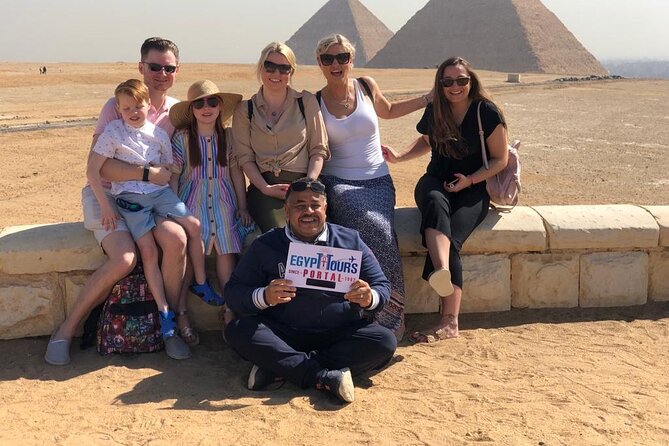
Your first major stop is the Giza Necropolis area, with admission included and a time window of about two hours. This is where you’ll start building your mental map of the site: what sits where, why the orientation matters, and how the pyramids and temples relate to each other.
Two hours sounds short on paper, but it’s enough if you focus on the right things early:
- Take a few minutes to step back and get the overall layout. It helps the rest of the site make sense.
- Use your guide’s explanations to connect the monuments to specific rulers and building ideas.
- Don’t spend every minute at one spot. The guide route matters here because you’ll want to see multiple perspectives, not just one photo angle.
This is also the stop where you’ll hear the kind of detail that makes the Giza experience stick. For example, your guide will point out the Sphinx’s placement and the story behind its carving, including the fun question about how the Sphinx lost its nose.
You’ll love this part if you want clarity, not just crowds and sightseeing. The plateau is impressive whether you know the background or not, but the guide’s job is to give you the background fast, so your photos have meaning later.
Great Pyramid of Khufu: the world’s last wonder that still feels huge
Next comes the Great Pyramid of Cheops (Khufu), scheduled for about one hour. This is not just any pyramid. It’s the last remaining monument of the Seven Wonders of the Ancient World, and it’s the largest on the Giza Plateau.
A few specific facts are worth holding onto while you’re there, because they explain why this structure feels so intense in real life:
- It was built for King Khufu.
- The height is listed as 147 meters.
- The construction involved more than 2,300,000 stones.
- Those stones are described as weighing from about 2.5 to 9 tonnes each.
Also, here’s the key price note: the Great Pyramid of Cheops admission ticket is not included. That means you may pay extra if you decide to enter. The tour still covers the big exterior experience, but if your bucket-list includes going inside, budget for the additional ticket.
Practical tip: keep your eye on timing. One hour at the pyramid sounds generous until you get slowed by lines, crowd movement, or people stopping for photos. If going inside matters to you, tell your guide early in the stop so you can decide quickly and avoid losing the chance.
Great Sphinx and Valley Temple: short stops with real payoff
After the pyramid, you move to the Sphinx for about 30 minutes, with admission included. This is a powerful little time slot because the Sphinx is both iconic and oddly personal in how it’s described.
The essentials you’ll hear on-site:
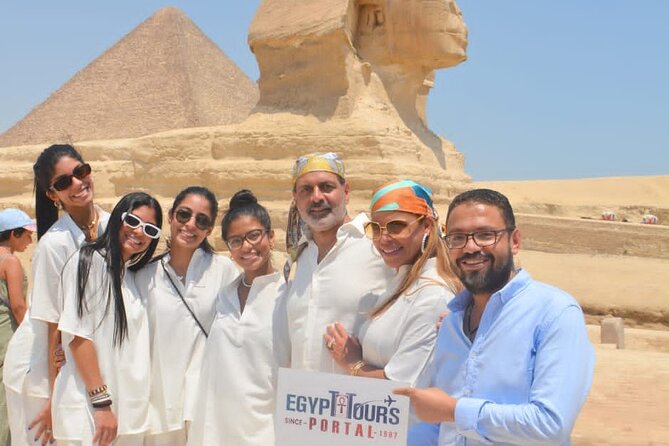
- The statue is a single piece carved from limestone.
- It’s associated with king Khafre for its facial expressions.
- Dimensions are given as roughly 73 meters long, 19 meters wide, and 20 meters high.
- Your guide will likely steer you toward the famous mystery about the missing nose.
Then comes the Valley Temple of Khafre for another short visit (about 30 minutes), again with admission included. Even if you don’t know much about Egyptian religious practices, this place has an important role in the story of royal mummification and purification.
The tour description frames it as the site that witnessed the main mummification & purification rituals of ancient Egyptian rulers and pharaohs. That context matters. Instead of treating the temple like just another ruin, you start seeing it as a functional part of the afterlife system people believed would carry on beyond death.
These two stops are where the day can feel surprisingly satisfying. You won’t have hours here, but you get the kind of guided context that turns a quick look into a clearer understanding.
Egyptian Museum: where King Tut’s golden details live
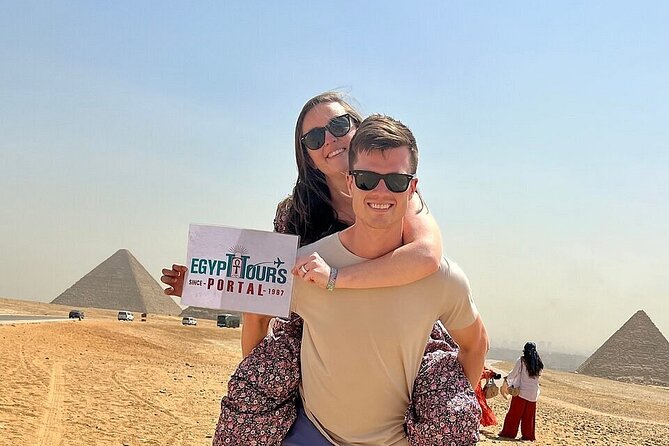
The biggest indoor block is the Egyptian Museum, scheduled for about 3 hours with admission included. This is where the tour shifts from monument scale to artifact scale, and it’s a very different kind of awe.
The museum is described as covering Egyptian civilization history, with a strong focus on pharaonic and Greco-Roman periods. You’ll also hear numbers that help you understand the sheer weight of the collection: at peak, it held more than 100,000 items, and the tour description references over 250,000 artifacts.
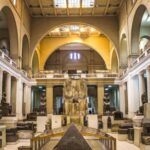
The ground floor, in particular, is highlighted as having large, heavy objects, including colossal figures positioned in the middle atrium. If you’ve only ever seen Egypt through photos, being in a hall with large pieces can shock you. It makes the museum feel less like a gallery and more like an archaeological storage and presentation space.
You can also read our reviews of more shopping tours in Cairo




King Tut highlights you should seek out
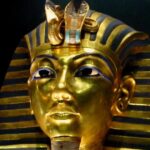
This stop is famous for King Tutankhamun’s treasures. The tour description specifically calls out golden items, including his golden mask that was enclosed in his tomb for about 3,500 years.
You don’t need to know every detail to appreciate why that matters. The mask is one of those objects where time feels irrelevant. Standing in front of it, you’re basically looking at a finished, purposeful object meant to survive. That’s a different kind of connection than seeing a building made of stone blocks.
One timing caution
Three hours can feel like a lot until you hit the rooms you want most. If you’re the type who wanders slowly, you’ll probably spend extra time following your curiosity. If you tend to rush, you might miss side rooms or the larger objects in the atrium.
Use your guide here. It’s the kind of place where a good guide helps you choose a route that matches your interests instead of letting the day scatter you into a dozen directions.
Khan Al-Khalili: Cairo’s open-air market stop that makes the day feel real
After the museum, you head to Khan Al-Khalili, described as the largest open-air market in the world. The stop is about one hour, and it’s free (no admission fee required).
This is a smart finish because it pulls you out of Egypt’s ancient timeline and drops you into everyday Cairo culture. You’ll find Egyptian items you might want to see or buy, with categories mentioned like:
- clothes
- spices
- other local goods
An hour is enough to walk, browse, and get your bearings in the bazaar maze. But it’s not enough to do serious shopping if you’re hoping to compare lots of stalls or negotiate multiple items. Think of this as the cultural punctuation mark at the end of a heavy history day.
Practical tip: wear comfortable shoes. Your feet will do the real work here, more than your camera does. If you’re prone to feeling overwhelmed in crowded markets, stick close to your guide and keep your energy for the objects you truly care about.
Also, do your best to keep water and snacks in mind earlier in the day. The pacing is set, and once you’re in the market, you’ll want to avoid breaking flow just to find basics.
Comfort, lunch, and why “small group” actually matters
This tour is built around comfort in a way that’s easy to overlook until you’re in it. You get an air-conditioned vehicle for the driving portions, plus hotel pickup and drop-off. The day is about 8 hours total, so comfort isn’t a luxury. It’s how you keep your energy for the long, walking-heavy stops.
Lunch is included at an Egyptian restaurant. Having lunch handled is one of the best value elements here because it prevents the day from breaking into stressful logistics like finding food that fits your schedule. The tour description doesn’t spell out the exact menu, but it does promise you a meal as part of the package.
One more point: the group size cap is 15. In places like Giza and museums, that can change how the day feels. Too many people and you spend time waiting. Too few and you lose some of that group help. At 15, you’re more likely to get the feeling of moving as a unit while still being able to ask questions and take photos.
The reviews you were given in your dataset lean hard toward guide performance. Names that show up with praise include Ahmed Elgohary, Emy, Mohamed Osman, Reham Sabry, Manal, and Hany Mubarak, among others. The themes are consistent: guides are prompt and organized, explanations connect the ruins to real stories, and the guide helps you get good photos without feeling like you’re fighting for time.
Price and value: what you’re actually paying for
The price is listed as $136.37 per person for an approximately 8-hour day tour. That’s not a budget number, but you’re also not just buying transport.
Here’s what your money covers, based on the tour details:
- air-conditioned vehicle
- a skillful Egyptologist during your private day tour (as described)
- admission fees to the mentioned places
- meet and assist at destinations
- lunch at an Egyptian restaurant
- admission at stops like the Sphinx, Valley Temple, and the Egyptian Museum
Now the important exception: the Great Pyramid of Cheops admission ticket is not included. So you should treat the base price as covering the core experience with a potential add-on if you want to go inside the pyramid.
Tipping is not included. That means your real out-of-pocket cost will be a bit higher once you account for gratuity and any extra ticket decisions.
If you want value in practical terms, this tour tends to fit best if you:
- want a guided route so you don’t waste time figuring out what to see first
- want the museum experience handled with context, not random wandering
- prefer not to negotiate day-by-day logistics on your own
If you already speak Arabic, enjoy solo planning, and are comfortable buying tickets and navigating without a guide, you could find cheaper options. But for many first-timers, paying for guided structure in Cairo is a relief, not a splurge.
Who should book this Giza, Museum, Bazaar day trip
This tour makes the most sense for:
- first-time visitors to Cairo who want a full, high-impact day
- people who learn best with explanations on the spot
- travelers who want included admissions and lunch so they can focus on sightseeing
- anyone traveling in a small group who prefers order and guidance over DIY
It may be less ideal for you if:
- you hate set schedules and fixed time slots
- you’re allergic to extra costs (because the Great Pyramid of Cheops ticket isn’t included)
- you want a long, slow museum day. Three hours is good, but it’s still a push if you’re a museum super-fan who needs every room
Should you book it?
If your priority is the Giza highlights plus the Egyptian Museum plus Khan Al-Khalili in one well-run day, this is a strong pick. The big reason is simple: you get structure. Cairo can be overwhelming, and having a guide with a clear plan lets you spend your energy on the actual wonder.
I’d book it if:
- you want your time on the plateau and in the museum to count
- you like the idea of a small group (max 15) with hotel pickup and a real route
- you’d rather pay once for a full day than stitch together multiple bookings
I’d think twice if:
- going inside the Great Pyramid of Cheops is a must for you and you don’t want any surprise add-ons
- you’d rather do Khan Al-Khalili longer and shop deeply, since the market stop is about one hour
Bottom line: this is a well-paced “greatest hits” day with Egyptologist storytelling, the key Giza monuments, and a Cairo market finish that feels like you’re leaving the ancient world and stepping back into real life.
FAQ
Do I get hotel pickup and drop-off?
Yes. The tour includes pickup from your hotel in Cairo using an air-conditioned vehicle, and it returns you after the day’s stops.
How long is the tour?
The duration is listed as about 8 hours.
How many people are in the group?
The tour notes a maximum of 15 travelers.
What admissions are included?
Admission fees are included for the Giza Necropolis area and for stops like the Great Sphinx, Valley Temple of Khafre, and the Egyptian Museum of Egyptian Antiquities.
Is the Great Pyramid of Cheops ticket included?
No. The admission ticket for the Great Pyramid of Cheops (Khufu) is listed as not included.
Is lunch included?
Yes. Lunch is included at an Egyptian restaurant.
Do I need an entry visa for Egypt through this tour?
The tour details note that Egypt entry visa is not included. You’ll need to arrange it separately.
Is tipping included?
No. Tipping is listed as not included.
Can I cancel for a refund?
Yes. You can cancel up to 24 hours in advance for a full refund.
When will I get confirmation after booking?
Confirmation is stated as received within 48 hours of booking, subject to availability.