
REVIEW · COPENHAGEN
Copenhagen: Amalienborg Palace Museum Entry Ticket
Book on GetYourGuide →Operated by Kongernes Samling / The Royal Danish Collection · Bookable on GetYourGuide
You can feel the monarchy in every room. The Amalienborg Palace Museum brings Denmark’s royals to life through preserved interiors, personal spaces, and hands-on exhibits that move through more than 150 years. I especially like seeing the Fabergé Chamber with its jewelry ties to Russia, and walking through rooms kept as if the royal family just stepped out. One thing to plan for: this is a focused museum stop, so if you’re expecting a full-day palace adventure, you may find it runs short.
This ticket is also strict about timing and what you can bring. You’ll need to stop at the cashier downstairs to scan your online ticket, and if you arrive more than 20 minutes late, your ticket won’t be valid. If you travel with a lot of stuff, double-check what’s allowed before you go—large bags, strollers, and even food and drinks are not permitted.
In This Review
- Key highlights worth putting on your route
- Amalienborg Square: where the museum fits into royal Copenhagen
- Timed entry rules, bag limits, and the quick ticket scan downstairs
- Christian X’s study and dining room: preserved rooms that set the mood
- The Fabergé Chamber: Russian jewelry and Danish royal ties
- Queen Louise’s private salon and the Gala Hall’s dramatic scale
- The Frederik X exhibition: what you’ll learn about succession
- How long to plan: a smart 45–60 minute route
- Is it worth $19? pricing that makes sense if you match expectations
- Who should book this museum ticket?
- Should you book this Amalienborg Palace Museum ticket?
- FAQ
- Where is the entrance to the Amalienborg Palace Museum?
- Do I need to scan my ticket before going upstairs?
- What happens if I arrive late?
- How long should I plan for the museum?
- Is a guided tour included?
- What’s included with the ticket price?
- Are bags, strollers, or food allowed inside?
- Is the museum wheelchair accessible?
Key highlights worth putting on your route
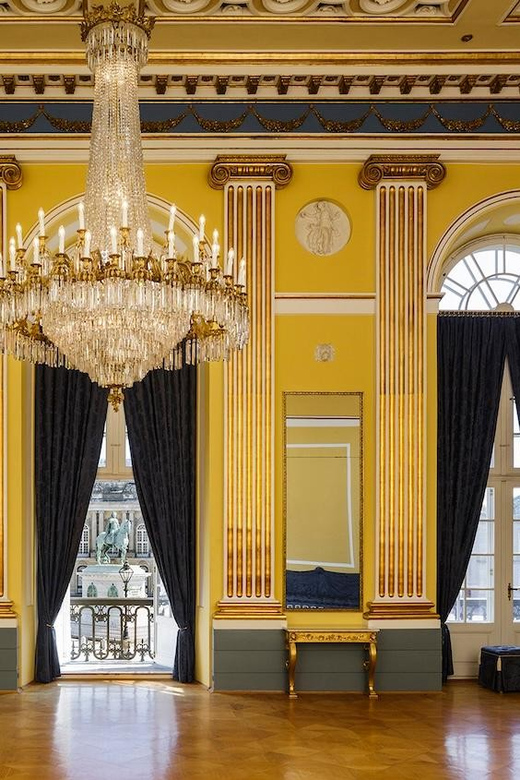
- Preserved royal rooms: Christian X’s study and dining room look staged like the royal family just left.
- Fabergé Chamber connections: Russian jewelry from 1860–1917, including a Fabergé coronation brooch made for Tsar Nicholas II.
- Queen Louise’s private salon: an interior around 1895 that hints at her European connections.
- Gala Hall scale: an 8-meter ceiling, gilding, and a view over the palace square.
- Frederik X exhibition access: the ticket includes current special exhibition entry (the Frederik X run was March 22 to Sept 8, 2024).
Amalienborg Square: where the museum fits into royal Copenhagen
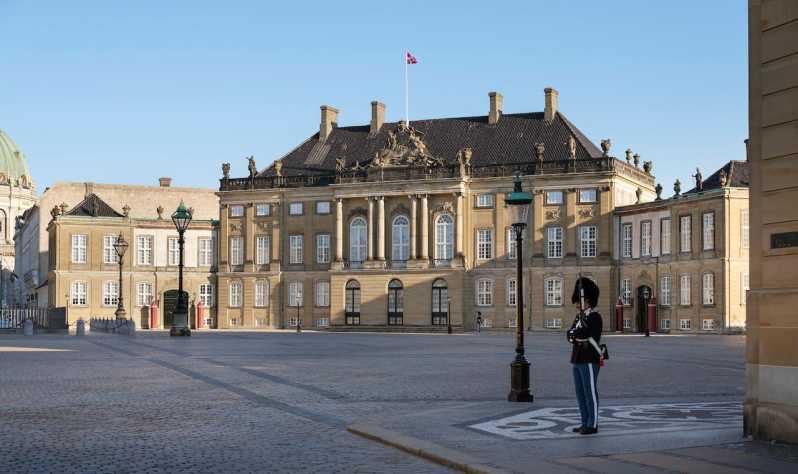
The Amalienborg Palace Museum sits in the middle of Copenhagen at Amalienborg Square, in the palace tied to Christian VIII. Amalienborg itself is not just one building; it’s made up of four palaces, and the museum is part of the one connected to Christian VIII’s Palace. That layout matters, because the setting does half the work for you: you’re viewing royal architecture from inside a formal royal complex, not from a distant exhibit hall.
If you like walking cities on your own terms, this is an easy stop to anchor your afternoon. The museum is about a 15-minute walk from the city center, so it pairs well with other nearby Copenhagen sights without forcing a big detour.
What you’ll notice right away is how the palace rooms are staged for viewing. This isn’t only portraits and captions. You’re meant to move room to room and absorb the “lived-in” feeling of the preserved interiors—furniture, decoration style, and the visual mood of the time periods.
A few more Copenhagen tours and experiences worth a look



Timed entry rules, bag limits, and the quick ticket scan downstairs

This ticket is valid for one day, but you should treat it like a scheduled entry. The listing notes you’ll need to check availability for starting times, and the museum enforces a 20-minute late arrival rule. If you’re trying to stitch together a tight itinerary, give yourself buffer time for the walk in and the entry process.
Here’s the on-site detail that can save you stress. The museum entrance is in the first building to your left when you enter Amalienborg Square from Frederiksgade/the Marble Church. Once you’re inside, you don’t just wander in upstairs. You’ll go downstairs to the cashier to present and scan your online ticket. After that, you’ll continue on to the exhibition spaces.
Plan around the restrictions too. The museum does not allow:
- Oversize luggage, large bags, and backpacks
- Baby strollers
- Food and drinks
- Pets (assistance dogs are allowed)
On the practical side, it is wheelchair accessible, so if you use mobility assistance, you should be able to plan your route without being shut out.
Also remember: this ticket is entry plus exhibition access. A guided tour is not included, so the museum experience is self-paced, with exhibit support you’ll access on site.
Christian X’s study and dining room: preserved rooms that set the mood
The heart of the museum is the idea that you’re walking through private spaces, not just museum displays. Two rooms especially help you picture how the royals worked and ate.
First up: Christian X’s study. The room is preserved as though the king had just left it, and the furnishings are heavy and dark in a way you’d recognize from an officer’s study around the early 1900s. You’re not looking at a modern recreation. You’re looking at the historical interior feel—dark walls, formal furniture, and a clear sense of the room’s purpose.
Then there’s Christian X and Queen Alexandrine’s dining room. It appears almost exactly as it did during their time in the palace, from 1899 until their deaths (1947 for Christian X and 1952 for Queen Alexandrine). This is one of those rooms where you start paying attention to small details: how the space reads, how the decor frames everyday royal life, and how the museum puts you close to the reality of a household, not just a crown.
I like that the museum doesn’t force you to be an expert. Even if you know only the basics of Denmark’s monarchy, the study and dining room give you emotional context. You begin to understand why royal spaces are powerful: they’re designed for authority, routine, and hosting.
The Fabergé Chamber: Russian jewelry and Danish royal ties
If you’ve ever heard the name Fabergé and wondered why it pops up in Northern Europe, the Fabergé Chamber gives you the answer. The museum shows hand-crafted Russian jewelry from 1860–1917, with a focus on the close links between the Danish and Russian monarchies.
One highlight is a Fabergé coronation brooch created for the coronation of Tsar Nicholas II. That single object is a shortcut into a bigger story: royal families were connected not just by politics, but by shared ceremonies and display culture. Jewelry like this wasn’t only ornament. It acted like a public message about power, legitimacy, and status.
You’ll probably find yourself slowing down here more than you expect. The chamber works well because it’s not just “here’s a thing.” It connects the artistry to the relationships between courts.
Queen Louise’s private salon and the Gala Hall’s dramatic scale
Two more rooms make the museum feel like a whole palace day, not just a quick stop.
Queen Louise’s private salon dates to around 1895 and shows a more modern interior style for that time period. The decorations include paintings and framed photographs on the tables, which give you a small but meaningful window into her family life and her connections across Europe. It’s the kind of room that helps you step away from the official version of monarchy and look at the personal side.
Then you reach the Gala Hall, and the vibe shifts. With a ceiling height of 8 meters, lavish gilding, and views toward the palace square, it feels built for display and public presence. The museum explains that in 1794 the royal family commissioned artist Nicolai Abildgaard to design the interior. Sculptures were created by Bertel Thorvaldsen, a name you may recognize if you’ve explored Danish art history.
This pairing works well: salon first for personal life, Gala Hall for ceremony. You start to feel the dual purpose of palaces—private household and public stage—living side by side in the same complex.
The Frederik X exhibition: what you’ll learn about succession
Your ticket includes access to all exhibitions, including the special exhibition FREDERIK X: King of Tomorrow. The museum had this exhibition running from March 22 to September 8, 2024 to mark the historical succession of the Danish throne on January 14.
What I like about this kind of exhibit is how it uses multiple media formats. The exhibition presents a portrait of the new king through photographs, objects, video clips, paintings, and sound. Even if you don’t want a long, lecture-style history lesson, these formats help you absorb the story faster and keep moving.
If you’re visiting after those dates, the general value of the ticket still holds because you’ll have access to the museum’s exhibitions on the day you go. The specific named exhibition may have changed, but the museum approach—personal artifacts plus room history—stays consistent.
How long to plan: a smart 45–60 minute route
This is not a museum that needs half a day. The experience is designed for a comfortable self-paced visit, often around 45 minutes to an hour, depending on how closely you read and how long you linger in the main rooms.
I’d plan it like this:
- Give yourself about an hour inside
- Then, if you have the energy, spend extra time outside the palace complex at the square
One reason it feels great is that the palace setting is part of the experience. When you finish inside, you still have the architecture around you, and it’s easy to keep your momentum with a stroll.
If you’re visiting with kids, plan for a bit more time. There’s audio support built around a child-friendly approach, which makes the museum feel less like homework and more like a guided walk through stories.
Is it worth $19? pricing that makes sense if you match expectations
At about $19 per person, this ticket sits in the category of “paid museum time” rather than “free palace scenery.” The question is whether you get enough rooms and exhibits to justify the cost.
Here’s my take: the value is strongest if you want:
- Preserved royal interiors (study, dining room, salons)
- Exhibit rooms tied to monarchy and personal artifacts
- Access to the special exhibition running at the time of your visit
If you arrive expecting a large, multi-building museum campus, you might feel it’s a smaller experience. The museum is focused. You’ll see key rooms and a curated set of exhibits, and then you’re done.
That’s not a deal-breaker. It can be a plus in Copenhagen, where good walking weather and other sights compete for your attention. The price is easier to justify when you look at it as one high-quality stop rather than a half-day commitment.
Also note what’s not included: there’s no guided tour. That’s fine if you like self-paced exploring, but if you prefer a person to translate context and keep the flow moving, you might want to pair the museum with another guided experience elsewhere.
Who should book this museum ticket?
This works especially well for:
- People who enjoy royal rooms and preserved interiors
- Visitors who like historical stories tied to objects (jewelry, furnishings, personal spaces)
- Families who want a museum that doesn’t feel like a lecture
You might reconsider if:
- You want a full-day museum marathon with lots of separate wings
- You’re traveling light on time and hate strict entry rules, because late arrival can cancel the ticket
Should you book this Amalienborg Palace Museum ticket?
I think it’s a smart buy when you want one compact, high-impact palace experience. The museum’s strength is how it connects monarchy to real spaces: Christian X’s study and dining room do a lot of storytelling without needing extra explanations, and the Gala Hall gives you the wow factor with its 8-meter ceiling and sculptural details by Bertel Thorvaldsen. Add in the Fabergé Chamber and the special exhibition access, and you get enough variety to feel worth your while.
Book it if you can fit an hour inside and you’re okay with the museum’s rules about bags and timing. Skip it if you’re not interested in preserved interiors or you’re looking for a longer, guided, multi-stop outing. If you’re in the middle of Copenhagen with limited time, this is one of the cleaner ways to spend it well.
FAQ
Where is the entrance to the Amalienborg Palace Museum?
The entrance is in the first building to your left when you enter Amalienborg Square from Frederiksgade/the Marble Church.
Do I need to scan my ticket before going upstairs?
Yes. Before your visit to the Amalienborg Museum, you need to go downstairs to the cashier to present and scan your online ticket.
What happens if I arrive late?
If you arrive more than 20 minutes late, your ticket will no longer be valid.
How long should I plan for the museum?
The visit is typically around 45 minutes to an hour, depending on how much time you spend in the rooms and exhibitions.
Is a guided tour included?
No. The ticket includes entry and access to exhibitions, but a guided tour is not included.
What’s included with the ticket price?
You get the Amalienborg Palace Museum entry ticket and access to all exhibitions.
Are bags, strollers, or food allowed inside?
Large bags, large purses and backpacks are not allowed. Baby strollers are not allowed. Food and drinks are also not allowed.
Is the museum wheelchair accessible?
Yes, the activity is wheelchair accessible.