REVIEW · ATHENS
Acropolis of Athens and Acropolis Museum Tour
Book on Viator →Operated by Athens Walking Tours · Bookable on Viator
Athens asks you to climb, then think. What makes this tour feel worth it fast is the earsets and the guide stories that turn ruins into a clear picture instead of random stone.
There’s one big consideration: strict entry times mean no waiting, and the slippery marble steps can be a real factor if you’re unsteady.
In This Review
- Key Highlights You Can Count On
- Meeting Dionysiou Areopagitou: Find Your Group Without Stress
- Security and Skip-the-Line Reality at the Acropolis
- Acropolis Main Route: Where Every Stop Pays Off
- Theatre of Dionysus: The Birthplace of Stagecraft
- Odeon of Herodes Atticus: A Roman Theatre Still in Use
- Temple of Athena Nike: Victory, Plus a Panoramic Payoff
- Erectheion: Myths With Caryatid Maidens
- Propylaea and the Parthenon Area: The Moment You Came For
- Listening With Earsets: How the Tour Keeps Moving
- Acropolis Museum: The Why Behind the What
- Price and Value: What You’re Paying For
- Comfort Tips That Make This Tour Much Easier
- The Guides: Why This Tour Often Feels Personal
- Who Should Book, and Who Should Choose Another Option
- Should You Book This Acropolis + Museum Tour?
- FAQ
- How long is the Acropolis and Acropolis Museum tour?
- What language is the guide?
- Are entrance tickets included?
- Does the tour include skip-the-line access?
- Where do I meet the guide?
- What should I bring for the walk?
- Is the tour good for people with limited mobility?
- What happens if it rains?
Key Highlights You Can Count On

- Earsets for every stop so you can hear the guide without craning your neck in crowds
- Optional prebooked tickets to reduce the time lost to entry lines
- A full Acropolis sweep that hits the Parthenon area plus the key surrounding monuments
- Acropolis Museum tie-in where artifacts make more sense after you’ve walked the site
- Small group cap of 24 for a more controlled, manageable pace
Meeting Dionysiou Areopagitou: Find Your Group Without Stress
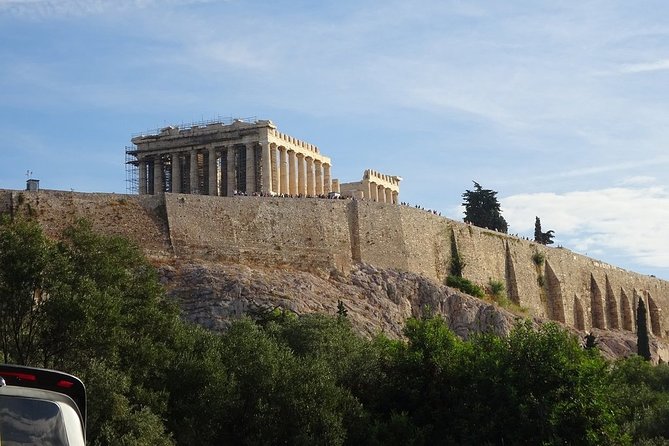
This tour starts at Dionysiou Areopagitou 3, Athina 117 42, and ends at the Acropolis Museum (Dionysiou Areopagitou 15). It’s in the city, near public transport, so you’re not stuck hunting for a remote pick-up point.
Still, do yourself a favor: arrive a bit early. One thing I like about this format is that it’s built around time discipline at the Acropolis. That also means you should expect a tight start, not a relaxed “wander over when you feel like it” moment.
Practical note: there’s no hotel pick-up or drop-off. If you’re traveling on multiple days in Athens, plan to use a local transit stop or a taxi for this one, then keep the rest of your day flexible around your own museum time.
You can also read our reviews of more museum experiences in Athens



Security and Skip-the-Line Reality at the Acropolis
You’ll meet your guide, walk a short distance, then go through airport-style security. This is normal for the Acropolis, but you should assume peak-season lines can reach 30+ minutes.
Here’s where the upgrade option matters. If you choose the ticket option (the tour offers an upgrade to prepay tickets), it can reduce wait time. It does not promise a magical zero-wait experience, but it often helps you avoid the longest delays.
The tour also sticks to strict entry times. If you show up late, you won’t be able to stall the group. And because entrance windows are time-locked, the tour runs with that in mind. Translation: you want to be ready, not rushing in while everyone else is already through.
Acropolis Main Route: Where Every Stop Pays Off
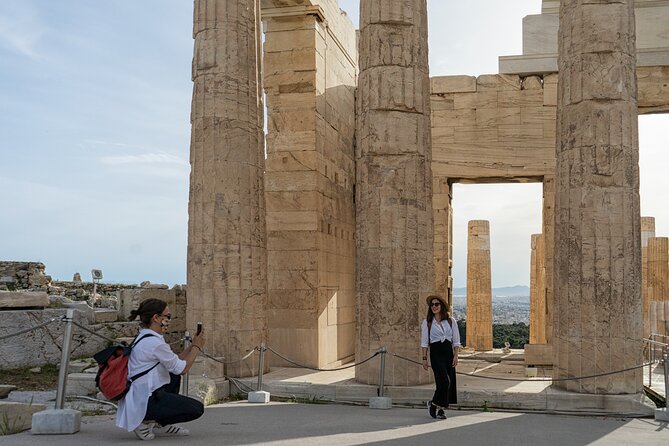
The total tour time is about 3 hours 30 minutes, with roughly 50 minutes at the Acropolis plus additional monument stops, then about 1.5 hours in the museum. Expect walking uphill, uneven surfaces, and some steep stairs. Comfortable, grippy shoes are not optional here.
Also, the site is outdoors and exposed. The tour runs rain or shine. One guide (Maria) was specifically noted for handling rain well, including rain gear during a rainy departure—so don’t panic if clouds move in. Just pack for comfort and traction.
Theatre of Dionysus: The Birthplace of Stagecraft
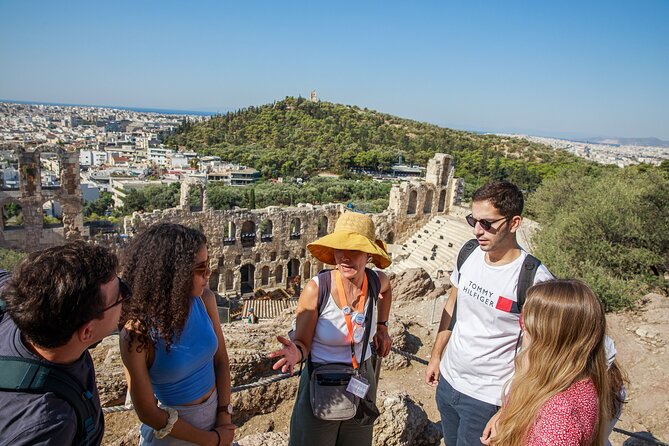
This stop is not just a pretty ruin. The Theatre of Dionysus is carved into the hillside, and it connects directly to how ancient Athenians experienced theatre—tragedies and comedies as part of daily culture and civic life. You’ll get a sense of scale quickly here: the rock work holds the seating shape like a permanent stage blueprint.
If you enjoy ideas behind the stones, this is one of the most satisfying parts. It’s easy to remember later when you’re in the museum and see how Greek art served public life.
Odeon of Herodes Atticus: A Roman Theatre Still in Use
Next up is the Herodes Atticus Odeon, a Roman-era theatre sitting on the Acropolis. What makes it fun is that it still hosts performances today. So you’re not only studying history—you’re watching a living continuation.
This is a great pause point for your brain. You’ve been learning about earlier Greek civic life, then suddenly you see how later rulers kept using the same dramatic setting.





Temple of Athena Nike: Victory, Plus a Panoramic Payoff
The Temple of Athena Nike is an Ionic temple known for its friezes and for those panoramic views over Athens. You get a concentrated dose of both art and scenery here.
The views matter because the Acropolis is built like a commanding viewpoint. It helps you understand why this place became the symbol it is: high, strategic, and made for looking out over the world.
Erectheion: Myths With Caryatid Maidens
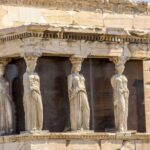
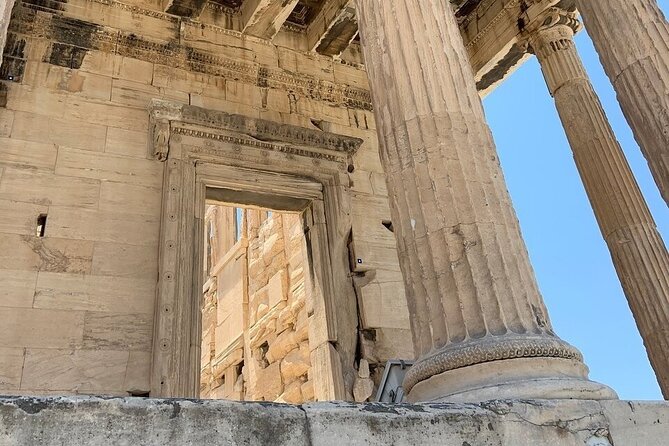
The Erechtheion is tied to Athenian legend, and the star attractions are the Caryatid maidens—sculpted figures that stand in for columns. If you’ve ever wondered why Greek sculpture feels so human, this is where it starts to click.
It’s also a good example of how the guide’s explanations change what you notice. Instead of just seeing a striking sculpture, you see the role it played and the story it carries.
Propylaea and the Parthenon Area: The Moment You Came For
You’ll also pass the Propylaea main gate area and reach the Parthenon with context, not just awe. The Parthenon stop is short (about 20 minutes), but it’s enough to take in the Doric columns, the intricate sculptural details, and the big-picture geometry that makes the building feel so intentional.
You’ll also get a break for the view over Athens. In hot season, this is your chance to cool down your head before you head to the museum.
Photo tip: this is not a slow walk-through. If you want photos, be ready to pause quickly. One downside some people felt was that the guide’s style didn’t always leave enough time for photos, so it’s smart to plan what you want to shoot before you get there.
Listening With Earsets: How the Tour Keeps Moving
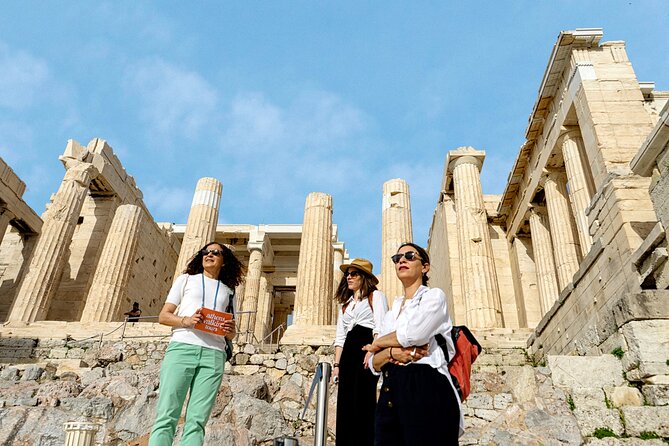
Earsets are included, which is a big deal at the Acropolis. The guide can speak while you move, and you don’t have to keep turning your head to catch every sentence. Some guests also noted the ear piece is one-sided and that they used their own earbuds if they had the right old-style plug.
Because the tour is small (up to 24), the guide can manage grouping better than the giant bus-style chaos. Still, you’re hiking on a schedule. Breaks are built in, but you’re not getting a long sit-down picnic.
A smart strategy is to take one “real breath” stop during the hot stretch. Hydrate early, not after you feel dizzy.
Acropolis Museum: The Why Behind the What
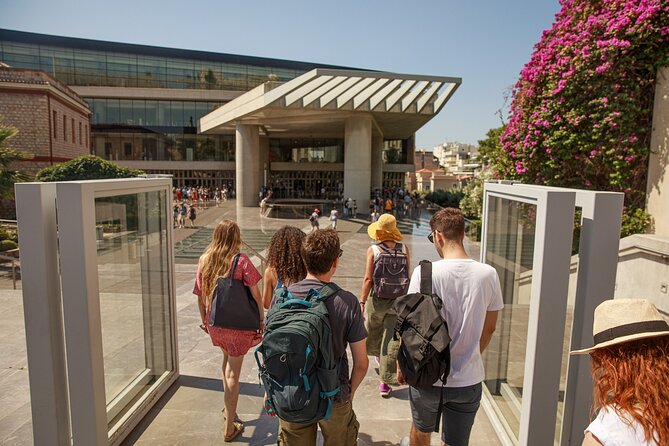
After the Acropolis, the tour heads to the Acropolis Museum for about 1.5 hours. This is where the visit shifts from outdoor ruins to curated artifacts, and it’s also where the tour format earns its keep.
The museum experience here is described as a chronological journey through Athenian history, focused on highlights of Acropolis finds. You’re not trying to see everything in one visit. Instead, the guide points you toward what connects most strongly to what you just walked past.
One especially useful detail: some major features removed for preservation have replicas on site, while the original pieces are in the museum. That makes the museum feel like a translation, not a repeat show.
If you’ve visited the museum before on your own, you might find it easier to navigate after this tour because you understand what you’re looking for. And if you haven’t, this is a great way to avoid the classic problem: staring at objects without knowing why they matter.
Price and Value: What You’re Paying For
The starting price is listed as $56.84 per person, and the tour includes:
- an English-speaking professional guide
- small group touring
- skip-the-line service when you book the ticket option
- earsets
- guided visits across the Acropolis stops and the museum highlights
- Athens Guide Magazine and an Athens Map
Entrance fees are not included unless you choose the ticket option: Acropolis entry is €30 and the Acropolis Museum is €20 (each per person).
So what’s the real value? It’s not just that the price is low. It’s that you’re buying time back and guidance value in a place that punishes wandering. The Acropolis is a maze of steep paths, and the museum is packed with objects that feel overwhelming if you don’t have context. Paying for a guide here is often cheaper than paying for wasted time—plus it helps you avoid the “I saw it, but I don’t remember what I saw” effect.
The upgrade can be especially worth it in summer or on busy days because prebooked tickets help you reduce the dead time from security and entry queues.
Comfort Tips That Make This Tour Much Easier
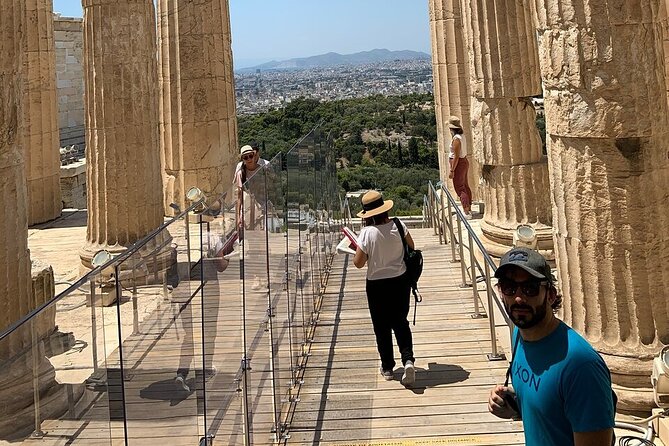
This tour asks for moderate physical fitness. You should expect uneven, sometimes slippery marble and plenty of steps. Even if you’re fit, the heat changes everything.
Here’s what I’d do to make it comfortable:
- Wear grippy sneakers and consider thin socks if your shoes get sweaty
- Bring a hat and sunscreen
- Bring water (the tour suggests bringing a bottle)
- Plan for limited shade; the Acropolis is mostly open
- Skip backpacks; backpacks are not allowed
Hot-weather note: one guest advised bringing cold water in summer because there may be limited access during the walk. There can be vending machines, but one person noted they accept coins only, which can be annoying if you’re not prepared.
Rain-weather note: the tour runs rain or shine. If you’re going in a season with sudden storms, pack a light rain layer and grip-friendly shoes anyway.
The Guides: Why This Tour Often Feels Personal
This is where the praise really shows up. Different guides bring different rhythms, but the common thread is that they explain what you’re seeing in a way that clicks.
You’ll see names like:
- Dimitris (engaging storytelling and mythology)
- Rina (extremely informative, patient with physical challenges)
- Yolanda (strong knowledge, clear museum explanations)
- Maria (great pacing in heat and rain, careful attention to everyone)
- Margarita (myth stories and management of slippery stones and crowds)
- Nicoletta (excellent English and a strong connection between site and museum)
- Niamb (a well-run early start that helps beat heat and crowds)
- Aigli and Panyioti (expert flow through crowded conditions and comfort-focused guidance)
One balanced warning: not every guiding style will match your preference. One person felt the guide spoke too many anecdotes and didn’t prioritize enough time for photos. That’s not a deal breaker, but it is a reason to go in ready to be flexible.
Who Should Book, and Who Should Choose Another Option
This tour is a strong match if you want:
- a structured Acropolis visit with context
- museum connections right after the outdoor monuments
- a smaller group experience (max 24)
- earsets so you can keep up while walking
It’s a tough match if you:
- need wheelchair access on this route (the route used isn’t compatible with wheelchairs, since the only wheelchair accessible path is on the other side)
- rely on a stroller (baby strollers are not allowed on the Acropolis site, and there’s no cloakroom at the side entrance used)
- hate stairs and slippery marble surfaces
If you’re traveling with a parent who moves slowly, this can still work, but you’ll want to take heat seriously. One guest was traveling with a knee replacement and appreciated how the guide supported the pace.
Should You Book This Acropolis + Museum Tour?
I’d book it if you’re the type who wants the Acropolis to make sense—not just look impressive. The earsets, the timed structure, and the museum connection are exactly what help you leave with real understanding.
I’d skip (or at least compare alternatives) if you strongly dislike guided pacing, if your mobility is limited, or if you need lots of unhurried photo time at the Parthenon area.
If you do book, go in with a plan: comfortable shoes, water, hat, and arrive early enough that security isn’t a gamble. Then lean into the guide stories and let the museum finish the job.
FAQ
How long is the Acropolis and Acropolis Museum tour?
It runs about 3 hours 30 minutes.
What language is the guide?
The tour is offered in English.
Are entrance tickets included?
Entrance fees for the Acropolis (€30) and the Acropolis Museum (€20) are not included unless you select the ticket option during booking.
Does the tour include skip-the-line access?
Skip-the-ticket line service is included when you book the option that includes tickets.
Where do I meet the guide?
The meeting point is Dionysiou Areopagitou 3, Athina 117 42, Greece. The tour ends at Acropolis Museum, Dionysiou Areopagitou 15, Athina 117 42, Greece.
What should I bring for the walk?
Wear comfortable shoes and clothes, bring a hat and sunscreen, and bring a bottle of water.
Is the tour good for people with limited mobility?
It requires moderate physical fitness due to uneven terrain and lots of walking. Baby strollers are not allowed on the Acropolis site, and wheelchair access is not supported on this route.
What happens if it rains?
The tour runs rain or shine. You should still be prepared for slippery conditions on the marble and changing weather.