REVIEW · AMSTERDAM
Van Gogh Museum Amsterdam Small Group Guided Tour
Book on Viator →Operated by 360 Amsterdam Tours · Bookable on Viator
Van Gogh makes more sense with the right path. This small-group museum tour strings his life and art together, so you see the why behind the brushwork. Whisper headsets keep you connected even in a crowded gallery, and the max 14 travelers setup helps the guide keep an eye on your questions.
I especially like the way the tour moves through Van Gogh’s career in clear chunks, not random room hopping. You also get included museum entry, so the ticket is one less thing to juggle. The only catch: two hours is tight, so if you want to linger for long stretches at just one favorite painting, you’ll have to plan to come back after the tour.
You can choose a morning or afternoon departure, and the tour ends inside the museum so you can stay on your own until closing time. Guides such as Martina S and Clare W have been praised for tying painting details to the moments in Van Gogh’s life, which is exactly what you want from a guided visit.
In This Review
- Key things to know before you go
- Price and what you’re actually paying for
- Meeting at Cobra Café and what the flow feels like
- The whisper headset: how it improves your museum time
- Your 2-hour Van Gogh Museum timeline in 6 stops
- Stop 1: Self-portraits and the idea of identity
- Stop 2: Influences on display in the first-floor foyer
- Stop 3: Paris years (1886 to 1888) and new energy
- Stop 4: Arles and the South of France (1888) in full color
- Stop 5: Saint-Rémy-de-Provence on Level 3
- Stop 6: Auvers Room and the late works
- Special exhibitions and what you should do after the tour
- Who this tour suits best
- A balanced take: the main trade-off
- Should you book this Van Gogh Museum guided tour?
- FAQ
- How long is the Van Gogh Museum small-group guided tour?
- Is the Van Gogh Museum admission included?
- What language is the tour offered in?
- How many people are in the group?
- Where does the tour start and end?
- Is the tour focused on the permanent collection or special exhibitions?
- Does the tour include a headset system?
- Are food and beverages included?
- Who can join the tour?
- Is free cancellation available?
Key things to know before you go
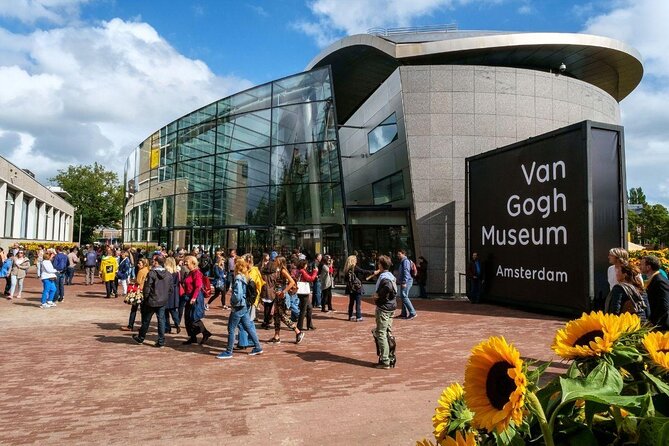
- Wireless whisper system: you hear the guide clearly in busy rooms
- A career timeline in 6 stops: portraits, Paris years, Arles, Saint-Rémy, Auvers
- Included admission ticket: you don’t buy museum entry separately
- Small group size (up to 14): more chances for questions and close-looking
- You can stay after the tour: the guide hands you off inside the museum
- Adults only (18+): calmer pacing if you prefer adult-focused groups
Price and what you’re actually paying for
At $77.43 per person for about 2 hours, this isn’t a budget shortcut. It’s paying for three things that matter at the Van Gogh Museum:
First, you’re getting a live English guide instead of a self-led audio track that you’ll eventually half-ignore while you read wall text. Second, the tour includes your admission ticket, which means you’re not double-paying to get inside. Third, the whisper system is a real quality-of-life upgrade when galleries are full and echoes bounce around.
I’d treat this as good value if your goal is understanding. If your goal is purely photo-taking and quick browsing, you may not get your money’s worth. But if you want the art to make sense while you’re looking at it, the price feels much more reasonable.
You can also read our reviews of more guided tours in Amsterdam


Meeting at Cobra Café and what the flow feels like
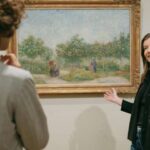
The tour starts at Cobra Café, Hobbemastraat 18 (near tram and public transit). Meeting points matter here because you’re heading into a major museum with a set schedule. Show up a bit early so you can settle in, grab your headset, and hear the intro before the group starts moving.
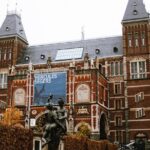
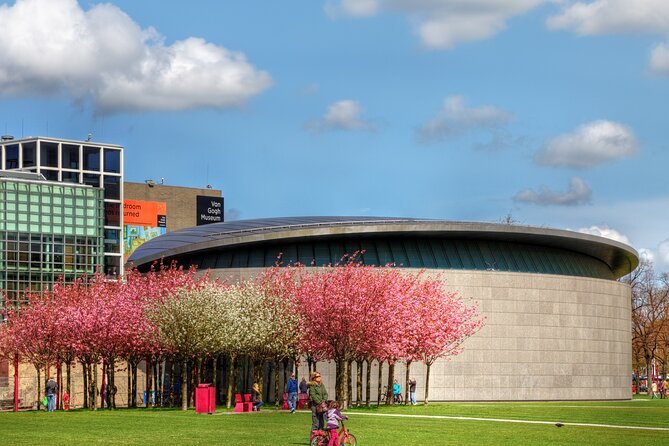
The tour ends at Museumplein 6, and you finish inside the Van Gogh Museum. That last detail is underrated. You get the guided part for context, then you’re free to slow down where you want, including after the tour route is done.
Also, the group caps at 14 travelers, which helps the guide keep momentum without feeling rushed. It’s not a big herd. You can still get close to the paintings when it’s your turn to look.
The whisper headset: how it improves your museum time
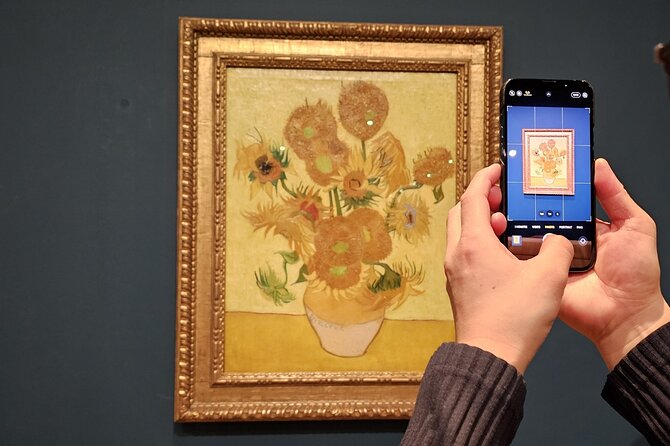
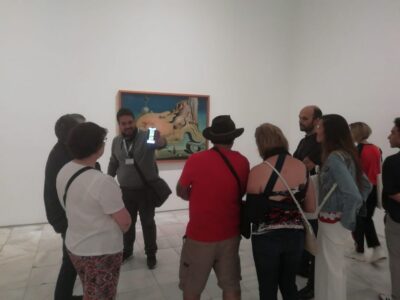
In a museum like this, the hard part isn’t finding art. It’s hearing the guide when you’re surrounded by other visitors doing the usual museum things: whispering, reading, stopping short, and occasionally blocking the view while someone takes a single perfect photo.
This tour uses a whisper system, so your guide’s voice stays clear. One review specifically noted the headsets worked well even for guests with hearing aids, which tells me the sound design is taken seriously.
Practical tip: treat your headset like part of the experience. Put it on before you enter the first gallery section and keep it on until the guide finishes the last stop. You’ll catch small details you’d miss if you’re constantly turning your head to locate someone speaking.
Your 2-hour Van Gogh Museum timeline in 6 stops
The itinerary is built like a guided storyline. You don’t just see masterpieces. You track the evolution: self-portraits, influences, technique, and how places (Paris, Arles, Saint-Rémy, Auvers) shape what he paints.
Each stop is roughly 15–20 minutes, so expect short, focused time blocks. That’s good for learning. It’s also the reason you should plan to revisit your favorites after.
Stop 1: Self-portraits and the idea of identity
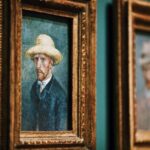
You start at the Van Gogh Museum with his self-portraits. Even in a museum full of famous work, self-portraits set the tone. They’re not just portraits of a face; they’re Van Gogh testing how art can show emotion, character, and even state of mind.
What to watch for: how your view shifts when you look at the paint like it’s a record of decisions—how the expression is built, not just what is shown. This opening is also useful because it gives you a baseline for recognizing what changes later in his career.
You can also read our reviews of more museum experiences in Amsterdam




Stop 2: Influences on display in the first-floor foyer
Next is the first floor foyer, where you’ll see paintings connected to influences and the world Van Gogh was learning from. The featured works include Woman Lifting Potatoes, plus works by or connected to Millet and Jules Breton, along with a wall of portraits featuring a Head of a Peasant Woman and The Potato Eaters.
This stop matters because it answers a key question: where did his style come from? Van Gogh didn’t paint in a vacuum. This section helps you spot the social and everyday subjects that were in the air, before Van Gogh turns them toward his own emotional intensity.
Possible drawback: the early part of the tour is rich in names and connections. If you’re the type who hates information overload at the start, just take it in as context, not homework.
Stop 3: Paris years (1886 to 1888) and new energy
Then you move into the period when Vincent moves to Paris between 1886 and 1888. The highlights here include Self Portrait with Felt Hat, Still Life with Absinthe, and scenes such as Agostina Segatori in Le Tambourin. You’ll also see Garden with Courting Couples.
This is where the museum experience often clicks for first-timers. Paris is the turning point toward bolder composition and a different kind of painterly confidence. Even the still life feels like more than objects—it feels like mood and rhythm.
What I love about this stop: it reminds you that Van Gogh’s growth isn’t only about landscapes. He learns how to structure a scene, how to depict people, and how to make everyday places feel alive.
Stop 4: Arles and the South of France (1888) in full color
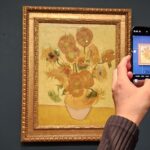
The next stop focuses on Arles and the South of France, when he moves there in 1888. You’ll see Sunflowers, Almond Blossoms, The Bedroom, and Japanese Paintings – copies from prints, along with The Yellow House.
This part is visually satisfying because it’s where you feel the “place” of the painting. The South isn’t just scenery. It’s light, atmosphere, and a different pace. The Japanese-influenced works are also a big clue: Van Gogh was studying how other artists simplified space and shaped compositions.
Quick takeaway for your own looking: when you see a piece like The Bedroom, don’t just notice the subject. Notice the arrangement and how the room feels tense, restful, or charged. The guide’s job is to point out those choices so you can see them, not just admire them.
Stop 5: Saint-Rémy-de-Provence on Level 3
On Level 3, the tour enters Saint-Rémy-de-Provence, with Almond Blossoms, Wheatfield with a Reaper, and Iris. You’ll also encounter Pieta (After Delacroix).
This section is crucial because it turns the earlier excitement into something more reflective and sometimes heavier. You’ll likely feel a mood shift as you move from brighter scenes into works that feel more inward.
Consideration: this is one of the stops where you may want extra time. The time block is still about 20 minutes, so if you’re deeply into symbolism or want to read every label, use your post-tour museum time to return here.
Stop 6: Auvers Room and the late works
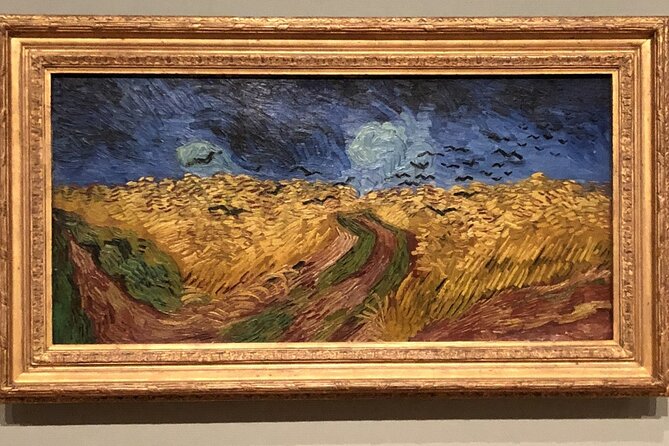
Finally, you reach the Auvers Room (Level 3), featuring Tree Roots and Wheatfield with Crows. This stop is shorter, about 15 minutes, but it lands with force because it’s closer to Van Gogh’s later life.
This ending helps you connect two dots: his technique keeps changing, but the emotional intensity stays. Even when the subject shifts, the way he organizes the painting feels urgent.
Special exhibitions and what you should do after the tour
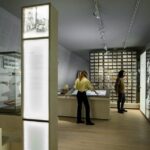
The tour focuses on the permanent collection. Special exhibitions are not included, which is good news if you like control over your schedule. After the guide route ends, you can keep exploring on your own, including looking around at extra displays at your pace.
Because the tour ends inside the museum, I recommend doing this simple plan:
1) Go slow for 10–20 minutes after the tour finishes.
2) Pick one stop that grabbed you most and return to that area.
3) Then do a quick sweep for any paintings you missed.
You’ll get the best of both worlds: guided context first, freedom second.
Who this tour suits best
This tour fits you if:
- You’re an art fan who wants meaning, not just a checklist of famous paintings
- You want help connecting Van Gogh’s locations and life moments to what you see
- You like small groups and clearer audio in crowded rooms
It might not fit you as well if:
- You only care about seeing the biggest names as fast as possible
- You dislike structured timing and prefer long solo wandering
- You plan to spend most of your time in special exhibitions, since the tour route is permanent-collection focused
A balanced take: the main trade-off
The biggest trade-off is time. You’ll cover a lot of ground in about two hours. That’s the point of a small guided timeline, but it means you won’t get hours to stare at every painting from every angle.
If you want maximum contemplation, treat this as the smart opener. Then let the museum be the slower second act.
Should you book this Van Gogh Museum guided tour?
Book it if you want Van Gogh to feel less like famous images and more like a story with causes and consequences. The included admission, the whisper headset, and the small group size are practical reasons this works in real museum conditions, not just on paper.
Skip it only if you’re planning to treat the museum like a quick photo stop. In that case, paying for a guided timeline won’t change much.
For most people, especially first-timers and art lovers who want context fast, this is a strong choice.
FAQ
How long is the Van Gogh Museum small-group guided tour?
The tour runs for about 2 hours.
Is the Van Gogh Museum admission included?
Yes. Admission tickets are included for the museum visits during the tour.
What language is the tour offered in?
The tour is offered in English.
How many people are in the group?
The tour has a maximum of 14 travelers.
Where does the tour start and end?
It starts at Cobra Café, Hobbemastraat 18, 1071 ZB Amsterdam, and ends inside the Van Gogh Museum at Museumplein 6, 1071 DJ Amsterdam.
Is the tour focused on the permanent collection or special exhibitions?
The tour is through the permanent collection. Special exhibitions are not included and can be visited on your own after the tour.
Does the tour include a headset system?
Yes. You’ll use a whisper system so you can hear your guide clearly.
Are food and beverages included?
No. Food and beverages are not included.
Who can join the tour?
This tour is for adults only, age 18 and older.
Is free cancellation available?
Yes. You can cancel up to 24 hours in advance for a full refund. Canceling within 24 hours does not provide a refund.