REVIEW · CARLSBAD
Mission San Luis Rey Museum Admission
Book on Viator →Operated by Mission San Luis Rey · Bookable on Viator
A mission that still feels alive. Mission San Luis Rey in Carlsbad pairs a self-guided museum visit with walkable mission grounds, including its famous sunken gardens. I especially like the way the experience lets you control your pace with a self-guided tour, plus helpful wall texts and exhibits covering Native American, Spanish, and Mexican artifacts.
Just keep one thing in mind: you’re on the clock. The museum hours are limited (and some areas can be closing when you arrive late), so plan to show up with extra time—especially if weather is turning. Non-refundable tickets also mean you’ll want to get the timing right.
In This Review
- Key things I’d focus on before you go
- Mission San Luis Rey: One of California’s Biggest Missions Near San Diego
- Your $7.63 Ticket: What You Really Get (and Why It’s Good Value)
- The Self-Guided Flow Inside Mission Grounds
- Sunken Gardens, Wooden Dome, and Cupola: Architecture You Can Inspect Up Close
- The Lavanderia Archaeological Area: Why This Mission Worked
- The Museum Exhibits: Native American, Spanish, and Mexican Artifacts
- Restoration, Decline, and a Site That Holds Contradictions
- The Church and Noon Mass: A Real-World Religious Center, Not Just a Monument
- Timing Tips for a Smooth 2–3 Hour Visit
- Small Group Size and Self-Guided Freedom (How It Feels)
- Where This Admission Fits Best (and Who May Want Alternatives)
- Should You Book Mission San Luis Rey Museum Admission?
- FAQ
- What does Mission San Luis Rey Museum admission cost?
- How long should I plan for the visit?
- What’s included with the ticket?
- Are food and drinks included?
- What time is the museum open?
- Is the tour guided or self-guided?
- Is the experience available in English?
- Can I attend Mass during my visit?
- Is the ticket refundable if my plans change?
- Is there a limit on the number of travelers?
- FAQ
- What’s the latest day and time my admission is valid?
- Do children need to be with an adult?
- Is the experience available to most travelers?
- Are souvenir photos included?
- Is there confirmation at booking?
Key things I’d focus on before you go
- King of the Missions: One of California’s largest Spanish missions, founded in 1798
- Sunken gardens and mission architecture: Including a wooden dome and cupola you can actually see
- Lavanderia archaeological area: A standout site tied to how the mission operated
- Three cultures in the museum: Native American, Spanish, and Mexican artifacts and interpretations
- You can attend Mass: The church holds daily Mass at noon
- Low-pressure format: Self-guided, with room to linger at the spots that grab you
Mission San Luis Rey: One of California’s Biggest Missions Near San Diego
Mission San Luis Rey is the kind of place that makes California history feel less like a textbook and more like a living place. Founded in 1798, it grew into one of the 21 Spanish missions across the state—and it earned the nickname King of the Missions because of its scale and importance.
You’ll find the mission isn’t just a museum piece. Today it’s also a retreat center and home for Franciscan friars, with an active church schedule (daily Mass at noon). That blend matters. It changes the tone from sightseeing-only to something calmer and more reflective, especially once you’re walking among gardens and chapel spaces instead of racing through a single exhibit room.
And since you’re in Carlsbad, you’re not stuck with a far-off detour. This is a very doable stop on a San Diego-area day, with access to both the museum and grounds under one admission.
Your $7.63 Ticket: What You Really Get (and Why It’s Good Value)
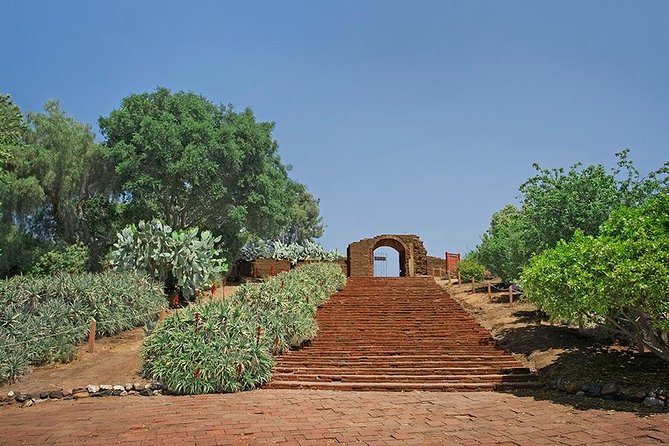
The admission price is listed at about $7.63 per person, and the big value is what’s included: access to the mission grounds plus the on-site museum with a self-guided tour.
For the money, you’re not paying just to enter a building. You’re paying for a whole experience footprint:
- Mission grounds you can walk through at your own pace
- The mission museum, designed for independent browsing
- Exhibits focused on Native American, Spanish, and Mexican artifacts
- Access during the stated daily window (opening hours are listed as 10:00 AM to 4:00 PM)
In plain terms: you can spend time where you care, and skip what doesn’t hold you. That’s especially helpful if you’re traveling with a mix of interests—someone who wants artifacts and someone who just wants outdoor mission architecture.
There are a couple non-inclusions to note. Food and drinks aren’t included. Souvenir photos are also not included (they’re available to purchase). If you think you’ll need a snack break, plan for it on your own.
The Self-Guided Flow Inside Mission Grounds
Your visit centers on one core stop: Mission San Luis Rey itself. Once you’re inside, the format is built for independent exploring, not a rushed group tour. The museum visit and grounds are designed to work together, so you can read, look, and walk in whatever order you prefer.
Here’s how I’d structure it once you arrive:
1) Start with the museum area so the context locks in
2) Then go outside and connect what you just read to what you’re standing in
That order matters because the mission story is multi-layered. You’ll see how Spanish mission life functioned, and you’ll also notice the way the site addresses Native American presence and the exchange between communities over time.
One detail I like from the on-site experience is the way the interpretive information is presented for easy reading. It doesn’t feel like you need a lecture to understand what you’re seeing.
Sunken Gardens, Wooden Dome, and Cupola: Architecture You Can Inspect Up Close
Mission San Luis Rey has the kind of mission architecture that rewards slowing down. You’re not just viewing a distant facade—you’re walking through a complex with specific design features.
Among the highlights called out at the site are:
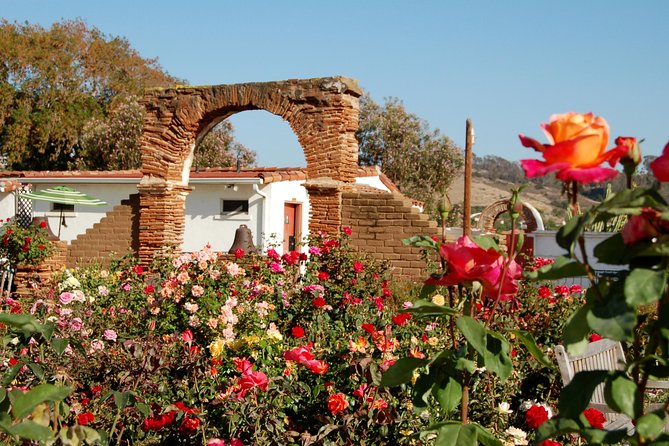
- The sunken gardens
- A wooden dome and a cupola
- Architectural and archaeological features tied to how the mission was built and used
The sunken gardens are especially memorable because they change the feel of the space. They give you that sense of a planned landscape—an engineered environment meant for cultivation and daily life. Even if you’re not a garden person, it’s hard not to notice how the layout influences your movement and your attention.
And the wooden dome/cupola details give the site a character that feels different from missions that are mostly about stone walls. You get those mixed material textures—built, restored, and still visible in real time.
The Lavanderia Archaeological Area: Why This Mission Worked
One of the most interesting parts of Mission San Luis Rey is the sprawling lavanderia archaeological site. Even if you only have a couple hours, this is the kind of feature that helps you understand mission life as operations—not just religion and buildings.
Why does it matter? Because it ties to everyday work. Missions had routines, labor, and infrastructure. When you see an archaeological area associated with that function, it turns the mission from a background setting into a working system.
If you’re the type who likes connecting history to daily life, this section will likely pull you in longer than you planned. If you’re more focused on the museum artifacts, you’ll still want to allot time here, because it’s a strong bridge between exhibits and the physical site.
The Museum Exhibits: Native American, Spanish, and Mexican Artifacts
The museum is where the visit becomes more explanatory. You’ll browse exhibits featuring Native American, Spanish, and Mexican artifacts and learn about Spanish influence in California.
This is also where the museum experience feels thoughtfully designed for self-guided visitors. You can move at your pace and spend time on whichever display you find most meaningful. Some exhibits include video presentations that explain the work of the friars and their ongoing role in caring for people. If you like audio-visual context, plan to pause for those screens rather than treating them like optional extras.
A small practical note: interpretive text helps you make sense of the mission’s story. It’s the kind of support that’s great when you don’t want to rely on a guided narrative. You can keep walking while still staying oriented.
Restoration, Decline, and a Site That Holds Contradictions
Mission San Luis Rey isn’t presented as a perfect, untouched time capsule. The narrative includes the mission’s journey through restoration—and also its periods of neglect.
In particular, you’ll learn about the sadness of disrepair and abandonment after the Spanish-American War. That kind of story adds emotional weight. It also makes the restored spaces feel earned rather than just decorative.
That contrast is part of why the experience can hit you more than you expect. This isn’t only about architecture or artifacts; it’s about change. The site reflects what was built, what was lost, and what was later brought back.
The Church and Noon Mass: A Real-World Religious Center, Not Just a Monument
One of the best reasons to visit Mission San Luis Rey is that it’s still active. The church has daily Mass at noon, and visitors are welcome to attend.
This changes the mood in a good way. You’re not only touring a historical structure; you’re stepping into a working religious space. If you’re sensitive to respectful silence, you’ll probably appreciate the tone.
If your schedule lines up with noon, treat it like part of your itinerary rather than an accidental bonus. Mass can also be a natural reset after reading in the museum—your attention shifts from information to atmosphere.
Timing Tips for a Smooth 2–3 Hour Visit
The visit duration is listed as approximately 2 to 3 hours. That’s realistic if you plan to do both museum and grounds without rushing.
I’d aim for a simple timing plan:
- Arrive soon after opening if you want the full site rhythm
- Build in time for at least one sit-down moment in the museum (videos and reading take longer than you think)
- Don’t cut it close to closing—some areas may be shutting down as the day ends
One practical lesson to take seriously: rain and late arrivals can shorten what’s accessible. If weather is messy, don’t assume you’ll still have the same flexibility near closing time. Show up early, and you’ll protect your visit.
Also, note that the mission indicates opening hours as 10:00 AM to 4:00 PM (Monday through Sunday). Separately, admission is described as valid daily between 10:00 AM and 4:30 PM. Since there’s a time overlap, the safest approach is to treat 4:00 PM as your hard planning target.
Small Group Size and Self-Guided Freedom (How It Feels)
The experience is listed with a maximum of 10 travelers. In practice, the self-guided structure is what you’ll actually feel day-to-day: less pressure, more flexibility.
This is ideal if:
- You like reading and looking without a clock
- You want to move from museum to grounds when it makes sense to you
- You’ve got a schedule that needs flexibility in a San Diego-area day
It’s also a smart choice if you want history without the intensity of a long guided script. The exhibits do the heavy lifting, and the grounds let you slow things down.
Where This Admission Fits Best (and Who May Want Alternatives)
This Mission San Luis Rey admission is a strong match for:
- People who want a self-guided Spanish mission visit with time to read
- Anyone interested in the Spanish mission era plus the role of Native American, Spanish, and Mexican communities
- Travelers who like calm sites that encourage reflection, not constant crowds
- Families with kids who enjoy project-style learning (the exhibits and visuals can support that kind of curiosity)
Two situations where you should be more careful:
- If you’re arriving very late in the day, you risk missing sections that may close earlier than you expect.
- If you need food on-site, plan ahead because food and drinks aren’t included.
Also, children must be accompanied by an adult. So if you’re traveling with kids, keep that paired-in-time approach in mind.
Should You Book Mission San Luis Rey Museum Admission?
Yes, I’d book it if you want a low-stress, self-guided way to experience one of California’s most important Spanish missions close to San Diego. The price is modest, and the value comes from getting both the museum and the mission grounds, with interpretation designed for independent browsing.
Before you decide, check two things:
1) Your arrival time. Aim earlier rather than later.
2) Your expectations. You’re not buying a timed guided program; you’re buying access and freedom to explore.
If those fit your style, Mission San Luis Rey is the kind of stop that turns a quick detour into a meaningful hour-or-three.
FAQ
What does Mission San Luis Rey Museum admission cost?
The admission price is listed as $7.63 per person.
How long should I plan for the visit?
The experience duration is approximately 2 to 3 hours.
What’s included with the ticket?
The ticket includes admission to the mission grounds and the on-site museum, with a self-guided tour.
Are food and drinks included?
No. Food and drinks are not included.
What time is the museum open?
Opening hours are listed as 10:00 AM to 4:00 PM, Monday through Sunday.
Is the tour guided or self-guided?
It’s self-guided.
Is the experience available in English?
Yes, the experience is offered in English.
Can I attend Mass during my visit?
The church celebrates daily Mass at noon, and visitors are welcome to attend.
Is the ticket refundable if my plans change?
No. This experience is non-refundable and cannot be changed for any reason.
Is there a limit on the number of travelers?
Yes. The maximum group size is listed as 10 travelers.
FAQ
What’s the latest day and time my admission is valid?
Admission is described as valid daily between 10am and 4:30pm, while the listed opening hours are 10:00 AM to 4:00 PM. To be safe, plan to be inside by the opening-hours end.
Do children need to be with an adult?
Yes. Children must be accompanied by an adult.
Is the experience available to most travelers?
It’s listed as Most travelers can participate.
Are souvenir photos included?
No. Souvenir photos are available to purchase, but they’re not included in the admission.
Is there confirmation at booking?
Yes. Confirmation is received at the time of booking.