REVIEW · PHNOM PENH
Tuol Sleng Genocide Museum (S-21) and Choeung Ek Killing Fields Tour
Book on Viator →Operated by The Killing field and Toul Sleng genocide museum S21 Tour · Bookable on Viator
If you visit Phnom Penh, do this. In one guided trip, you’ll see how the Khmer Rouge turned daily life into fear—at Choeung Ek Killing Fields and Tuol Sleng prison museum S-21. I like that the tour uses an English-speaking guide plus air-conditioned transport, so you spend less time figuring things out and more time focusing on what you’re seeing. One consideration: this is heavy material, so plan for an emotional day and go in with a calm pace.
What I like most is the practical setup: hotel pickup (or a nearby meeting point), cool water during the drive, and a guide who keeps the day organized across both sites. I also appreciate the way the guide frames what happened without skipping the difficult parts, and many guides add a human touch through family stories and personal connections. The drawback is simple: you’ll pay extra entrance fees on top of the tour price, so check your total before you book.
This is a short, focused 4-hour experience. You’ll move between two sites about 9 miles apart and then return to the pickup area or your accommodation. Go if you want the clarity of a guide and an efficient route; skip if you only want a light sightseeing day.
In This Review
- Key things to know before you go
- A hard day with a solid plan: how this tour works
- Pickup and meeting point: where to start in Phnom Penh
- Choeung Ek Killing Fields: what you’ll see and how to pace it
- Tuol Sleng Genocide Museum (S-21): a school turned prison
- Why the guide matters here (and what to look for)
- Price and value: what you really pay for a 4-hour guided day
- What to bring so you can stay present
- Who this tour fits best
- Should you book the Choeung Ek and S-21 tour?
- FAQ
- How long is the Choeung Ek and Tuol Sleng S-21 tour?
- Is hotel pickup included?
- What are the entrance fees for each site?
- Does the tour include air-conditioned transport and water?
- Is it a guided tour in English?
- How many people are in the group?
- Where does the tour start and where do you end up?
- Do I need good weather for this experience?
- Can I cancel for a full refund?
- Is the ticket delivered digitally?
Key things to know before you go
- Hotel pickup with air-conditioned car plus cool water for the ride between sites
- English-speaking guide who keeps explanations clear and respectful
- Choeung Ek first, then S-21 so the day builds from field to prison
- Admission tickets are not included ($3 for Choeung Ek, $5 for S-21)
- Small group feel with a maximum of 20 travelers
- About 4 hours total, with time set aside for both sites
A hard day with a solid plan: how this tour works
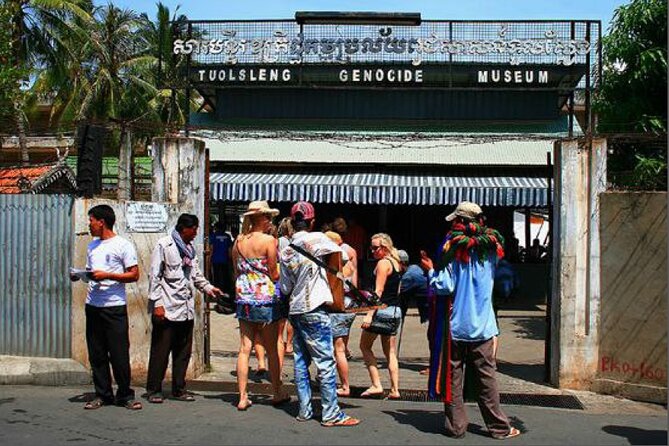
This is the kind of tour you book because you want structure. You’ll start in Phnom Penh, then head out to Choeung Ek south of the city (about 9 miles), and afterward you’ll come back for Tuol Sleng (S-21). With a guide and driver handling logistics, you’re not juggling buses, tuk-tuks, and timing while you’re already dealing with heavy emotions.
The pace is one big reason this format works. The day is split into two major stops, each given about 2 hours. That matters because if you cram too much, you miss details. If you take too long, the emotional weight can flatten out your ability to pay attention. Here, the timing aims for an in-between: long enough to absorb meaning, not so long that your brain checks out.
Another practical plus is comfort. The tour includes a clean air-conditioned vehicle and cool water. Those small details are not fluff here. When you’re outdoors at one site and inside at another, your comfort affects your focus.
You can also read our reviews of more museum experiences in Phnom Penh

Pickup and meeting point: where to start in Phnom Penh
You have two ways to join: hotel pickup or meet at a central spot. If you don’t want to wait at the hotel lobby, you can use the listed starting point: River Crown Restaurant, 357 St. 178, Preah Sisowath Quay area, Phnom Penh 12206.
Either way, the tour is designed to be easy to join. The vehicle is driven by your provider’s driver, and your English-speaking guide runs the show. You’ll return afterward—either to your hotel/guesthouse or back to the meeting point you used—so you’re not left trying to get back on your own.
If you’re planning the rest of your day, treat this as a half-day commitment. It’s about 4 hours total, not a full-day marathon, but it can feel longer because it’s emotionally intense.
Choeung Ek Killing Fields: what you’ll see and how to pace it
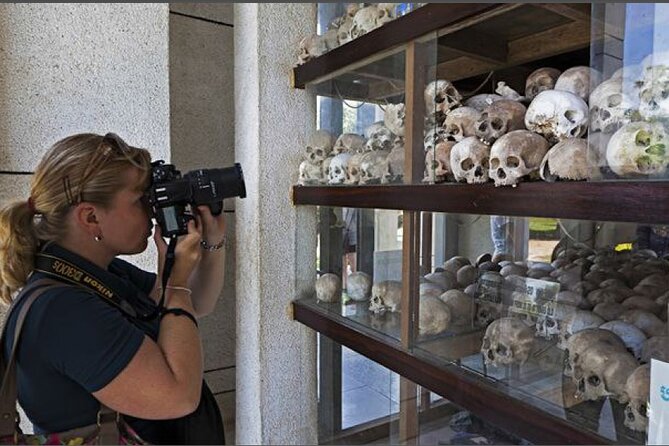
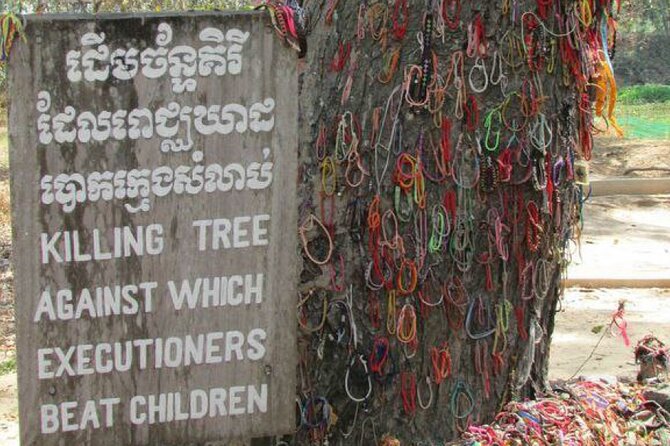
Choeung Ek is where you’ll grasp the scale of what the Khmer Rouge did. The place didn’t start as a killing field. It was once an orchard and a Chinese cemetery, then Khmer Rouge control changed everything into a site of mass executions. Your guide will explain the years of the Khmer Rouge period (1975 to 1979) and connect what you see on the ground to how the system worked.
When you arrive, you’ll be walking through an outdoor memorial landscape. Expect quiet, respectful signage, and areas designed to help you understand the site’s history. This isn’t the sort of place where you’ll want to rush for photos. The value is in reading what’s provided, looking closely, and letting the guide’s explanation give you the missing context.
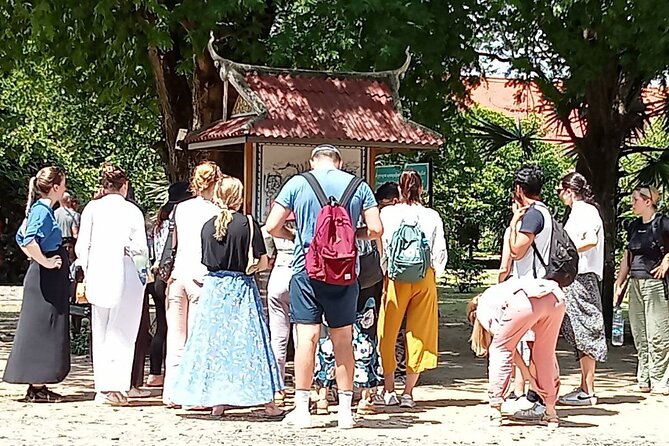
A key benefit of a guided visit is pacing the information. Some guides bring a measured tone that balances facts with care. Several people who did this tour described guides as serious when needed, and some even used a light touch of humor at the start of the day—without turning the subject into a joke. That matters because it helps you settle before the real weight hits.
One consideration: the site can feel uncomfortable in a way that goes beyond sight. The emotional pressure builds as you move through the memorial areas. If you’re the type who gets overwhelmed easily, take short breaks during the walk and slow your pace. You can still stay respectful and present without forcing yourself to “power through.”
Tuol Sleng Genocide Museum (S-21): a school turned prison
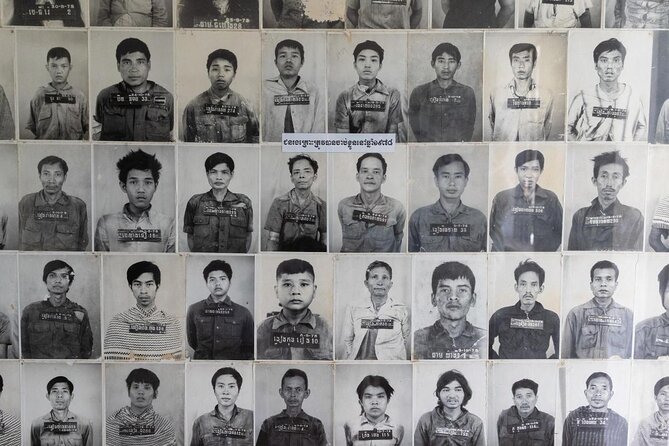
After Choeung Ek, you’ll return to Phnom Penh for S-21, Tuol Sleng, often called the genocide museum. The name roughly translates as hill of the poisonous trees, and your guide will explain how Pol Pot’s regime turned an ordinary high school into a high-security prison.
This is where the story becomes more personal and more bureaucratic. You’re shown how detainees were imprisoned and processed, and how torture was used to extract information. The museum framework helps you understand the mechanics of the system, not just the outcome.
S-21 is also visually specific: the building layout and the way exhibits are arranged push you to imagine rooms that once held prisoners. You’ll likely spend the full 2 hours here, and that time is important. You need that long to follow the thread from imprisonment to records and aftermath.
Another reason this stop works well with a guide: interpretation. Even if you read the signs, you benefit from hearing the timeline explained clearly. Many guides on this route have personal or family connections to the story, and that can make the information land differently. It’s also why the tone often becomes extremely respectful—your guide is there to help you understand, not just to recite dates.
As you move through, you may find yourself pausing often. That’s normal. If you feel tears coming, don’t panic. One of the consistent themes people shared in their feedback is that the guide prepares you for the emotional reality of the day, rather than pretending you can stay unaffected.
Why the guide matters here (and what to look for)
At these sites, you can technically go on your own. But a guided tour gives you something hard to replace: a human explanation that connects the dots. In this specific experience, you’re getting an English-speaking guide plus a driver. That means you spend your energy processing the story instead of figuring out transportation and sequencing.
The best guides on this route also seem to handle three jobs at once:
- Keeping the timeline straight across the two sites
- Explaining how the Khmer Rouge system worked, step by step
- Maintaining a tone that is factual and compassionate
You may meet guides such as Mr. Baboon, Sum Cheath, or Visal, and you might notice patterns in the way they teach. Some use brief humor to keep the atmosphere steady at the start, then become fully serious when the content demands it. Others emphasize personal connection through family history, which can make the museum feel less like history class and more like testimony.
Look for how your guide responds if you ask questions. Many of these guides are praised for being respectful and clear under pressure, and that’s exactly what you want on a tour like this.

Price and value: what you really pay for a 4-hour guided day
The tour price is listed at $19.20 per person, and that includes the English-speaking guide, driver, air-conditioned transportation, cool water, and hotel pickup. Admission fees are extra: $5 for Tuol Sleng (S-21) and $3 for Choeung Ek.
So, your rough total comes to $27.20 per person before tipping. That makes this one of those travel deals that feels fair once you add it up. You’re paying for two major sites with a guide and a vehicle that connects them efficiently.
What you get for the money is convenience plus context. The admission costs alone would still require transport and navigation. Here, you get a planned route and the explanation that helps you understand what you’re looking at, which is the real value at both sites.
One thing to remember: tipping is not included, so set aside a small budget for that. And if you’re traveling on a tight schedule, this format’s 4-hour window can be a big win. You’re not stuck waiting for transfers or losing time with last-minute logistics.
What to bring so you can stay present
Since this is a heavy day, your gear should be practical. The tour provides cool water, but you’ll still want to bring your own essentials for comfort.
Here’s what I’d pack:
- A light layer (museums can be cooler than expected, and outdoor areas change with time of day)
- Comfortable shoes (you’ll be walking in outdoor memorial grounds and moving through indoor spaces)
- A hat or sunscreen if the weather is bright—Choeung Ek is outdoors
- A small bag for personal items so you can move easily
Also mentally prepare. You can’t “solve” what you’ll see. Instead, plan how you’ll cope: decide ahead of time whether you want silence or conversation on the drive back, and consider skipping other intense activities afterward.
The tour also depends on good weather. If conditions are poor, the provider may offer a different date or a full refund, which is useful if you’re planning around Phnom Penh’s rainy season.
Who this tour fits best
This is a strong match if you want:
- A clear, structured day with a guide who explains the Khmer Rouge period
- Hotel pickup convenience
- A visit that moves efficiently between Choeung Ek and S-21
It also fits first-timers to Phnom Penh who don’t want to spend half the day coordinating transport. The group size is capped at 20 travelers, which can make the experience feel less rushed and more attentive.
It might feel less ideal if you need a very light itinerary, or if you’re not emotionally ready for sites connected to genocide and mass violence. If you go, go with care.
Should you book the Choeung Ek and S-21 tour?
I think you should book this tour if you’re visiting Phnom Penh for the first time and you want the most meaningful way to see both memorial sites in one half-day. The guide-driven context, the practical pickup and transport, and the well-paced 2-and-2 hour structure add up to real value.
If you hate heavy topics or you’re looking for entertainment, don’t force it. But if you’re here to understand history—clearly and respectfully—this is one of the best ways to do it without turning the day into a logistical headache.
FAQ
How long is the Choeung Ek and Tuol Sleng S-21 tour?
It runs for about 4 hours total, with roughly 2 hours at Choeung Ek and roughly 2 hours at Tuol Sleng (S-21).
Is hotel pickup included?
Yes. The tour includes hotel pickup, and you’ll also be able to start from a listed meeting point if you prefer.
What are the entrance fees for each site?
Tuol Sleng Genocide Museum (S-21) costs $5.00 per person, and Choeung Ek Genocidal Center costs $3.00 per person. Admission fees are not included in the tour price.
Does the tour include air-conditioned transport and water?
Yes. The tour includes clean transportation with air-conditioning and cool water during the trip.
Is it a guided tour in English?
Yes. You’ll have a professional English-speaking tour guide plus a driver.
How many people are in the group?
The tour has a maximum of 20 travelers.
Where does the tour start and where do you end up?
The start point is listed as River Crown Restaurant in Phnom Penh. The activity ends back at the meeting point, and the overview also notes that your guide will return you to your hotel or guesthouse.
Do I need good weather for this experience?
Yes. It requires good weather. If it’s canceled due to poor weather, you’ll be offered a different date or a full refund.
Can I cancel for a full refund?
Yes. Cancellation is free, and you can cancel up to 24 hours in advance for a full refund.
Is the ticket delivered digitally?
Yes. The tour uses a mobile ticket.