REVIEW · BUCHAREST
Traditions in Bucharest: Village Museum and Wine Tasting Tour
Book on Viator →Operated by Unveil Romania · Bookable on Viator
Romania is easier to understand with your feet moving. I love the National Village Museum for its real buildings from across the country, and I love how the day ends with 3 glasses of wine plus cheese and charcuterie. One thing to plan for: you’ll do a little walking (less than 1 mile), so comfy shoes matter.
What really sells this tour is the private guide angle. People like Mihai Vataselu and Mike are praised for clear English, sharp storytelling, and making the history feel practical, not schoolbook. If you’re hoping for a fast museum sprint, this isn’t that. It’s paced for learning, plus a relaxed craft stop and a sit-down tasting.
In This Review
- Key highlights worth your attention
- Village Museum: the quick route to Romanian history you can see
- A craft stop on Calea Victoriei: what to buy without feeling touristy
- Wine tasting in Bucharest’s Victory Avenue zone: Dealu Mare in plain language
- Timing and comfort: why pickup and an air-conditioned car are a big deal here
- Who should book this tour (and who might prefer something else)
- Price and value: why $148.19 can make sense
- Practical tips to get more from each stop
- Should you book this Traditions in Bucharest tour?
- FAQ
- How long is the Traditions in Bucharest tour?
- What does the tour include for the wine tasting?
- Is hotel pickup provided?
- What are the main stops on the tour?
- Where does the tour start and where does it end?
- How much walking is involved?
- Who can participate in the wine tasting?
Key highlights worth your attention
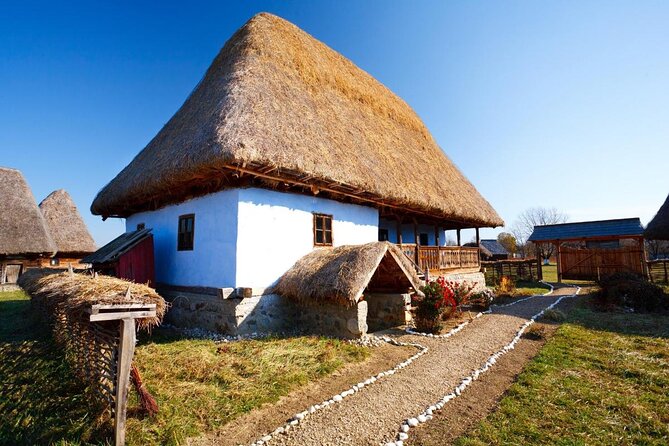
- Dimitrie Gusti National Village Museum: open-air village buildings traced to historical provinces back to the 17th century
- A private licensed guide: explanations that connect architecture, village life, and culture
- Calea Victoriei craft stop: handmade Romanian items like ie blouses, Horezu pottery, and Moldavian Easter eggs
- Dealu Mare wine tasting: 3 glasses of regional wine with cheese and sausage
- English service plus pickup/drop-off: free hotel pickup within city limits in an air-conditioned car
Village Museum: the quick route to Romanian history you can see
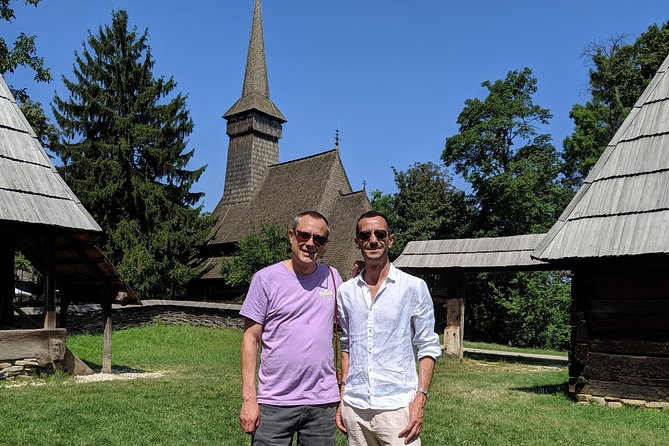
The day starts at the Dimitrie Gusti National Village Museum, an open-air reconstruction of traditional Romanian village life. This is not a “look at a photo” kind of stop. It’s built to help you see how people lived—where they prayed, how their homes were shaped, and what everyday work looked like.
The museum spreads out like a small world. Your guide walks you through houses and farm buildings designed for different regions. You’ll notice differences in roofing and materials: reef-roofed houses tied to the Danube Delta, simple yet elegant forms associated with Moldavia and Wallachia, and the heavy, carved wooden facades you’d expect from Transylvania. Even if you’re not an architecture nerd, you’ll pick up patterns fast. Steep roofs, thatched barns, log cabins, watermills, windmills—these details explain how weather and livelihood drive building style.
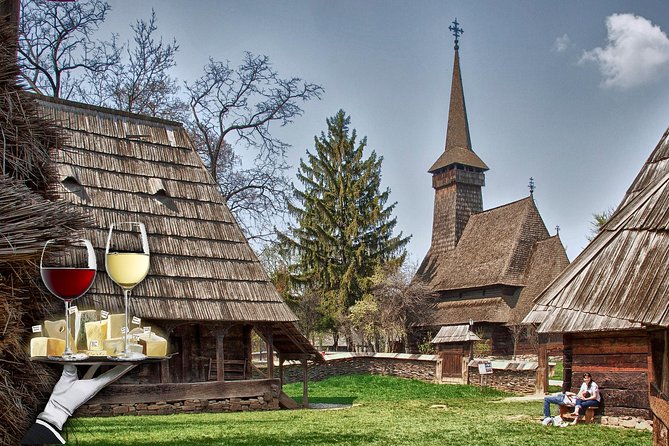
What I like most is the way it frames architecture as history you can walk around. The museum includes churches and other village structures like oil presses, road crucifixes, and working-style agricultural buildings. In other words: it’s not just a pile of old wood. It’s an explanation of how rural Romania functioned.
Best part for most people: those wooden churches. They’re usually the moments where your brain goes quiet for a second. And if you’ve got kids, or you’re traveling with anyone who needs “something to look at,” the variety keeps attention.
Possible drawback: you’re touring an open-air site, so your comfort depends on the day’s weather. If it’s hot or chilly, plan accordingly with layers and sun protection.
You can also read our reviews of more tours and experiences in Bucharest.



A craft stop on Calea Victoriei: what to buy without feeling touristy
After the village museum, you head to a local art and craft shop on Calea Victoriei. This is a short, 30-minute stop, but it’s carefully aimed: it puts you in front of items made by hand, tied to specific Romanian regions.
Here’s what you may see when you arrive:
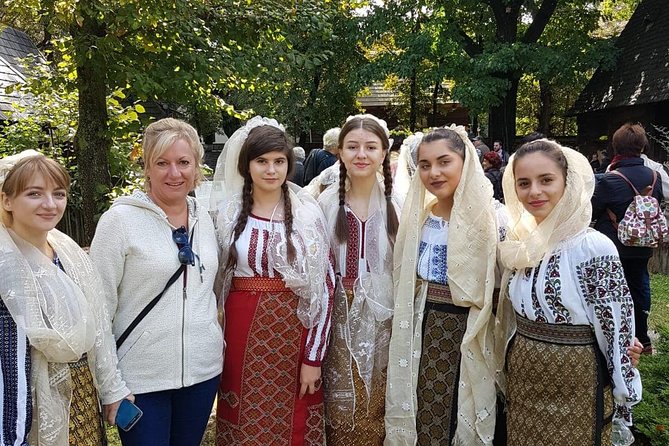
- traditional ie blouses
- glass painted icons
- Moldavian-style Easter painted eggs
- Horezu pottery (linked to Wallachia)
- wooden masks and small trinkets from Transylvania
- Dracula-themed souvenirs, books, and traditional sweets like knot cookies and chocolate nuts
You don’t have to buy anything. But this stop works because it helps you recognize what you’re looking at during your trip. You’ll start to spot regional cues—patterns, materials, and motifs—so souvenirs feel less like random shopping and more like cultural breadcrumbs.
What to do if you want value: if you see something you love, ask what it is and where it comes from. Your guide can usually help connect the item to the regional story. The goal is simple: buy one meaningful piece instead of five random ones.
Possible drawback: because the stop is brief, you’ll need to move with intention. If you prefer slow browsing, come ready with a sense of what you want to look for: textiles, ceramics, religious art, or small gifts.
Wine tasting in Bucharest’s Victory Avenue zone: Dealu Mare in plain language
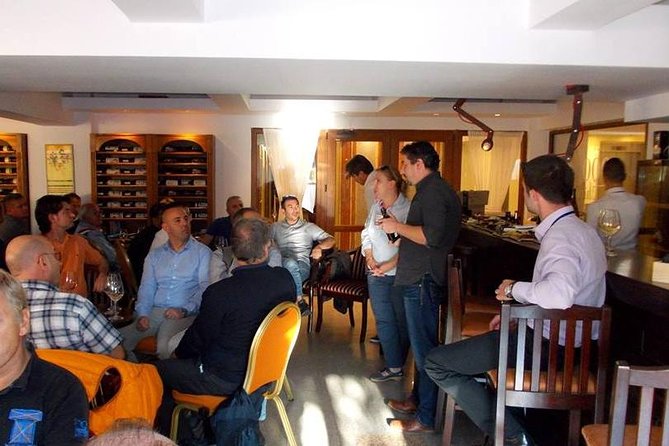
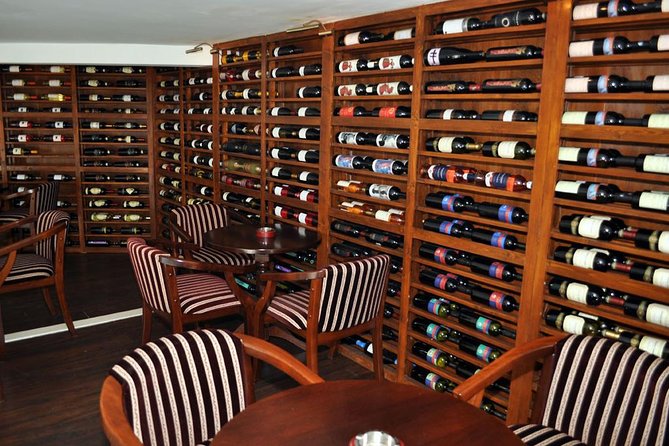
The last stop is at a local wine bar, and this is where the tour shifts from history to taste. Your guide ties the tasting to culture, not just wine facts.
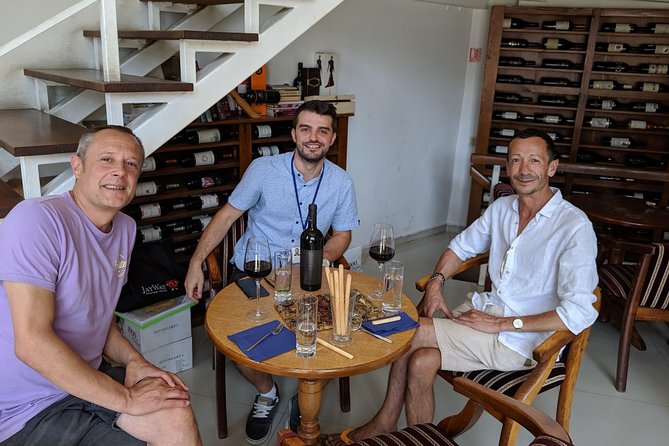
Romania has a long viticulture story—2000+ years of winemaking tradition. At the bar, you’ll learn about the terroir of Dealu Mare, Romania’s most famous wine region. The tasting includes 3 glasses of wine and a plate of cheese & charcuterie.
This is also where you’ll get familiar with grapes that may be new to you, such as Feteasca Neagra and Negru de Dragasani. Even if you’re a casual drinker, your guide will help you connect what you taste to what’s happening in the vineyard and the region.
Why this matters: wine tastings can turn into a “sip and shrug” experience. Here, the structure (3 glasses plus food, with guidance) helps you actually understand what you’re tasting. The cheese and sausage also make the tasting feel like a meal moment, not a timed chore.
Possible drawback: you must be 18+ to drink, and wine is part of the final stop. If you don’t drink alcohol, you might still enjoy the food and stories, but the core activity is centered on tasting.
After the tasting, the tour ends near the wine bar on Victory Avenue—an easy walk back toward the Old Town area and close to the Romanian Athenaeum.
Timing and comfort: why pickup and an air-conditioned car are a big deal here
This tour runs about 5 hours. You’re also not left to figure out logistics on your own. You get free hotel pickup anywhere in Bucharest within city limits, in a private air-conditioned vehicle, plus drop-off at the end.
In Bucharest traffic, that comfort counts. One review detail stuck with me: the emphasis on safe, calm driving. The city can be chaotic. A private car means you lose less time to navigating and more time on the experience.
Most travelers will be fine for the amount of walking (less than 1 mile total), but it’s still real walking across museum grounds and between stops. Wear comfortable shoes and bring a light layer if you get cold in the evenings.
Meeting point is the Romanian Athenaeum area (Strada Benjamin Franklin 1-3). If you start from your hotel, your guide meets you in the lobby near reception.
Who should book this tour (and who might prefer something else)
This tour is a strong fit if you want:
- a private guide with English explanations
- a clear cultural arc: village life → regional crafts → wine tasting
- a “first serious day” in Bucharest that still feels grounded and authentic
It’s also a great pick for families. One family-friendly detail that stood out is that both the village museum and wine bar are described as working well with children. If you’re traveling with kids, the museum’s variety of buildings and the tasting’s food pairing can be easier than long lecture-style tours.
You might want to skip or choose a different option if:
- you dislike any walking at all
- you only want nightlife or modern Bucharest highlights (this tour focuses on traditional culture and regional food/wine)
- you’re looking for a super slow shopping spree in the craft stop
You can also read our reviews of more museum experiences in Bucharest




Price and value: why $148.19 can make sense
The price is $148.19 per person for a tour lasting about 5 hours. On paper, that’s not cheap. But you’re paying for more than two attractions.
Here’s what you get that often costs extra when booked separately:
- a private licensed guide for the full experience
- hotel pickup and drop-off (free within city limits)
- Village Museum admission
- private transportation in an air-conditioned car
- wine tasting with 3 glasses plus a cheese & charcuterie plate
- a craft shop stop where the admission is free
So your biggest “value math” is this: the museum entry and the guided pacing don’t leave you hunting for tickets or timing. Then the wine tasting comes with food and guidance, not just a menu and a guess.
If you’re traveling with a group, it can also be a good use of money because group discounts are offered. And if you’re the kind of traveler who wants your guide to translate what you’re seeing—especially at an open-air museum—you’ll feel the payoff.
Practical tips to get more from each stop
A few small moves make a big difference on this kind of tour:
- Bring shoes you can walk in comfortably. The museum is outdoors and uneven in places.
- If you love crafts, decide what you want before you arrive at the shop. The stop is short.
- For wine, go slow. The pairing with cheese is part of the experience.
- If your accommodation address is unclear on your booking info, double-check it before the tour. One organized guide even handled an address mismatch with a call to confirm the pickup spot.
Should you book this Traditions in Bucharest tour?
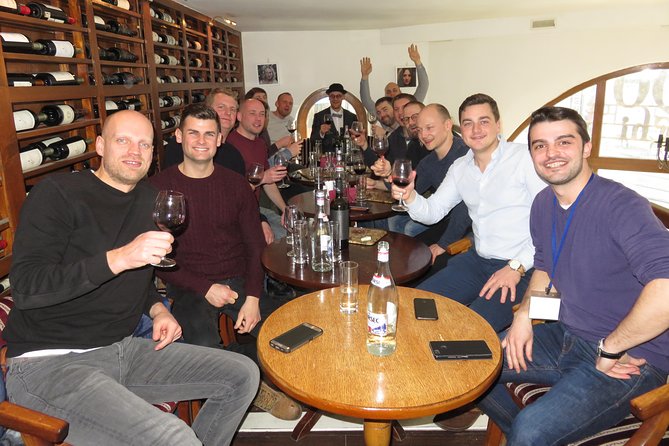
Yes, if you want a guided day that explains Romania through daily life—buildings, regional crafts, and wine. The strongest reasons to book are the private guide approach, the National Village Museum’s real-world variety, and the fact that the tasting gives you structured learning with 3 glasses and food.
I’d think twice if you hate any outdoor walking or if you want only modern city sights. This tour is built for tradition and region-to-region differences. If that matches your travel style, it’s a smart, good-value way to spend half a day in Bucharest.
FAQ
How long is the Traditions in Bucharest tour?
It lasts about 5 hours.
What does the tour include for the wine tasting?
You get 3 wine glasses per person, plus a cheese and charcuterie plate.
Is hotel pickup provided?
Yes. There is free hotel pickup anywhere in Bucharest within the city limits, and you also get drop-off back in the city center area.
What are the main stops on the tour?
The tour includes the Dimitrie Gusti National Village Museum, a Calea Victoriei art and craft shop, and a final stop at a local wine bar.
Where does the tour start and where does it end?
It starts at the Romanian Athenaeum area (Strada Benjamin Franklin 1-3). It ends at the wine bar on Victory Avenue, within walking distance of the Old Town area.
How much walking is involved?
There is a small amount of walking involved, described as less than 1 mile.
Who can participate in the wine tasting?
The minimum drinking age is 18 years old.