REVIEW · TOKYO
Tokyo: Art Aquarium Museum GINZA Entry Ticket
Book on GetYourGuide →Operated by LINKTIVITY Inc. · Bookable on GetYourGuide
Ginza has a fish-and-art show. The Art Aquarium Museum GINZA turns goldfish viewing into a sensory installation using light-and-music effects and even scent. I like how it feels more like modern art than a standard aquarium, and I love the careful, photo-friendly display design—but it is also fairly compact, so you’ll finish faster than you might expect.
You’ll find it tucked inside Ginza Mitsukoshi, which makes the logistics easy if you’re already sightseeing in Ginza. The main consideration for planning is that nearby options can feel limited if you were hoping for a whole aquarium district—so build this into a day that already has other stops.
In This Review
- Key Things You Should Know Before You Go
- Sensory Goldfish Art in the Middle of Ginza
- Finding Art Aquarium Museum GINZA at Ginza Mitsukoshi
- What You Actually Do During Your 1-Hour Visit
- The Modern Art Twist on Traditional Edo Goldfish Appreciation
- Light, Music, and Scent: The Parts People Don’t Expect
- Photography in the Museum: How to Get Great Shots Without Problems
- Seasonal Changes You Can Actually Notice
- Gift Shop and Souvenirs: Small, But Fun
- Price and Value: Is $17 Worth It?
- A Balanced Reality Check: What to Consider
- Who Should Book This Ticket?
- Should You Book Art Aquarium Museum GINZA?
- FAQ
- How long should I plan to spend at Art Aquarium Museum GINZA?
- Where is the museum located inside Ginza Mitsukoshi?
- What are the nearby train options?
- Are children allowed for free?
- Can I take photos inside?
- Are flash or extra lights allowed?
- Is the ticket refundable?
Key Things You Should Know Before You Go
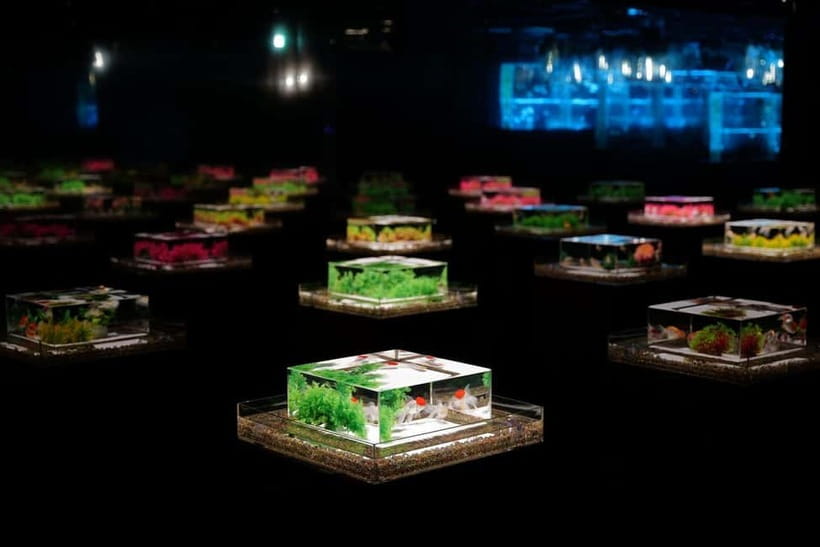
- Sensory presentation: goldfish scenes paired with music and scent effects
- Modern take on Edo goldfish culture: a reimagining of traditional goldfish appreciation in a contemporary layout
- Seasonal updates at a permanent venue: the exhibits change across the year even though the museum is permanent
- Photo-friendly, with limits: photography is allowed, but no tripods/monopods and no strobes or extra lighting
- Short visit window: plan on about 1 hour of viewing time
- Ginza Mitsukoshi location: straightforward train access and same-day ticket pickup on the 9th floor
Sensory Goldfish Art in the Middle of Ginza
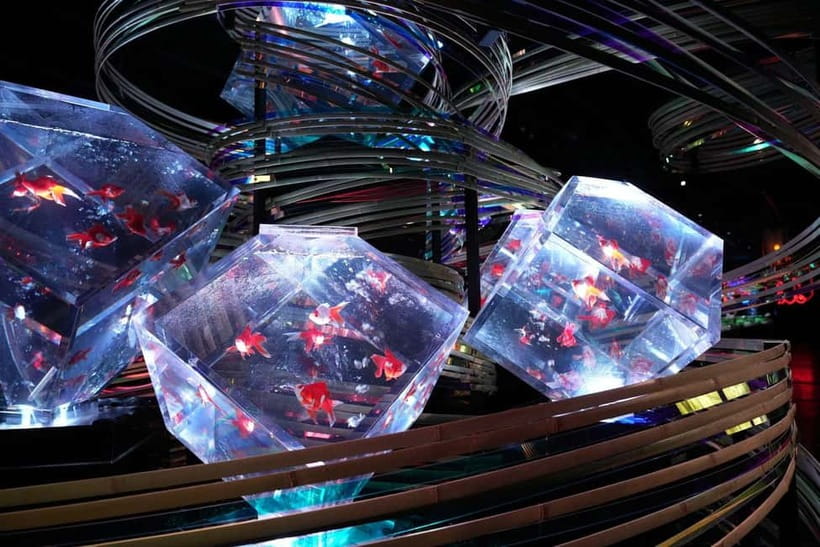
The Art Aquarium Museum GINZA is exactly what the name suggests: an aquarium built like an art experience. Instead of only focusing on tank walls and labels, it choreographs how you see goldfish—using light, background music, and scent to shift the mood as you move through the space.
The best part is that the goldfish are not treated as background décor. The displays are designed to make color, shape, and movement feel intentional, almost like living sculpture.
And yes, it’s in Ginza, inside a major department store. That’s not just convenience—it also changes the feel of the outing. You can start with shopping or a café nearby, then switch into a calmer, more controlled indoor show.
A few more Tokyo tours and experiences worth a look
Finding Art Aquarium Museum GINZA at Ginza Mitsukoshi
This is one of those Tokyo stops that’s easy to route because it’s in a landmark mall. You’ll enter through Ginza Mitsukoshi (Chuo-ku), and the admission reception for same-day tickets is on the 9th floor of the new building.
For train access, you’ve got multiple options:
- Tokyo Metro Ginza Line, Marunouchi Line, Hibiya Line: exit A7 at Ginza Station
- Tokyo Metro Yurakucho Line: about a 5-minute walk from Ginza 1-chome Station (exit 9)
- Toei Asakusa Line and Tokyo Metro Hibiya Line: roughly 2 minutes via the underground passage from Higashi Ginza Station toward Ginza Station
If you like simple navigation, this location is a win. You can also use your phone’s map to follow the underground passages—Ginza station exits can be a little maze-like, but the museum itself is very “department store clear.”
What You Actually Do During Your 1-Hour Visit
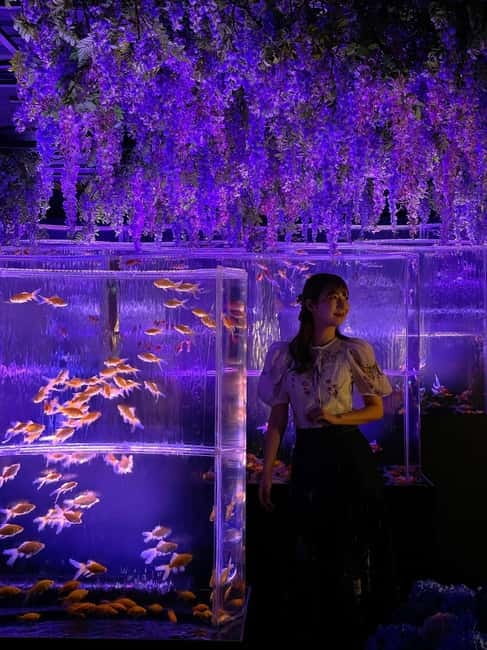
The ticket is valid for a single day, and the estimated viewing time is about 1 hour. That lines up with what you’d want for this type of sensory show: enough time to see everything calmly, not enough time for a half-day detour.
A practical way to plan your visit:
1) Get oriented fast
You’ll want to settle in your first space and watch how the museum uses the senses. The experience is built around goldfish movement, but the lighting and music set the pace more than you might expect.
2) Follow the displays in a loose loop
The museum uses unique spatial presentations, so a straight-line walk usually feels less natural than circling through the rooms. You’ll get better visuals by giving yourself time between displays so the lighting doesn’t blur together.
3) Take photos as you go, not at the very end
Because the museum is compact, you don’t want to rush at the finish. Get your “must-have” shots while you’re already in position, then slow down for a second viewing.
4) Read the English info panels
There’s English information about the goldfish, which helps you connect the look of each display to the species and the theme. Even if you don’t read every line, it makes the experience feel less like pure visuals and more like an intentional story about goldfish appreciation.
When the hour ends, you’ll likely feel you saw everything without feeling drained. That’s good value for an indoor activity in a busy city.
The Modern Art Twist on Traditional Edo Goldfish Appreciation
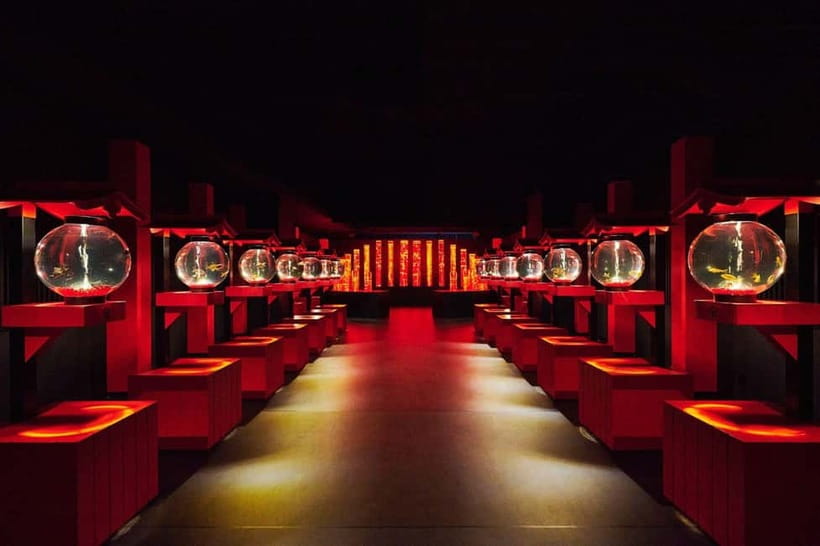
What makes this museum different from a typical fish stop is the theme. It reimagines the Edo-period tradition of goldfish appreciation through a modern art lens. In practice, that means you’re not just observing fish—you’re experiencing a curated atmosphere built around their beauty.
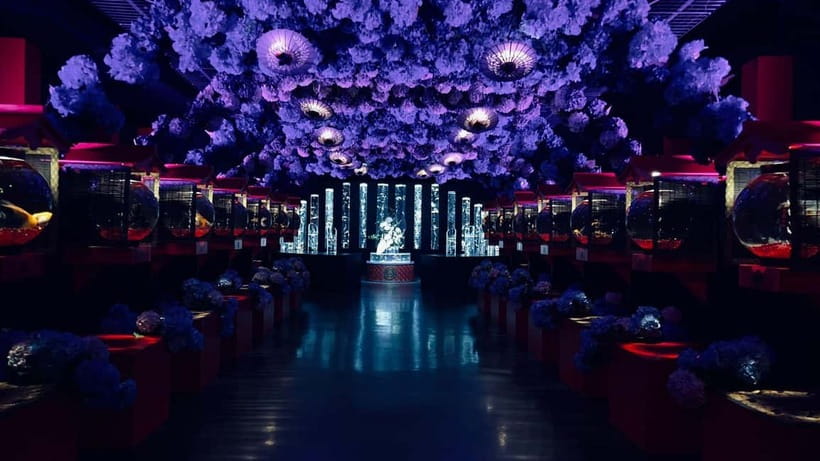
You can feel the “art museum” mindset in the way the displays are staged. Instead of a standard layout where you compare tanks one after another, the museum uses lighting and spatial effects to transform each view.
This is also where the seasonal idea matters. The museum is a permanent venue, but it offers changes throughout the year. So the goldfish you see now won’t be the same mood later, even if the building is the same.
Light, Music, and Scent: The Parts People Don’t Expect
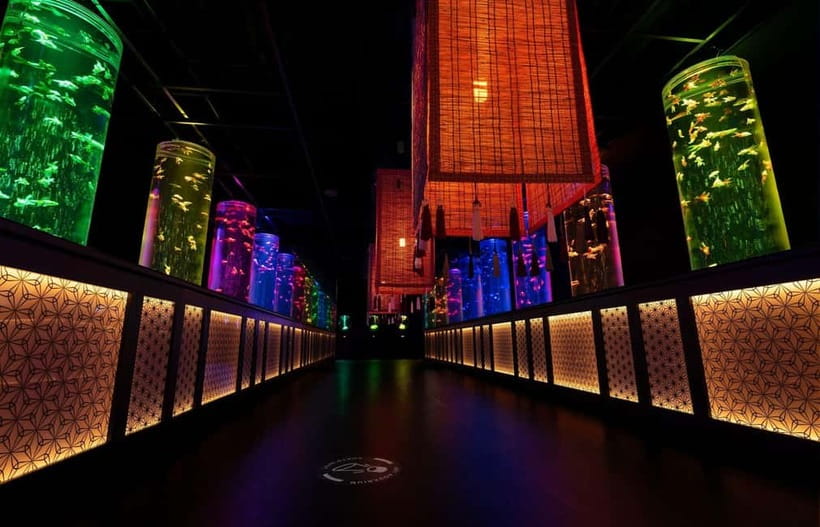
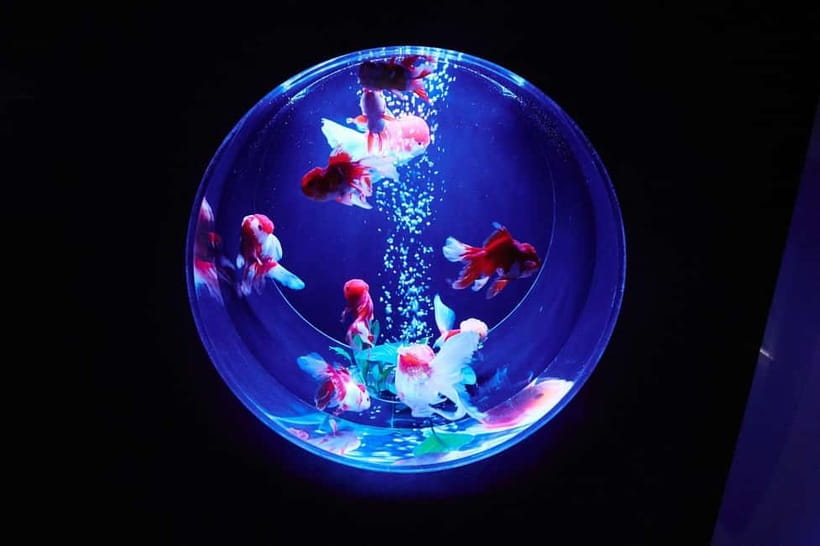
The show isn’t only visual. The museum uses light and music to shape how you perceive the goldfish movement, and it also includes scent. One reviewer specifically liked the aromatherapy aspect, which matches the idea that you’re meant to feel like you’re in an art environment rather than just standing near tanks.
That sensory layering is why this can feel soothing even though goldfish are constantly moving. The music in the background is described as tranquil, and that matters: it keeps the experience calm while the fish do the lively work.
If you’re sensitive to strong smells, it’s worth keeping that in mind. The scent is part of the concept, so if that’s a concern for you, plan to step back briefly if you need a break.
You can also read our reviews of more museum experiences in Tokyo



Photography in the Museum: How to Get Great Shots Without Problems
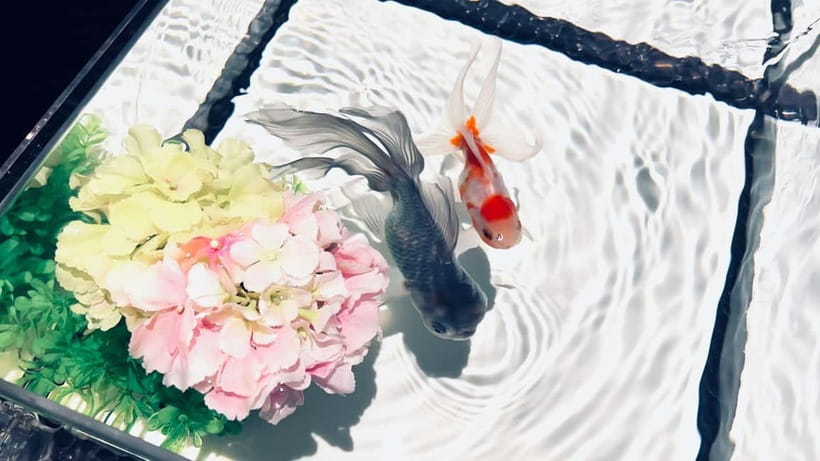
This is a popular spot for photography. You’ll see people lining up for specific angles, and it can be very satisfying to capture the goldfish against the lighting effects.
Here’s the key rule set you should follow:
- Tripods and monopods are not allowed
- Strobes and extra lighting are not permitted
- Photography is allowed
What this means for you: bring your patience and your hands. Use burst mode or adjust your camera settings, but keep equipment compact. If you want sharper results, steady your elbows on a rail if there is one, or use a faster shutter setting when the fish are moving toward the light.
Timing helps too. Midweek entry around late morning tends to feel calmer, which makes photos easier without blocking other people. Even with photo takers present, the museum often stays manageable if you’re not arriving at peak crowds.
Seasonal Changes You Can Actually Notice
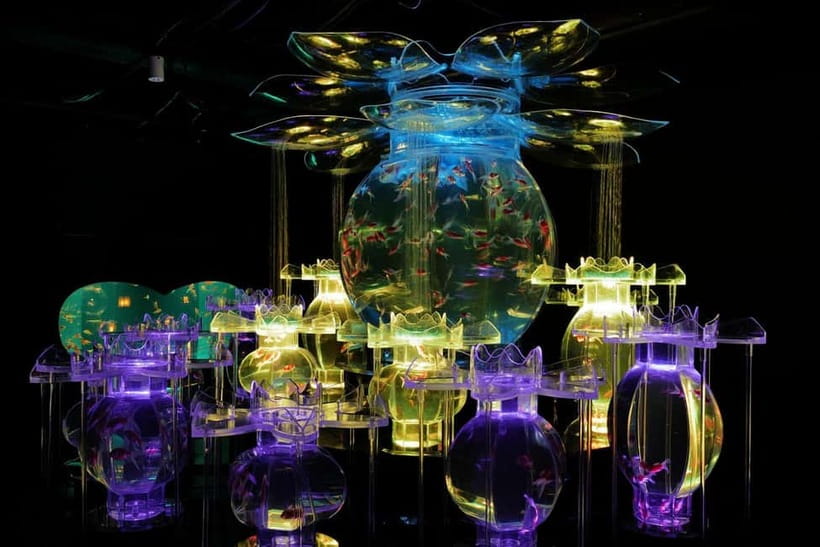
Because the museum is permanent but updates across the year, it’s not a one-and-done experience. One person even mentioned coming back twice within two years and finding that more than half of the art felt new.
What does that mean for you? If you’re in Tokyo for a short stay, you’re still going to see a full experience in one visit. But if you live here or return, it’s worth treating it as a “seasonal stop,” not a single item on your list.
Seasonality also helps with planning your photo style. The lighting setup and display themes change, so your best shots might depend on the time of year you’re visiting.
Gift Shop and Souvenirs: Small, But Fun
Don’t ignore the gift shop. Several reviews highlight that the souvenir selection is good, and if you like “Tokyo memorabilia” that isn’t cheesy, this is an easy place to browse.
It’s also a nice way to extend the outing without adding more walking. After an hour of exhibits, stepping into the shop gives you a natural end point.
Price and Value: Is $17 Worth It?
At about $17 per person, this is not a budget activity—but it can still feel like good value if you like design, atmosphere, and photography.
Here’s why the price can make sense:
- You’re paying for a sensory experience (light, music, scent), not just fish viewing
- The exhibits are staged like art installations, with English information and strong visual impact
- The viewing time is about an hour, so you’re getting a clear “time-for-money” ratio
- It’s easy to fit into an already-packed Ginza day because it’s inside Mitsukoshi
The main reason it might not feel worth it is if you only want basic aquarium info. If you’re the type who goes for educational tank-by-tank comparisons, you may find it more “art experience” than “science center.”
A Balanced Reality Check: What to Consider
This is a high-rated experience overall, but I think it’s smart to name the downsides clearly.
First, it’s compact. You should plan on closer to 45 minutes to 1 hour, not a long, wandering aquarium day.
Second, there’s a comment about fish looking maltreated. I can’t verify what caused that impression from the details provided, but it’s enough that you should pay attention to the fish you see when you arrive. If something looks off to you, trust your instincts and step out.
Finally, it can feel a bit out of the way if your Ginza day was built around other specific activities. If your schedule is flexible, it works great. If you’re trying to stack tightly related attractions, check what’s already near your route.
Who Should Book This Ticket?
You’ll likely enjoy Art Aquarium Museum GINZA if you:
- Like photography-friendly indoor exhibits
- Enjoy design-driven museums where the space matters as much as the subject
- Want a calm, short outing in the middle of a busy Tokyo itinerary
- Appreciate goldfish culture, especially the Edo-to-modern storytelling idea
It’s also a strong rainy-day pick. It’s fully indoors and stays tightly timed.
You might skip it if you’re looking for a huge aquarium with lots of walking between large habitats, or if you dislike places where scent and music are part of the experience.
Should You Book Art Aquarium Museum GINZA?
If you’re already in Ginza and you want something different from the usual Tokyo checklist, I’d book it. The concept is distinctive—goldfish presented like modern art through light, music, and scent—and the logistics are painless thanks to the Mitsukoshi location and clear access routes.
Do it on a day when you can give it a focused hour. If you’re the type who rushes through things, you might feel disappointed by the compact size. But if you like taking your time for photos and reading the English info, this feels like the kind of stop that sticks in your memory for all the right reasons.
FAQ
How long should I plan to spend at Art Aquarium Museum GINZA?
The estimated viewing time is about 1 hour, and the museum is compact, so many people finish within that range.
Where is the museum located inside Ginza Mitsukoshi?
Same-day tickets and admission reception are on the 9th floor of the new building at Ginza Mitsukoshi, 4-6-16 Ginza, Chuo-ku, Tokyo.
What are the nearby train options?
You can reach it via Ginza Station (Tokyo Metro Ginza/Marunouchi/Hibiya lines, exit A7), Ginza 1-chome Station (Tokyo Metro Yurakucho line, about 5-minute walk, exit 9), or Higashi Ginza Station (Toei Asakusa line and Tokyo Metro Hibiya line, about 2 minutes via underground passage).
Are children allowed for free?
Yes. Up to two children under elementary school age may enter free of charge with one adult.
Can I take photos inside?
Photography is permitted, but tripods and monopods (and similar equipment) are not allowed.
Are flash or extra lights allowed?
No. The use of strobes and lighting equipment is not permitted.
Is the ticket refundable?
No. The activity is non-refundable.