REVIEW · LISBON
Tiles and Tales: Workshop and National Tile Museum Visit
Book on Viator →Operated by Around Lisbon · Bookable on Viator
Lisbon’s tiles get personal in one day. You cross the 25 de Abril Bridge, head to Azeitão to paint a tile, then enjoy time at the National Tile Museum at your own pace. I love the hands-on tile workshop where you create something you can ship, and I love that the day mixes craft with seeing azulejos on real buildings as you ride around Lisbon.
One thing to consider: tile shipping timing can affect your plans, so if you’re leaving Portugal soon, ask what delivery window fits your itinerary.
Key things I’d circle on your map
- 25 de Abril Bridge views before you even start the tile lesson
- Azulejos de Azeitão hands-on workshop with your own painted tile
- National Tile Museum self-paced time for antique and preserved pieces
- Lunch choice between seaside Sesimbra or Lisbon
- Round-trip transfers with WiFi and bottled water so you can focus on the art
In This Review
- Crossing 25 de Abril Bridge, Then Heading to Tile Country
- Azulejos de Azeitão Workshop: Painting Your Own Azulejo
- How Your Guide Teaches Lisbon’s Tiles in Motion
- National Tile Museum Time and the Fronteira Palace Backup
- Lunch in Sesimbra vs. Staying in Lisbon
- Price and Logistics: What the $102 Gets You
- Quick Tips for a Smooth Day
- Should You Book Tiles and Tales?
- FAQ
- What time does the tour start?
- Is pickup included, and where can they meet me?
- How long is the experience?
- Is lunch included?
- What’s included in the cost?
- Do I get time on my own in the National Tile Museum?
- Can I ship the tile I paint?
- What if I need to cancel?
Crossing 25 de Abril Bridge, Then Heading to Tile Country
The day starts with a ride across the 25 de Abril Bridge. It’s not just a commute move. The views help you get oriented fast—both directions show Lisbon’s spread and river life, and it makes the rest of the day feel like you’re moving through a living city, not ticking boxes.
From there, you drive south toward Azeitão, in the region known for its azulejo tradition. Along the way, you’ll see tilework on the exteriors of homes and businesses. That matters, because tiles in Portugal are more than museum objects—they’re part of daily architecture, weatherproofed and decorative at the same time.
Your guide also frames what you’re seeing with quick history context. One thread that comes through is the influence of the Arabic occupation on the Iberian Peninsula—basically, why decorative ceramic art took hold and how motifs evolved over time. It gives you a way to look at what’s in front of you instead of staring at pretty patterns without a thread to follow.
Azulejos de Azeitão Workshop: Painting Your Own Azulejo
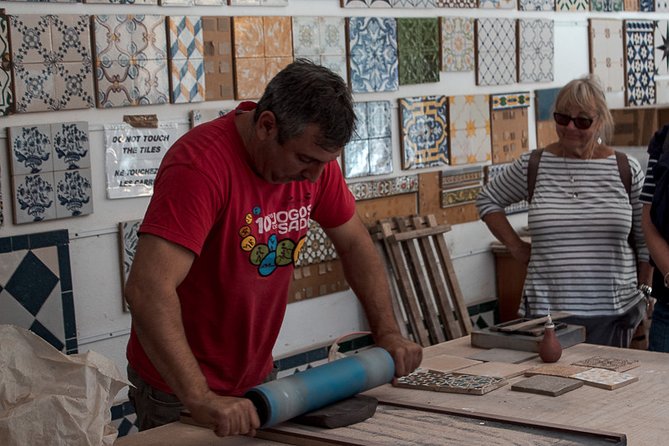
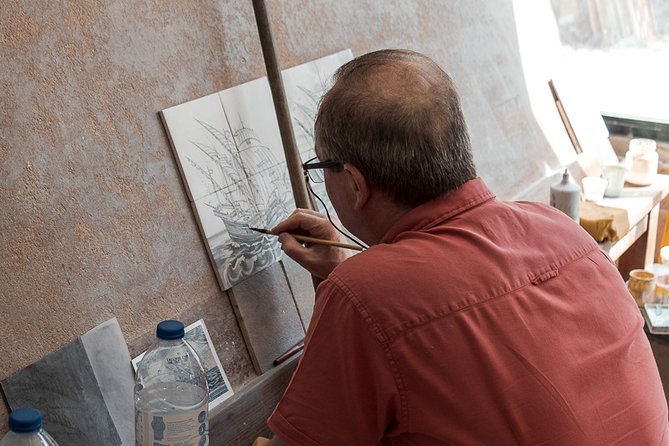
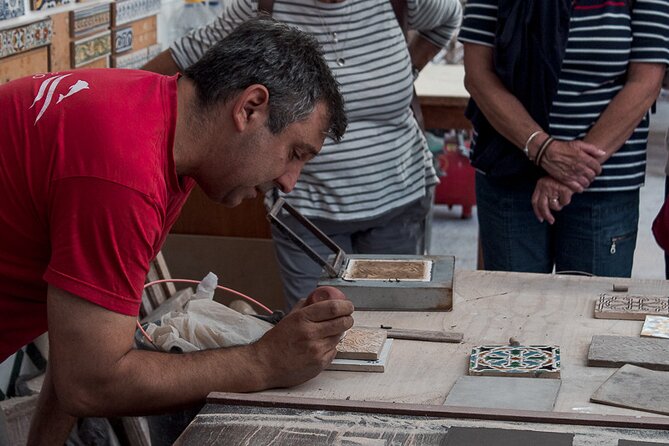
This is the core of the experience: a hands-on workshop in Azeitão (Azulejos de Azeitão). Plan for about two hours. You’ll learn about how tiles are made, then you get to paint your own piece.
A big plus here is that the studio is set up for visitors to participate. In the past, guides like Nuno have kept the experience friendly and paced—so you’re not rushed to slap on color and run. Others (like Ariana, Tiago, and Raquel, depending on who you’re assigned) also bring a clear, upbeat approach to the craft part of the day.
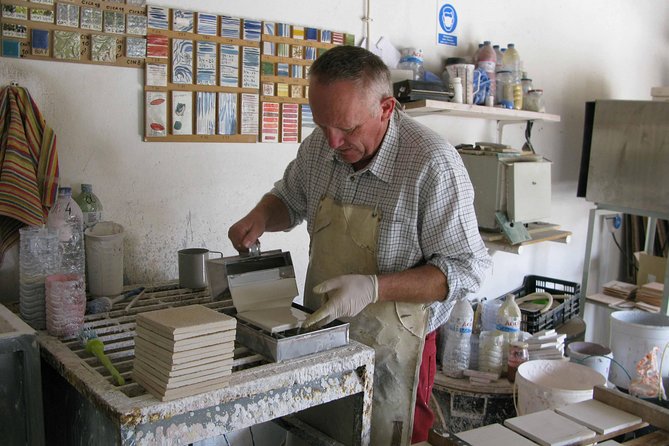
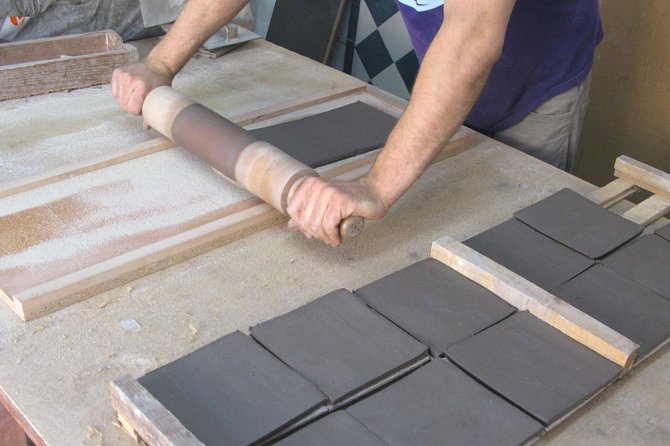
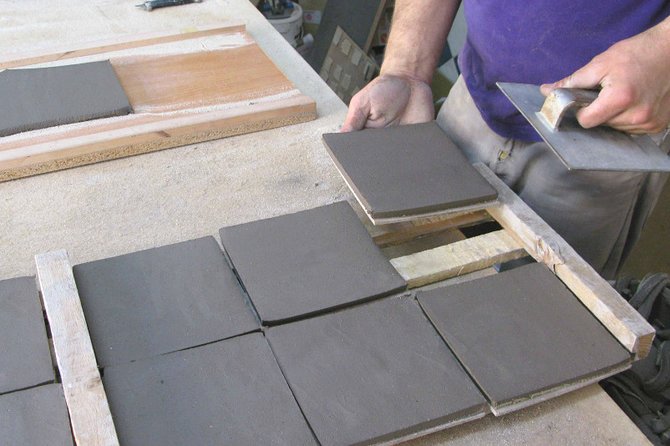
What you’ll actually do is paint the tile. The artisans handle the real production side—things like the materials prep and the firing process that makes the final tile work. So if you’re picturing a full do-everything-from-scratch pottery class, adjust expectations: this is painting-focused, with the studio team doing the technical steps around it.
One of the best practical perks: you can have your finished tile shipped. You’ll be able to take home a piece of Portugal beyond photos. The timing can matter, though—some people get delivery arranged to a Lisbon address (often an accommodation desk setup), and the turnaround can be at least a few days. If your trip ends quickly, it’s worth asking about faster options and fees before you commit.
You can also read our reviews of more museum experiences in Lisbon



How Your Guide Teaches Lisbon’s Tiles in Motion
The clever part of this day is that you don’t treat tiles like an isolated activity. Your guide keeps pointing out what’s around you—shapes, colors, and styles—then ties it back to the techniques you’ll see later.
When your guide is passionate (and many are, including Nuno in particular), the drive becomes part of the learning. You’ll notice how different eras can look like different languages: some façades use repeating geometric patterns, others lean into blue-and-white scenes, and you start to spot how designs are meant to sit on flat walls that would otherwise look unfinished.
This “on-the-road tile spotting” also helps with attention. Instead of waiting until you reach a museum, you’re training your eye from the start. You’ll come back to the National Tile Museum and recognize what you saw on streets and building corners.
One more subtle benefit: the guide can tailor the pace. In practice, that means you’re less likely to get steamrolled by a rigid schedule. If you want more time at the workshop painting, or you’re the kind of person who stops to stare at a single doorway tile for ten minutes, a good guide makes room for it.
National Tile Museum Time and the Fronteira Palace Backup
After Azeitão, you head to the National Tile Museum. Your time there is around 1 hour 30 minutes, and you can explore at your own pace. That’s the right amount of time for most people: long enough to enjoy the collection, short enough that you’re not fighting crowds or museum fatigue.
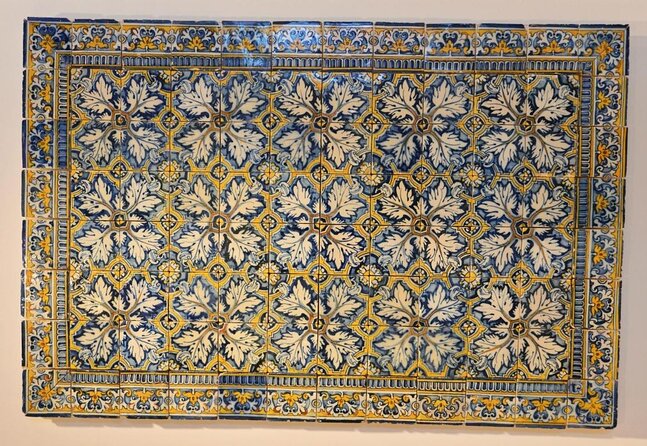
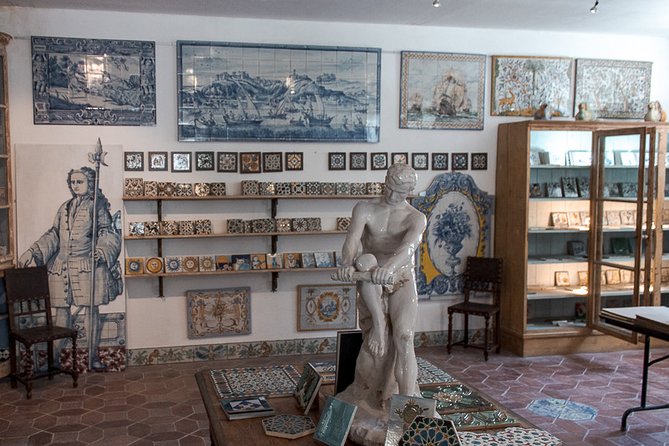
You’re there to see how azulejos developed over time—especially preserved and antique tiles. It’s a good place for “oh, so that’s what I just saw on that wall” moments. The museum format also helps you slow down and focus on craftsmanship—patterns, aging, and the overall way tiles fit architectural spaces.
There’s one wrinkle worth knowing. If the museum is unavailable due to maintenance or closing, your guide may swap in another tile-rich stop. A common alternative mentioned is Fronteira Palace, which offers interior and exterior tile examples. So if you’re set on the museum specifically, you can ask your guide on the day what the plan is for that visit window.
If you’re the type who hates feeling rushed at the end of a timed day, keep an eye on museum timing. If the schedule is tight, you may want to prioritize your must-see rooms first, then allow extra time to wander.
Lunch in Sesimbra vs. Staying in Lisbon
Lunch isn’t included, but you do get a flexible choice on where to eat. You’ll either go to Sesimbra (a fishing village setting) or stay in Lisbon.
Sesimbra is the option that tends to win people over. The whole vibe shifts when you’re near the coast—sea views, an easier pace, and plenty of casual places to eat. One guide recommendation that stood out involved ordering a cuttlefish dish, and the general idea is simple: go local and let the day’s theme carry into your meal.
If you’d rather keep it simpler, Lisbon lunch can be easier for timing. Either way, the structure is helpful: you’re not guessing where to stop after a workshop. You’ll get a plan, plus time to actually eat instead of sprinting.
Practical note: since lunch isn’t included, bring a realistic budget mindset. The tour price covers the art and transport pieces; food is on you.
Price and Logistics: What the $102 Gets You
At $102.12 per person, this sits in the “serious day trip, not a cheap bus ride” category. The value comes from what’s bundled:
- Round-trip hotel/airport/port pickup and drop-off (with the note that you might need to meet at a nearby spot in some areas)
- Driver/guide and a local guide
- WiFi in the van and bottled water
- Tile workshop time with you painting your own tile
- National Tile Museum time (entry is listed as free on the schedule)
That mix matters. You’re paying for transport out of the city plus guided context so you don’t miss what you’re looking at. And you’re paying for a hands-on craft activity that gives you a tangible souvenir.
Is it perfect value for everyone? If you only want a quick photo stop, you might feel the day is too structured. And if you’re not interested in tile history or craftsmanship, the drive-and-museum rhythm might feel like a lot of ceramic talk. But if tiles are even a mild interest, the workshop-to-museum pairing makes the money feel more justified.
Also, double-check what’s included around shipping details at the workshop. The general promise is that your painted tile can be shipped to your accommodation or home, but shipping timing and delivery address rules can affect your planning. If your schedule is tight, ask early about turnaround and any options for quicker shipping.






Quick Tips for a Smooth Day
A few small choices can make this day trip much easier:
- Wear something you don’t mind getting paint-adjacent (even if it’s not messy, studios can be smudge-prone).
- If shipping matters, ask the studio staff about delivery timing and where they can send it (especially if you’re staying somewhere without a reception desk).
- Bring patience for the day’s structure. It’s designed to move from bridge views to workshop to museum, and that pacing is part of the experience.
- If you’re museum-focused, decide what you want to see first. With limited time, you’ll get more satisfaction if you don’t leave everything for the last 20 minutes.
And one more thing: choose your lunch style. Sesimbra tends to be the scenic, slower option; Lisbon is the practical one if you want control of your timing and budget.
Should You Book Tiles and Tales?
Book this if you want a full, satisfying Portugal day that mixes art history with actual hands-on making. It’s one of the better ways to understand azulejos in Lisbon because you see tiles where they belong—on streets, in workshops, and in preserved collections.
Skip it (or at least reconsider) if you’re hoping for a casual, flexible stroll with no schedule structure. And if you’re flying out soon, make sure your tile shipping plan matches your dates.
Bottom line: for art lovers and anyone who likes coming home with more than photos, Tiles and Tales is a strong, value-heavy day—especially when your guide is willing to show you what to notice.
FAQ
What time does the tour start?
The tour starts at 9:00 am.
Is pickup included, and where can they meet me?
Yes. Hotel or apartment pickup is offered, and pickup can also be arranged from the Port or the Airport. In some city areas, you may need to join at a nearby meeting point.
How long is the experience?
It runs for about 8 hours (approx.).
Is lunch included?
No. Food and drinks aren’t included, and lunch is not included in the tour price.
What’s included in the cost?
Included items are the driver/guide and local guide, round-trip pickup and drop-off, WiFi in the van, and bottled water.
Do I get time on my own in the National Tile Museum?
Yes. You have about 1 hour 30 minutes at the National Tile Museum, and you can explore at your own pace.
Can I ship the tile I paint?
You can paint your own tile and have it shipped. Delivery details and timing can affect your plans, so it helps to ask about the shipping window and where they can deliver it.
What if I need to cancel?
You can cancel for a full refund if you cancel at least 24 hours before the experience’s start time. If you cancel less than 24 hours before, the amount paid isn’t refunded.