REVIEW · LISBON
Lisbon: National Tile Museum Entry Ticket
Book on GetYourGuide →Operated by GetYourGuide Tours & Tickets GmbH · Bookable on GetYourGuide
Azulejos turn a convent into a time machine. I love the museum’s 15th-century to today timeline of Portugal’s tiles, and the stunning church and chapel setting inside the former Convent of Madre Deus. One catch: this ticket is not a true skip-the-line pass, so you may still wait a bit.
This isn’t a quick snack museum. Plan about 90 minutes for a relaxed route, then consider adding the on-site cafe and a browse of the Lisbon city display.
In This Review
- Key highlights to know before you go
- National Tile Museum: More than pretty azulejos
- Getting in: Hours, last entry, and what to expect at the door
- Start where it makes sense: Materials and techniques first
- The chronological azulejo route: 15th century to today
- The former Convent of Madre Deus: where the tiles have a home
- Church and chapel time: paintings, giltwood, and ceiling moments
- Cloister calm: saints relic busts and slower looking
- The on-site cafe and garden seating: a good reset
- The Lisbon city display on the upper floor
- Audio option: simple, but plan for your own setup
- Price and value: is an $11 ticket worth it?
- Who should book this tile ticket in Lisbon?
- Should you book the National Tile Museum entry ticket?
- FAQ
- What are the opening hours for the National Tile Museum?
- Which days is the museum closed?
- Where do I enter and show my ticket?
- Is this a skip-the-line ticket?
- How long is the ticket valid?
- What should I bring for the visit?
Key highlights to know before you go
- A chronological azulejo route that starts with how tiles are made, then moves forward in time
- Former Convent of Madre Deus (founded in 1509), so you’re touring history, not just flat walls
- Portuguese tile styles from the 15th century to the present, plus ceramics and faience up through the 21st century
- Church, cloister, sacristy, high choir, and Chapel of Saint Anthony are all part of the experience
- Extra stops inside the building like the cafe with garden seating and a Lisbon city display on an upper floor
- Wheelchair accessible, with step-free access available
National Tile Museum: More than pretty azulejos
Portugal’s azulejos aren’t just decoration. At the National Tile Museum, the tiles are treated like evidence—proof of how materials, techniques, trade, religion, and style changed over time.
What I like most is that you don’t get stuck only staring at colorful walls. The route begins with an explanation of tile-making materials and techniques, then shifts into a chronological walk through centuries. That structure matters because it makes the differences you’re seeing feel logical, not random.
And yes, the tiles are gorgeous. But the building itself also does a lot of the work: the museum lives in the former Convent of Madre Deus, which brings a quieter, more sacred atmosphere to the art.
A few more Lisbon tours and experiences worth a look


Getting in: Hours, last entry, and what to expect at the door
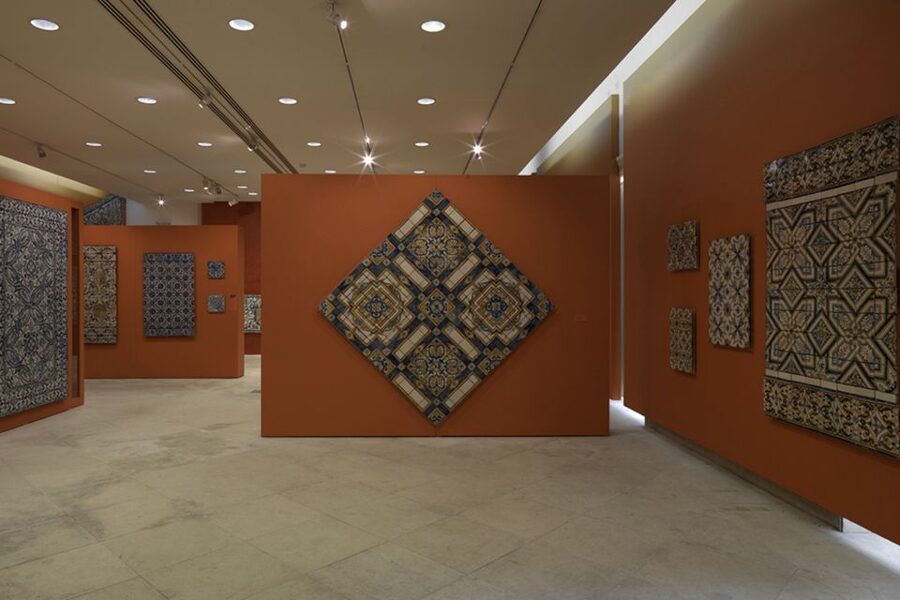
This ticket covers admission to the National Tile Museum, valid for 1 day (you’ll pick a starting time based on availability). Opening hours run Tuesday to Sunday, with a midday break: 10:00 am to 1:00 pm, then 2:00 pm to 6:00 pm. Last entry is at 5:30 pm.
Also, read the fine print and plan accordingly: this is not a skip-the-line ticket. If you show up during a peak wave, expect some waiting before you can enter.
My practical suggestion: aim for late morning or early afternoon, and don’t count on staying right until closing. With last entry at 5:30 pm, you’ll feel rushed if you treat this like an add-on after other heavy stops.
When you arrive, enter at the main entrance and show your ticket on arrival. The activity ends back at the meeting point, so you’re free to linger inside only within the museum’s open hours.
Start where it makes sense: Materials and techniques first
Most tile museums can become a show-and-tell of pretty scenes. This one starts with the fundamentals, and that’s a big reason it clicks.
You begin with a short intro display showing the materials and techniques used to manufacture tiles. Even if you’re not the kind of person who reads labels for sport, this setup gives you a map for what you’re about to see. You start noticing the differences in surface, style, and period with sharper eyes.
Then the museum switches into a chronological route. That means you’re not jumping around stylistic eras. You’re watching change happen—step by step—so the 15th-century look has context, and the later ceramic styles don’t feel like a totally different world.
The chronological azulejo route: 15th century to today
After that introductory section, the galleries run in order from the second half of the 15th century onward. This is where you’ll spend most of your time if you want to truly absorb the evolution.
The core focus is Portuguese decorative ceramic tiles (azulejos) from the late medieval period through later centuries and up to the present day. You’ll see how designs shift over time—both in the images chosen and in the overall visual language.
What I appreciate is that the museum doesn’t treat tiles as a single thing. It also includes other ceramic forms: along with tiles, you can find ceramics, porcelain, and faience from the 17th to the 21st century. That broader mix helps you understand azulejos as part of a wider craft and industry, not an isolated tradition.
If you’re doing this on a busy day, here’s the smart way to pace it: pick a couple of rooms to slow down in. The museum’s overall flow is chronological, so you can still keep moving without skipping the parts that grab you.
The former Convent of Madre Deus: where the tiles have a home
The National Tile Museum is housed in the former Convent of Madre Deus, founded by Queen D. Leonor in 1509. That founding date isn’t just trivia. It affects your whole mood in the building.
The museum opened as a National Tile Museum in 1965 and later became a National Museum in 1980. Over time, different building campaigns transformed parts of the complex. So even the architecture tells a story while you’re walking.
Several major spaces are included in the museum route:
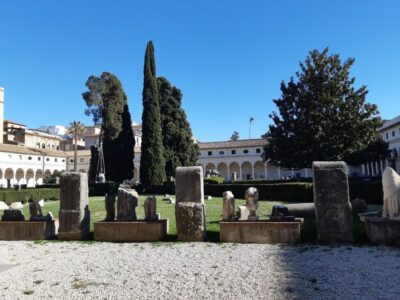
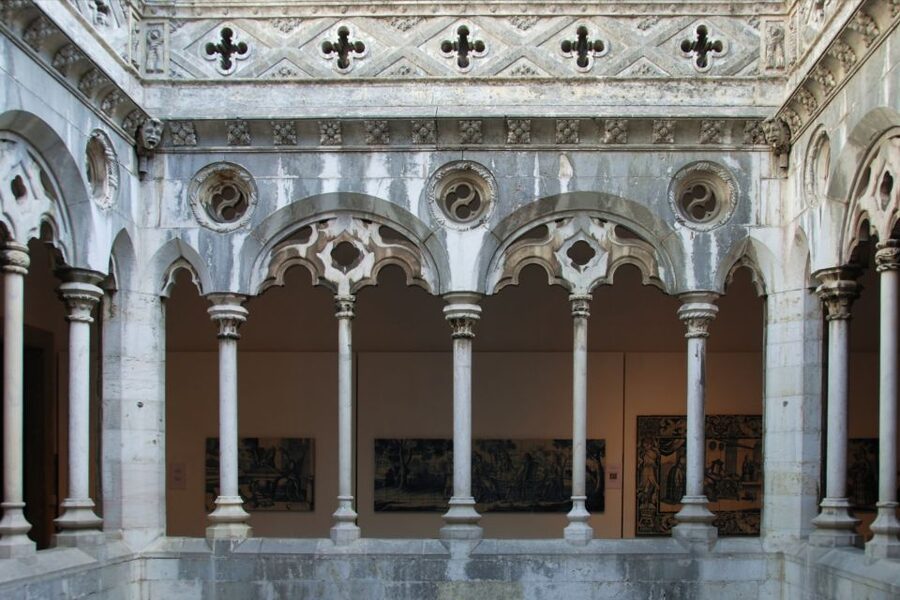
- The 16th-century mannerist cloister (a visual calm spot for tile spotting)
- The church, decorated with remarkable sets of paintings and tiles
- The sacristy, with a Brazilian wood display cabinet and carved wood frames with paintings
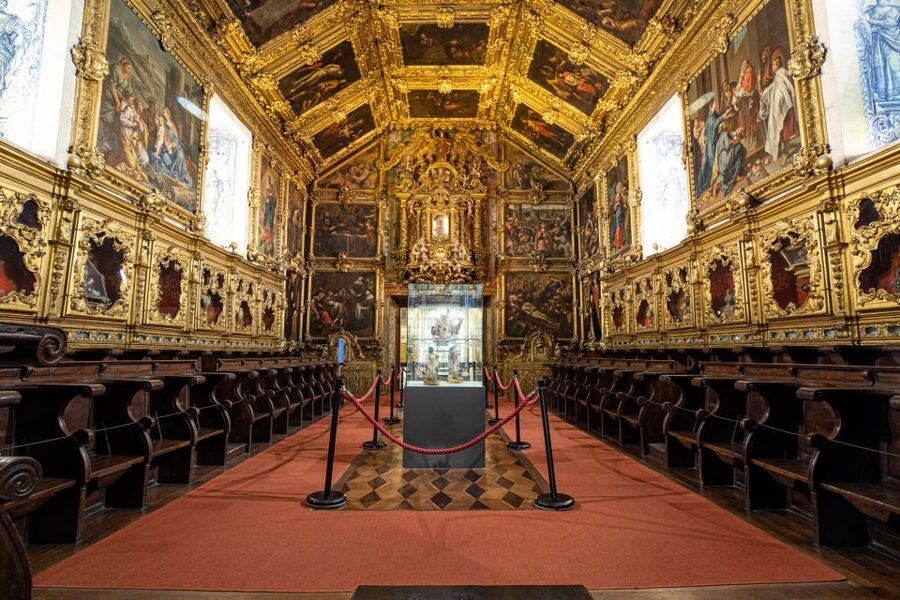
- The high choir, with rich carved giltwood embellishments
- The Chapel of Saint Anthony, with 18th-century Baroque decoration and canvases by André Gonçalves
Because these spaces were designed for religious life, the art doesn’t feel like a background. It feels integrated—like the setting was always meant to carry meaning.
You can also read our reviews of more museum experiences in Lisbon




Church and chapel time: paintings, giltwood, and ceiling moments
A tile museum can sometimes force you into a pattern: stare at wall, move along, repeat. Here, the museum gives you moments you’ll want to pause in, especially in the church and chapel areas.
In the church, look for the combined effect of paintings and tiles. The descriptions point to multiple sets of paintings and tile decoration, which means you’re not only seeing azulejos—you’re seeing them working with other art forms.
In the sacristy, the Brazilian wood display cabinet and carved wood frames with paintings add another layer. That detail matters because it connects tile decoration to broader artistic taste and materials.
Then there’s the high choir, with carved giltwood embellishments. Even if you’re not a woodwork person, giltwood has a way of pulling your gaze upward—exactly what you want in a space like this.
The Chapel of Saint Anthony is the other big anchor. You’ll see 18th-century Baroque decoration and a significant number of canvases by André Gonçalves. If your brain likes a clear “story moment,” this is one of those spots where everything feels more dramatic and theatrical than the surrounding areas.
Cloister calm: saints relic busts and slower looking
The cloister can be a relief if you’re spending your day hopping between Lisbon sights. It’s also one of those spaces where tile lovers tend to get quiet.
Inside, the cloister includes busts associated with saints’ relics (so it’s not only decorative). That means you get a “history layer” in the middle of your tile route.
If you like taking photos, this is a good place to steady your pace. You can use the open space and calmer light to capture wide views without trying to force every shot in a tight gallery.
The on-site cafe and garden seating: a good reset
You’ll find a cafe on site, and it’s more than an afterthought. One of the best practical reasons to visit here is that the museum is comfortable to finish, even if you arrive warm or tired.
People specifically call out the coffee shop at the end as an experience on its own. The cafe also has garden seating, which helps if you want a break from indoor viewing.
If you’re planning this alongside other Lisbon stops—like the nearby Lisbon Aquarium—the cafe can be your timing tool. Eat first if you’re hungry, then go back in while you still have energy to look carefully.
The Lisbon city display on the upper floor
One review highlight points to a Lisbon city display on the top floor. That’s a useful reminder: the museum isn’t only about tiles as objects. It also connects the art to the wider story of Lisbon and place.
For me, this kind of interpretive stop is where “I like tiles” turns into “I get why they mattered.” Even if you don’t spend a lot of time there, knowing the museum ties tile design to Lisbon’s visual identity makes the rest of your visit feel more grounded.
Audio option: simple, but plan for your own setup
Some visitors mention an audio experience. The key detail: the audio required downloading an app and using your own headphones.
So if you want audio, go in prepared—headphones charged, phone ready, and a little patience if the setup takes a moment. If you’d rather not deal with that, you can still get a strong experience from the visuals and the introductory manufacturing section.
Price and value: is an $11 ticket worth it?
At about $11 per person, this ticket is priced like a smart add-on. But it’s also priced like a real museum visit, not a quick photo stop.
The value comes from three things you’re actually getting:
- Time-spanning art and craft, from late 15th-century work up through contemporary pieces
- Multiple historic interior spaces (not just a single room of displays)
- A built-in break option with the cafe and garden seating
If you enjoy art history, design, or Portuguese culture, this becomes an easy yes—especially on rainy days, when you want indoor sights that reward slow looking.
If you’re only interested in one or two tiles, it might feel like a lot. But the museum’s chronological route helps you choose where to focus, rather than being forced into every single room.
Who should book this tile ticket in Lisbon?
This works for a wide range of people, more than you might expect.
You’ll love it most if you:
- Like seeing how crafts evolve over centuries
- Care about architecture, religious art spaces, and the way art fits into real buildings
- Enjoy label reading and structure—because the museum gives you a logical path
It can also be a strong family option. Even people who go in unsure about a tile museum often end up staying longer because the building is so varied: cloister, church, sacristy, choir, chapel.
If you’re the type who hates slow museum pacing, set expectations for about 90 minutes and pick your “must-see” spaces (church and chapel are usually the winners).
Should you book the National Tile Museum entry ticket?
Yes—if you want a Lisbon museum that’s visually strong and actually teaches you something without feeling like homework.
Book it if:
- You’re curious about azulejos beyond the surface look
- You want a visit that blends art, craft, and historic architecture in one place
- You’ll appreciate being able to slow down—especially in the church and chapel areas
Think twice if:
- You hate any chance of queues, since this is not a guaranteed skip-the-line ticket
- You only want a quick stop and don’t plan to spend around 90 minutes
If you’re aiming for value, this one fits: for roughly $11, you get tiles across centuries and a convent setting that makes the whole visit feel more alive than most museums.
FAQ
What are the opening hours for the National Tile Museum?
The museum is open Tuesday to Sunday from 10:00 am to 1:00 pm and 2:00 pm to 6:00 pm. Last entry is at 5:30 pm.
Which days is the museum closed?
It is closed on January 1, Easter Sunday, May 1, June 13, and December 25.
Where do I enter and show my ticket?
Enter the National Tile Museum at the main entrance and show your ticket on arrival.
Is this a skip-the-line ticket?
No. This is not a skip-the-line entry ticket to the National Tile Museum.
How long is the ticket valid?
The ticket is valid for 1 day. You should check availability for starting times.
What should I bring for the visit?
Bring your passport or ID card, comfortable shoes, a camera, water, and comfortable clothes.