REVIEW · ROME
Rome: Early Bird Vatican Museums Small Group Tour (MAX 6 People)
Book on Viator →Operated by Eyes of Rome · Bookable on Viator
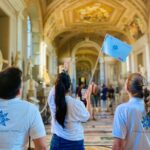
The Vatican opens before the crowd does. With first access in the morning and a guide steering you through the big-ticket rooms, this 3.5-hour visit is built for people who want the highlights without spending their whole day in line chaos.
I especially like two things: the small-group size (max 6) keeps it easier to hear the guide and stay together, and the timing gives you skip-the-line entry when many visitors are still forming their queues. One thing to consider: even early, it can feel crowded, and parts of the Museums are hot with limited A/C—so bring water and wear breathable layers.
In This Review
- Key points to know before you go
- First access at 8:00 AM: how the timing actually helps
- Meeting point details: arriving with the right mindset
- Vatican Museums opening run: Pigna courtyard and Pomodoro’s sphere
- The Map Gallery: 120 meters of Italy from the 1500s
- Tapestries and the Raphael-school feel: story stitched in fabric
- Candelabri Gallery: Greek and Roman fragments in a dramatic setting
- Sistine Chapel in 30 minutes: how to get the most without rushing
- St. Peter’s Basilica: Pietà, tombs, and the feeling of scale
- Bernini’s Baldachin and St. Peter’s Square: finish strong with geometry
- What the 3.5 hours really means for you
- Heat, crowd pressure, and the one practical thing to do
- Price and value: what you pay for (and what you get back)
- Who this early bird Vatican tour is for
- Should you book this tour?
- FAQ
- What time does the tour start, and how long is it?
- Where do I meet the tour, and where does it end?
- Is this tour skip-the-line, and do I get admission tickets?
- What group size is it?
- Is there a dress code for the Vatican?
- What should I bring or plan for during the visit?
Key points to know before you go
- First access (8:00 AM) focus helps you reach the Sistine Chapel while lines are still manageable.
- Max 6 people means you spend more time looking at art and less time negotiating where everyone stands.
- Skip-the-line entry tickets are included, including admission for Vatican Museums and the Sistine Chapel.
- St. Peter’s Basilica highlights include Michelangelo’s Pietà and a quick pass to the Baldachin and St. Peter’s Square.
- Dress code is required: no shorts or sleeveless tops; knees and shoulders must be covered.
First access at 8:00 AM: how the timing actually helps
This tour starts early—7:30 AM—and it begins at Giuly’s Café, Via Santamaura 3 (00192 Roma RM). You’ll end in St. Peter’s Square (Piazza San Pietro, 00120), so you’re not stuck backtracking across Vatican grounds when you’re already tired.
The big value is that you’re scheduled for first access (8:00 AM). The Vatican Museums are so large that “seeing everything” isn’t realistic for most people. Starting early doesn’t magically make crowds disappear, but it does change the feel of the day: you get your most important moments before the mass of late-morning visitors floods in.
Expect a moderate amount of walking and plan on comfortable shoes. There’s also a dress code for places of worship and selected museums—so check what you’re wearing the night before.
You can also read our reviews of more museum experiences in Rome
Meeting point details: arriving with the right mindset
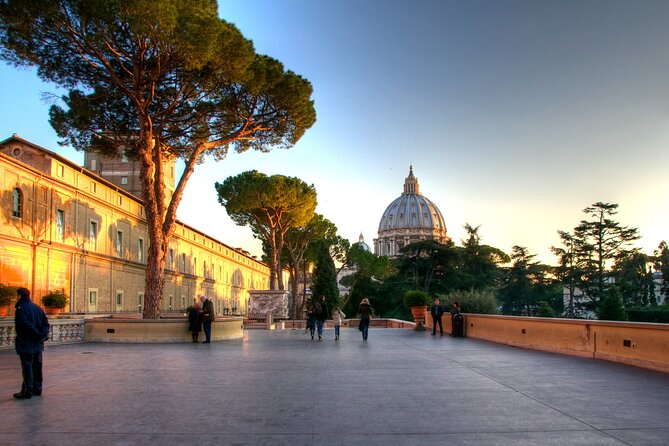
The meeting spot is in Rome proper, not inside the Vatican gates. That means your morning rhythm matters. If you arrive late, you’ll rush through the start, and you’ll miss the calm head-start the whole tour is designed around.
You’ll get a mobile ticket, and the tour is offered in English. Service animals are allowed, and the meeting area is described as near public transportation, which helps if you don’t want to wrestle with taxis or complicated directions.
I’d treat this as a “show up ready” morning: covered clothing, water, comfortable footwear, and your phone charged for the mobile ticket.
Vatican Museums opening run: Pigna courtyard and Pomodoro’s sphere
Once inside the Museums, the tour moves with purpose. The route is aimed at the rooms that people most often regret skipping—or spend far too long later trying to find on their own.
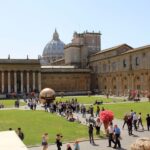
A first stop is the Courtyard of the Pigna, connected to the older Belvedere area. Courtyards sound small on paper, but this one matters because it sets the tone: you’re walking into a mix of sculpture, space, and museum layout that you simply won’t “get” by accident.
Then you’ll see Arnaldo Pomodoro’s Sphere within a Sphere (in the Cortile della Pigna). It’s one of those pieces where light changes everything: the fractured bronze surface catches shadows, and the smaller sphere inside creates that “outer world / inner world” feeling. The guide’s role here is important—not because you need an art history lecture, but because they help you look at details instead of just taking a photo and moving on.
The Map Gallery: 120 meters of Italy from the 1500s
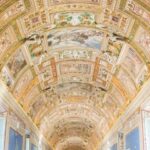
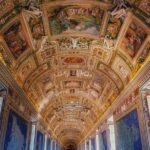
Next you’ll hit the Galleria delle Carte Geografiche—the Gallery of Maps. This is not a quick photo stop. The tour includes a short visit, but the room itself is the point: it stretches 120 meters and features topographical maps of Italy created in the 16th century under Pope Gregory XIII.
Why it’s worth your time: it’s a reminder that the Vatican wasn’t only about theology and art in the abstract. It also preserved political and geographic thinking—how Europe understood itself on paper.
If you tend to glaze over in museums, this is still a good room because you can “read” it. Stand back, look across the length of the wall, then come closer to notice how the maps are painted and organized.
Tapestries and the Raphael-school feel: story stitched in fabric
The Gallery of Tapestries takes you into something more hands-on in spirit. You’ll see 15th and 16th-century tapestries woven with scenes from biblical and historical narratives, inspired by designs from Raphael’s school.
It’s tempting to treat tapestries like background decoration, but up close they demand attention: the scenes are complex, and the craftsmanship shows why these were once prestige objects. In a short 5-minute window, I’d focus on one tapestry panel and let the guide’s context anchor what you’re seeing.
The practical upside of this tour schedule is that you’re not stuck in any one room too long. It’s a “best-of” approach, not a slow museum marathon.
Candelabri Gallery: Greek and Roman fragments in a dramatic setting
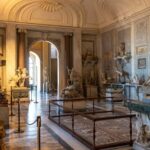
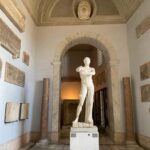
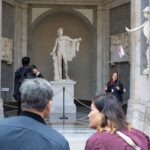
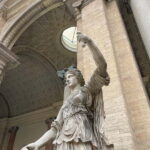
Then comes the Galleria dei Candelabri, named for the grand marble candelabras that split the gallery into thematic sections. This room holds a mix of Greek and Roman statues, sarcophagi, and reliefs.
What makes it enjoyable is that it feels both architectural and archaeological. Late 18th-century setup means you’re not just viewing ancient fragments—you’re experiencing how later curators staged ancient art for display. The guide helps connect the dots, so you don’t walk through wondering what you’re supposed to notice.
In this kind of room, I like to look at scale first: how large the pieces are, where the eye lands, and how the candelabras guide your movement.
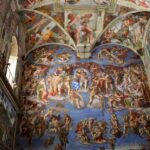
Sistine Chapel in 30 minutes: how to get the most without rushing
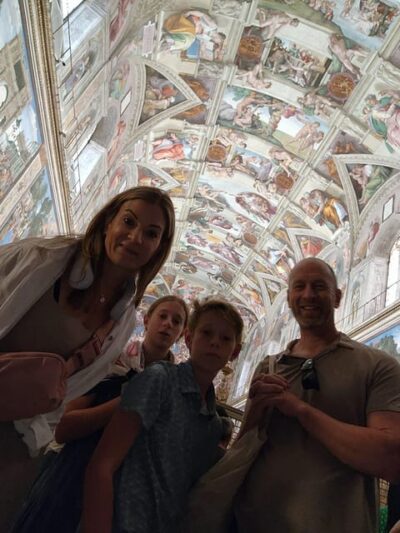
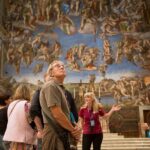
The Sistine Chapel visit is about 30 minutes, and that time limit is actually helpful. The Chapel is one of the most talked-about rooms on earth, but it can also be one of the hardest to enjoy if you’re trying to do it like a normal museum.
The Chapel is named for Pope Sixtus IV and includes a burst of meaning around its restoration of the old Cappella Magna between 1477 and 1480. It’s also historically important because it’s been used for conclaves and other official papal ceremonies. Then, of course, it’s Michelangelo’s frescoes that pull you in.
One reality check: the Chapel can feel noisy and crowded, and phones and cameras sometimes show up despite rules. Your best strategy is mental, not technical. Go in with a plan for your gaze—upper walls for the big scenes, then shift down to pick out how figures connect across panels—so your attention stays on the art, not on the surrounding commotion.
If you want a quieter experience, this early start still won’t make the Sistine peaceful, but it can make it far more tolerable than later in the day.
St. Peter’s Basilica: Pietà, tombs, and the feeling of scale
After the Museums, you’ll move to St. Peter’s Basilica for about 45 minutes. This is the religious and artistic “final boss,” and the tour is set up to hit the most famous moments without you spending the first 15 minutes stuck at the wrong entrance.
You’ll see Michelangelo’s Pietà, dated 1498–1499, carved in Carrara marble. Two details make this statue worth extra attention: it’s the only work Michelangelo ever signed, and it was moved to its current location in the 18th century (it’s in the first chapel on the right as you enter). Knowing those facts helps you notice the craftsmanship instead of treating it like just another must-see sculpture.
The tour also includes time around the venerable tomb of Saint John Paul II (Karol Wojtyla). If you’re visiting during a period with special events, you might notice that access patterns can change, so having a guide matters when rules and openings shift.
A key consideration: during the Jubilee year, some areas can be under restoration or affected by extraordinary celebrations. One practical tip is to keep expectations flexible about what you’ll see inside St. Peter’s on any given morning.
Bernini’s Baldachin and St. Peter’s Square: finish strong with geometry
St. Peter’s continues with a quick stop at the Baldachin—the bronze canopy over the high altar, designed by Gian Lorenzo Bernini. The structure is over 90 feet tall, and even a short viewing window feels dramatic because it towers over everything else in the basilica’s visual field.
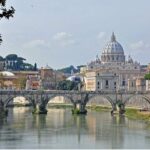
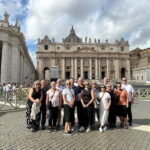
Then you’ll step into St. Peter’s Square for about 15 minutes. The space is an ellipse framed by 284 Doric columns, arranged in four rows. The measurements are big—196m wide and 148m long—but the effect is simpler: you feel pulled inward, like the square is designed to gather people into one central focus.
Bernini laid out the square during the pontificates of Alexander VII and Clement IX, which gives you a neat timeline to keep in mind while you look at the layout.
What the 3.5 hours really means for you
This is a 3 hours 30 minutes tour, plus travel time within the Vatican grounds. That time limit shapes everything: you’re not doing a slow “everything” visit, you’re doing a high-value sequence.
Here’s what you gain:
- You get a structured path through the Museums instead of getting lost in a labyrinth.
- You reach the Sistine Chapel with a better chance of enjoying it rather than surviving it.
- You end in St. Peter’s Square, so the experience doesn’t stop abruptly at the last door.
Here’s what you give up:
- You won’t have hours to linger on every side chapel or every sculpture niche.
- If you’re the type who needs extended quiet time, you’ll likely want to return on your own after this tour ends.
Heat, crowd pressure, and the one practical thing to do
A lot of people underestimate comfort in the Vatican Museums. Even on early tours, you can still be standing in busy areas and walking between rooms without much airflow.
Bring water. Some areas of the Vatican Museums have no air conditioning, and the timing doesn’t erase the heat—it just reduces the worst of the long-line sun.
Also, accept that early doesn’t mean empty. Even the “first access” window can include a large number of people inside key entry points. That’s exactly why the small-group setup matters: you stay moving, and the guide helps keep you from drifting away from your plan.
Price and value: what you pay for (and what you get back)
At $179.81 per person, this isn’t a “cheap morning” activity. But it’s also not just a guided lecture. You’re paying for three things that are hard to replicate on your own:
1) Skip-the-line value.
The tour includes skip-the-line entry for the Vatican Museums and the Sistine Chapel, plus first access timing. That can save you hours of wasted time, which is the real cost of a Rome day.
2) The small-group advantage.
With max 6 people, you’re less likely to get separated, and you can ask questions without shouting over a crowd.
3) A guided hit list.
You’ll pass through high-impact rooms: the Courtyard of the Pigna, Pomodoro’s sphere installation, the 120-meter Gallery of Maps, the Tapestries, Candelabri Gallery, then straight into the Sistine Chapel and St. Peter’s Basilica highlights.
If you’re short on time in Rome, or you dislike standing in lines, that combination is what turns the price into value.
If you’re the kind of visitor who enjoys roaming freely and doesn’t mind planning logistics yourself, you might decide you can do it cheaper. But if you want the best parts with the least friction, this is the kind of “pay once, save time” choice that often makes people happy.
Who this early bird Vatican tour is for
This tour fits best if you:
- Are visiting for the first time and want a clear path to the big masterpieces.
- Want guided context so you’re not just looking at famous names.
- Prefer smaller groups and easier movement through crowds.
- Have limited time and want the Vatican Museums, Sistine Chapel, and St. Peter’s Basilica in one run.
It may not be ideal if you:
- Want to spend long, unstructured hours in the Sistine Chapel.
- Are uncomfortable with crowded interiors even early in the morning.
- Can’t meet the dress code requirements (covered shoulders and knees).
Also, it helps to remember that St. Peter’s access can change during high-activity periods like Jubilee celebrations. A good guide will adapt in real time, but your morning plan should still allow for some uncertainty.
Should you book this tour?
I’d book it if you want the Vatican’s most famous rooms in a tight, efficient window—especially if you know you’ll lose patience in long lines. The early start, max 6 format, and skip-the-line admission are the three strongest reasons to choose it, and the route hits the right mix of sculpture, painting, and architecture.
Skip it if you’re planning a slow, wandering museum day or if you’d rather build your own route without the structure. And whatever you choose: double-check your outfit for the dress code, bring water, and treat this as a “high-impact highlights” morning, not a full Vatican deep study.
FAQ
What time does the tour start, and how long is it?
The tour starts at 7:30 AM and runs for about 3 hours 30 minutes.
Where do I meet the tour, and where does it end?
You meet at Giuly’s Café, Via Santamaura 3, 00192 Roma. The tour ends at St. Peter’s Square, Piazza San Pietro, 00120.
Is this tour skip-the-line, and do I get admission tickets?
Yes. The tour includes first access and skip-the-line entry. Admission ticket coverage includes the Vatican Museums and the Sistine Chapel, and St. Peter’s Basilica admission is listed as free for the included visit.
What group size is it?
It’s a small-group tour with a maximum of 6 travelers.
Is there a dress code for the Vatican?
Yes. You need to follow a dress code: no shorts or sleeveless tops. Knees and shoulders must be covered for both men and women, or you may be refused entry.
What should I bring or plan for during the visit?
Plan for a moderate amount of walking and bring comfortable shoes. The tour also takes place early and involves time in large indoor spaces, so it’s smart to be prepared for warm conditions.