REVIEW · CAIRO
Private full day tour Sakkara , Memphis museum ,Dahshur pyramids
Book on Viator →Operated by The Egyptian King · Bookable on Viator
A day of pyramids and museum stops feels like a lot—then it clicks. This private full-day route strings together the story of how Egypt built and refined pyramid shapes, from Saqqara to Dahshur, with the Memphis Museum as your history reality check.
I like how hands-on it is for an all-day outing: you’ll visit tombs, and you’ll also get the chance to enter the Unas pyramid interior with painted surfaces and inscriptions. I also like the variety in the middle of the day—Memphis Museum brings you face-to-face with the huge Ramses II statue, then you can add lunch and a stop for handmade carpets.
One thing to think about: the schedule is flexible at 4 to 8 hours, and some extras depend on which option you choose (like entrance fees and lunch). If you’re trying to protect a tight timetable in Cairo, you’ll want to confirm your exact start time and inclusions before you lock it in.
In This Review
- Key highlights before you go
- Why Saqqara, Memphis, and Dahshur belong together
- Pickup and transport: the practical Cairo part
- Stop 1: Saqqara’s Step Pyramid zone and the tombs that explain daily life
- What you’ll see at Saqqara
- A consideration when you go inside
- Stop 2a: Memphis Museum and the Ramses II statue you can’t miss
- What you’ll see at Memphis Museum
- Stop 2b: Lunch and a handmade carpet stop for texture, not just boxes to tick
- Stop 3: Dahshur’s Bent and Red Pyramids, and why this tour sells them hard
- Why Dahshur can feel different than Giza
- What you’ll do at Dahshur
- A small practical note
- The guide experience: how to get more than facts
- Price and value: what $14 gets you, and what to confirm
- Who this tour suits best (and who might want something else)
- Should you book this Saqqara, Memphis, and Dahshur tour?
- FAQ
- What does the tour include?
- How long is the tour?
- Where does the tour take place?
- Is there hotel pickup?
- Can I enter any pyramids?
- Is this a group tour or private?
Key highlights before you go
- Saqqara Step Pyramid area: the early, experimental stage of pyramid building, not the final version
- Unas pyramid interior: the one with painted interior and hieroglyphic inscriptions
- Tombs of Idut and noble family burial sites: you get context for daily life, not just architecture
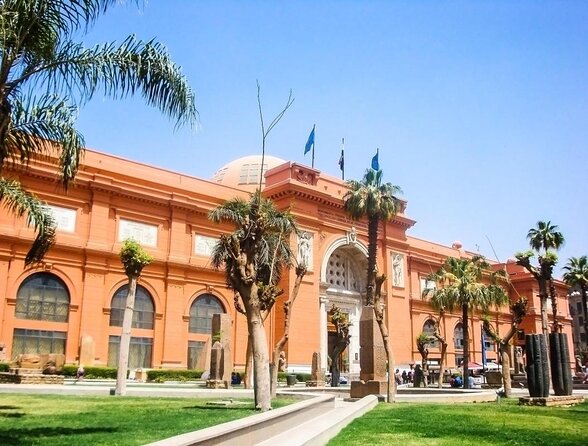
- Memphis Museum with Ramses II: the big king statue plus a feminine Sphinx statue
- Dahshur’s Bent and Red Pyramids: the evolution from steps to the “perfect” shape you know from Giza
- Optional carpet-and-lunch break: a practical pause that also adds cultural texture
Why Saqqara, Memphis, and Dahshur belong together
This tour makes a simple point, and it’s a good one: pyramids didn’t appear fully formed. Egypt tested ideas, refined techniques, and gradually improved the plan. Starting at Saqqara gives you the beginning of that story, then Memphis gives you the human side—rulers, sculpture, and the place these monuments fit into.
You also get a nice change of pace. Saqqara is about ancient burial and early pyramid design. Memphis Museum is about what power looked like—big statues and iconic figures—so your brain isn’t stuck in “stone geometry mode” all day. Then you head south to Dahshur, where the tour leans into the idea that these pyramids can feel more interesting than Giza because you’re watching the “from-to” progression.
If you want one day in Cairo that doesn’t just hit famous names but actually helps you understand the development of pyramid building, this is built for you.
You can also read our reviews of more private tours in Cairo

Pickup and transport: the practical Cairo part
Cairo days can turn into chaos fast, so I like that this is set up as a true private outing. You get hotel pickup and drop-off by private air-conditioned vehicle, which matters when you’re moving between archaeological sites and museums.
A few practical details that help:
- You’ll be guided by a qualified Egyptologist, and the team also includes guides who work as photographers, which can mean more “how to see and shoot this” guidance rather than just reciting facts.
- You get bottle water, which sounds small until you’re walking in the sun and heat between stops.
- You’re offered a mobile ticket, which keeps check-in straightforward when you’re bouncing between locations.
Your only real logistics “watch-out” is timing. The duration is listed as 4 to 8 hours. That’s a wide range, usually because of traffic, entry timing, and whether you add optional stops like lunch or interior access. If you have dinner reservations or another fixed plan later, plan a buffer.
Stop 1: Saqqara’s Step Pyramid zone and the tombs that explain daily life
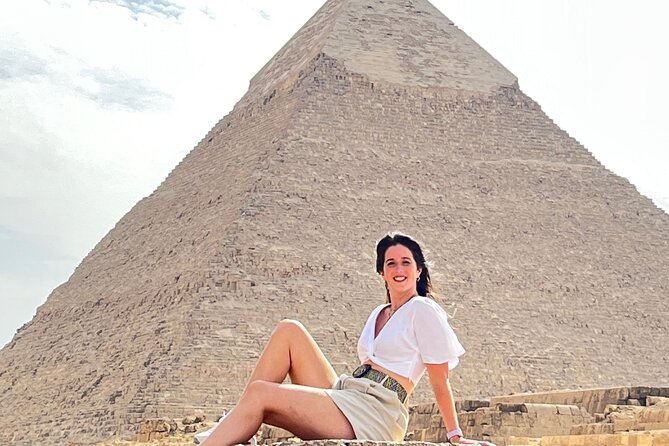
Saqqara is where this day starts turning from sightseeing into understanding. You’re heading south of Giza to an area described as Egypt’s early pyramid site, including the Step Pyramid, noted as the first pyramid in the world in the tour description.
What I like most about Saqqara on this route is the mix:
- The Step Pyramid concept (early design)
- The burial program around it (what people built around the pyramid)
- Interior access at a specific tomb/pyramid
What you’ll see at Saqqara
- The Step Pyramid area: the “prototype” phase of pyramid building
- Tomb visits, including the princesses’ tomb of Idut and tombs of noble families
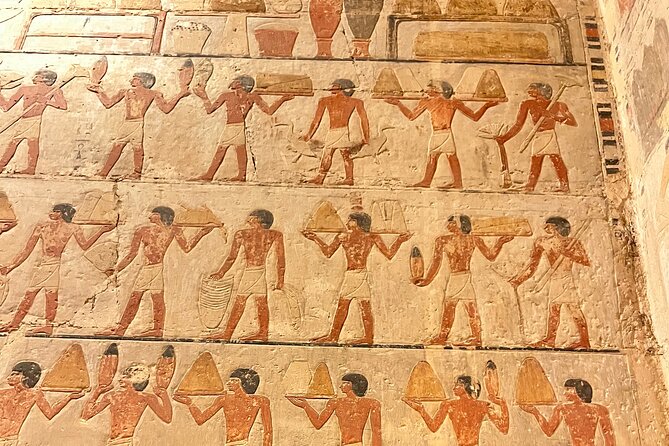
- A visit to the Unas pyramid, described as the only pyramid with painted interior, plus hieroglyphic inscriptions
Those details matter because they change how you read the site. You’re not only staring at large stone shapes. You’re looking for the human messages carved into and painted on surfaces—hieroglyphs that connect the monument to belief, status, and everyday life.
A consideration when you go inside
Interior spaces can feel tight, and Egypt sites can be warm even when the outside looks manageable. If you’re comfortable moving slowly and you don’t mind standing in a doorway to see painted surfaces, the interior stop is worth it. If you’re sensitive to enclosed areas, give yourself extra time to pause outside and let the guide explain what you’re aiming to notice before you step in.
You can also read our reviews of more museum experiences in Cairo





Stop 2a: Memphis Museum and the Ramses II statue you can’t miss
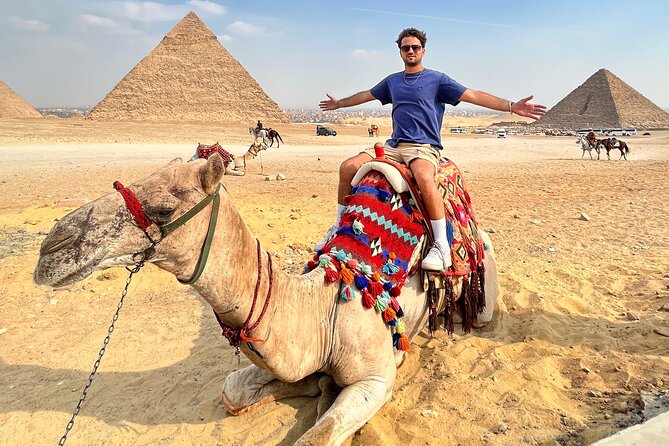
After Saqqara, you move to Memphis, described as the first capital of Egypt. The main pay-off here is simple: the museum puts major sculpture in front of you so you can connect the archaeology to the people and politics behind it.
What you’ll see at Memphis Museum
- The big statue of Ramses II (Ramses ||)
- A feminine Sphinx statue
Even if you’re not a sculpture expert, large royal figures are a fast way to understand how power was displayed. Ramses II is the kind of name you hear again and again in Egypt travel, and seeing a statue at scale helps the story become physical. Then the feminine Sphinx statue adds a different angle—more mythic and symbolic—so your eyes aren’t stuck on one kind of image.
The tour also gives you control here. You can take time to move at a relaxed pace through the museum rather than rushing. That flexibility makes a big difference in how much you absorb.
Stop 2b: Lunch and a handmade carpet stop for texture, not just boxes to tick
Between Memphis and Dahshur, there’s an option to stop for lunch. If you book an all-inclusive option, lunch is part of the package; otherwise, you can have lunch at a restaurant or just rest.
There’s also a cultural stop tied to craft: a visit to an oldest fabric shop to see how carpets are handmade.
I’m a fan of this kind of pause because it does two things:
- It breaks up the “temples and tombs” pattern so the rest of the day doesn’t feel repetitive.
- It gives you something tactile to think about later, especially after staring at stone and writing.
Keep expectations realistic: this isn’t a lecture hall. It’s a workshop-style view of craft, which can be more memorable than another quick photo stop.
Stop 3: Dahshur’s Bent and Red Pyramids, and why this tour sells them hard
Now for the star act—Dahshur. This is where the tour leans into the concept of pyramid evolution in a very visual way. You’re going to see the Bent Pyramid and the Red Pyramid.
Why Dahshur can feel different than Giza
In the tour description, Dahshur is framed as more interesting than Giza. The reason it’s persuasive is structural: you’re not just seeing a completed “final form” pyramid. You’re seeing the transition in design, described as the Egyptian hard work that developed the pyramid shape from steps to bent pyramid, then to the first perfect pyramid, the Red Pyramid, noted as being before Giza pyramids.
That story arc is perfect for first-timers who want to stop memorizing dates and start understanding the logic of design.
What you’ll do at Dahshur
- Visit the Bent Pyramid
- Visit the Red Pyramid
- You may have the chance to go inside (the description specifically highlights going inside the Bent Pyramid, and also suggests you can go inside the pyramids)
If you can enter, do it with a “slow looking” mindset. Interiors make the structure feel real—stone scale, tight corridors, and the experience of moving through a space designed for one purpose. Even without fancy interpretation, the physical experience often clicks for people who struggle to grasp pyramid construction from photos alone.
A small practical note
Interior access usually changes what you can carry and how long you’ll linger. Wear comfortable shoes and keep your bag manageable. This is one of those days where you’ll feel grateful you didn’t overpack.
The guide experience: how to get more than facts
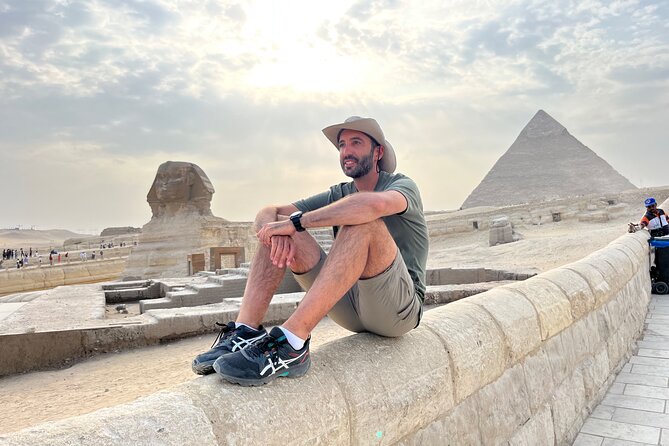
This tour is built around an Egyptologist guide, and that’s the difference between a checklist and a day that makes sense. The format described includes a lecture at the start, where your guide talks through ancient history and the pyramid story, then follows that explanation through each stop.
Here’s what to do to get the most:
- Ask the guide to connect Saqqara’s early design to what you’ll see later at Dahshur.
- During tomb visits, spend extra time on what the hieroglyphs are telling you about life and status—not just what they look like.
- When you reach Memphis, ask how sculpture fit into royal image-making, since that’s the museum’s strongest value.
Also, don’t be shy about photo requests. Since the team includes guides and photographers, you can typically get more practical help about where to stand and how to frame shots so you capture both the big monument views and the details.
Price and value: what $14 gets you, and what to confirm
The price is listed at $14 per person, which is unusually low for a private, full-day format in Cairo. The good news is the package is clearly designed to include the core ingredients: private air-conditioned pickup/drop-off, an Egyptologist guide, and bottle water.
Here’s the part you should double-check before you pay:
- Entrance fees are described as optional for all inclusive.
- Lunch is also described as optional for all inclusive.
So if you care about museum and site entry without worrying about extra payments, choose an option that explicitly includes what you want. If you’re fine covering any entry charges yourself, you’ll still likely find the structure good value for the day you’re getting—especially because you’re bundling multiple pyramid stages plus a museum.
Bottom line: at this price, you’re not buying “just transportation.” You’re buying a planned route with interpretation and the chance to see major monuments in a single shot.
Who this tour suits best (and who might want something else)
This private route works best if you want:
- A full day that mixes architecture, tombs, and a museum
- Pyramid context that moves from early forms to later refinements
- A guide-led day rather than wandering around alone
- The chance to enter at least one pyramid interior site (the Unas interior and Bent Pyramid are specifically highlighted)
It may be less ideal if:
- You’re extremely time-restricted and can’t tolerate the tour’s 4 to 8 hour range
- You don’t want any optional stops like lunch or the carpet shop (because the day can expand if you add them)
If you’re a first-time visitor who wants the biggest “pyramid story” in one day, this fits nicely.
Should you book this Saqqara, Memphis, and Dahshur tour?
I’d book it if you want your Cairo pyramid day to make sense as a progression—from the early experiment at Saqqara, to the royal world at Memphis Museum, to the design evolution at Dahshur with Bent and Red Pyramids. The private vehicle and Egyptologist-led lecture style are the big reasons this works: you’re not just moving between sites, you’re learning how to connect them.
I’d hesitate only if you need strict timing and you haven’t confirmed exactly what’s included in your option (especially entrance fees and lunch). Once you confirm those details, this looks like strong value for a big, meaningful day.
FAQ
What does the tour include?
You get a private tour with hotel pickup and drop-off by a private air-conditioned vehicle, a qualified Egyptologist guide, bottle of water, and all taxes. Entrance fees and local lunch are listed as optional depending on the all-inclusive option.
How long is the tour?
The duration is listed as 4 to 8 hours (approx.).
Where does the tour take place?
It covers Saqqara (Sakkara), the Memphis Museum, and the Dahshur pyramids in the Cairo area.
Is there hotel pickup?
Yes. Pickup is offered from your hotel or another chosen location by private vehicle. There may be an extra charge for pickup from 6 October City, Nasser City, New Cairo, or the airport.
Can I enter any pyramids?
The tour description highlights going inside the Unas pyramid at Saqqara and going inside the Bent Pyramid at Dahshur, and also notes that the pyramids are more interesting than Giza.
Is this a group tour or private?
This is a private tour/activity, so only your group participates.