REVIEW · PADUA
Padova: Baptistery of the Cathedral & Museum of the Diocese
Book on GetYourGuide →Operated by Kalatà s.r.l. · Bookable on GetYourGuide
Frescoes that tell the world’s story. This 1-hour visit to Padua’s Baptistery of the Cathedral is packed with 14th-century art and worship, and the setting inside Piazza Duomo makes every stop feel important. I like that the visit is guided by a narrative audio tour with a clear storyline, not random wall text.
I also really enjoy the focus on the Baptistery’s paintings: they connect major events of salvation from Genesis to Revelation, finishing at the Paradise scene that dominates the dome. One possible drawback: audio languages depend on what’s available at the start, so if you’re counting on a specific language (like Spanish), it’s smart to verify when you exchange your voucher.
In This Review
- Key things to know before you go
- Why Padua’s Baptistery frescoes feel different from other churches
- The 1-hour flow: how the visit actually moves
- The art program: Giusto de’ Menabuoi’s fresco world
- Reading the Baptistery dome and the Paradise finale
- The larger Piazza Duomo complex: Cathedral, palace, and continuity
- Museum of the Diocese and the Bishops’ Hall stop
- Price and value: is $17 fair for a 1-hour audio tour?
- Practical tips that make the visit smoother
- Who this Baptistery experience is best for
- Should you book this Padova Baptistery + Diocese Museum visit?
- FAQ
- How long is the Baptistery and Diocese Museum visit?
- Where do I go to start?
- Do I need to exchange a voucher?
- Is the audio guide included?
- What languages are available?
- Is it wheelchair accessible?
- Can I take photos?
- Are animals allowed inside?
- Is this part of a UNESCO site?
- What’s the cancellation policy?
Key things to know before you go
- UNESCO World Heritage setting: You’re visiting a site recognized for its cultural importance, not just a church interior.
- Headset audio guidance: Included headsets keep you oriented while you move through the Baptistery.
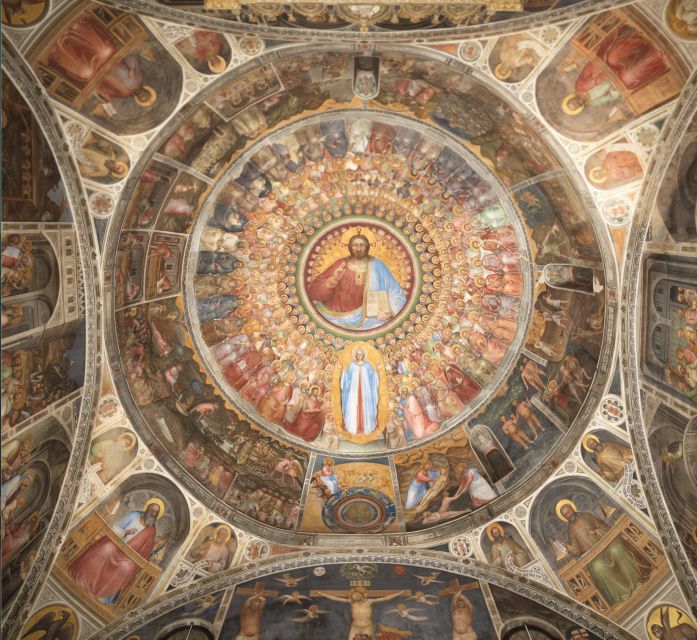
- A salvation story arc: The narration tracks the journey from Genesis to Revelation and up to the dome’s Paradise.
- 14th-century artists and patrons: The fresco program is tied to Giusto de’ Menabuoi, commissioned by Fina Buzzaccarini, wife of Francesco da Carrara il Vecchio.
- Piazza Duomo complex: You’re not only in the Baptistery; the Cathedral and the Bishop’s palace sit in the same monumental complex.
- Diocese Museum + Bishops’ Hall segment: The Museum of the Diocese includes a guided visit to the Bishops’ Hall.
Why Padua’s Baptistery frescoes feel different from other churches
If you’ve ever wandered into a church and thought, Great, beautiful, but what am I looking at?—this is the opposite. In Padua’s Baptistery, you’re surrounded by a planned fresco cycle that tells a story across the walls and climbs toward the dome. The experience is built around letting that artwork make sense, step by step.
I especially like how the narration is anchored to the subject matter. You’re not just told what the frescoes are; you’re guided through what they mean, starting with the Book of Genesis and moving through the thread that reaches the Book of Revelation. That structure turns a visual feast into something you can follow, even if you don’t speak Italian.
And yes, the setting matters. Piazza Duomo is the kind of place where Christianity has left layers of stone, buildings, and tradition over a very long time. You feel that “place-ness” the moment you enter the complex, because the Baptistery sits alongside the Cathedral and the Bishop’s palace—one big architectural statement rather than an isolated stop.
You can also read our reviews of more museum experiences in Padua
The 1-hour flow: how the visit actually moves
This is a tight, efficient 1-hour plan, so you’ll want to arrive ready to focus. The experience works as a headset-led route: you exchange your voucher at the ticket counter first, then you start the guided portion with the audio.
Here’s what that means for you in real terms:
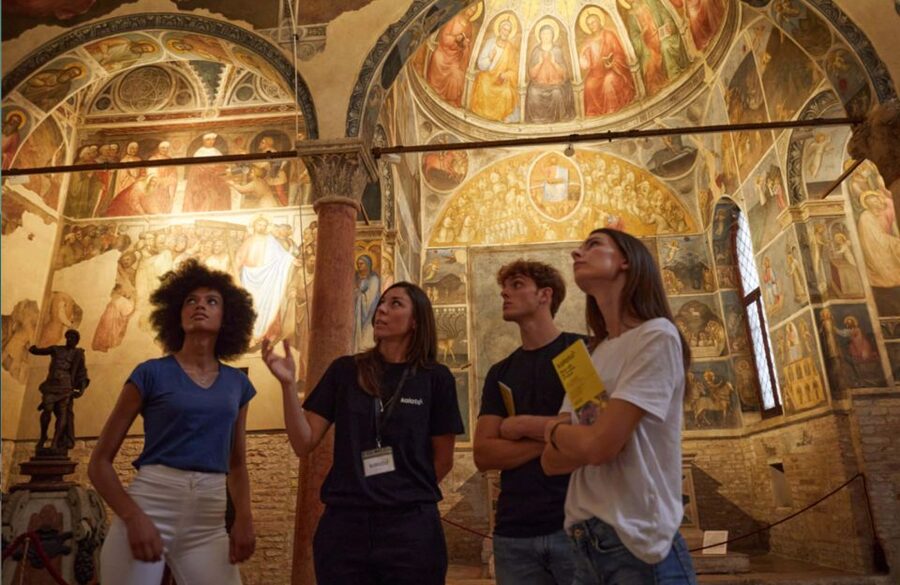
- You’ll spend your time inside the Baptistery of the Cathedral with a narrated walk through the main fresco program.
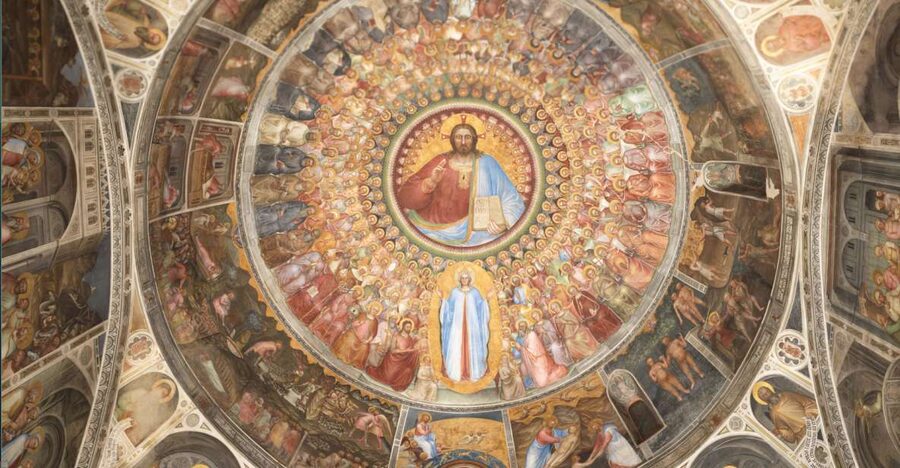
- The dome scenes get their moment in the story, including the Paradise imagery that dominates the top.
- Then you connect what you saw in the Baptistery to the wider monumental complex around it, including the Cathedral and Bishop’s palace.
- Finally, you add the Museum of the Diocese, including a guided visit to the Bishops’ Hall.
Because it’s only one hour, you won’t have time to do everything slowly and take long side detours. Instead, you get a curated path that’s designed to help you understand the art before you run out of time. If you like structured visits—good. If you like lingering for an hour in one room alone—this may feel fast.
The art program: Giusto de’ Menabuoi’s fresco world
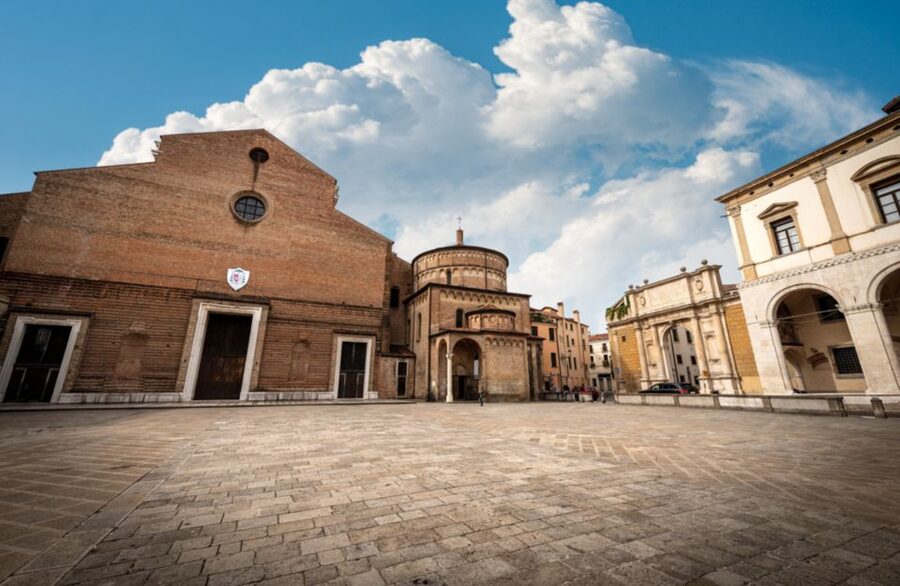
The Baptistery frescoes aren’t random decoration. They’re one of the highest expressions of Italian 14th-century art, and the story behind the project adds weight.
The paintings were commissioned to Giusto de’ Menabuoi by Fina Buzzaccarini, wife of Francesco da Carrara il Vecchio, Lord of Padua. Knowing that patron connection helps you understand that this wasn’t only a spiritual project—it was also a political and cultural one. A ruling family commissioning such work signals status, faith, and influence.
What the narration does well is translate that into a visual storyline you can follow. You start with the sweep from Genesis, and the guidance keeps pace as the program moves toward Revelation. The end point is especially satisfying: the narration leads you toward the dome’s Paradise scene, so your last moments aren’t just more paintings—they’re the culmination of the whole “salvation journey” idea.
If you like religious art but find it hard to connect images across a large space, this setup helps a lot. You’re guided to look for meaning, not just color.
Reading the Baptistery dome and the Paradise finale
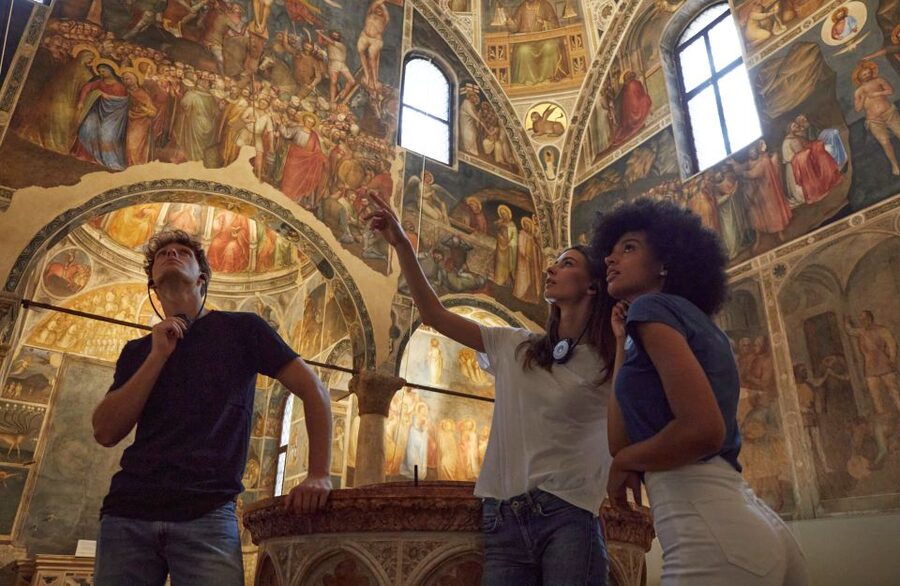
Dome imagery can be overwhelming, even when it’s beautiful. Here, the narration is timed to help you deal with scale. You’re guided toward the dome so you understand what you’re seeing as you look upward.
The key detail is that the audio tour doesn’t treat the dome as an optional extra. It’s part of the storyline finish, with Paradise dominating that space. So you don’t just end the visit by remembering a pretty ceiling—you end with a clearer sense of where the program lands emotionally and spiritually.
If you’re the type who takes a moment to look around before moving on, you’ll like this. If you prefer to keep moving quickly, you’ll still benefit, because the audio gives you a reason to stop and orient yourself in each zone.
One note: cameras are allowed, but you need a safety strap on your device. That’s practical to know ahead of time so you don’t get stuck adjusting gear mid-visit.
The larger Piazza Duomo complex: Cathedral, palace, and continuity
This experience isn’t just inside one room. It’s anchored in the wider monumental complex of Piazza Duomo, which includes the Cathedral and the Bishop’s palace.
That matters because Christianity in Padua isn’t shown as a single-era snapshot. The complex itself reflects a millennial tradition and continuity—centuries of worship and cultural identity concentrated in one spot. Even if your main focus is the Baptistery fresco program, stepping into the broader complex helps you understand why the Baptistery sits where it does.
Think of it like this: the Baptistery is your story book, and Piazza Duomo is the bookshelf that explains why the book got written in the first place. You don’t need to be a history expert to feel the difference.
Museum of the Diocese and the Bishops’ Hall stop
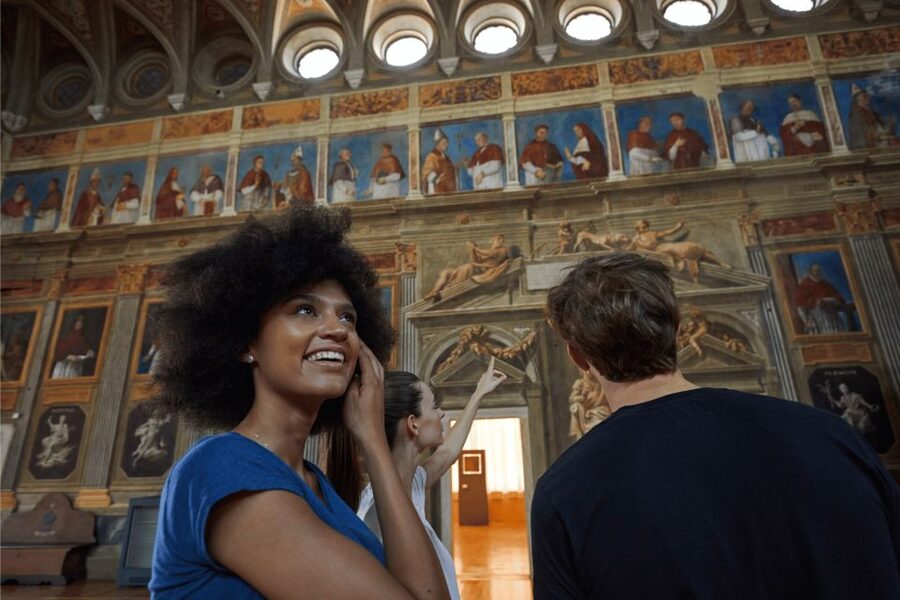
After the Baptistery portion, you transition to the Museum of the Diocese inside the Bishop’s palace. The highlight named in the experience is the Bishops’ Hall, visited as part of an unusual guided segment.
Since this is still within a one-hour window, you shouldn’t expect a long museum crawl. Instead, you get a focused look at a key room—enough to add context to the church setting you’ve just experienced in the Baptistery.
If you enjoy mixing art with the institutions behind the art, this portion is a good match. It gives you the sense that the fresco cycle didn’t happen in isolation; it belonged to a lived religious community and its leadership.
Price and value: is $17 fair for a 1-hour audio tour?
At $17 per person for a one-hour experience, the value is mostly about what you’ll get out of audio guidance and how much you care about understanding the fresco cycle.
Here’s how I’d judge it:
- If you like narrative explanations, headsets that guide your viewing, and a clear storyline across Genesis to Revelation, then the price feels reasonable. You’re paying for interpretation, not just access.
- If you mostly want quiet photo time with no structured guidance, you may feel the cost doesn’t match the pace. The experience is designed, so it won’t turn into a free-form wandering session.
There’s also the language factor. One booking experience highlighted that the tour was supposed to be in Spanish but only other languages were available at arrival, and the person found the price high for what they received. That doesn’t mean it’s always a problem, but it is a reminder: language availability affects satisfaction. If your preferred language is essential to your enjoyment, you’ll want to confirm before you commit fully to the start.
Practical tips that make the visit smoother
This one is simple, but a few details can make a big difference once you’re on site.
- Exchange your voucher first: The meeting point is the Ticket Office at piazza Duomo 12, Padova. You must exchange your voucher at the ticket counter before the tour begins.
- Bring your patience for art pacing: With only 1 hour, you’ll want to keep your eyes up and your brain ready. The tour works best when you’re willing to follow the narrative flow.
- Plan around camera rules: Cameras are allowed with a safety strap, so check that you have one before you arrive.
- Know the animal rule: Animals of any kind aren’t allowed, with the exception of assistance dogs for people with disabilities.
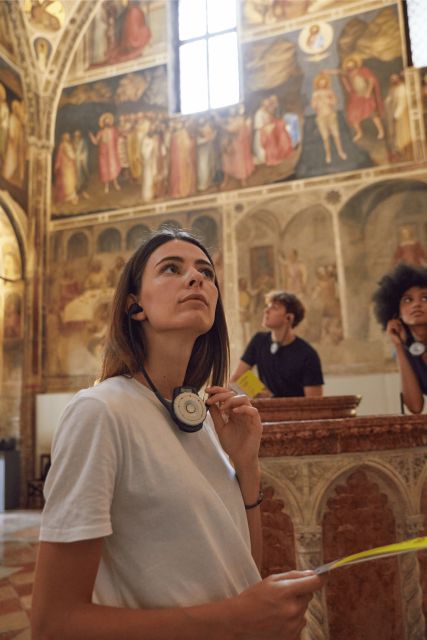
- Use the headset properly: Headsets are included, and that’s the heart of how the visit makes sense. If the volume is too low, fix it early rather than waiting.
Who this Baptistery experience is best for
This works especially well if you:
- like religious art but want help connecting the images to a story
- want an efficient, high-impact experience in under two hours
- prefer audio guidance instead of reading wall labels
- enjoy 14th-century art and the names behind it—Giusto de’ Menabuoi, Fina Buzzaccarini, and Francesco da Carrara il Vecchio
It’s less ideal if you:
- only want unguided time and no narrative structure
- need a very specific audio language and can’t tolerate any mismatch
- expect a long museum-style visit, since the time is deliberately focused
Should you book this Padova Baptistery + Diocese Museum visit?
If you want a short, well-structured art-and-faith experience in Padua, I think it’s a strong pick. The standout value is the way the headset narration ties the fresco program together—from Genesis to Revelation and up to the dome’s Paradise—so you’re not just looking, you’re understanding.
Book it if:
- you care about frescoes and want a guided viewing path
- you like the idea of Piazza Duomo as a combined Cathedral–palace–museum context
- you’re comfortable following an audio narrative for about an hour
Skip it (or at least double-check language expectations) if:
- your enjoyment depends on a specific language and you can’t risk a change at the start
- you think $17 is too much for a headset-guided walk with limited time
FAQ
How long is the Baptistery and Diocese Museum visit?
It lasts 1 hour.
Where do I go to start?
Go to the Ticket Office at piazza Duomo 12, Padova.
Do I need to exchange a voucher?
Yes. You must exchange your voucher at the ticket counter before the tour begins.
Is the audio guide included?
Yes. Headsets are included so you can hear the audio guide.
What languages are available?
The audio guide and host/greeter are available in Italian, English, French, Spanish, and German.
Is it wheelchair accessible?
Yes, the experience is listed as wheelchair accessible.
Can I take photos?
Yes, cameras are allowed if they have a safety strap.
Are animals allowed inside?
Animals aren’t allowed. Assistance dogs are the only exception for people with disabilities.
Is this part of a UNESCO site?
Yes. It’s identified as a UNESCO World Heritage site.
What’s the cancellation policy?
Free cancellation is available up to 24 hours in advance for a full refund.