REVIEW · OSLO
Oslo: Paradox Museum Entry Ticket
Book on GetYourGuide →Operated by Paradox Museum Oslo · Bookable on GetYourGuide
The first time you see the floor shift, your brain will argue with your eyes. Paradox Museum Oslo is an interactive, photo-friendly museum built around mind-bending tricks of perception and how physics and perspective get bent. Two things I really like: the exhibits feel hands-on (not just something to watch), and the layout pushes you toward great photos with marked spots. One drawback to consider is that it’s largely self-guided, so you may not get help at every single photo moment or every room.
This is the kind of activity that works whether you’re traveling with kids, friends, or just yourself. You book a timed entry, check in at the entrance about 10 minutes before, and then follow a one-way flow through all areas. Plan for about an hour if you move steadily, but you can easily stretch it if you slow down to test every effect and read the explanations.
It sits in central Oslo, and it’s easy to reach on foot. The closest public transport stops are Nationaltheatret and Stortinget, both just a few minutes away. If you want a quick, high-energy stop with a lot of silly-science moments, this is a strong pick.
In This Review
- Quick hits before you go
- Checking in for your timed entry at the museum entrance
- First rooms: getting your bearings with illusions and photo points
- QR codes and the science behind each paradox (without killing the fun)
- Photo-friendly setup: how to get the best angles fast
- One-way flow through the museum: how long it really takes
- Paradox Boutique: souvenirs that actually fit the theme
- Price and value in Oslo
- Should you book Paradox Museum Oslo?
- FAQ
- How long is the Paradox Museum Oslo experience?
- Where do I check in for my ticket?
- How much does a ticket cost?
- What public transportation is closest?
- Can I bring food and drinks?
- What language is available at the museum?
Quick hits before you go
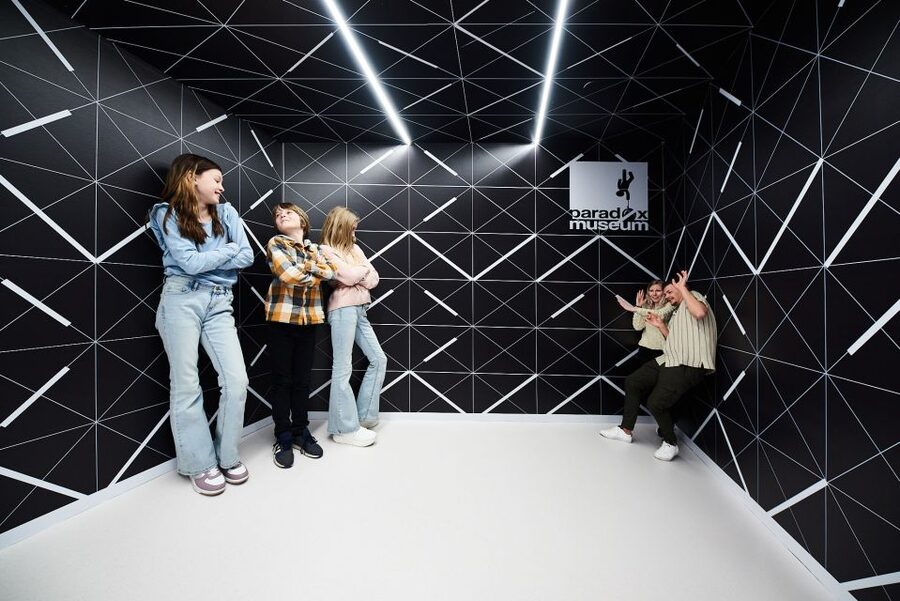
- 70+ interactive exhibits that challenge what your eyes think is true
- QR codes and descriptions that explain how each paradox is created
- Clearly marked photo points so you can get the angle without guessing
- English and Norwegian staff help (you may see help concentrated in certain areas)
- One-way flow with signs guiding you through the museum
- Paradox Boutique for souvenirs and games right after the exhibits
Checking in for your timed entry at the museum entrance
Paradox Museum Oslo runs on timed entry, and it starts the moment you arrive. Show your ticket at the entrance so they can check you in about 10 minutes before your booked time. That matters because the museum is set up for a smooth, one-way route. If you’re late, you’ll feel rushed before you even start.
Location-wise, you’ll be happy you picked central Oslo for this. The museum is close to public transit, with Nationaltheatret and Stortinget stops just a couple minutes away. That’s practical if you’re hopping between sights and you don’t want to spend your whole day on transit.
What I like about the check-in flow is that it keeps things moving. The museum isn’t asking you to wait for a full group or chase a guide. Once you’re in, you can work at your own speed while still following a clear route.
One small planning note: the museum doesn’t include food and drinks, and food and drinks aren’t allowed inside. So if you need a snack, do it before you go. This is also a good reason to pack light: you’ll be moving room to room, and you’ll want your phone or camera ready for the photo moments.
A few more Oslo tours and experiences worth a look


First rooms: getting your bearings with illusions and photo points
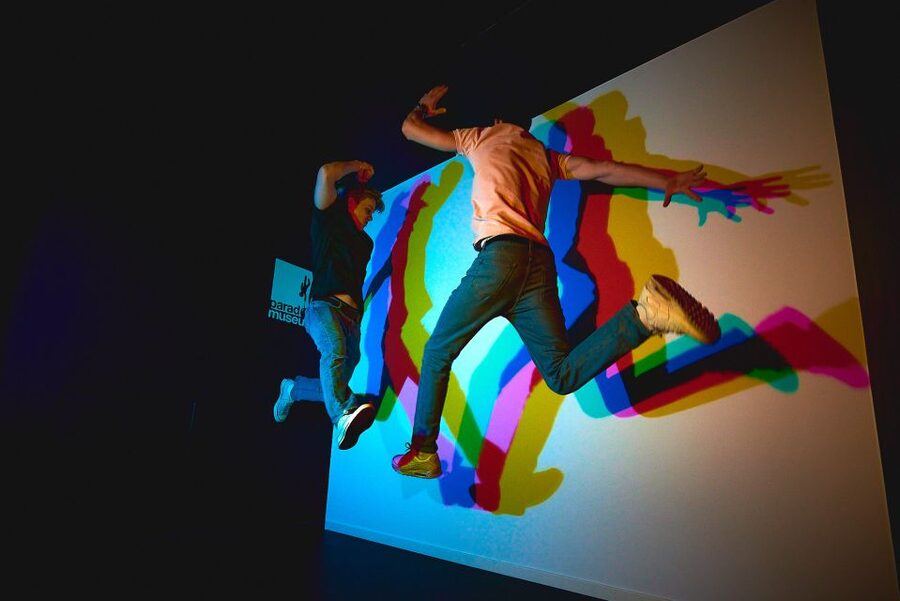
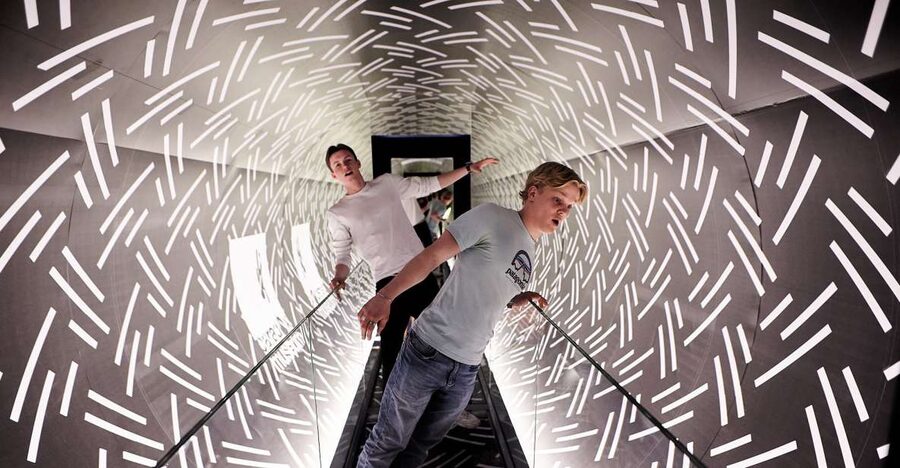
When you step into Paradox Museum Oslo, the big idea is simple: your brain will be tricked, and you’ll prove it by trying the exhibit the intended way. The experience is built around optical illusions and interactive installations, so you’re not just reading labels. You’re testing what happens when you stand in the right place, look at the right angle, or interact the way the setup expects.
In the early part of the museum, you might need a minute to understand how each exhibit works. Several people note they were a bit confused at the start until they got the hang of it. That’s normal here because the museum uses visual misdirection as part of the fun. Give yourself time in the first rooms to figure out the pattern: look for instructions, then look for the spot that makes the effect click.
A huge practical help is that the museum highlights photo opportunities with marked photo points. You’ll see where you should stand, and that makes a big difference. Without those points, illusion photos turn into guesswork. With them, you can experiment quickly, get the shot, and move on without wasting half the visit.
Staff support seems friendly and professional, though it’s not evenly spread across every exhibit. Some people report extra help with photos only in certain areas, while others felt there weren’t staff stationed at every location. So if you care about getting specific pictures, don’t wait—ask early, and then use the marked photo points once you understand the system.
QR codes and the science behind each paradox (without killing the fun)
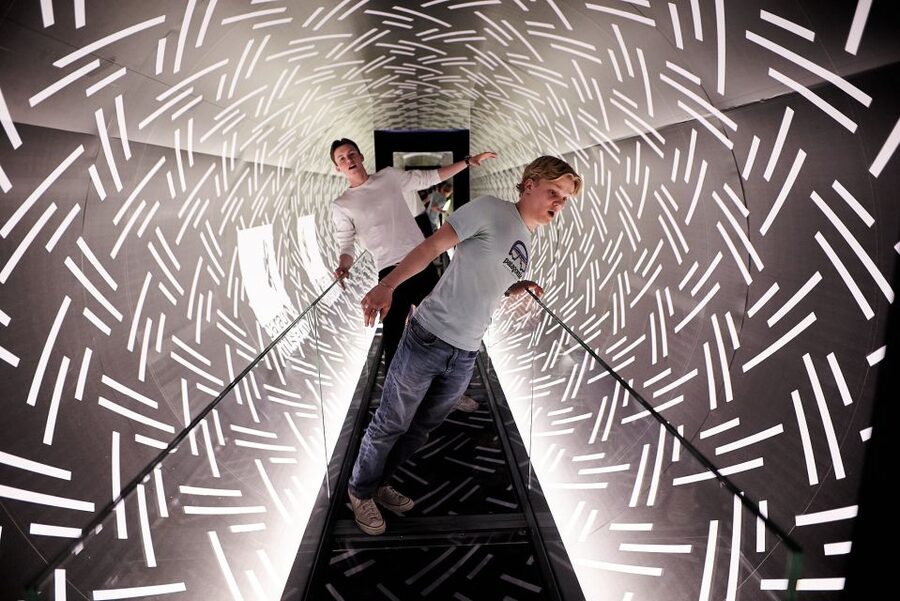
Paradox Museum Oslo is not trying to be a stiff science lecture. It teaches through play. You’ll find descriptions and QR codes that explain how each illusion is achieved—essential for turning wow moments into real understanding.
What I like about this approach is that it respects your time. You can enjoy an exhibit immediately, then scan the QR code when you want the explanation. It’s a flexible rhythm: curiosity first, details second.
The museum’s themes are clearly set around how we perceive the world. Expect lessons tied to perception, physics, and perspective. That’s the heart of the concept: the museum shows how easily your brain can be persuaded, and how the same scene can look different depending on angles, motion, and framing.
It also helps that there are more than 70 interactive exhibits. That volume keeps the visit from feeling like you saw the whole thing after a few rooms. Even if you’ve seen illusion-style museums elsewhere, the experience tends to land because the effects are presented as a sequence: try, react, learn, laugh, repeat.
There’s one consideration, though. A few people point out that some exhibits can feel average, and occasionally something may not be working properly. That doesn’t ruin the visit—there’s plenty to do—but it’s worth keeping expectations realistic. Treat it as a fun, hands-on experience where technology is part of the magic, not guaranteed perfection at every single station.
Photo-friendly setup: how to get the best angles fast
If you’re coming for photos, this museum is built for it. The key is the combination of interactive illusions and clearly marked photo points. You’ll often be able to step into place, get the intended effect, and capture it with less trial-and-error than typical museums.
I also like how the museum basically encourages you to slow down just enough to get results. The setup makes you adjust your position, sometimes adjust your head angle, and then check the effect. That’s why the photos usually look convincing—because the illusion is designed to work from specific viewpoints.
That said, don’t assume someone will always be ready to take your picture everywhere. Some feedback points out help concentrated in one area rather than every station. If you’re visiting as a couple or solo and you want a great photo, here’s the smart move: request help when you see it available, then rely on the marked spots for your own shots afterward. If your phone camera is decent, a lot of the illusions will still give you strong images without a pro.
Also, the museum is described as photo-friendly and full of dazzling effects. But “photo-friendly” doesn’t mean you’ll never be blocked by other people. Timed entry helps spread crowds, and that’s another reason to arrive close to your check-in time rather than far early.
One-way flow through the museum: how long it really takes
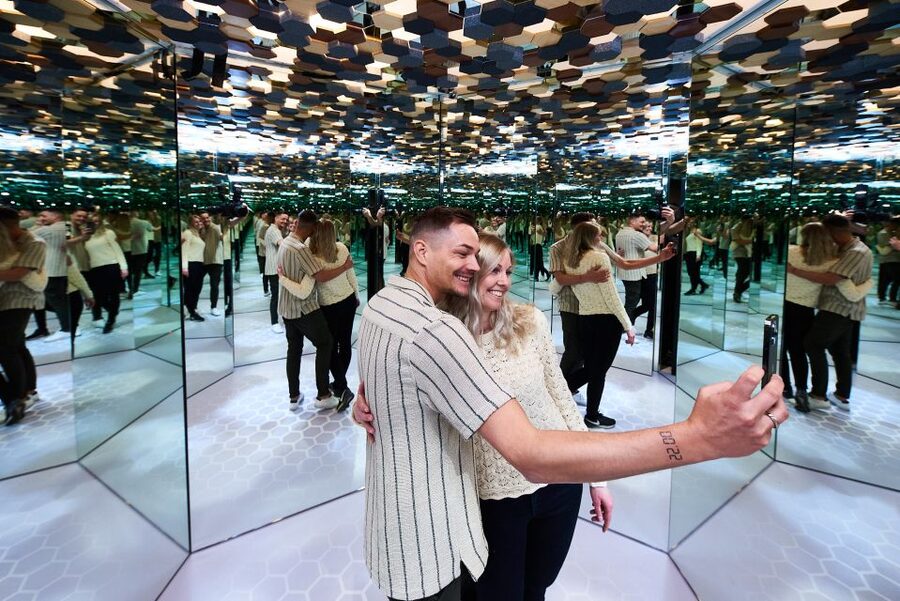
The museum follows a one-way flow system with signs that guide you from exhibit to exhibit. This matters because it shapes your experience. You don’t backtrack. You follow the route, and each room is essentially a new mini challenge.
For timing, the ticket duration is listed as 1 hour. In practice, many people complete the museum in around that timeframe, while others took longer because they spent extra time on each illusion. The most useful way to plan is to treat 1 hour as a minimum if you’re efficient, and 1–2 hours as a comfortable target if you want to read most QR codes and replay a few favorites.
This one-way routing also affects how you pace your attention. If you skip explanations at first, you might miss the “how it works” payoff later. If you read everything immediately, you might feel slower but you’ll probably enjoy the scientific twist more. I’d aim for a middle approach: do the interaction first, scan the QR code when it looks interesting, and don’t try to read every single one word-for-word.
Wheelchair access is supported, which is great if mobility is a concern. Since the route is guided by signs and designed to move you forward, it’s generally easier to navigate than free-for-all layouts.
One last practical point: the museum experience doesn’t include food or drinks, and those items aren’t allowed inside. That means you’ll want to plan a nearby meal or snack if you’re pairing this with other Oslo stops.
You can also read our reviews of more museum experiences in Oslo

Paradox Boutique: souvenirs that actually fit the theme
After the exhibits, you can head to the Paradox Boutique. This is where the experience extends beyond the rooms. The shop sells games and souvenirs tied to the whole paradox-and-illusion idea, so it feels like a natural ending rather than a random add-on.
I like this kind of museum retail because it gives you something you can bring home that matches what you just did. If you scanned QR codes and played with illusions for an hour, you’re more likely to enjoy a related game at home than a generic postcard-and-magnet set.
If you’re traveling with kids, this stop can be the easiest way to turn the memories into something tangible. If you’re traveling solo, it’s still a good way to leave with a “proof of fun” item that isn’t just a photo.
Don’t rush through it if it’s your thing. The museum is described as a one-hour experience, but people often spend time both inside and at the shop depending on interests. Build in a little buffer so the ending doesn’t feel like a deadline.
Price and value in Oslo
At $29 per person, Paradox Museum Oslo sits in the mid-to-upper range for a one-hour attraction. The fair question is: is it worth it?
Here’s how I’d judge the value. You’re paying for more than an exhibit gallery. You’re getting:
- 70+ interactive installations, not passive viewing
- QR-coded explanations that add educational value without turning it into a lecture
- photo points that make it easier to capture results
- A timed, self-guided museum that’s easy to fit into a busy day in central Oslo
That combination is what justifies the price. Even if a few exhibits are miss-and-hit (and some systems can occasionally be down), the overall experience is built to keep you busy and engaged.
Is it pricey for what it is? Some people feel yes, especially compared to museums with deeper collections. But in Oslo, the cost of doing fun indoor activities can add up fast. If you want a concentrated dose of playful science that doesn’t require a full afternoon commitment, this ticket can be a good trade.
Should you book Paradox Museum Oslo?
Book it if you want a short, high-interaction activity in central Oslo. I’d especially recommend it if you:
- Like optical illusions and hands-on experiences
- Want a place where photos are part of the fun, thanks to marked photo points
- Enjoy learning through quick explanations via QR codes
- Are traveling with kids, teens, or friends who like trying things
Skip it or adjust expectations if you:
- Want a fully guided, behind-the-scenes explanation at every exhibit. Support seems helpful, but not necessarily present at every photo station.
- Expect a museum that feels like a permanent, deep exhibition collection. This is more about experiencing and playing than long-form display.
If you’re flexible, you’ll probably get your money’s worth by using the 1-hour timing as a baseline and staying a bit longer when something really clicks.
FAQ
How long is the Paradox Museum Oslo experience?
The entry duration is listed as 1 hour.
Where do I check in for my ticket?
You should show your ticket at the entrance of the museum and check in 10 minutes before your booked time.
How much does a ticket cost?
The ticket price is $29 per person.
What public transportation is closest?
The closest stops are Nationaltheatret and Stortinget, both a couple of minutes from the museum.
Can I bring food and drinks?
No. Food and drinks are not allowed.
What language is available at the museum?
You’ll find host or greeter support in English and Norwegian.