REVIEW · RIO DE JANEIRO
Olympic Boulevard, Museum of Tomorrow & Historical Rio
Book on Viator →Operated by C2Rio Tours & Travel · Bookable on Viator
Downtown Rio teaches you fast. This half-day tour pairs easy hotel pickup with an excellent, interactive stop at the Museu do Amanhã, while still moving at a walking pace that may feel like a lot if you tire easily. It’s also a shared group experience, so you’ll spend some time doing the back-and-forth to gather everyone.
I love how the route threads together Rio’s modern face and older streets without making you commit to a full-day plan. You’ll start in the port-and-history zone (including the Porto Maravilha area) and work your way toward Rio Centro landmarks, with plenty of photo breaks along the way.
Plan on a solid 4 hours starting at 9:00am, rain or shine. The payoff is a compact overview of downtown highlights, with a professional guide who speaks English, Spanish, and Portuguese and keeps the pace sensible for a mixed group size (max 19).
In This Review
- Key things you’ll notice right away
- A half-day downtown Rio plan that fits a tight schedule
- Hotel pickup and a small van: less hassle, more time
- Cais do Valongo and Painel Etnias: early context without the heavy lift
- Porto Maravilha on foot: a revitalized port zone you can actually feel
- Mauá Square and the Olympic Boulevard feel
- Museu do Amanhã: the interactive centerpiece that earns the time
- Mosteiro de São Bento and the churches of Rio Centro
- Praça XV and the colonial architecture thread you’ll remember
- Praca Quinze de Novembro and the walk that ties it all together
- Confeitaria Colombo: a classic stop that’s optional on your wallet
- Price and logistics: is $72 a smart value?
- My take on who should book (and who shouldn’t)
- Should you book Olympic Boulevard, Museu do Amanhã & Historical Rio?
- FAQ
- What time does the tour start?
- How long is the tour?
- What’s included in the price?
- What isn’t included?
- How much walking is involved, and what should I wear?
- Does the tour run in bad weather?
- Where does pickup and drop-off happen?
- Is Confeitaria Colombo open every day?
Key things you’ll notice right away
- Hotel pickup and drop-off from major areas like Copacabana, Ipanema, Leblon, Leme, and Barra da Tijuca
- Museu do Amanhã (1.5 hours) as the anchor stop, built for hands-on, interactive time
- Olympic-era moments like Mauá Square and the 2016 Olympic cauldron at Pira Olímpica
- A guided walking loop through Rio Centro’s colonial street grid and historic squares
- Confeitaria Colombo included as a visit (food is extra), with extra time if you want to grab pastries
A half-day downtown Rio plan that fits a tight schedule
This is the kind of tour I’d pick when I want the basics of a city without losing a whole day. It runs about 4 hours, starting at 9:00am, and it focuses on downtown Rio—away from the Copacabana beachfront crowds.
At $72 per person, the real value is that you’re paying for a guide-driven route plus roundtrip van transport from your hotel area. If you’re also going to spend time figuring out where to go next (and how to get there safely and efficiently), that time cost adds up fast.
The pacing is built for people who want movement and context at the same time. You will walk, though—this isn’t a sit-and-watch bus tour—so bring shoes you’d wear for a long city day.
You can also read our reviews of more historical tours in Rio de Janeiro

Hotel pickup and a small van: less hassle, more time
You don’t have to play guessing games with meeting points. Pickup and drop-off are included from main hotels in the South Zone (Copacabana, Ipanema, Leblon, Leme) and from hotels in Barra da Tijuca in the West Zone.
The van is air-conditioned, with a maximum group size of 19 passengers. That size matters: it usually feels personal enough for the guide to manage the group, but still large enough that you won’t get stuck in a too-small arrangement.
One practical note: because it’s shared, you may pick up other people before you hit the first stop. That’s not a deal-breaker, but it can nudge your start feeling slightly slower than a private tour.
Cais do Valongo and Painel Etnias: early context without the heavy lift
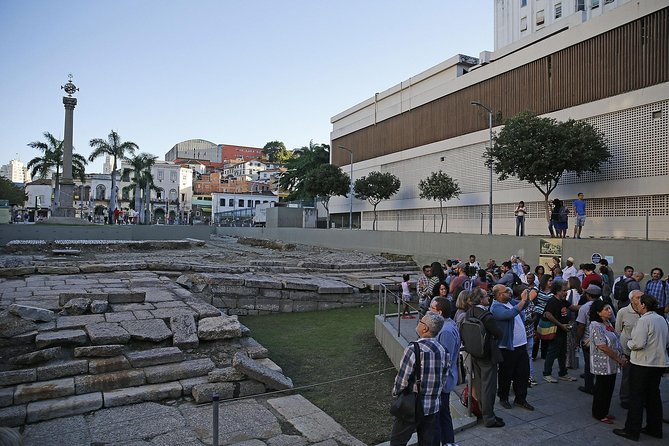
The first stop is Cais do Valongo, where you’ll walk by with live commentary. Admission is free, and the goal here is orientation—getting you pointed at the story of the port-and-city connection before you move deeper into downtown.
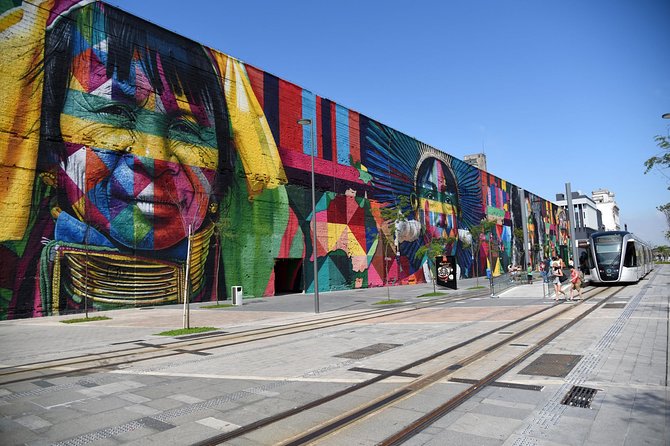
Right after that, you stop at Painel Etnias for photos (also free). This is the kind of quick stop I like on half-day tours. You get visual context without burning time searching for the place on your own.
If it’s raining, expect the guide to keep things efficient: quick looks, short commentary, and then moving on. This is one reason these “walk-and-look” early stops work well for time-pressed days.
Porto Maravilha on foot: a revitalized port zone you can actually feel
Next you’ll walk through Porto Maravilha, Rio’s revitalized Port Zone. The tour doesn’t throw you into museum overload here; it gives you a street-level circuit where you can see modern redevelopment alongside older city textures.
You also get breaks that make the loop easier to tolerate—photo time, short walks, and quick transitions. In a half-day format, that rhythm helps you keep energy for the big indoor stops later.
This section is also a reminder of why downtown Rio can feel different from the beach areas. Even if you only have a few hours, you’ll notice how the city’s layout and density create a very distinct vibe.
Mauá Square and the Olympic Boulevard feel
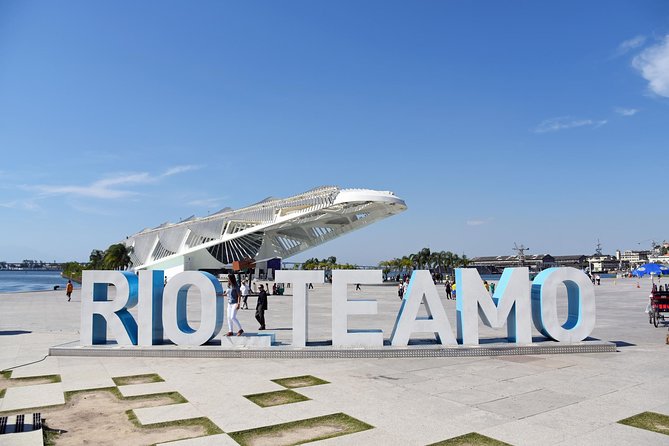
After Porto Maravilha, you’ll make a quick visit to Mauá Square, revitalized at the 2016 Olympics. The stop is brief (about 5 minutes), but it’s a useful anchor if you’re curious how the Olympic legacy shows up in the city.
Then comes a moment that’s very specific and very visual: Pira Olímpica, where you can see the 2016 Summer Olympics cauldron. It’s listed as just about 1 minute, so you’ll want your camera ready—but that quick hit works as a clean “there it is” checkpoint.
A couple of guide styles can affect how much you feel you saw here. When the guide keeps the commentary punchy and points out what to notice, these stops feel complete. If you’re expecting a more extensive Olympic-site deep dive, the time can feel short—so match your expectations to the half-day format.
You can also read our reviews of more museum experiences in Rio de Janeiro



Museu do Amanhã: the interactive centerpiece that earns the time
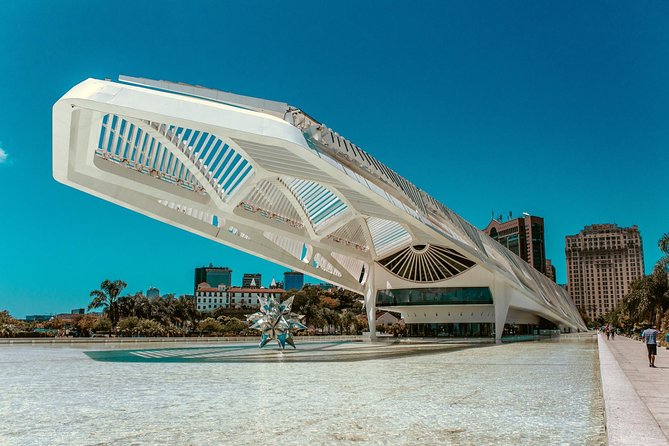
The heart of the tour is Museu do Amanhã (Museum of Tomorrow). You get an internal and interactive visit for about 1 hour 30 minutes, and admission is included.
This is the stop that’s easy to justify, even if you’re selective about museums. Interactive displays give you something to do with your time instead of passively waiting for your next landmark. It’s also the one place where you can slow down a bit and actually use the visit rather than just look from the outside.
One of the best parts of this design is timing. You don’t hit the museum too late, so even if the morning starts with a bit of walking or weather delays, you still have a comfortable block to enjoy the exhibits.
If you’re traveling with kids or teens, the interactive nature is a major plus. If you’re traveling solo or as a couple, it still works because the museum doesn’t rely on you already knowing the city’s context.
Mosteiro de São Bento and the churches of Rio Centro
After the museum, you’ll stroll along the Orla Conde (Conde’s waterfront area) to relax and reset your brain before the historic architecture stops.
Then you’ll visit Mosteiro de São Bento (Monastery of Saint Benedict) internally for about 15 minutes, with admission included. This is a smaller, focused church-and-monastery experience that fits well after the larger museum block.
The route also passes by the Church of Our Lady of Candelaria, which is known for receiving hundreds of tourists daily and being one of Brazil’s main nineteenth-century artistic works. Even as a pass-by stop, it helps you connect Rio’s religious art tradition to the street you’re standing on.
Practical tip: with so many religious and historic interiors on the route, you’ll want a quick set of expectations—this isn’t about rushing photo after photo. It’s about stepping in, taking in the space for a bit, then moving.
Praça XV and the colonial architecture thread you’ll remember
The tour shifts into colonial-era Rio Centro through a series of short, meaningful checkpoints.
You’ll walk through alleys from Travessa do Comércio and look for preserved traits from colonial times. Then you’ll observe an architectural landmark connected between XV Square and Travessa do Comércio—the former residence of the Telles de Menezes family. That linkage matters because you’re not just seeing a single building; you’re following the physical connections that shaped old downtown movement.
At Praça XV, you’ll see the Master Valentine Fountain (also called the Colonial Fountain), designed by Valentim da Fonseca e Silva. It’s built during the colonial period, and it’s the kind of detail-heavy stop that makes the city feel lived-in rather than staged.
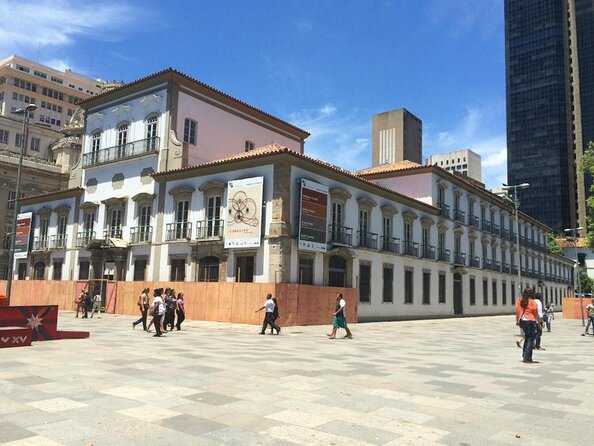
You’ll also pass through Paço Imperial, an 18th-century colonial building that was built for governors’ residence and now operates as a cultural center. It’s a quick stop, but it ties the squares and streets together into one bigger story: buildings that once held power now holding visitors.
Praca Quinze de Novembro and the walk that ties it all together
Next is a visit to Praca Quinze de Novembro, about 15 minutes, with live commentary as you walk by. By now, you’ve already seen the museum, churches, and historic squares—so this stop can feel like a “put it together” moment.
I like these mid-to-late square stops because they give you a mental map. Even if you don’t remember every name perfectly, you end up remembering where things sit relative to each other.
If you’re walking with sore feet, this is where the tour’s group size and guide attention can really help. A good guide keeps you moving, but not sprinting, and pauses when people need a breather.
In the same spirit, the route is designed to connect you back toward the final food-and-sight stop without turning the last hour into a blur.
Confeitaria Colombo: a classic stop that’s optional on your wallet
The final featured visit is Confeitaria Colombo. You get about 20 minutes inside, but admission includes the visit only—food and drinks are not included.
The tour does give a little extra time if you choose to eat, which is a smart way to keep the experience flexible. If you want a quick pastry break, you can. If you’re not hungry, you’re not forced into ordering.
There’s one day-based limitation: Confeitaria Colombo is closed on Sundays, so your day matters. If you’re booking for a Sunday, double-check that you still want this tour knowing the ending visit won’t run as listed.
Also, this is the spot where I’d slow down the most. Not because it’s required, but because it’s where you can decompress after the walking. You’ll be glad you did.
Price and logistics: is $72 a smart value?
For $72 and roughly 4 hours, this tour is priced like a “high-value overview” rather than a slow, deep, private experience.
You’re getting:
- a professional guide with live commentary in English, Spanish, and Portuguese
- hotel pickup and drop-off from key Rio neighborhoods
- a comfortable air-conditioned van
- entrance included for Museu do Amanhã and Mosteiro de São Bento
What you’re not getting is food (except that you can buy it at Confeitaria Colombo) and a full Olympic-site itinerary. If you want more time at Olympic venues beyond Mauá Square and Pira Olímpica, this may feel short.
Weather is another factor. The tour operates rain or shine, and that matters because downtown sightseeing can get slippery and tiring when it’s wet. On rainy days, the route can feel more about smart pacing than constant outdoor strolling.
The biggest decision point for me is your walking tolerance. If you can handle a downtown walking loop, this feels like a good spend. If you’re recovering from jet lag or prefer long rides over steps, you’ll want to think carefully.
My take on who should book (and who shouldn’t)
Book this if you want:
- a fast, guided way to see downtown Rio without getting overwhelmed
- the Museu do Amanhã experience as a full stop, not a quick glance
- a mix of Olympic-era sights and colonial architecture basics
- hotel pickup that removes the headache of finding a meeting point
Skip or adjust expectations if:
- you want a long Olympic-focused day (this is half-day and the cauldron moment is brief)
- you’re likely to struggle with steady walking for the duration
- you’re expecting a purely outdoors beach-style route (this is streets, churches, squares, and museum time)
Should you book Olympic Boulevard, Museu do Amanhã & Historical Rio?
Yes—if your goal is to get oriented fast and end up with memorable indoor-and-outdoor highlights in one compact morning. I like this format because it doesn’t waste your time: you start with context, hit the museum anchor, then close with historic downtown details and a simple food stop.
The biggest practical “check yourself” item is your shoes and your energy. Wear comfortable footwear, plan for rain timing shifts, and keep your expectations aligned to a half-day route.
If you’re flexible, this is a strong way to turn one morning into a real sense of Rio Centro.
FAQ
What time does the tour start?
The start time is 9:00am.
How long is the tour?
The tour lasts about 4 hours (approx.).
What’s included in the price?
You get a guided half-day walking tour in downtown Rio, professional live commentary (English, Spanish, Portuguese), roundtrip transport from listed hotel areas, and admissions for Museu do Amanhã and Mosteiro de São Bento. Taxes and fees are included too.
What isn’t included?
Food and drinks are not included, including anything you buy at Confeitaria Colombo.
How much walking is involved, and what should I wear?
It’s a walking tour, and the advice is to wear comfortable shoes. Most travelers can participate, but be ready for regular walking during the downtown loop.
Does the tour run in bad weather?
Yes. The tour operates rain or shine.
Where does pickup and drop-off happen?
Pickup and drop-off are available from main hotels in the South Zone (Copacabana, Ipanema, Leblon, Leme) and from West Zone hotels in Barra da Tijuca.
Is Confeitaria Colombo open every day?
No. Confeitaria Colombo is closed on Sundays.