REVIEW · MARRAKESH
Fes: Bou Inania Madrasa, Museum, Tannery, Souk & Medina Tour
Book on GetYourGuide →Operated by Moments in Morocco - Tour Agency · Bookable on GetYourGuide
Fes has a way of getting under your skin fast, and this tour is the efficient path through the maze. I especially like the expert guidance inside the UNESCO Medina (so you don’t just wander in circles) and the strong mix of top sights plus hands-on-looking craft stops. One thing to consider: entrance tickets for Bou Inania Madrasa and Dar Batha aren’t included, and some workshop stops can turn into shopping moments.
You’ll start at Bab Bou Jeloud, the famous Blue Gate, then move through major Marinid and university-era landmarks, watch centuries-old dye work at the tannery, and end in the souks for textiles, spices, metalwork sounds, and tile craftsmanship. It’s built for first-timers who want the highlights without losing the plot.
In This Review
- Key things to know before you go
- Start at Bab Bou Jeloud and get your bearings quickly
- Bou Inania Madrasa: cedarwood, zellige tiles, and a marble courtyard
- Al-Karaouine University: an exterior stop that still matters
- Dar Batha Museum: a palace you can read through crafts
- Chouara Tannery: natural dyes, dye pits, and real trade
- Medina souks: textiles, spices, metalwork sounds, and shopping with a plan
- How to shop without losing your head
- Pottery and zellige tile workshop: seeing the craft behind the ornament
- Pacing and time management: how the 4 hours actually feel
- Price and value: what the $12 tour includes (and what it doesn’t)
- Guides make the difference: examples of the tour style
- Should you book this Fes Medina tour?
- FAQ
- What is the duration of the tour?
- Where does the tour start, and how do I meet the guide?
- Are entrance tickets included for Bou Inania Madrasa and Dar Batha?
- What are the main stops on the tour?
- Is the tour guided, and what languages are offered?
- What should I bring with me?
- Is the tour suitable for people with mobility issues?
Key things to know before you go
- Bab Bou Jeloud gets you oriented right at the UNESCO Medina entrance
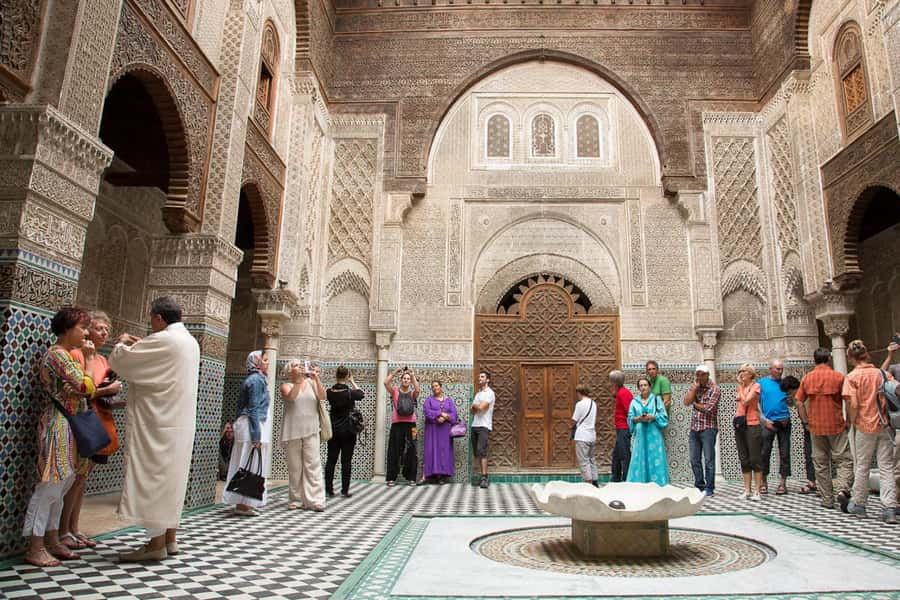
- Bou Inania Madrasa is a visual feast: cedarwood carvings, zellige tiles, and a calm marble courtyard
- Al-Karaouine University exterior visit saves time while still giving you the feel of Fes as a learning city
- Chouara Tannery views explain the process with dye pits using natural colors like saffron and indigo
- Souk + workshop mix is practical for seeing crafts and knowing what you’re looking at
- Free time at each stop helps you take photos, rest, and browse without feeling rushed
Start at Bab Bou Jeloud and get your bearings quickly
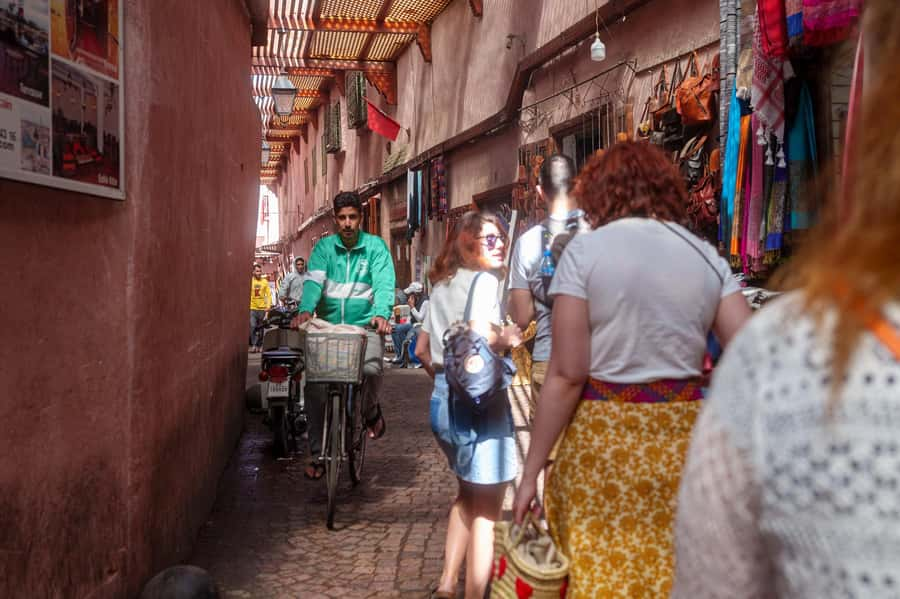
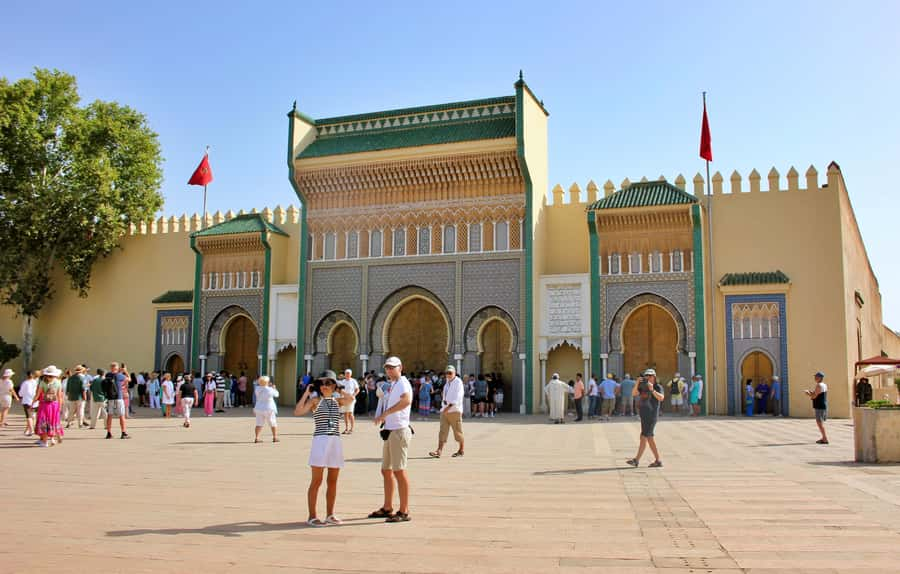
The tour kicks off near Hotel Batha, then flows into the Medina from the standout entry point: Bab Bou Jeloud, the Blue Gate. Walking into Fes this way matters. The streets aren’t just “narrow”—they’re a living system. With a guide, you get context for what you’re seeing instead of only a string of confusing turns.
You’ll get a short intro from your guide, then head out through the alleys and souks. This is where the value shows: you’re not only ticking off landmarks, you’re learning how Fes works—who’s doing what, where crafts cluster, and why certain buildings sit where they do.
You can also read our reviews of more museum experiences in Marrakesh

Bou Inania Madrasa: cedarwood, zellige tiles, and a marble courtyard
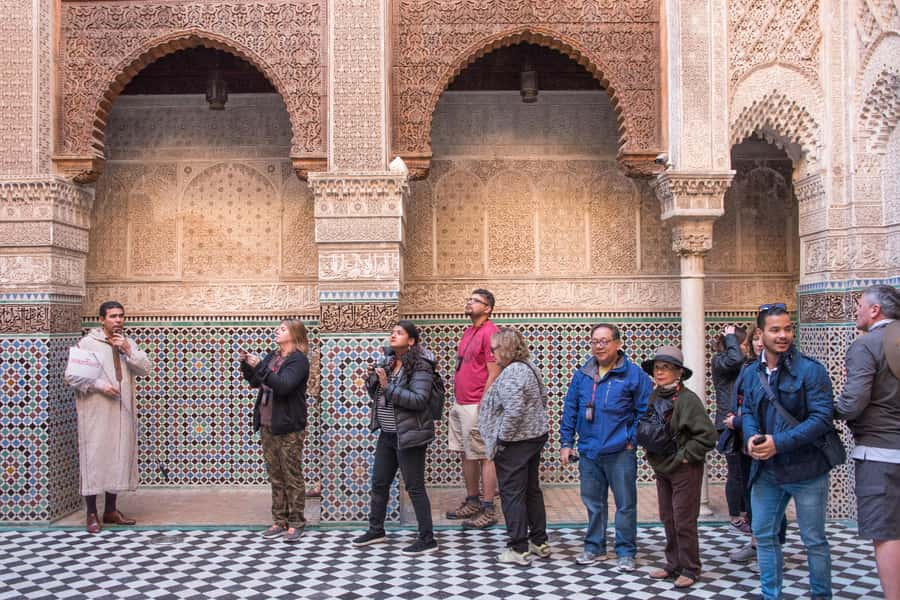
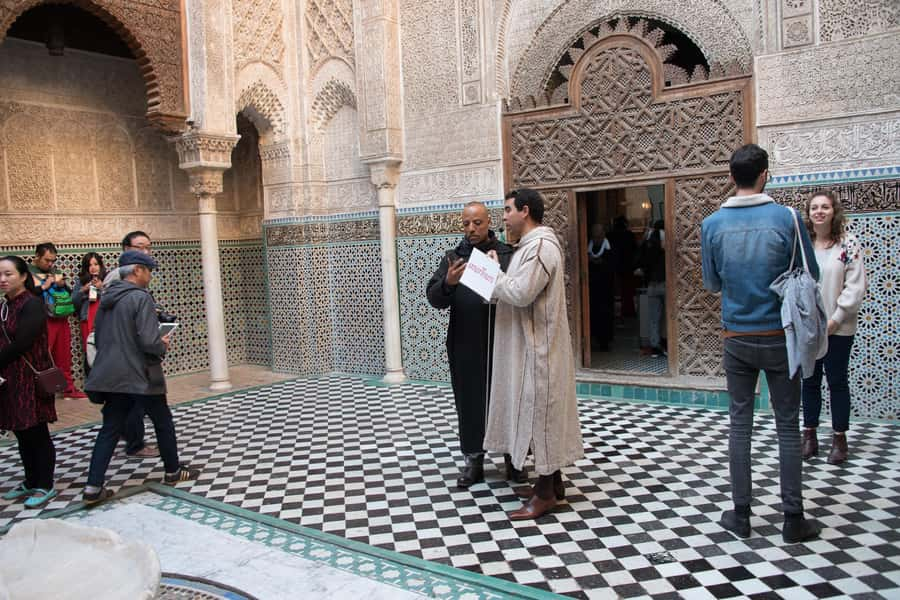
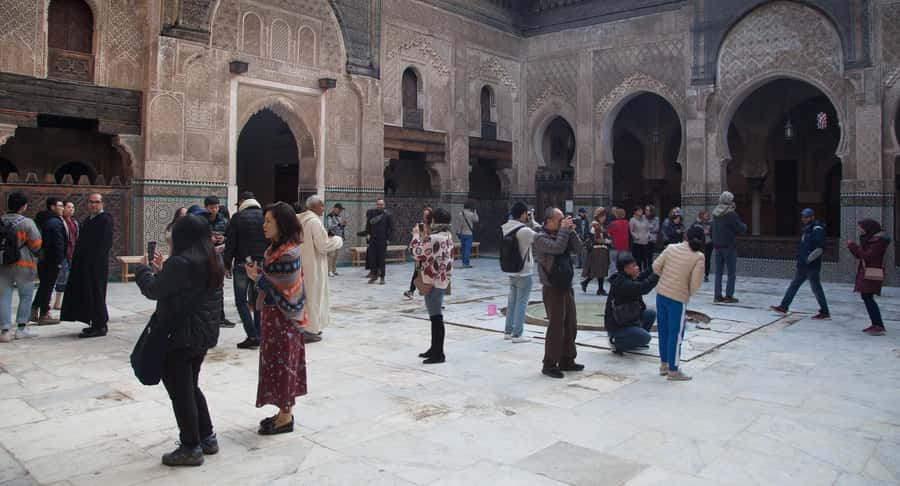
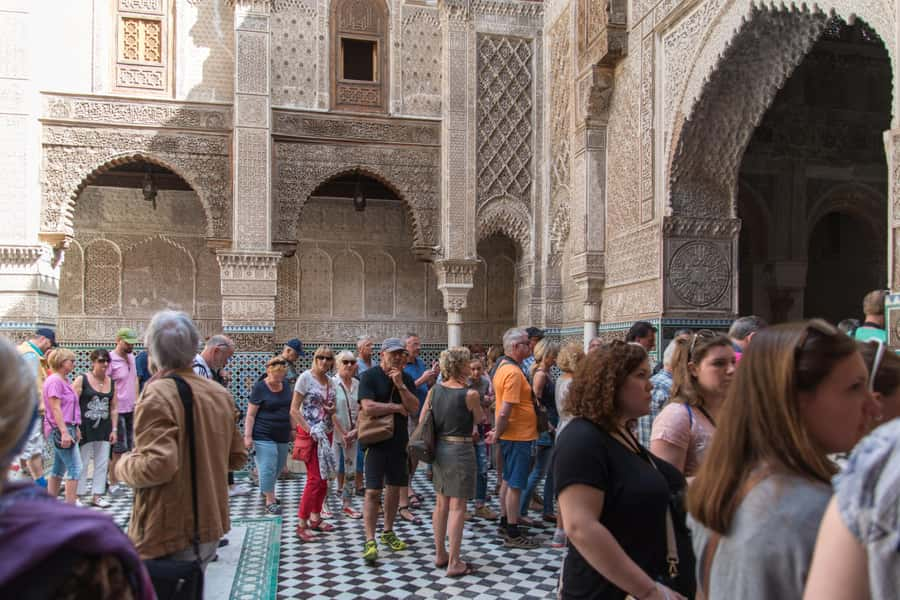
Next comes Bou Inania Madrasa, one of Fes’s most famous Marinid-era masterpieces. What makes it special is the level of detail you can actually see while someone explains it. Think carved cedarwood, intricate zellige tilework, and a serene marble courtyard that feels like a pause button after the noise outside.
Bou Inania is also notable because it’s one of the rare madrasas that functioned as a mosque too. That detail changes how you read the space. You stop viewing it as only a beautiful building and start seeing it as a place designed for learning, worship, and community life.
Practical note: you may have to handle ticketing separately here. The entrance fee for Bou Inania Madrasa is listed as 20 MAD per adult, and it’s not included in the $12 tour price.
Al-Karaouine University: an exterior stop that still matters
After Bou Inania, you’ll admire Al-Karaouine University and its mosque from the outside. This is an “exterior visit,” so you’re not expecting the full interior experience—but it’s still worth it if you want the big-picture story of Fes.
Al-Karaouine is presented as one of the world’s oldest universities. Even without stepping inside, the building’s importance comes through in how the area feels and how your guide frames it. You’ll also learn how Fes earned its reputation as a city of scholars, not just craft markets.
If you’re the type who likes context, this stop is a good bridge between the visual artistry of the madrasa and the everyday life you’ll see in the souks.
Dar Batha Museum: a palace you can read through crafts
Then you shift from religious architecture to a former royal palace now known for Moroccan arts and history: Dar Batha Museum of Islamic Arts. It’s a smart pairing with the madrasas and the university area because it keeps you in the same theme—how art, learning, and identity connect in Fes.
Dar Batha is known for exquisite craftsmanship: carved wood, ceramics, and fine embroidery. You’ll get a guided visit plus some free time. That free time matters. Museums move at different speeds than the Medina. Here, you can slow down and really look without getting dragged along.
The entrance ticket is listed at 20 MAD per adult and is not included in the tour price. Budget that, and you’ll avoid the small last-minute scramble.
Chouara Tannery: natural dyes, dye pits, and real trade
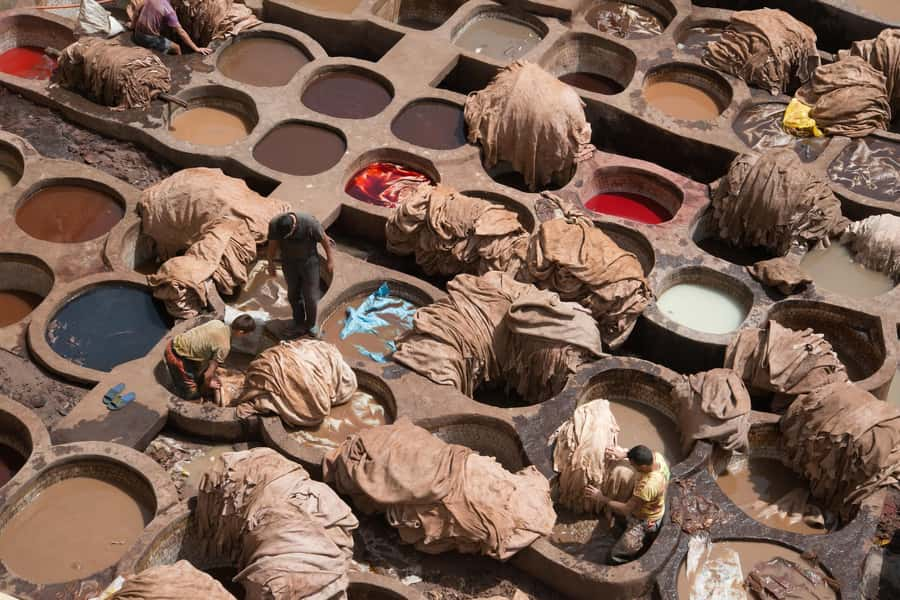
Now for the sensory highlight: the Chouara Tannery. The tour takes you to the tanning area with a photo stop and guided viewing, plus time to explore. From a panoramic terrace, you can watch the process in a way that’s hard to understand from street level.
The key detail is how the dye work is done. You’ll see artisans hand-dye leather using natural dyes like saffron and indigo, and the tour notes that this tradition goes back to the 11th century. Whether you’re fascinated by chemistry or just curious how a city keeps ancient skills alive, this is the stop that turns “architecture and history” into something human and practical.
Also plan for the reality check: this is a working craft zone. That means it can feel crowded, busy, and strongly commercial in the surrounding co-op shops. One guide experience you’ll likely encounter is that you’re shown places where merchandise is sold. Approach it like a museum shop, not a surprise trap: browse if you want, and if something feels too salesy, politely decline.
Medina souks: textiles, spices, metalwork sounds, and shopping with a plan
After the tannery, you move into the Medina of Fes with more guided wandering and more free time. This is where the tour earns its keep for shoppers and non-shoppers alike. Even if you don’t plan to buy, you learn what the different souk lanes specialize in and how to spot quality.
You’ll visit iconic souks such as:
- Souk Sabaghine for handwoven textiles
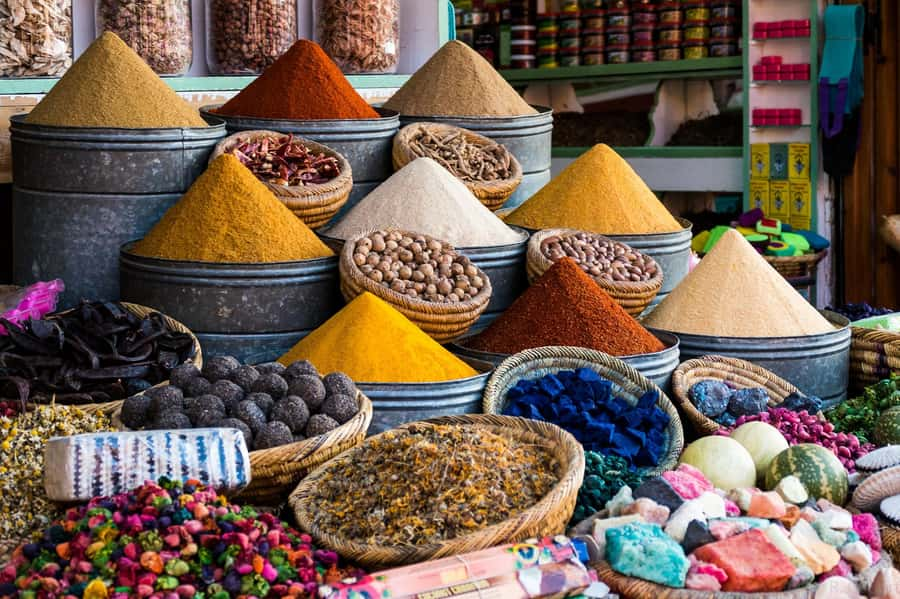
- Souk El Attarine for spices, perfumes, and herbal remedies
And nearby, you’ll hear and see metalworking tradition at Hammam Seffarine, where the coppersmiths’ hammering creates a soundtrack you’ll remember. The tour includes time to walk and see what’s going on, not just pass through.
How to shop without losing your head
If shopping is on your list, I like that this tour doesn’t just point you at stores—it helps you understand what you’re seeing. In past tour experiences, guides like Mouanis (who has been described as friendly and unhurried) and Houssine have taken people to craft-making areas and emphasized practical shopping advice.
You’ll also hear stories from guides who steer you toward artisan work rather than cheap copies. One strong tip that keeps showing up: if you want authentic Moroccan crafts, ask questions and compare materials, not only the price tag. And if you’re approached repeatedly at workshops, that’s normal here—breathe, smile, and keep your boundaries clear.
Pottery and zellige tile workshop: seeing the craft behind the ornament
The tour wraps craft appreciation with a pottery and zellige tile workshop stop. Here you can watch artisans mold clay, hand-paint ceramics, and cut delicate tiles into mosaic patterns—skills that end up on palaces, fountains, and mosques across Morocco.
This is an excellent ending because it connects the earlier “wow” factor (zellige detail in Bou Inania) to the modern hands that still make it. Once you’ve seen how tiles are cut and arranged, you’ll notice the logic behind the patterns instead of only admiring the look.
If you like souvenirs that feel like they belong to a place (and not to a mass-market shelf), this stop is where you start spotting quality quickly.
Pacing and time management: how the 4 hours actually feel
At about 210 minutes (around 4 hours), this tour is short enough to stay enjoyable but structured enough to hit the big names. You’ll have guided time plus free time at each monument, which is how you avoid the common problem of “guided tour speed-walk.”
It also helps that the itinerary alternates between high-focus sights (madrasas, museum) and more atmospheric wandering (souks and tannery surroundings). That rhythm is why families and first-timers tend to like it. In one experience with a guide named Mouanis, the pace was described as friendly and not rushed, even with a family traveling with three kids.
The walking is real. You’re in the Medina—so wear comfortable shoes, bring water, and accept that stops may come with stairs and uneven ground.
Price and value: what the $12 tour includes (and what it doesn’t)
The listed price is $12 per person, and it mostly covers the guide, organization, and access support. What you do get is meaningful:
- a licensed local guide
- a private or small-group walking tour (depending on the option)
- skip-the-line access to selected monuments
- free time at stops
- a WhatsApp reminder with the guide name and meeting point
But two major entrance fees are not included:
- Bou Inania Madrasa: 20 MAD per adult
- Dar Batha Museum of Islamic Arts: 20 MAD per adult
So the real “all-in” cost depends on your ticket needs. Still, the value is strong if you treat this as a guide-led way to see several top highlights in one go, especially the tannery and multiple iconic souk zones that are easy to miss without local street knowledge.
If you prefer to roam alone and you already know the Medina layout, you could skip the tour and DIY. If you want the landmarks plus a readable map of craft areas, paying for the guide is usually the smartest shortcut.
Guides make the difference: examples of the tour style
A big reason this tour scores well is the human factor: guides who know not only places but also people, rhythms, and where to spend time.
For example:
- Mouanis has been described as warm, friendly, and unhurried.
- Houssine has been described as born in the Medina and especially good at routing you to craft-making places and explaining what to look for.
- Jamal has been praised for providing keys to understand how the Medina develops and how life inside it unfolds.
- Driss has been mentioned for helping avoid lower-quality souvenirs and steering toward real crafts.
You’ll also see a pattern: guides often give practical advice for navigation and shopping. One person noted that salespeople weren’t pushy at some stops, while another mentioned that some coop-style tannery visits come with product offers—so be ready to politely refuse and keep moving.
Should you book this Fes Medina tour?
I’d book it if:
- it’s your first time in Fes and you want the major sights in one afternoon
- you care about crafts (tannery, tiles, pottery) and want help reading quality
- you’d rather follow a trusted route than guess your way through the Medina
- you want a tour that has free time built in, not just a nonstop march
I’d skip or at least confirm details if:
- you dislike shopping-oriented stops and don’t want to negotiate politely
- you need a very low-walking itinerary (the Medina is uneven and full of steps)
- you have mobility concerns. The information provided includes both wheelchair accessibility and a note that it is not suitable for people with mobility impairments, so you should check with the operator before booking.
If you want Fes as more than photos—if you want the story behind the tiles and the logic of the souks—this is a solid use of 4 hours.
FAQ
What is the duration of the tour?
The tour runs for 210 minutes, which is about 4 hours.
Where does the tour start, and how do I meet the guide?
The guide meets you in front of Hotel Batha, Ave de La Liberte, Fes. If your accommodation is inside the Medina and you choose the private option, pickup may be available from your riad reception.
Are entrance tickets included for Bou Inania Madrasa and Dar Batha?
No. Entrance tickets are not included. Bou Inania Madrasa is 20 MAD per adult, and Dar Batha Museum is 20 MAD per adult.
What are the main stops on the tour?
You’ll visit Bab Bou Jeloud, Dar Batha, Bou Inania Madrasa, an exterior view of Al-Karaouine University, the Chouara Tannery, and the Medina souks. You’ll also include craft/workshop stops for pottery and zellige tiles.
Is the tour guided, and what languages are offered?
Yes, it’s a live guided tour. Guides are listed in English and French.
What should I bring with me?
Bring comfortable shoes, sunglasses, sunscreen, water, and cash.
Is the tour suitable for people with mobility issues?
The information provided says it includes wheelchair accessibility, but it also notes it is not suitable for people with mobility impairments. You should confirm specifics with the provider before booking.