REVIEW · CAIRO
Mummy museum and coptic area and Mohamed Ali mosque
Book on Viator →Operated by Lovely Egypt Tours · Bookable on Viator
Pyramids, mummies, and churches in one big day. This private Cairo tour strings together Giza viewpoints, the famous Great Sphinx, and Cairo’s Christian heritage in Old Cairo, with a guide who helps the whole day make sense. At $45 per person for about 8 hours, it’s aimed at giving you real context without turning your day into a mad dash.
I also like the fact that the mummy museum stops are not an afterthought. The National Museum of Egyptian Civilization (NEMC) is built around mummies, coffins, and jewels, so you get a clear shift from pyramid symbolism to the artifacts people actually touched in ancient life and death.
One thing to plan around: admission tickets aren’t included, and the day runs in strong sun with a requirement for solid physical fitness. If you don’t handle heat and walking well, it can feel like a lot.
In This Review
- Key highlights you’ll care about
- Giza’s Big-Picture Story: Why the Pyramids Still Feel So Strange
- Great Sphinx: One Stone, One Face, and a Lot of Legend
- NEMC Mummy Museum: Why This Stop Feels Different From the Pyramids
- Old Cairo for Coptic-Era Meaning: Churches and the Holy Family Story
- Price and Ticket Reality: What $45 Actually Buys You
- The Human Factor: Why Sabry and the Driver Matter
- Timing, Heat, and Physical Fitness: The Real-Day Checklist
- Who Should Book This Tour (and Who Might Skip It)
- Should You Book Lovely Egypt Tours for This Cairo Day?
- FAQ
- What is the duration of the tour?
- Is pickup included?
- Is this a private tour?
- What does the $45 per person price include?
- Are admission tickets included?
- Is there a fitness requirement?
- What about cancellations?
- Does the tour run in poor weather?
- Are service animals allowed?
Key highlights you’ll care about

- Private group format means you’re not stuck with random strangers making the pace weird
- Giza time with story-driven explanations on how and why the pyramids were built
- Great Sphinx + Sun Temple details tied to King Kefren and the sun cult
- NEMC mummy museum focus on mummies, coffins, and jewels (more than just a quick peek)
- Old Cairo churches and Holy Family site for a major religion-history contrast
Giza’s Big-Picture Story: Why the Pyramids Still Feel So Strange

The tour starts at the Pyramids of Giza, and the goal isn’t only to stare at stone. You’re guided through the reasoning people connect to the pyramids: the scale, the labor, and the symbolism. Expect clear, on-the-ground explanations tied to what you’re seeing around you.
Here are the kinds of details your guide will talk through. You’ll hear the account that the Great Pyramid (often linked to Khufu/Keops) involved millions of stones and massive effort, including the idea that materials came from Luxor and traveled via the Nile by boats. You’ll also hear the “distance-to-the-sun” comparison for the Great Pyramid’s height (150 meters versus 150 million kilometers), plus stories about the burial chamber being one enormous granite block (described here as 80 tons).
Even if you’ve read pyramid facts before, this kind of guided framing helps your brain connect the dots. A pyramid doesn’t feel like a pile of geometry when someone points out what’s aligned where, and why ancient Egyptians might have cared so much about light, time, and kingship.
Practical note: you’ll spend about three hours at Giza, and admission tickets are not included. That matters for two reasons: (1) you’ll want to budget extra, and (2) your entry access can depend on on-site rules and lines. Build a little flexibility into your day.
You can also read our reviews of more museum experiences in Cairo



Great Sphinx: One Stone, One Face, and a Lot of Legend
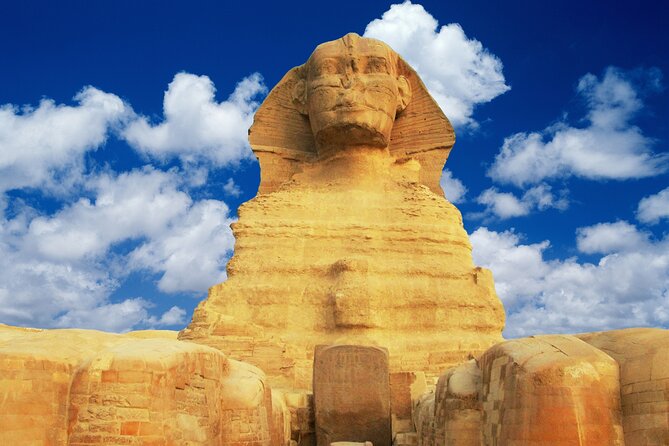
After Giza’s main features, you move to the Great Sphinx. This stop is shorter—about an hour—but it’s packed with “what to look for” moments. You’ll learn the standard description used here: the sphinx is carved as a lion body with a human face associated with King Kefren, presented as a guard figure watching over the pyramid plateau.
The story also includes why the sphinx looks the way it does today. Your guide will explain that the monument was covered by sand for long periods, and that its broken nose and damaged beard are part of the result. It’s one of those things you notice immediately once someone points it out, and it makes your photos feel less like random selfies and more like you’re capturing a real face.
You’ll also hear about the Sun Temple of Raa connected to Kefren, described as an open-air structure aimed at sun worship at sunrise and sunset. And yes, the tour includes a stop for a “wishing well” photo moment, where you can put in some money for good luck and chance.
Drawback to keep in mind: this is outdoors, so the sun factor is real. If you’re easily overheated, plan on moving slower during this segment and make water your best friend.
NEMC Mummy Museum: Why This Stop Feels Different From the Pyramids
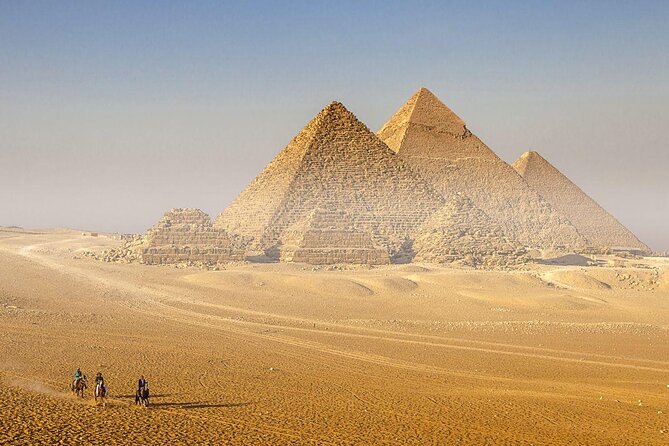
Next up is the National Museum of Egyptian Civilization (NEMC), about 1 hour 30 minutes. This is the tour’s most direct “mummy museum” moment, and it changes the mood immediately. Instead of massive structures and wide desert views, you’re in a world of objects—mummies, coffins, jewels, and the physical stuff of ancient status.
The value here is simple: pyramids tell a big story, but museums tell the intimate one. You’ll see items that help explain how belief turned into materials—how the body, the burial box, and precious adornments all connected. That’s what makes NEMC a useful counterweight to Giza.
One more thing: this stop can help break the physical rhythm of the day. People spend hours walking under the sun at the pyramids; an indoor museum stop tends to feel like a reset. Just don’t expect it to erase the whole day’s heat burden—there’s still a lot of time outside.
Admission tickets are also not included for this museum, so budget accordingly.
Old Cairo for Coptic-Era Meaning: Churches and the Holy Family Story
The final stop is Old Cairo for about an hour. This is where the day pivots away from pharaohs and into early Christian memory—churches and the site tied to the Holy Family’s escape from Herod, as presented on this itinerary.
Why this matters: Cairo isn’t one-layer history. It’s a stack. When you go from pyramid-age king worship to a story about refuge centuries later, you feel how the city’s identity has changed but the idea of sacred place has stayed strong. Even if you’re not deeply religious, the cultural continuity is striking.
In terms of pacing, the hour gives you enough time to see and understand without turning the last stretch into exhaustion. It’s also a good place to ask your guide for “what should I do next in Cairo?” suggestions, since you’re ending the day in a neighborhood that still feels lived-in.
Quick check if Mohamed Ali Mosque is a must for you: the stop list you provided highlights Old Cairo rather than the Mohamed Ali Mosque. If you want that specific mosque, confirm with Lovely Egypt Tours whether it’s included on your exact departure.
Price and Ticket Reality: What $45 Actually Buys You
At $45 per person for roughly 8 hours, this tour can feel like a bargain—especially with pickup included and a private setup. The real question isn’t the base fee; it’s what you pay on top.
Two things affect your total cost:
- Admission tickets aren’t included for the key sites (pyramids/sphinx, NEMC)
- You’ll want time-buffered planning so the day doesn’t depend on perfect luck with lines and access
Where the value shows up is in the “guide time.” A good guide isn’t only translating signs; they connect stories to landmarks, help you avoid hassle, and keep your schedule from collapsing under Cairo’s real-world pace. The strongest praise for this tour centers on the guide experience—especially Sabry/Sabry Hashim—being friendly, patient, and very helpful with practical issues.
Also worth noting: there are group discounts, and the operator describes pickup as offered. Those small logistics things can matter a lot when you’re trying to see a lot without getting stuck managing every detail yourself.





The Human Factor: Why Sabry and the Driver Matter
One of the most consistently praised parts of this experience is the guide. Names that come up in feedback include Sabry/Sabry Hashim, described as friendly, very patient, and clear in explanations. People also highlight that he helps you tailor the day—like removing stops or staying longer at places you care more about.
This is not a small perk. In Cairo, timing and personal interest can make or break the day. When your guide can adjust, you spend less time negotiating in the moment and more time seeing what you actually came for.
There’s also practical help mentioned: assistance with exchanging money and guidance for buying products without getting scammed, plus a “protective” style that some guests appreciated, particularly women. A driver is also named in feedback (Mahmood), which adds to the sense that the transport side runs with fewer surprises.
So if you’re the type who likes history but also wants sanity—this guide-led approach is the heart of the value.
Timing, Heat, and Physical Fitness: The Real-Day Checklist
The tour runs about 8 hours, which means you’re stacking multiple sites into one continuous plan. That’s fun if you can handle it, and tough if you can’t.
The operator specifies that you should have strong physical fitness. That’s a heads-up more than a threat: expect walking in the sun, uneven ground, and time spent outdoors. One piece of feedback also points to a simple improvement—more breaks to cool down and drink water would help—so you should plan to take those moments when you can.
My practical advice:
- Start hydrated and keep topping up
- Wear sun protection you trust (hat, sunglasses, sunscreen)
- Bring comfortable shoes that can handle stone and sand-like surfaces
- Use the museum stop as a reset for your body, not only your brain
If you’re traveling with mobility limitations, or you want a slow pace, this exact format may feel like too much in one day.
Who Should Book This Tour (and Who Might Skip It)

I’d point this tour at two types of travelers:
- First-time visitors who want Giza + Sphinx + Egyptian museum plus Old Cairo in one structured day
- History-minded people who like explanations tied to what they’re seeing, not just a list of monuments
You may want to skip or modify if:
- You can’t handle heat and outdoor walking well
- You only care about one or two sites and don’t want a full-day schedule
- Mohamed Ali Mosque is non-negotiable for your trip—since it isn’t shown in the stop list you shared
Should You Book Lovely Egypt Tours for This Cairo Day?
If you’re looking for an organized, private-style day that covers the big Cairo hits—pyramids, Sphinx, the mummy-focused NEMC, and Old Cairo—it’s a solid choice. The strongest reason to book is the guide quality: Sabry Hashim is repeatedly described as kind, patient, and clear, with the ability to tailor the day to what you care about.
Just be honest with yourself about the main trade-off: admission tickets are extra, and the day is long enough that heat and walking matter. If you go in prepared, you’ll come away with a clearer story of Egypt—from kings and sun worship to mummies and sacred sites in Old Cairo.
FAQ
What is the duration of the tour?
The tour lasts about 8 hours.
Is pickup included?
Yes, pickup is offered.
Is this a private tour?
Yes. It’s private, and only your group participates.
What does the $45 per person price include?
The provided price is $45 per person. Admission tickets for the main sites are listed as not included.
Are admission tickets included?
No. Admission tickets are not included for the pyramid area and the NEMC museum.
Is there a fitness requirement?
Yes. The tour description says travelers should have a strong physical fitness level.
What about cancellations?
Cancellation is free. You can cancel up to 24 hours in advance for a full refund.
Does the tour run in poor weather?
The experience requires good weather. If it’s canceled due to poor weather, you’ll be offered a different date or a full refund.
Are service animals allowed?
Yes, service animals are allowed.