REVIEW · BELFAST
IRA Troubles Conflict Private Tour Museum Graves Murals and Political Analysis
Book on Viator →Operated by Giants Causeway Tours · Bookable on Viator
One part history class, one part street-level reality. This private Belfast tour maps the Troubles through murals, memorials, and political analysis, with plenty of time to ask questions and compare notes. I really like the guided Peace Walls experience where you even write a peace message, and I like that the tour leans hard into the Irish Republican story rather than skimming the surface. The main drawback: it is not trying to give equal weight to Loyalist arguments, so if you want a perfectly even two-sided lecture, this may feel lopsided.
Because it’s private, you’re not stuck nodding along in a big group. You’re also in good hands with guides who bring real Belfast context, and you may even meet local names like Barry, Joe, Paula, Ciarán, or Brendan as your driver-guide. Expect an intense mix of art, politics, graves, and living memory, all wrapped into about three hours.
In This Review
- Key points before you go
- Why this Belfast tour is more than murals on a wall
- The private museum stop and why it feels different
- Peace Walls up close: writing peace where the city split happened
- Falls Road and Divis Street murals: political art explained from the inside
- Shankill Road murals: the Loyalist heartland you can’t ignore
- Clonard Martyrs Memorial Garden: names, symbols, and memory
- Milltown Cemetery and Bobby Sands: the hunger strike in real place
- More Bobby Sands: murals that keep the story present
- Divis Tower and Ballymurphy: the murals and names as local news
- Clonard Monastery and Garden of Remembrance: faith and war on the same street
- Price and logistics: do you get value for $255.50?
- Who should book this tour, and who might not love it
- Should you book this Belfast Troubles and murals tour?
- FAQ
- How long is the tour?
- What does the tour cost?
- Is pickup included?
- Is this tour private?
- What language is the tour delivered in?
- Are museum and memorial admissions included?
- Is the Irish Republican History Museum always open?
- What notable sites are included?
- Can most travelers participate?
- What’s the cancellation policy?
Key points before you go
- A private-format Troubles tour with time for questions instead of rushing past facts
- Peace Walls access both sides, plus a chance to sign and write a peace note
- Bobby Sands sites and memorials, including Milltown Cemetery and murals
- Falls Road and Shankill Road murals explained from a clear political perspective
- Clonard Martyrs Memorial Garden with detailed plaques and named remembrances
- Museum time and object viewing, including a stop involving plastic and rubber bullets
Why this Belfast tour is more than murals on a wall
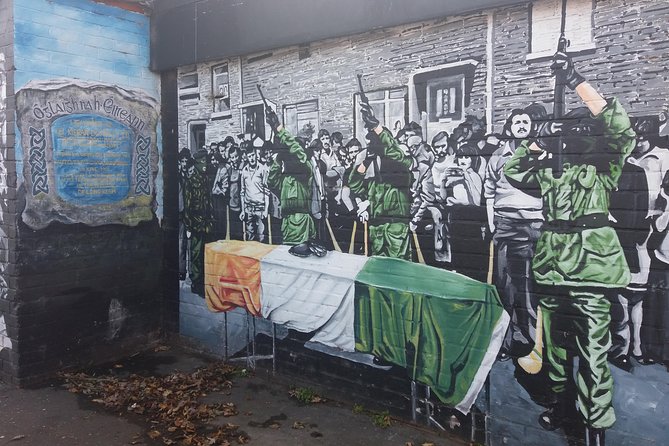
Belfast is famous for street art, but this tour treats murals like political documents. You’ll spend time where the paint is not decoration. It’s a message to the present.
The private format matters. Your guide can slow down when a question lands. You can ask why a wall still stands, or what a memorial is trying to say. And you’re not competing with a tour bus for attention at the Peace Walls or the cemetery.
The other reason I’d pick this style of tour: it gives political analysis as you go. It’s not just dates and names. You’ll connect the conflict’s start, how it evolved for Irish Republicans, and how the current peace process is discussed through that lens. That makes it easier to understand why Belfast still feels divided on certain streets.
You can also read our reviews of more tours and experiences in Belfast.
The private museum stop and why it feels different
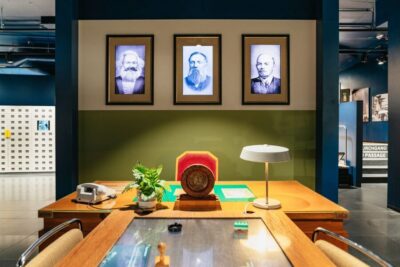
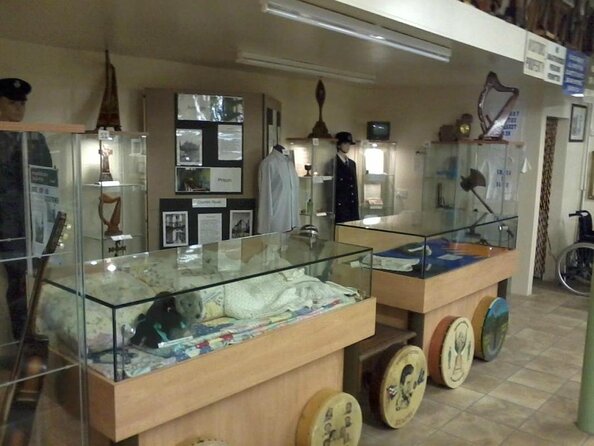
One of the strongest parts is the museum visit that isn’t usually open to the public. That changes the whole mood. Instead of browsing in a crowd, you’re getting guided context.
The program includes the Irish Republican History Museum, and it’s tied to Eileen Hickey’s Irish Republican History Museum as part of what you’ll see. You may also have the chance to meet ex-prisoners of war who share their experiences of the Conflict. That personal context is what turns the big historical story into something you can actually picture.
There’s also a hands-on element mentioned in the tour inclusions: seeing and handling plastic and rubber bullets used by British Crown forces. Even if you don’t agree with every political framing on the day, that kind of object does something that photos can’t. It makes the conflict feel physical, not abstract.
Practical note: the museum only opens from 10:00 to 14:00, Tuesday through Saturday. If it’s closed, the plan is to pivot and show you around Ballymurphy instead.
Peace Walls up close: writing peace where the city split happened
The Peace Wall portion is the emotional centerpiece for many people, and I get why. You’ll learn why the peace lines or peace walls were built and what they separate: predominantly Republican and Nationalist Catholic neighborhoods from predominantly Loyalist and Unionist Protestant neighborhoods.
You don’t just drive by. The plan is to visit both sides of the Peace Wall. That means you’re standing in the real boundary of daily life, not reading a plaque from the sidewalk.
Then there’s the peace moment: you’ll sign your name and write a message of peace. It’s a small action, but it hits harder here than it would anywhere else. You’re putting words into a place built to keep neighbors from harming each other.
The program also calls out the scale: one of Belfast’s most famous peace walls stretches about 800 meters between the Shankill Road and the Falls Road. It’s described as an imposing multi-level concrete structure. You’ll feel that size in your body when you walk and pause for photos.
Falls Road and Divis Street murals: political art explained from the inside
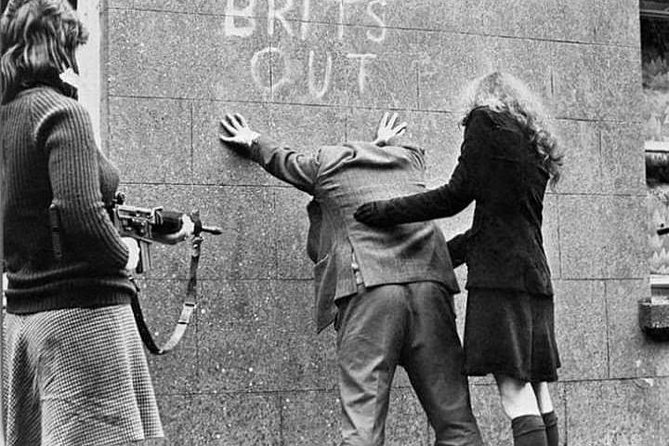
Your first mural-focused segment includes the International Mural Wall on Divis Street and time around the Falls Road. The framing is explicitly Irish Republican, with history that runs from the beginning of the Troubles through to the present peace process, plus a current political analysis.
This is where murals painted by former prisoners (POWs) come up. That detail is important. It explains why the art can feel urgent and personal, not corporate or generic. You’re not only seeing what the community wanted to remember, you’re seeing what people wanted to say while still living inside the conflict.
You’ll also get context for why Peace Walls became part of the daily map of Belfast. The tour describes them as a separation solution that started in 1969 and, due to their effectiveness, never really came down. It also notes that around one-third of the walls appeared since 1994, after the IRA declared an effective ceasefire.
If you want to understand why the city still looks the way it does, this is one of the best stretches on the tour.
Shankill Road murals: the Loyalist heartland you can’t ignore
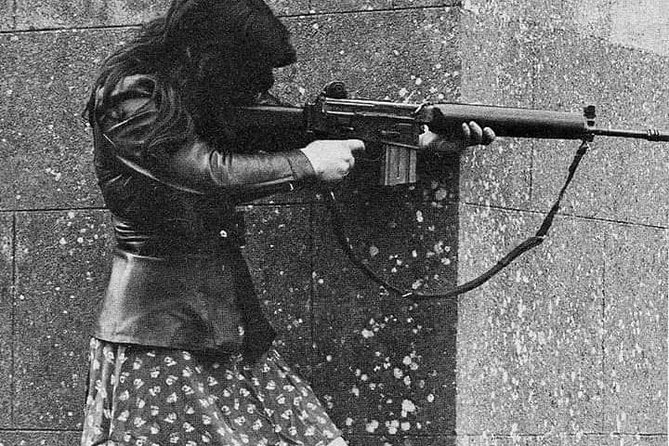
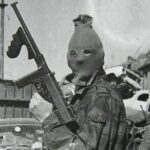
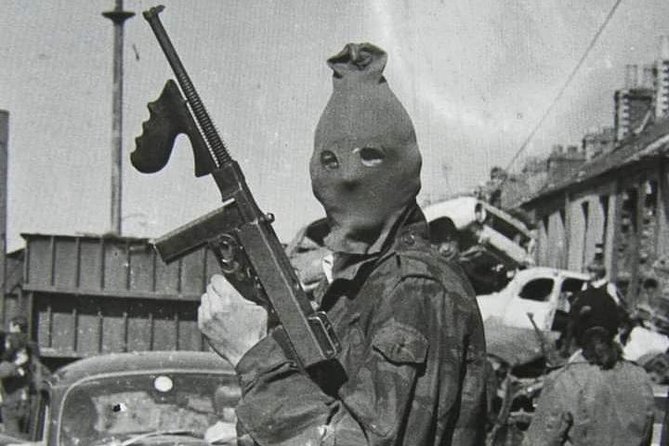
Then you shift to the Shankill Road, the heartland of Ulster Loyalism. The tour explains how that area is tied to Loyalist paramilitaries such as the UDA/UFF and UVF. You’ll see murals that depict masked figures associated with those organizations.
This stop can be intense, mainly because the murals are so direct. They don’t try to soften the story. They also connect to why the city’s division didn’t just fade after the Troubles started to shift. Some of the symbolism is still there, like a permanent headline.
Here’s the balance point for you: this tour is not trying to deliver a neutral, courtroom-style debate between Republican and Loyalist narratives. It’s built around Irish Republican interpretation. So if you’re expecting equal time for how Loyalists explain their own case, you might feel the gap.
Still, seeing Shankill Road murals on the same day as Falls Road murals helps you grasp one big reality: Belfast’s conflict isn’t only in old photographs. It’s still in current street language.
Clonard Martyrs Memorial Garden: names, symbols, and memory
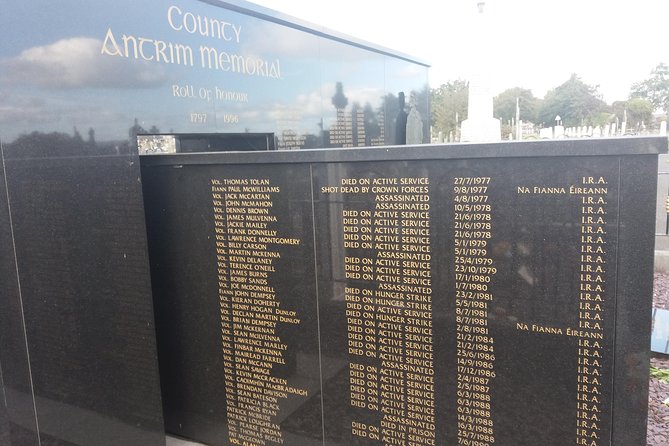
The Clonard Martyrs memorial is one of the stops that tends to land with visitors, because it’s built for remembrance rather than spectacle.
You visit the Clonard Martyrs Memorial Garden at Bombay Street and see a black iron gate with a black and red rising iron phoenix, including the phrase Out the Ashes Arose The Provisionals. The garden is laid out in three separate yards, and the program walks you through what’s on each part.
In the central yard, you’ll see a black and white Celtic cross in the middle with an Irish inscription about faithful dead. Behind it is a granite plaque featuring male and female Volunteers with bowed heads. There are also panels with the shields of Ireland’s four provinces.
The left and right panels are described as roll-of-honour and memorial sections, including both Republican prisoners from the Clonard area and civilian casualties. Along the boundary walls are a series of plaques organized by decades, starting as far back as 1921–1922 and running through later years.
If you like detail, this is your stop. You’ll also see benches with small golden plaques dedicated to specific individuals. For example, the data includes names such as Seamus (Shay) Sullivan, Frank Moyna, Lily Lewis, Sam and Tony Lewis on one side, and Renee & Marie Rosbotham, Alex Comerford, and Helena Kelly on another.
You’ll also see plaques acknowledging gate donations, including the Roddy McCorley Club and the Michael Dwyers GAC (1798). The point is not abstract “heritage.” It’s a carefully structured map of who the memorial is for.
Milltown Cemetery and Bobby Sands: the hunger strike in real place
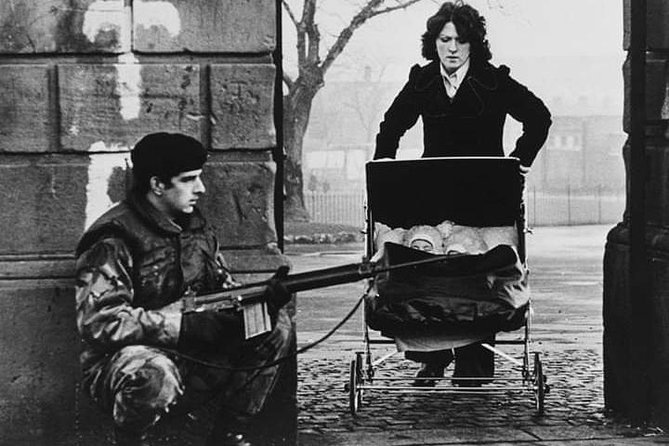
Milltown Cemetery is where the tour turns from murals and memorial gardens into graves and lived consequence.
You’ll visit the Republican Plot and see the resting place connected to Bobby Sands, a member of the Provisional IRA who died on hunger strike while imprisoned at HM Prison Maze. The tour description includes that he was the leader of the 1981 hunger strike after 66 days, and that it was in protest of the removal of Special Category Status. It also notes that he was elected MP at the time of his death.
The cemetery stop also explains how the National Graves Association works there, including that graves are marked with the Red Hand. It references multiple republican plots and IRA volunteers buried there, including volunteers killed in the 1920s and the Northern Campaign in the 1940s. The New Republican Plot is described as including the remains of 77 IRA Volunteers, including Óglach Mairéad Farrell.
If you’re the kind of traveler who prefers truth on the ground over history in theory, this cemetery visit is one of the most powerful ways to understand the conflict’s cost. It’s also one of the stops where your emotions are likely to run higher, because you’re looking at names that were made into political symbols.
More Bobby Sands: murals that keep the story present
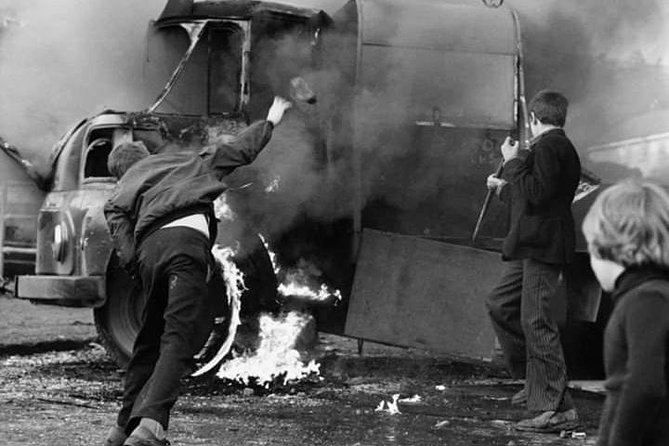
On top of the cemetery visit, the tour includes additional time at Bobby Sands murals.
You’ll see an iconic Bobby Sands mural in the Republican heartland and learn about the Blanket and Dirty Protests connected to the 1981 hunger strikes. You’ll also get references to other hunger strikers, including a mention of visits that include photographs of 12 of the 22 hunger strikers.
The practical takeaway: you’ll leave with multiple visual anchors. One site gives you the cemetery meaning. The murals give you the public, ongoing symbolism.
If you care about photos, bring your camera plan. The stops are timed and short, so you’ll want to be ready to frame quickly.
Divis Tower and Ballymurphy: the murals and names as local news
Next you’ll head toward Divis Tower, which overlooks the Falls Road republican stronghold. The tour notes that British Army positions included a snipers nest and spy post up until 2005. You’ll also see names and murals related to the first victims of the Troubles, described as the first two victims.
It then moves into Ballymurphy Road. You’ll see murals to An Gorta Mor and drive through Republican Ballymurphy. The tour also references murals to local volunteers, including Jim Bryson and his Big Louie machine gun, described as used to terrify the British Army.
One more mural stop is included around Divis and the Welcome Wall, plus time in the heartland of the Irish Republican Army.
Why this matters for your understanding of Belfast: these murals function like local broadcasting. They keep specific stories in view, decade after decade. If you try to learn the Troubles from books alone, you can miss how constantly people are reminded of what happened.
Clonard Monastery and Garden of Remembrance: faith and war on the same street
Clonard Monastery gets special attention, because it sits right at an interface area between Catholic Falls Road and Protestant Shankill Road neighborhoods.
The tour explains that on 14 August 1969 loyalist mobs from the Shankill Road launched attacks on houses owned by Catholics on Bombay Street and Cupar Street. Residents fled and many houses were burned, including the whole of Bombay Street. It also says the priests from Clonard were involved early in trying to safeguard local residents.
The program includes names of clergy who worked for peace and lived there: Frs. Alec Reid and Gerry Reynolds.
Then you visit the Garden of Remembrance linked to D Company, 2nd Battalion, Belfast Brigade of the IRA. The tour ties it to the Provisional IRA’s Belfast command areas, noting the battalions and their regional bases after the organization formed in 1969. You’ll hear how the Second Battalion connected to the Falls Road / Clonard / Ballymurphy district.
If you’re expecting only paramilitary imagery, this part adds something else: the role of faith leaders and community spaces amid conflict.
Price and logistics: do you get value for $255.50?
At $255.50 per person for about three hours, you’re paying for three things that group tours often can’t deliver.
First is private transportation and a private, your-group-only experience. You’re in an air-conditioned vehicle and your driver handles navigation, which keeps you focused on what you’re seeing instead of map work.
Second is the itinerary density. The tour includes multiple paid entry points and memorial sites, with admission tickets included at stops such as the International Mural Wall segment, Peace Walls, Shankill Road murals, Peace Wall access, Milltown Cemetery, and the museum portion. That matters because Belfast can stack entry fees quickly.
Third is the Q-and-A reality. The private format helps you ask follow-ups when something feels confusing or emotionally loaded.
Heads-up on logistics: pickup is free from a central Leonardo hotel meeting location. Other pickup zones and some drop-offs cost extra. You won’t be picked up from airports, and there are specific extra charges for certain areas like Titanic museum or Queen’s University, plus cruise ship pickup pricing.
My advice: this price makes sense if you want a guided interpretation you can question and you’re comfortable with a heavy political and emotional theme. If you only want a light, neutral “walk and photos” approach, you may prefer another style of tour.
Who should book this tour, and who might not love it
Book it if you want to understand Belfast through a clear Irish Republican lens, and you like learning by seeing real locations: Peace Walls, mural districts, memorial gardens, and the cemetery where Bobby Sands is buried.
Book it if you care about political analysis as part of the tour, not just storytelling. The format is designed for discussion, not speed.
You might think twice if you want balanced time for Loyalist arguments as an equal thread throughout the day. The tour is built from an Irish Republican perspective, and that direction shows.
If you’re sensitive to heavy content, plan for strong emotions. Graves and memorials are part of the experience, and the tour also includes handling conflict-related items like plastic and rubber bullets.
Should you book this Belfast Troubles and murals tour?
If your goal is to grasp why Belfast still looks divided, you should book this. The Peace Walls access, the named memorial stops at Clonard and Milltown Cemetery, and the repeated focus on murals connected to key figures like Bobby Sands create a clear learning path in just a few hours.
I’d skip it only if you want a strictly neutral, both-sides-equal historical lecture. This tour is more honest than that. It makes a choice, and you’ll see the Troubles from inside that choice.
If that matches your curiosity, it’s a strong use of time in Belfast.
FAQ
How long is the tour?
It runs about 3 hours.
What does the tour cost?
The price is $255.50 per person.
Is pickup included?
Pickup is offered, with a free pickup option from a central Leonardo hotel meeting location. Other pickup/drop-off locations may cost extra.
Is this tour private?
Yes. It’s a private tour, and only your group participates.
What language is the tour delivered in?
It’s offered in English.
Are museum and memorial admissions included?
Admission tickets are included for the tour’s stops listed in the schedule, including the mural wall segment, Peace Walls, Shankill Road, Clonard Martyrs, Clonard Monastery, Divis Tower, Milltown Cemetery, and the cemetery/mural stops.
Is the Irish Republican History Museum always open?
No. The museum only opens from 10:00 to 14:00 Tuesday through Saturday. If it’s closed, the plan is to show you around Ballymurphy instead.
What notable sites are included?
The tour includes Peace Walls, International Mural Wall Divis Street, Shankill Road murals, Clonard Martyrs Memorial Garden, Milltown Cemetery including Bobby Sands, Divis Tower, Ballymurphy Road murals, Clonard Monastery, and the D Company Garden of Remembrance area.
Can most travelers participate?
The description says most travelers can participate.
What’s the cancellation policy?
Free cancellation is available if you cancel up to 24 hours in advance for a full refund.