
REVIEW · BRITISH MOTOR MUSEUM
Warwick: British Motor Museum Entry Ticket
Book on GetYourGuide →Operated by British Motor Museum · Bookable on GetYourGuide
The sound of engines starts even before you park. At the British Motor Museum in Warwickshire, you’ll walk through decades of British motoring with Time Road storytelling and hands-on Under The Skin exhibits in a really user-friendly venue. It’s the kind of place where even if you’re not the resident car expert, the museum makes the changes in family life and technology feel practical and fun.
I especially loved the guided context. When you catch a volunteer guide like Trevor, the cars stop being just metal and turn into a timeline you can actually follow. My other big win was the behind-the-scenes angle—seeing how vehicles are conserved in the Collections Centre makes the whole collection feel alive and future-minded. One thing to consider: the museum’s big indoor spaces can make some tour audio harder to catch, so if you’re listening closely, pick your spot near the speaker.
In This Review
- Quick hits before you go
- First stop: the museum setup and why it feels easy
- Time Road: the walk that ties cars to real life
- Making British Cars: what the industry did, and what comes next
- Under The Skin interactive exhibits: where curiosity becomes a hands-on win
- Collections Centre and conservation: the “how they survive” part
- The world’s largest historic British-car collection: how to actually enjoy 400+ cars
- What the museum experience feels like for different ages
- Volunteers, staff, and the value of asking questions
- Café, shop, and staying fueled for a long visit
- Timing and pacing: how long should you plan?
- Price and value: is $24 a good deal?
- A couple of real considerations before you go
- Who should book this ticket?
- Should you book the Warwick British Motor Museum entry ticket?
- FAQ
- How long is the British Motor Museum visit?
- What will I see at the museum?
- Is there anything for families and children?
- Is free parking included?
- Is the museum wheelchair accessible?
- Are pets allowed?
- Is there food available onsite?
- What’s the main drawback to know about?
Quick hits before you go

- Time Road walks through motoring and family life across the decades, with period details that make it easy to remember.
- Under The Skin is hands-on and practical, including comparisons like rack and pin versus power steering and how suspension has improved.
- Collections Centre gives conservation context, showing how preservation is done for future generations.
- 400+ cars dating back to the 1890s means there’s always something new to look at, even if you only skim.
- Enthusiastic volunteers and staff add real personality—ask questions and you’ll get answers.
- Free parking, onsite café, and an onsite play area keep the day smooth for mixed-age groups.
First stop: the museum setup and why it feels easy
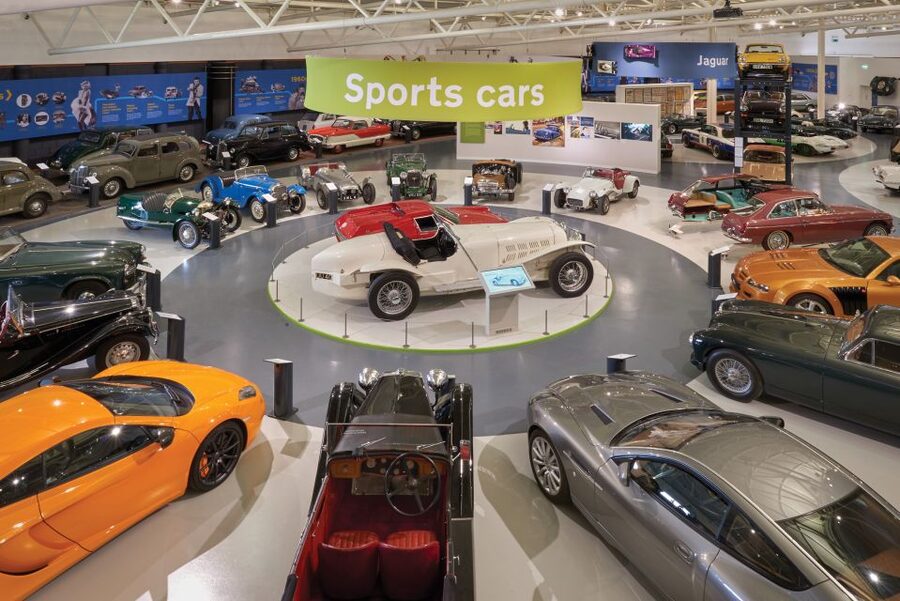
This is one of those museums that doesn’t fight you. The site is designed for wandering, with enough space that you’re not constantly squeezing past strollers or stopping to decipher confusing layouts. Plus, the collection is indoors in a way that works well for a full day, even when the weather has opinions.
The ticket is listed as a full-day visit, and that’s how you’ll get the best experience. Some people move through in around 2.5 hours, while others take 4 to 5 hours. Your pace can be relaxed without feeling like you’re missing the “real” museum.
Two practical perks I’d plan around: free parking and a café onsite. Parking saves time and hassle, and having food nearby matters because car museums can turn into a long, rewarding rabbit hole.
Time Road: the walk that ties cars to real life

If you do only one structured route, make it Time Road. This is where the museum earns its “history you can feel” reputation: you’re not just looking at vehicles, you’re moving through how motoring changed everyday life.
Expect period music and built-in cues for memorable moments, with examples like the introduction of double yellow lines. Those details matter because they connect rules, streets, and family routines to the cars themselves. You’ll start seeing motoring as something social, not just technical.
What I like about this section is that it levels the playing field. You don’t need to know make-and-model trivia to enjoy it. If you’re visiting with kids or a mix of ages, Time Road gives everyone a storyline to follow.
Making British Cars: what the industry did, and what comes next
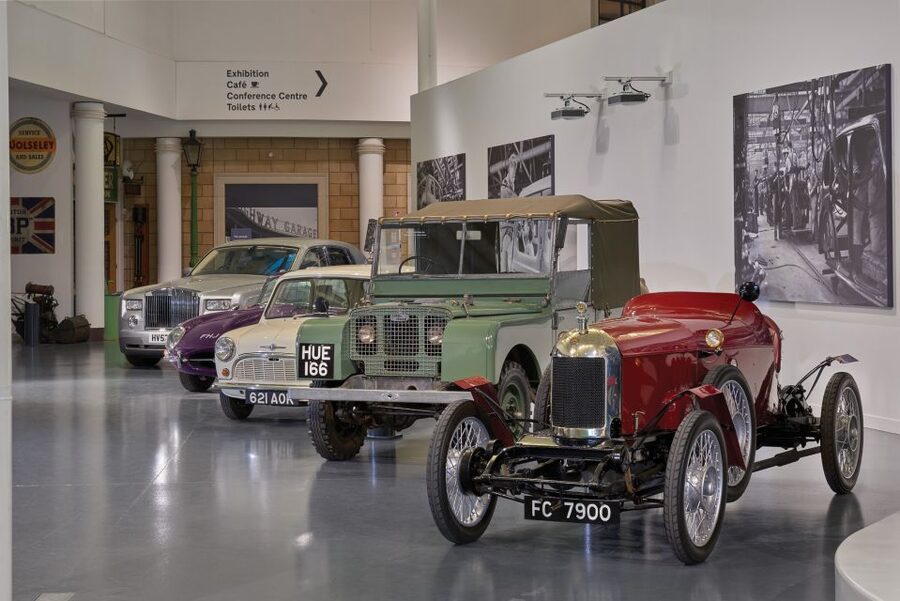
After Time Road, you’ll want to shift from “what life looked like” to “how cars changed.” The Making British Cars section is built to show the influence of the British motor industry over time and point toward where it’s heading.
This part works best when you slow down. Look for how design, engineering, and production priorities shift across decades. The museum doesn’t treat car history like a straight line of winners and losers—it frames it as a system shaped by society, technology, and demand.
If you’ve ever wondered why certain British designs became icons, this is where you start getting the thread. Even if you’re more into the cars you grew up with, you’ll likely find connections between that nostalgia and earlier innovations.
Under The Skin interactive exhibits: where curiosity becomes a hands-on win
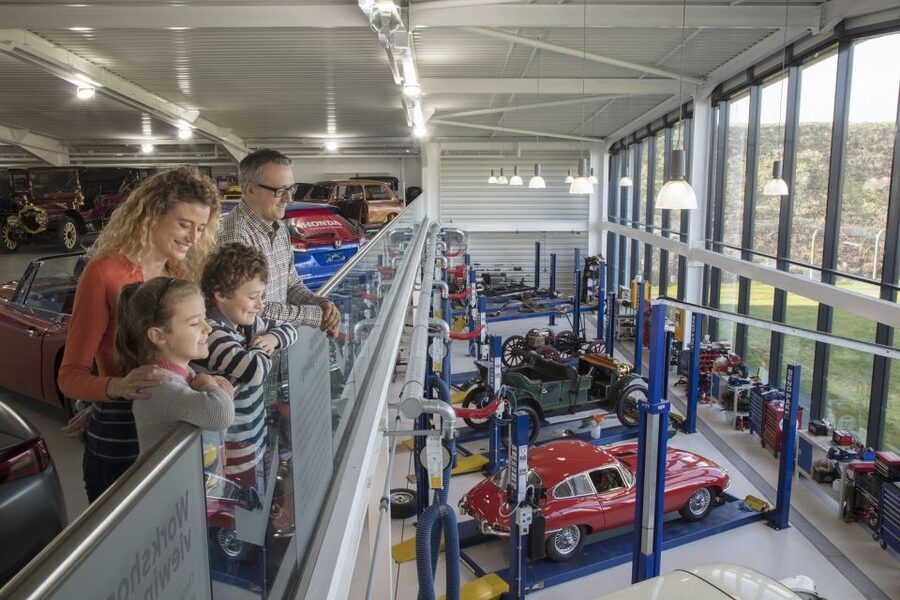
Under The Skin is the section I’d recommend to anyone who learns by doing. Instead of passively reading panels, you can interact with exhibits that explain how cars work.
You’ll see comparisons like rack and pin versus power steering, and how suspension has improved over time. That’s not just technical trivia—it’s the kind of practical understanding that makes you notice real driving differences when you ride in any modern car.
This is also a great choice if your group includes non–car fans. People who don’t care about brand collecting often enjoy figuring out how systems work. It’s the rare museum area that turns confusion into a solved problem.
One note from real-world experience: in big galleries, guided audio can be tough to hear. If you’re aiming to catch every explanation while you explore Under The Skin, position yourself where sound carries best and don’t be afraid to pause when you find a station that’s calling your name.
Collections Centre and conservation: the “how they survive” part
One of the best ways to appreciate a museum collection is to understand what happens when it’s off display. The Collections Centre lets you see behind the scenes at how vehicles are conserved so they can be protected for future generations.
This matters more than it sounds. Historic cars aren’t just old objects; they’re delicate machines with layers of material that can deteriorate. When you understand the care involved, you treat the collection with a little more respect—and you’ll probably look at the cars with a sharper eye.
If you’re the type who likes craft and restoration details, this is a highlight. It also pairs nicely with the rest of the museum because it answers the quiet question: how does a museum keep this stuff from turning into scrap?
The world’s largest historic British-car collection: how to actually enjoy 400+ cars
The British Motor Museum is home to 400+ cars, including vehicles dating back to the 1890s. That’s an impressive number, but numbers can overwhelm you fast. The trick is to choose your focus and let the rest be a bonus.
Here’s a simple strategy that works: pick one theme for the first hour. Examples could be Jaguar history, movie cars, prototypes that never made production, or family classics you recognize from real life. Reviews mention rare one-offs and prototypes, and people love that mix of familiar and surprising.
After you build that “mental map,” you can wander without stress. You start spotting patterns—body styles, design language, engineering shifts—because you’re no longer scanning aimlessly.
Also, pay attention to the way the museum talks to you. Signage and period illustration help you move from car to car with context, not just sightlines.
What the museum experience feels like for different ages
This museum is family-friendly in a way that’s built into the day. There are family activities included, an onsite play area, and even small things like push-along cars that help little kids feel included without needing constant adult attention.
For teens and older kids, Time Road and Under The Skin tend to land well. A 15-year-old enjoying the museum is exactly the kind of sign I look for—because it means the place has more than one lane to ride in.
For adults who are “not really into cars,” you’ll still have plenty to enjoy if you focus on social history and practical tech. The museum’s design does a good job connecting cars to family life and daily routines, which turns the subject into something broader than engine worship.
Volunteers, staff, and the value of asking questions
The human side is a big part of the experience. Many of the guides are volunteers, and the museum staff and volunteers are comfortable chatting and answering questions.
One guest specifically praised hearing history from Trevor during a visit for a partner’s birthday, and that kind of personal explanation is what turns a self-guided day into something with depth. Another recurring theme is that volunteers help you get more out of the visit, especially if you’re curious about specific brands or collections.
My practical advice: don’t treat questions as interruptions. If you’ve got a question—why a car looks a certain way, how steering works, what a prototype was for—ask it when you see an expert nearby. The museum experience gets better when you interact.
Café, shop, and staying fueled for a long visit
You’ll need food. Car museums can be a lot of walking, plus lots of time staring at tiny details. The onsite café offers hot and cold meals and snacks, and it’s a relief to know you won’t have to leave the grounds to keep energy up.
From the reviews, the café is generally seen as a good part of the day. People mention it as a solid, pleasant break, though one note is that pricing can feel a bit high for some. I’d still plan to eat there, because it keeps your momentum and saves you the hassle of timing a meal elsewhere.
If you like souvenirs or books about motoring history, the onsite shop is another easy win. It’s worth checking before you leave while the cars are still fresh in your head.
Timing and pacing: how long should you plan?
You can get through the museum in a shorter window if you’re selective, but you’ll enjoy it more if you let it be a real day.
Here’s a realistic pacing guide based on typical visit rhythms:
- 2.5 hours can work if you focus on a few key areas and keep moving.
- 4 hours or more is a comfortable range if you want to see the big exhibits and read enough signage to connect the dots.
- 4–5 hours fits best if you’re into cars, prototypes, and you like chatting with volunteers.
If it’s a hot day, plan for occasional slowdowns. One review mentioned the buildings could have better circulation, so bring water and take breaks. You’ll enjoy the cars longer if you don’t push through fatigue.
Price and value: is $24 a good deal?
At around $24 per person, the British Motor Museum sits in a reasonable range for a day out with heavy content. You’re getting a full museum visit that can easily stretch into several hours, plus interactive exhibits and a collection that spans from the 1890s to near-modern eras.
What makes the value feel real is what you get for that entry price: family activities, free parking, an onsite café, and wheelchair accessibility. You’re not paying extra just to have a functional, comfortable visit.
Also, the museum’s rating is strong—4.7 with 141 reviews—and that matches the pattern in the comments: the cars, the storytelling, and the helpful staff are the recurring reasons people recommend it.
A couple of real considerations before you go
First: tour audio can be hit-or-miss. One reviewer noted difficulty hearing the tour due to acoustics in a large room, with a suggestion that amplified systems could help. If you want guided context, choose a spot where sound carries best and be okay with occasionally doing parts self-guided.
Second: extra activities can change. One comment mentioned the 4×4 track has gone and there’s no karting. The museum still has plenty to do, but if your kids are motivated by specific attractions, you should plan around the core museum experience rather than expecting every add-on.
Third: exhibit variety isn’t guaranteed to match your personal brand wish list. For example, one person was disappointed not to see Triumph cars. That doesn’t mean the museum is lacking—it means your best move is to show up excited to browse across eras and brands.
Who should book this ticket?
You’ll probably love it if you want a day out that teaches as you wander. It works for car enthusiasts because the collection is deep, including rare and unusual vehicles. It works for families because Time Road and the interactive exhibits give kids and teens a reason to stay engaged.
It’s also a good pick if you’re traveling with someone who’s “half into cars.” The museum frames motoring as part of society—streets, rules, family routines, and engineering—so you’re not trapped in one-interest territory.
If you’re short on time and only want one “big attraction” in Warwickshire, this is a solid anchor because it can fill most of your day without needing other plans.
Should you book the Warwick British Motor Museum entry ticket?
Yes, I think you should book it—especially if you want a structured story (Time Road), plus hands-on learning (Under The Skin). The combination of 400+ historic vehicles, behind-the-scenes conservation in the Collections Centre, and the friendly volunteer energy makes this feel more than a static car show.
Book with a simple mindset: arrive ready to walk, pick a couple of themes, and talk to staff when you get the chance. If you do that, the $24 ticket doesn’t just buy access—it buys a whole day of motoring history that connects to the world you live in now.
FAQ
How long is the British Motor Museum visit?
The ticket is valid for a 1-day visit. Many people spend around 2.5 hours, while others take closer to 4 to 5 hours depending on how closely they explore.
What will I see at the museum?
You’ll see a large collection of historic British cars dating back to the 1890s, plus exhibit areas that explain the British motor industry over time, interactive displays about how cars work, and a walk through Time Road.
Is there anything for families and children?
Yes. Family activities are included in admission, there is an onsite play area, and there are age-friendly experiences scattered through the museum.
Is free parking included?
Yes, free parking is included.
Is the museum wheelchair accessible?
Yes. The museum is wheelchair accessible, with comments from visitors noting easy movement around displays and lifts.
Are pets allowed?
Pets are not allowed, but assistance dogs are allowed.
Is there food available onsite?
Yes. There is an onsite café serving hot and cold meals and snacks, plus the museum has a shop and toilets.
What’s the main drawback to know about?
One consideration is that tour audio can be harder to hear in large rooms due to acoustics. Also, some extra attractions may not be available depending on current offerings.