REVIEW · HAMBURG
Hamburg: Ticket for the Paradox Museum
Book on GetYourGuide →Operated by Paradox Museum Hamburg · Bookable on GetYourGuide
Your eyes will argue with the room. The Paradox Museum Hamburg turns optical illusions and hands-on science into an experience you can walk through at your own speed, across 14 colorful rooms and 50+ interactive exhibits spread over about 1,300 sqm. I especially like how the museum makes physics feel playable, and how it’s designed for smartphone photos without turning into a boring lecture.
If you prefer quiet museums with deep explanations, this may not be your style. Some parts are shown in the original language, and the whole place runs on interaction, which means it can feel a bit busier in the most popular rooms.
In This Review
- Key Highlights You’ll Actually Care About
- Ticket Price and Time: what $27 buys you
- Getting to the Paradox Museum on Alter Wall (and validating fast)
- First Rooms: how the museum gets your brain guessing
- Giant Effects and body-scale illusions that feel weird (in a good way)
- Zero Gravity Room: weightlessness without the lecture
- Mirror Rooms: walking straight gets complicated
- Art and Science by Hamburg artists (why it matters)
- Smartphone-friendly photo moments, with help in the hallways
- How the 60–90 minutes usually feels (and how to pace it)
- Best for families, mixed ages, and curious teens
- What to expect from 2025 special exhibitions and workshops
- What you should bring for a smooth visit
- After the rooms: the boutique and souvenir zone
- So…should you book the Paradox Museum Hamburg ticket?
- FAQ
- Where is the Paradox Museum Hamburg located?
- How long does the experience take?
- How much is the ticket?
- Where do I go when I arrive?
- Is the museum wheelchair accessible?
- What should I bring with me?
- Can I pay with cash?
Key Highlights You’ll Actually Care About

- 14 rooms / 1,300 sqm: plenty of space so you’re not stuck in a single hall for the whole visit
- 50+ interactive exhibits: you’ll do things, not just look
- Optical illusions + math/physics: the tricks connect to real physical and mathematical phenomena
- Built for photos: staff can help you spot strong picture angles
- Art meets science by Hamburg artists: local creativity shows up inside the experiments
- 60–90 minutes works for most schedules: it’s long enough to have fun, not so long you lose the day
Ticket Price and Time: what $27 buys you

For $27 per person, you’re paying for a ticket to an experience that’s basically an all-senses playground: optical illusions, interactive demonstrations, and art-science installations all under one roof. The museum expects a 60–90 minute visit (the booking duration is listed as about 1.5 hours), which is a good match for a city day when you still want time to explore Hamburg after.
Here’s the value angle: you’re not buying a guided tour of one viewpoint. You’re buying access to many different rooms, and you can spend time on the parts that hook you. If you enjoy experimenting with how your body and brain interpret the world, that makes the price feel more reasonable.
A few more Hamburg tours and experiences worth a look


Getting to the Paradox Museum on Alter Wall (and validating fast)
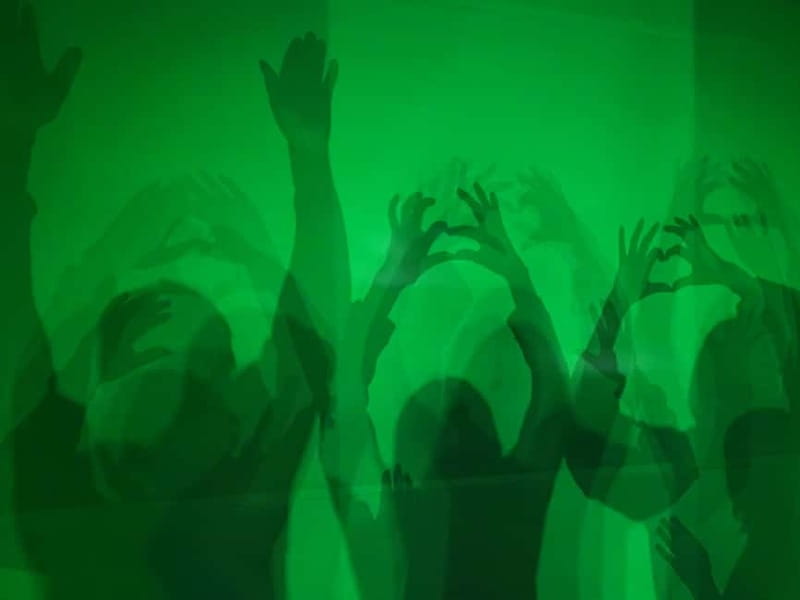
The Paradox Museum Hamburg sits right in the heart of the city on Alter Wall. When you arrive, don’t wander hoping for a ticket check at random—go to the reception to have your ticket validated.
This is one of those small things that makes the whole visit smoother. If you validate quickly, you’re free to start doing what the museum is built for: walking into a room, trying the illusion, then moving on to the next one.
First Rooms: how the museum gets your brain guessing
The museum’s flow is simple: you move room to room through optical illusions and interactive exhibits, and the design nudges you to try things yourself. The rooms are colorful and separated into distinct spaces, which helps you keep track of where you are and what kind of trick you’re doing next.
In the opening areas, your goal is mostly to get past the first few moments of skepticism. Optical illusions work best when you let them run their course—step in, follow the prompt, and see what your instincts claim. It’s not about being “good at” illusions. It’s about paying attention to how quickly your brain can be convinced.
Giant Effects and body-scale illusions that feel weird (in a good way)
One of the classic ways this museum plays with perception is by making you feel like you’re changing scale—like becoming a giant. That kind of illusion works instantly because you can compare your body position to the environment and still feel off-balance.
If you’re visiting with kids, this is the kind of moment that can grab them right away. They don’t need to understand the math to want to try it again. Adults often love it too, especially if you like photo tricks where the result looks different from different angles.
A practical tip: take a couple of shots from slightly different spots. Many illusions look “obviously fake” from one position, then click into place the moment your camera is aligned correctly.
Zero Gravity Room: weightlessness without the lecture
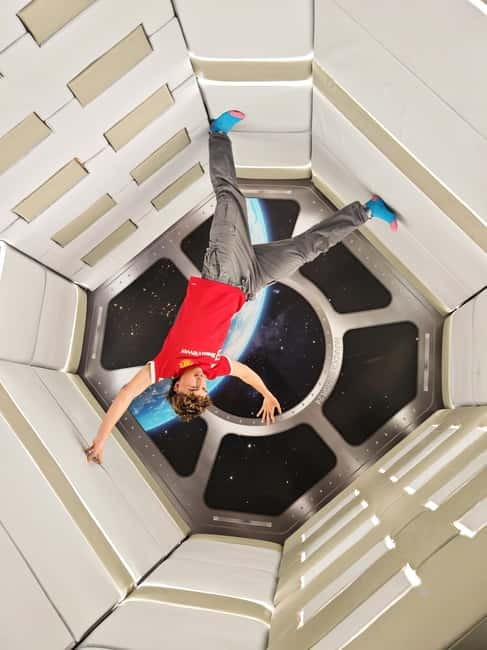
The Zero Gravity Room is one of the headline experiences, built around the feeling of weightlessness. You go from normal standing and walking cues into a scenario where your body thinks gravity should behave one way, then you experience it behaving another.
This is where the museum’s mix of art and science really makes sense. You’re not just watching an idea—you’re testing it with your own movement. You’ll likely get that playful “how is this even possible” feeling in seconds, then spend longer trying to recreate the moment for your photos.
If you’re someone who usually avoids “hands-on” exhibits, this is worth trying anyway. It’s physical enough to feel real, but not technical enough to be overwhelming.
You can also read our reviews of more museum experiences in Hamburg

Mirror Rooms: walking straight gets complicated
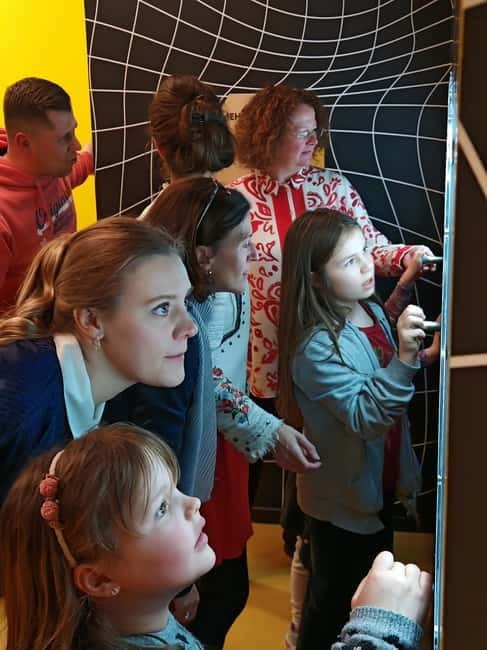
Mirror rooms are where your senses start to argue with each other. The museum uses reflective spaces so that walking forward—or even judging space—can feel wrong. It’s the kind of room that turns into both a challenge and a comedy act, because you’re constantly correcting your steps and trying again.
This is also a fantastic group room. When you walk in with friends or family, you can compare what each person thinks is happening. Some people move carefully as if they’re defusing a puzzle. Others charge in confidently and then recalibrate. Either way, you’re participating, not observing.
A consideration: if you get motion or sensory stress easily, mirror-heavy spaces might feel intense. Take your time and step back when you need a break. It’s not a timed attraction.
Art and Science by Hamburg artists (why it matters)
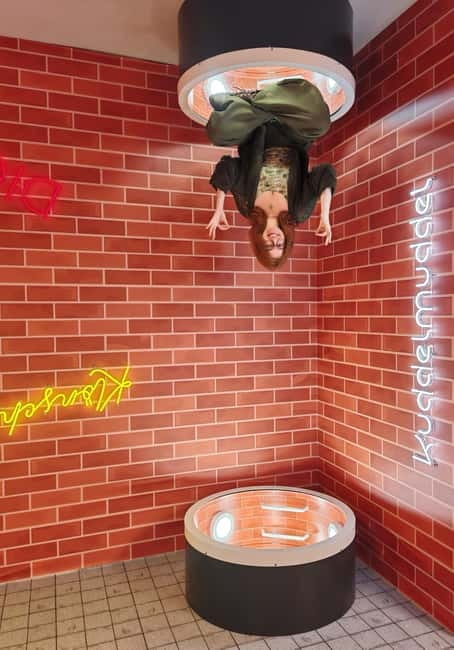
One of the more interesting parts of the museum’s concept is that you’re not only dealing with physics tricks. You’re also seeing works by Hamburg artists that combine art and science. That matters because it keeps the experience from feeling like a carnival of gimmicks.
Instead, you get a stronger sense that the illusions connect to creative thinking. The math and physical phenomena aren’t presented as cold facts. They’re presented as something you can test with your hands, your eyes, and your movement through the rooms.
For art lovers, this angle can turn a quick stop into a more meaningful one. For science-curious visitors, it makes the ideas friendlier, because you’re seeing how creativity shapes how we interpret experiments.
Smartphone-friendly photo moments, with help in the hallways
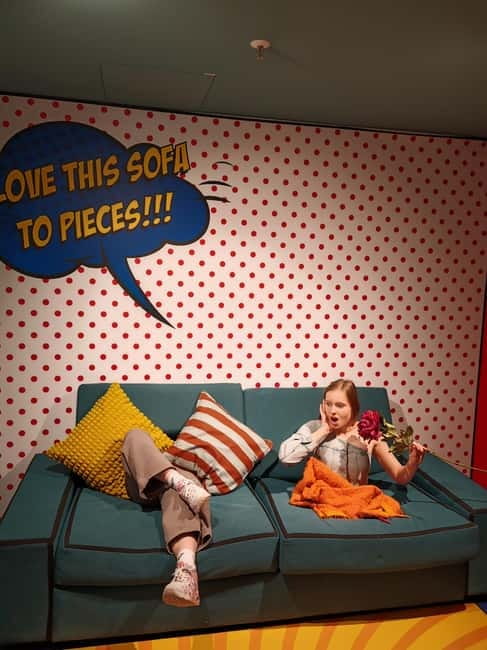
The museum is built for sharing. You can capture experiences with your smartphone right on site, and staff members in the hallways help you find the best photo spots.
That’s a real advantage in a place like this. Optical illusions can depend heavily on camera position and lighting, and getting it “right” usually takes a few tries. Staff pointing you to photo angles can save you time and frustration—especially if you’re traveling with someone who wants to move at a good pace.
What I’d do: after you enter a room, try the activity once, then take a short pause and look around for the most popular standing spots. Then do your best photo pass. It keeps you from spending your whole visit holding your phone out while missing the experience.
How the 60–90 minutes usually feels (and how to pace it)
The museum’s visit window is 60–90 minutes, and that’s a helpful target because the space is large and the exhibits are interactive. With 14 rooms, you’ll want to move with intention: try each room at least once, then return to the ones you can’t stop repeating.
A balanced approach works best. Spend enough time in each room to feel the illusion, but don’t overstay if your energy drops. Some exhibits will catch you more than others, and that’s normal.
If you’re bringing kids, I’d plan for shorter bursts. Interactions take physical effort, and younger visitors can burn out faster when they’re moving between rooms. The museum’s layout makes it easy to flow forward and reset quickly.
Best for families, mixed ages, and curious teens
This is one of those experiences that gets praised for being easy across generations. The strongest signal from recent feedback is that it works for families with very young children and for older kids and adults at the same time. When everyone can participate, you avoid the classic “adult gets bored while kids wait” problem.
The museum also plays well for teens who want something more hands-on than a traditional museum. Optical illusions are instant, and the results are shareable. That combination tends to keep attention where a quiet exhibit might lose it.
If you’re traveling solo, it still works. You can take your own photos in the illusion spaces, and you can replay rooms that give you the most fun results.
What to expect from 2025 special exhibitions and workshops
From 2025, the museum plans to offer changing special exhibitions or workshops. That’s a reason to visit again later, especially if you’re the type who already knows you’ll repeat a few rooms because the first pass goes so fast.
Because the focus is interactive and room-based, changing content likely won’t replace the core illusions. Instead, it should add fresh moments—extra photo opportunities and new hands-on experiments—so your second visit feels new rather than repetitive.
What you should bring for a smooth visit
Bring a charged smartphone and a camera if you like. The museum explicitly expects you to photograph the experience, and your phone batteries can drain faster than you think in a high-photo environment.
Also bring a credit card, because on site only card payments are accepted. That matters if you want to buy souvenirs right after your visit and you don’t want to scramble at the checkout line.
After the rooms: the boutique and souvenir zone
Once you finish the interactive exhibits, you’ll have time for the boutique. You can buy gifts, books, games, T-shirts, umbrellas, and other souvenirs.
This is more than a cash register stop. If the museum got you interested in optical illusions or the science behind them, a book or a game can turn your visit into something you keep playing with later. It’s also a handy way to bring home a memory that isn’t just another photo file.
So…should you book the Paradox Museum Hamburg ticket?
I’d book this if you want a fun, modern museum experience with lots of hands-on moments and quick results. The ticket price makes sense when you think of it as access to many interactive rooms—especially if you’re traveling with kids, teens, or mixed-age groups.
I’d hesitate if you want a quiet, guided, history-heavy museum visit, because this place is about doing and reacting. Also keep in mind that some content is shown in the original language, and if language detail is important to you, plan to lean more on visuals and activities than reading.
If your goal is a high-energy stop in Hamburg that you’ll remember (and share), the Paradox Museum is a strong bet.
FAQ
Where is the Paradox Museum Hamburg located?
It’s in central Hamburg on Alter Wall.
How long does the experience take?
You can plan about 60–90 minutes for the interactive exhibits, with the activity duration listed as 1.5 hours.
How much is the ticket?
The price is $27 per person.
Where do I go when I arrive?
Go to the reception to have your ticket validated.
Is the museum wheelchair accessible?
Yes, the experience is wheelchair accessible.
What should I bring with me?
Bring a camera, a credit card, and a charged smartphone.
Can I pay with cash?
No. Only card payments are accepted on site.