REVIEW · FLORENCE
Florence: Visit the Leonardo Da Vinci Museum
Book on GetYourGuide →Operated by Museo Leonardo Da Vinci Firenze · Bookable on GetYourGuide
One step into the Leonardo Da Vinci Museum and you get it. This is a science-and-invention museum built around hands-on models and big ideas from the original notebooks, not just glass cases. I especially like the scale (800 square meters over three floors) and the fact that it works for kids and adults at the same time.
The one thing to plan around is that the ticket doesn’t include a guided or personalized tour, so if you want someone to point out the best connections to Leonardo’s life, you may want to add that separately.
I also appreciate how practical the visit feels. You’re given access to interactive areas, workshops for children, an interactive music room, restrooms, and Wi‑Fi, so you can build your own path through the museum without feeling lost. One possible drawback to keep in mind: checkroom/luggage storage is not included, so traveling light helps.
In This Review
- Key things to know before you go
- Why this Leonardo museum works for real people (not just fans)
- Price and logistics: the part that can trip you up
- Ground floor: flight, war, interactive labs, and Vasari frescoes
- First floor: Brunelleschi’s dome site, Fiesole flight, and music
- Basement science: anatomy hall, documentary, and another interactive lab
- What you get besides the models: workshops, interactive music, and rest areas
- Museum rules that affect your day (so you aren’t surprised)
- Is this worth it for your travel style?
- Should you book the Leonardo da Vinci Museum in Florence?
- FAQ
- How long is the Florence Leonardo Da Vinci Museum visit?
- How big is the museum and how many floors does it have?
- How many models are on display?
- What is included in the ticket price?
- Is a guided or personalized tour included?
- Do I need to show my reservation before entering?
- Is luggage storage/checkroom included?
Key things to know before you go
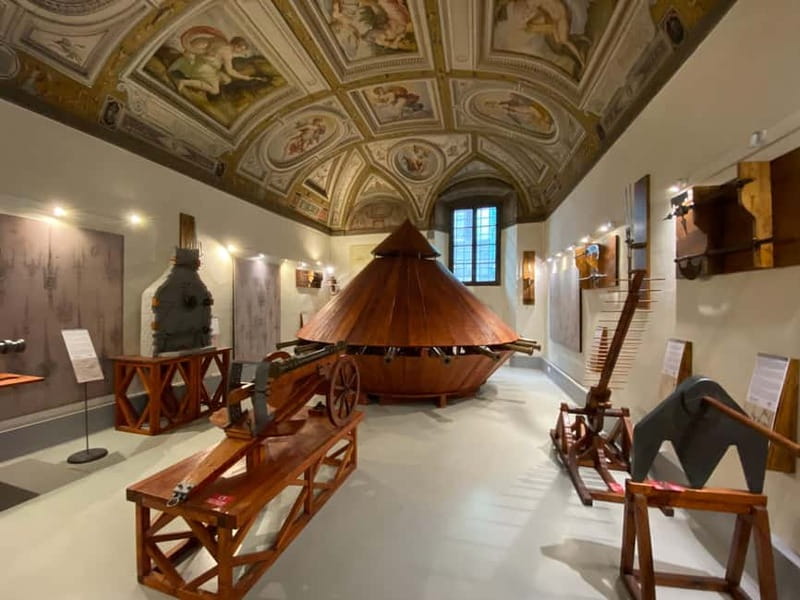
- Europe’s largest Leonardo da Vinci collection: the museum is promoted as having the biggest collection in Europe.
- 120+ models across 3 floors: the layout is big enough to feel like a full visit, not a quick stop.
- 50 interactive public models: plenty of chances to touch, test, and experiment.
- Hands-on for ages 3–99: the museum is designed to match different energy levels.
- Workshops and interactive music room: not everything is gears—some parts are sound, movement, and play.
- Original frescoes from Vasari’s school: there’s an art connection, even in a science museum.
Why this Leonardo museum works for real people (not just fans)
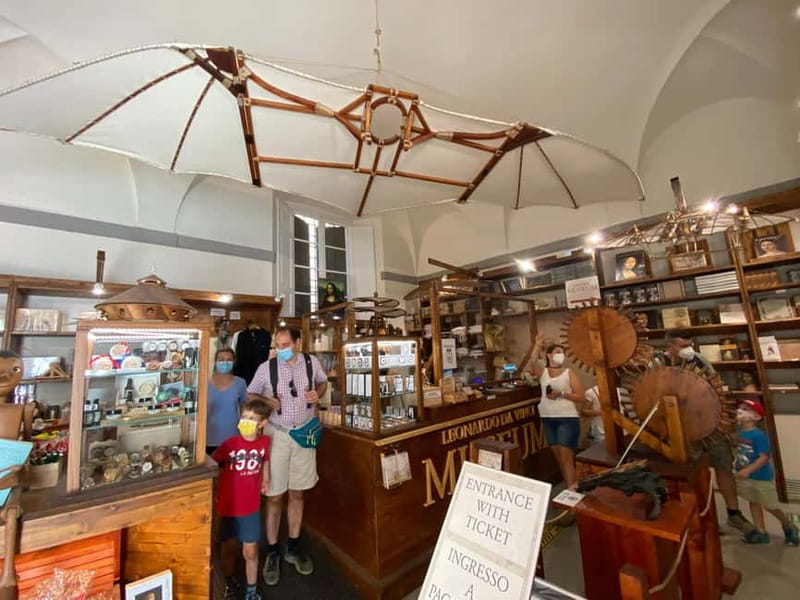
If you like Florence because it’s art, you might think a Leonardo museum would be “bonus content.” Here’s the twist: the museum treats invention like a living language. Models aren’t just displayed; they’re built to show how Leonardo was thinking—through motion, structure, and cause-and-effect.
I love that the museum is hands-on without turning into a theme park. You can spend time comparing designs, replaying how mechanisms are supposed to work, and using the interactive models to test your own understanding.
And if you’re traveling with kids or mixed ages, you’ll like the flexibility. The museum is suitable from 3 to 99, plus there are creative workshops for children and interactive stations that adults don’t feel talked down to.
The best value angle is also simple: the ticket price covers a lot of built-in activities, including fifty interactive models for the public, restrooms, Wi‑Fi, and the documentary area. At $11 per person, that’s a lot of “museum time” for the money.
You can also read our reviews of more museum experiences in Florence
Price and logistics: the part that can trip you up
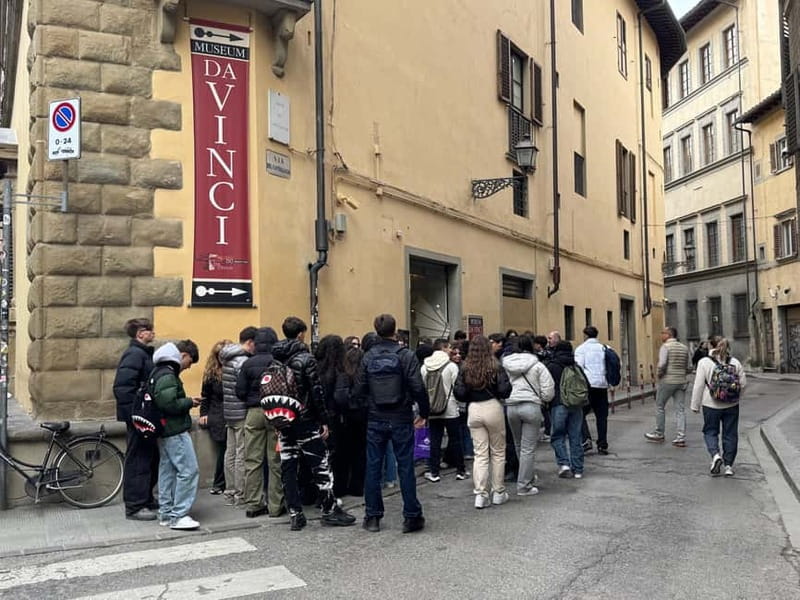
At $11 per person for a one-day visit, the museum is priced to be accessible. What you’re really paying for is space: an 800-square-meter exhibition spread across three levels, plus multiple interactive zones.
A few practical points matter more than you’d expect:
- Show your reservation at the ticket office before entering.
- The guided and personalized tour is not included in the ticket cost, so plan on exploring on your own unless you add guidance.
- Luggage storage (checkroom) is excluded. If you’re arriving with bags, keep that in mind so you don’t end up carrying heavy stuff through the whole visit.
There’s also a straightforward language setup. Hosts/greeters are listed in English, French, Spanish, and Italian, and some content may be shown in its original language—so it’s helpful to keep your expectations flexible and treat the interactive models as the main language anyway.
Ground floor: flight, war, interactive labs, and Vasari frescoes
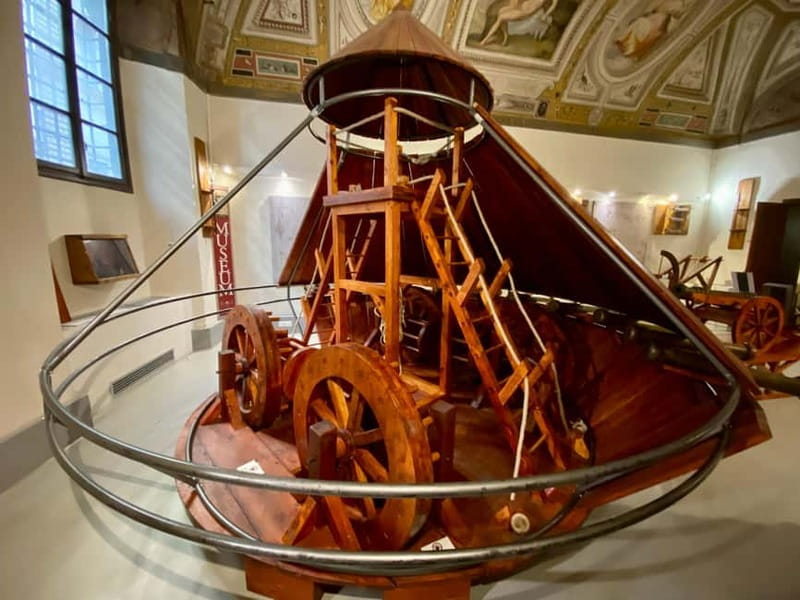
The ground floor is where the museum starts feeling fast and physical—engines, movements, and invention themes you can pick up right away.
Here’s what you’ll find:
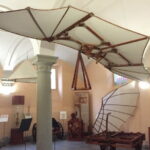
- Hall of Flight: a natural entry point if you like motion and mechanics.
- Interactive Laboratory: this is one of the areas designed for public interaction, so it’s a good place to begin when you still have the most energy.
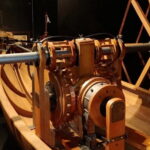
- Hall of War: yes, it’s in the museum, and it changes the tone. Expect invention themes applied to conflict and military engineering rather than a polished, modern “wow” display.
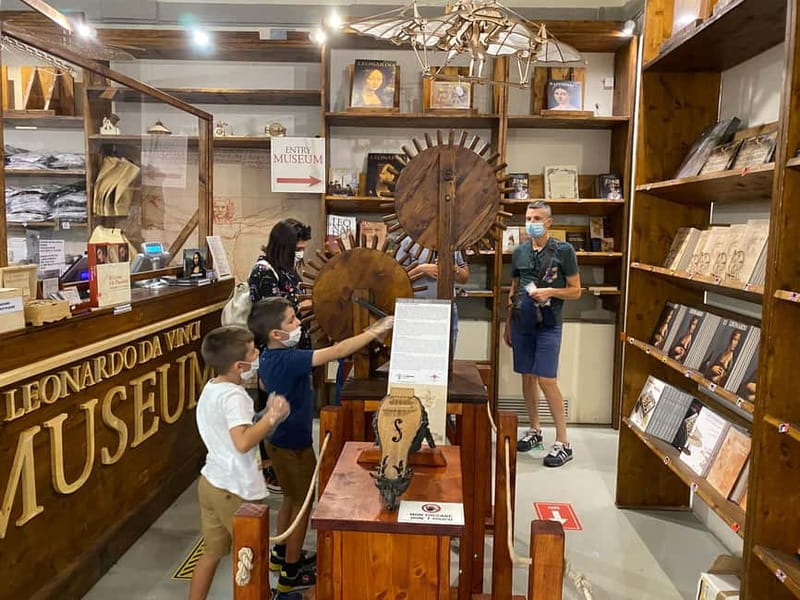
- Bookshop: handy if you want to take something home that ties the models together.
- Original frescoes from Vasari’s school: this is the art hook. Even if you’re there for science, it’s a reminder that Renaissance creativity worked across mediums.
A small drawback on the ground floor is that it’s easy to get pulled in different directions. If you’re short on time, pick one anchor area (Flight or the Interactive Laboratory) and then loop back instead of trying to do everything in a straight line.
First floor: Brunelleschi’s dome site, Fiesole flight, and music
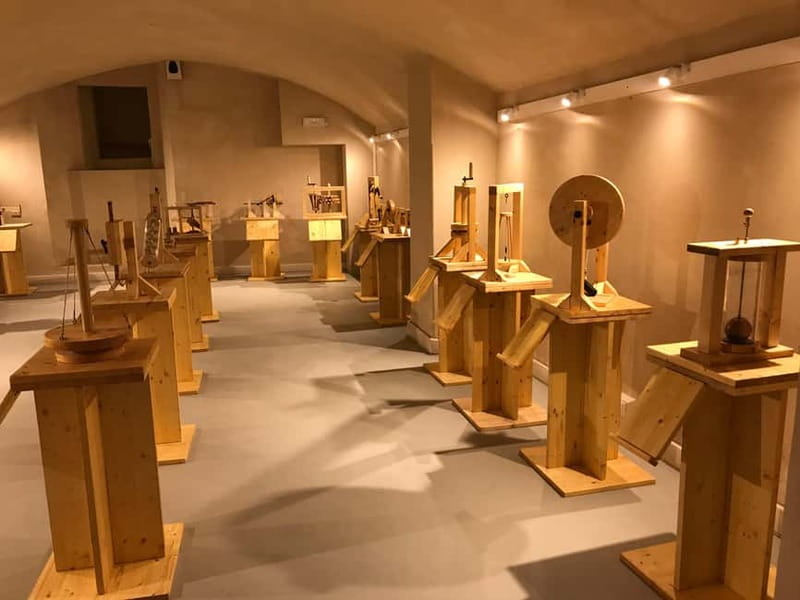
The first floor feels like the museum shifting from “look at mechanisms” to “understand design thinking.” It’s still interactive-friendly, but the themes lean more toward architecture, space, and expression.
Key rooms on this level include:
- Brunelleschi Hall: tied to the dome-building site idea. If you’re familiar with Florence’s architectural story, this room adds extra context to why engineering and art were so close at the time.
- Fiesole Flight Hall: another flight-themed space, but with a different angle than the ground-floor entry point.
- Music Hall: this is a welcome curveball. The inclusion of an interactive music room elsewhere also signals the museum’s goal: invention isn’t only about tools—it’s about translating ideas into systems you can sense.
If you like your learning to come with variety, this floor is where you’ll feel it. You can spend time in the architectural connection and then shift gears to something more playful in Music.
Basement science: anatomy hall, documentary, and another interactive lab
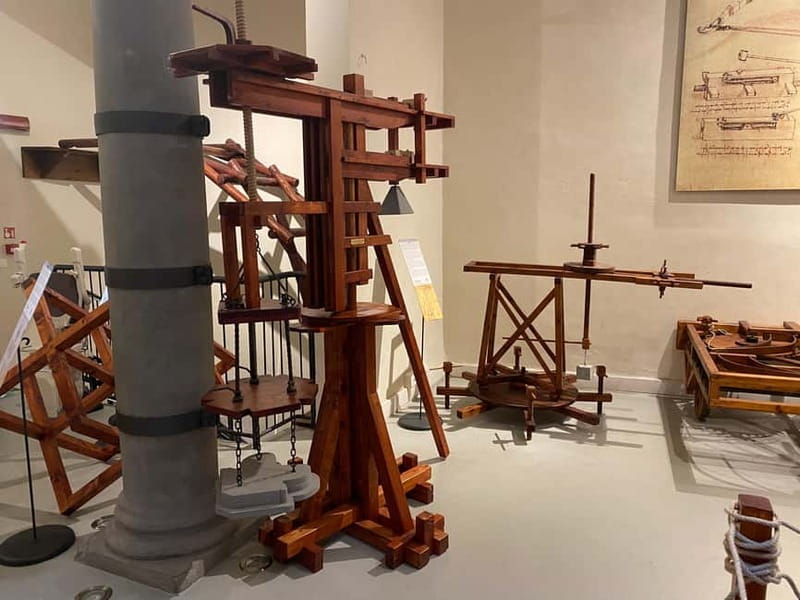
The basement floor is where the museum slows down, at least compared to the upper levels. It’s built around biology, understanding the human body, and using documentary content to give invention a wider meaning.
On this level you’ll find:
- Interactive Hall: more hands-on time, so you can keep your momentum going.
- Anatomy Hall: focused on the body and how people tried to understand it.
- Documentary on Leonardo da Vinci’s life: a structured way to connect the models back to the person behind them.
- Interactive Laboratory: again, not just one lab. This helps if you want repetition, or if you skipped interactive areas upstairs.
The documentary and anatomy focus are especially helpful if you’re traveling with someone who likes context more than play. It gives you a break from hands-on experimenting and a way to “reset” your thinking before you head back to the model spaces.



What you get besides the models: workshops, interactive music, and rest areas
This is where the ticket value becomes clear. It’s not only about looking at inventions; it’s also about experiences built into the price.
Included with your admission:
- Fifty interactive models for the public
- Restrooms and Wi‑Fi connection
- Interactive and creative workshops for children
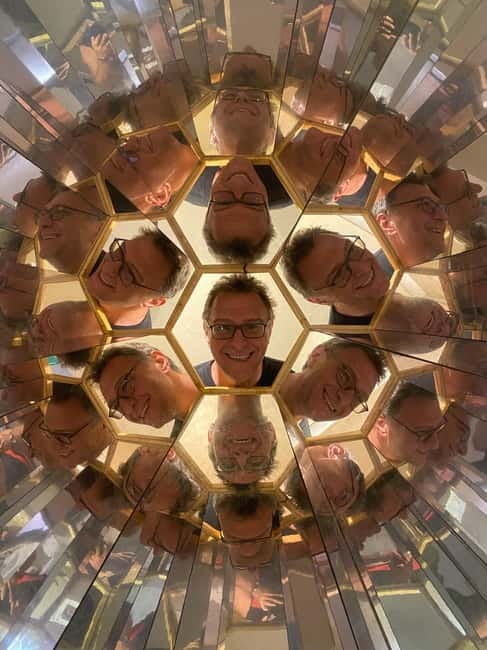
- Interactive music room
- Documentary on Leonardo da Vinci’s life
That matters because museums can be draining if you’re stuck in a one-speed loop: walk, read a label, move on. Here, you’re offered more ways to participate—touching, experimenting, and listening—so your visit doesn’t rely entirely on how quickly you read.
Also, the presence of workshops is a big practical advantage. If you’re visiting with young children, those creative sessions can help keep the trip from becoming a “parent marathon.”
Museum rules that affect your day (so you aren’t surprised)
To keep the experience smooth, the museum lists clear restrictions. You’ll want to plan around these before you arrive—especially with kids.
Not allowed:
- Food and drinks (so plan meals around your visit)
- Weapons or sharp objects
- Non-folding strollers
- Smoking indoors
- Certain items like bikes, handcarts, plastic bottles, and unaccompanied minors
- Bare feet
- Intoxication and alcohol or drugs
For many visitors, the big practical one is food and drinks. The museum is designed for interaction, so bringing snacks might not be the right move unless there’s a designated place for it (not stated here). Plan a snack stop outside, then return ready to explore.
Is this worth it for your travel style?
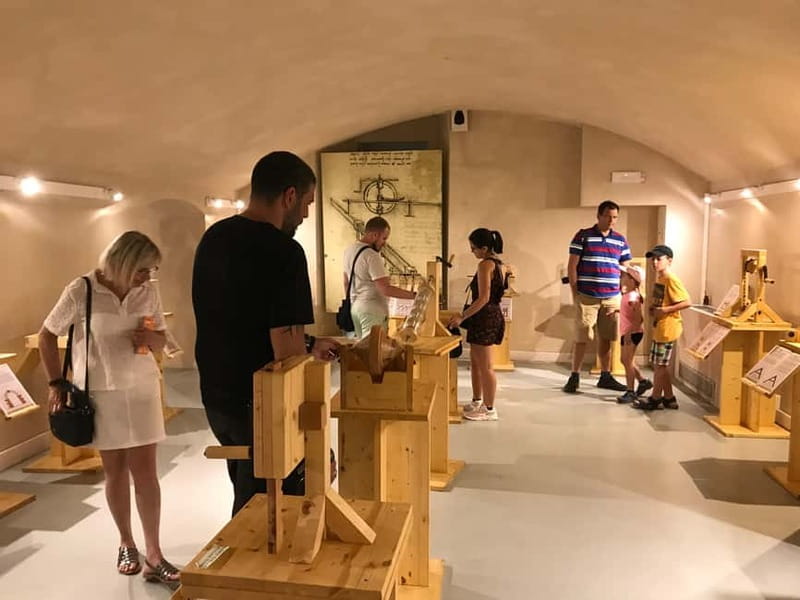
This museum fits best if you want more than a quick Florence photo stop. With a one-day visit and three floors of exhibits, it’s a good option for:
- Families who want a museum that doesn’t hinge on long reading
- Science-and-tech lovers who like mechanics and real models
- Mixed-age groups where adults and kids can each find something engaging
- Travelers who want an easy addition to a Florence itinerary without committing to a full-day outdoor plan
If you’re the kind of traveler who only enjoys large-scale art galleries, you might want to treat this as a companion experience. There are original frescoes from Vasari’s school, but the core focus is Leonardo and invention.
Should you book the Leonardo da Vinci Museum in Florence?
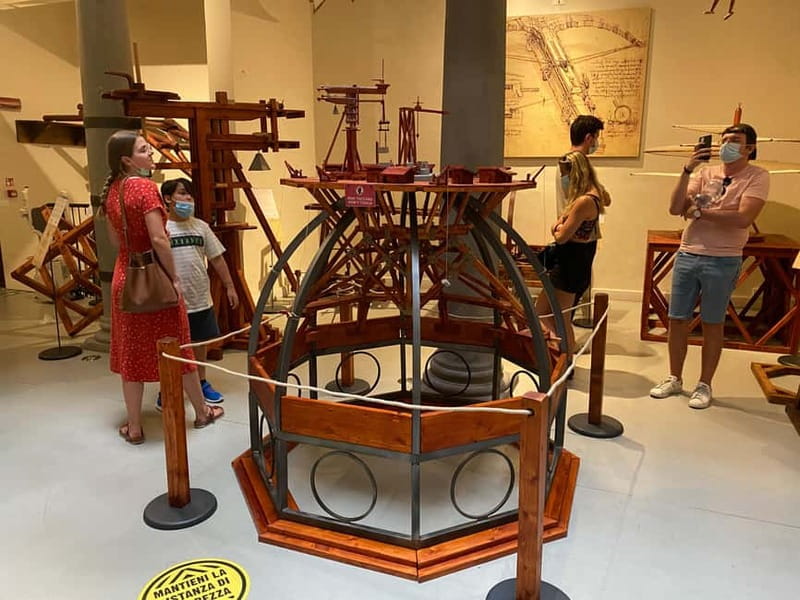
Yes—if you like hands-on learning and want a value-packed museum day. For $11, you’re getting 50 interactive models, workshops (for children), a documentary, and enough space—800 square meters over three floors—to make the visit feel substantial.
The only time I’d hesitate is if you specifically want a guided narrative. Since the ticket excludes guided and personalized tours, you’ll be relying on your own exploration unless you add that service. Also consider travel convenience: because luggage storage isn’t included, traveling light keeps the experience smoother.
If you’re in Florence and you want a museum that mixes invention, art connections, and real interaction, this is a strong pick.
FAQ
How long is the Florence Leonardo Da Vinci Museum visit?
The experience is valid for 1 day.
How big is the museum and how many floors does it have?
The museum is 800 square meters and the exhibitions are spread over three floors.
How many models are on display?
There are more than 120 models, including fifty interactive models for the public.
What is included in the ticket price?
Included amenities and activities are restrooms, Wi‑Fi, fifty interactive models, interactive and creative workshops, an interactive music room, and a documentary on Leonardo da Vinci’s life.
Is a guided or personalized tour included?
No. A guided and personalized tour is excluded from the ticket cost.
Do I need to show my reservation before entering?
Yes. You are advised to show your reservation at the ticket office before visiting.
Is luggage storage/checkroom included?
No. Luggage storage services are excluded from the ticket.