REVIEW · CAIRO
Giza pyramids, Sphinx, and the big museumum
Book on Viator →Operated by Lovely Egypt Tours · Bookable on Viator
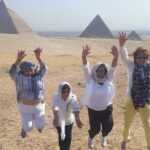
One stone-age idea still hits hard: the pyramids. This tour strings together Giza landmarks with the Bent and Red pyramids, then finishes with a big museum full of ancient artifacts. I love how the guide turns the geometry into something you can actually picture, and I love the chance to step inside colder tomb spaces instead of only staring from outside.
The day runs about 8 hours and moves at a steady clip, so it’s not for people who want zero pressure. One drawback to plan for: entrance fees are not included, and some stops may be ticketed separately depending on what you choose to go in.
In This Review
- Key things to know before you go
- What $40 gets you for an 8-hour Cairo classic
- Cheops and the Sphinx: where the scale becomes real
- Saqqara’s Step Pyramid: Djoser, Imhotep, and the quest for the perfect angle
- Bent and Red pyramids: the tomb interiors you’ll feel in your bones
- The big museum: coffins, gold, masks, and why it matters
- Getting through the day well: heat, pace, and photo strategy
- Tickets and tips: where costs can creep in
- Should you book this Giza pyramids + museum day?
- FAQ
- What time does the tour start?
- How long is the experience?
- Is hotel pickup and drop-off included?
- What is the price per person?
- Are entrance fees included?
- Do I need to tip on this tour?
- Is this tour private or shared?
- Is bottled water provided?
- Can I travel with a service animal?
- How far in advance is it usually booked?
- FAQ
- Is it worth booking if I only have one day?
- Is there free cancellation?
- Does the tour include group discounts?
- Can most travelers participate?
- What about confirmation after booking?
Key things to know before you go
- A tight timeline that still hits the big names: Giza pyramids and Sphinx, plus Saqqara step pyramid, then Bent and Red pyramids.
- A guide who connects shape, power, and meaning: the tour explanation links pyramid form to creation themes and royal tomb development.
- Inside views where allowed: you’ll get time for interior access at the pyramids when the tour includes it, and you’ll want layers if you go inside.
- Photo moments are built into the route: the Sphinx area and pyramid viewpoints are scheduled so you can actually stop and shoot.
- The museum is part of the payoff: coffins, jewelry, gold, masks, and multiple gods show how Egyptians thought about life and afterlife.
What $40 gets you for an 8-hour Cairo classic
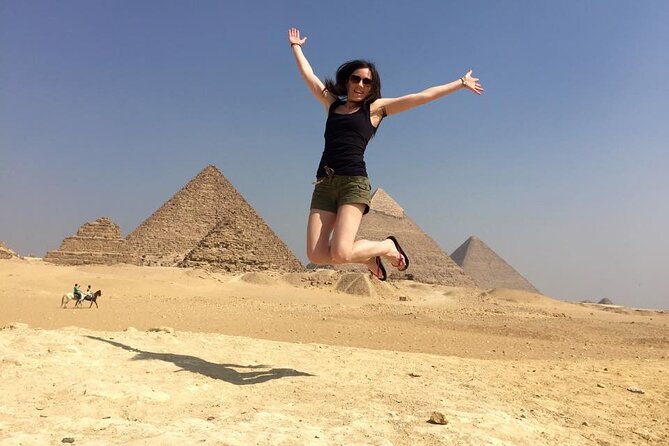
At $40 per person, this is a value play if you want a one-day sweep of major sites without juggling taxis and tickets on your own. You get hotel pickup and drop-off, private transportation, bottled water, and a tour guide, which makes the day feel organized even when Cairo traffic tries to freestyle.
The schedule is built around efficiency: you start early at 8:00 am, then work through multiple monument zones. The tour also notes group discounts, which can make the price even more attractive if you’re traveling with others.
What I like for practical travelers: the itinerary is designed so you’re not just collecting checkmarks. The explanations about royal tomb development and why each pyramid looked different are timed right alongside the sites, so the story sticks.
You can also read our reviews of more tours and experiences in Cairo.


Cheops and the Sphinx: where the scale becomes real
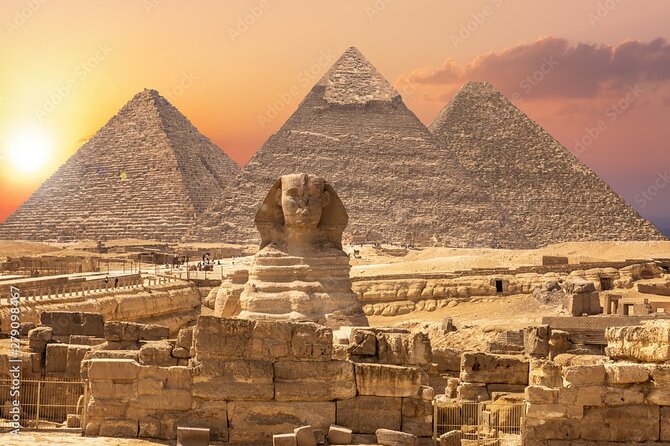
Your day begins in the Giza Governorate, with time at the pyramid associated with Cheops. The tour frames it as the big leap forward in pyramid design, and it emphasizes the idea that the pyramid shape helped protect the mummy forever. You also get the striking detail that it’s associated with around one million stones and massive stone-moving effort, including the challenge of bringing stones from the Nile region to Giza.
Even if you’ve seen pyramid photos before, being there in person changes the math. The real wow-factor is how the entire pyramid reads as one object from almost any angle, and how the guide’s scale talk helps you stop thinking of it as a building and start thinking of it as a machine for belief.
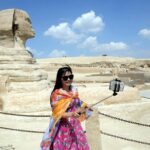
Then you move to the Great Sphinx, described as one stone cut by hand: a human face of the king of the time paired with a lion body. You’ll also hear the story about sand covering the Sphinx and damage like the broken nose and missing parts of the beard area, which helps explain why it looks the way it does today. If you care about photos, this stop is gold because the Sphinx sits in a landmark position and you’ll have time to look, reposition, and shoot without sprinting like a movie extra.
The tour also includes the nearby Sun Temple concept tied to the sun and the idea of renewal. Even if that part feels religious or symbolic to you, it matters because it’s what gives the site context. You’re not just viewing a face in sand—you’re seeing how the Egyptians made the pyramid landscape part of a bigger cosmic system.
Saqqara’s Step Pyramid: Djoser, Imhotep, and the quest for the perfect angle
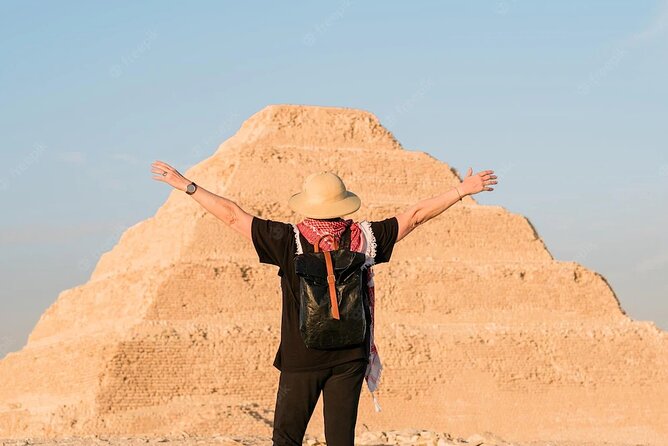
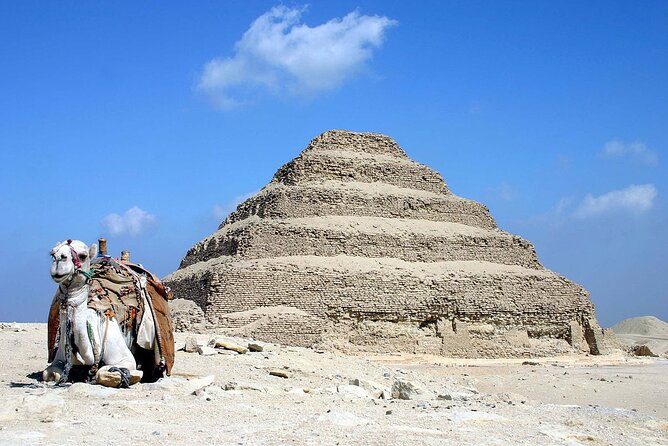
Next comes the Pyramid of Djoser’s complex, tied to the earliest major step-style pyramid approach. The tour highlights Zoser and the connection to Imhotep, and it focuses on the push toward a “perfect” pyramid form. You’ll hear the logic that the step design didn’t achieve the energy and stability Egyptians associated with the classic pyramid shape, so later rulers pursued smoother angles.
The step pyramid is fascinating because it shows a design trial period, not a final product. Standing there, you can see how later pyramid builders could take what worked, adjust what didn’t, and aim for stronger geometry. It’s also a good mental reset between the Giza giants and the tomb complexes you’ll visit next—your brain gets a breather while still learning.
A practical note: this stop is scheduled for around 2 hours, but the pace depends on how many people you’re sharing the day with and how long you linger on viewpoints. If you get restless in ruins, you may want to keep one goal in mind at this stop: pick a single vantage point and watch how the structure changes as you walk.
Bent and Red pyramids: the tomb interiors you’ll feel in your bones
The route then turns toward the Bent Pyramid and Red Pyramid, both tied to Snefru (father of Keops in the tour’s framing). The Bent Pyramid is presented as a transition—starting with one angle and changing it partway through—which helps you understand the trial-and-error behind the final pyramid formula.
You’ll also have a chance to see the tomb area described as empty inside at the Bent Pyramid stop. Even with minimal “plot,” it’s powerful to be in a space meant for eternal protection, with the knowledge that the Egyptians believed the pyramid shape helped sustain the mummy forever. The guide’s explanation is what makes this stop more than a quick look.
Then comes the Red Pyramid, described as the first pyramid built for Snefru with an angle presented as perfect. The tour specifically points out that it’s cold inside, and that interior access is part of the experience. If you plan to go in, treat it like a real temperature change: you’ll thank yourself for bringing a light layer, even if the outside sun feels intense.
One more detail I find useful: the Bent and Red pyramids are less “crowd-celebrity” than the main Giza pyramid viewpoint, so your photos can come out less cluttered. You still get the dramatic edges and the lesson in design evolution, but it feels a bit more like discovery than performance.
The big museum: coffins, gold, masks, and why it matters
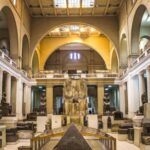
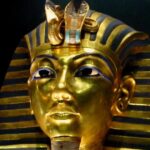
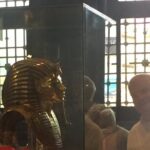
The tour’s final big component is the big museum—the part that ties the pyramid talk to real objects. The description for this stop is heavy on afterlife material: coffins, jewels, gold, statues, masks, and many different gods, plus “old pieces” that bring the story down from monuments to everyday sacred objects.
This is the stop that helps you connect the meaning of the pyramids to what Egyptians actually preserved. If you’ve ever left the Giza plateau thinking, Great, so what, the museum is where you get answers. You start to see how belief systems show up in real craftsmanship: burial items, protective symbols, and the way names and roles mattered in death.
If you have limited time in Cairo, this museum portion is a smart add-on because it expands the day beyond stone geometry. It gives you texture: materials, shapes, and iconography you can study longer than you can study a distant pyramid face.




Getting through the day well: heat, pace, and photo strategy
This tour runs roughly 8 hours, with multiple monument zones and a mix of outside viewing plus interior access at some pyramids. You’ll want to plan like it’s a stamina day, not a casual stroll.
Here’s how to make it easier:
- Wear non-slip shoes for uneven stone and dusty surfaces.
- Use water early, not only when you’re thirsty. Bottled water is included, but you’ll burn through it fast.
- Bring a light layer if you’re going inside the Red Pyramid tomb area, since the tour notes it’s cold inside.
- Pre-decide your photo priorities. The Sphinx and pyramid viewpoints are your high-impact shots; the tomb interiors are your “close-up memory.”
If you care about your pictures, ask your guide about the best times to reposition during the Sphinx stop. In the past, a guide named Morsi has been praised for getting people lined up for photos while still keeping the explanations clear. Even if you don’t have the same guide, that general skill matters.
Tickets and tips: where costs can creep in
The headline price is $40 per person, and what makes it work is that transport and guiding are included. But the tour clearly lists entrance fees and tipping are not included, so you should budget extra for whatever sites and interior areas are ticketed on the day.
Some parts of the route mention free admission in the schedule, like Giza Governorate and the Pyramid of Djoser Road time blocks, but you shouldn’t assume every stop is fully covered. If you want interiors at the pyramids, plan on additional charges and keep some cash for tipping the guide and driver.
Bottom line: treat $40 as the organized logistics fee. Your total day cost depends on the entrances you choose and what the monuments require on the day.
Should you book this Giza pyramids + museum day?
If you want a single day that links Giza pyramids, the Sphinx, Saqqara’s step pyramid, and both Bent and Red pyramids, this tour fits the bill. It’s also a strong choice if you like guided storytelling tied directly to what you’re seeing—this isn’t random driving between sites.
I’d skip it if you’re the type who needs a very relaxed pace, long unanswered wandering, or lots of downtime. The day is structured, and the value comes from seeing a lot. If you’re okay with that trade-off, you’ll likely come away with clear mental links between pyramid design, royal tomb evolution, and the afterlife objects shown in the museum.
FAQ
What time does the tour start?
The tour start time is 8:00 am.
How long is the experience?
Plan for about 8 hours.
Is hotel pickup and drop-off included?
Yes. Hotel pickup and drop-off are included, along with private transportation and bottled water.
What is the price per person?
The listed price is $40.00 per person.
Are entrance fees included?
No. Entrance fees and tipping are not included.
Do I need to tip on this tour?
Tipping is not included, so you should plan to tip your guide and driver as you feel appropriate.
Is this tour private or shared?
This is set up as a private tour/activity, meaning only your group participates.
Is bottled water provided?
Yes. Bottled water is included.
Can I travel with a service animal?
Yes. Service animals are allowed.
How far in advance is it usually booked?
It’s commonly booked about 40 days in advance on average, so earlier planning can help.
FAQ
Is it worth booking if I only have one day?
If your goal is to see Giza plus the step, Bent, and Red pyramids and also visit a museum, one day is exactly what this tour is built for.
Is there free cancellation?
Yes. You can cancel for a full refund if you cancel at least 24 hours before the experience’s start time.
Does the tour include group discounts?
Yes, the tour notes group discounts.
Can most travelers participate?
The tour says most travelers can participate.
What about confirmation after booking?
Confirmation is received at the time of booking.
If you want, tell me your travel month and whether you care more about pyramid interiors or museum time, and I’ll help you decide if this schedule matches your style.