REVIEW · BARD ITALY
Bard: Fortress Exhibitions and Museums Entrance
Book on GetYourGuide →Operated by Forte di Bard · Bookable on GetYourGuide
The fort at Bard changes your pace. One minute you’re at valley level, the next you’re touring museums inside a real 19th-century military stronghold. I especially like the Museum of the Alps for the way it sets the region in context, and I love the panoramic lifts because they make the climb (and photos) feel easy.
My only heads-up: depending on how you booked, you may need to queue to exchange your voucher for a paper ticket at the entrance. The visit itself is first-rate, but I’d still plan to arrive with a little buffer so your day starts smoothly.
In This Review
- Key things that make Forte di Bard worth your time
- Forte di Bard: a fortress museum day that makes sense
- Getting up inside the fort: lifts, walkways, and photo strategy
- Museum of the Alps: context first, then the story gets sharper
- Museum of Fortifications and Frontiers: read the walls like a map
- The Prisons: when the tone turns heavy
- Chapel, parade grounds, courtyards, and walkways: the architecture part of the show
- Temporary exhibitions and the audio guide that keeps you moving
- Price and value: what $28 buys you at Forte di Bard
- Booking realities: voucher exchange and avoiding entrance-day friction
- Who should visit Forte di Bard (and who might not)
- Should you book Forte di Bard? My decision guide
- FAQ
- FAQ
- What’s included with the Fortress of Bard entrance ticket?
- Do I need a live guided tour?
- How does the audio guide work?
- Where do I exchange my voucher?
- Can I use the panoramic lifts at the fortress?
- Is Forte di Bard wheelchair accessible?
- What’s the cancellation policy?
Key things that make Forte di Bard worth your time
- Three museums under one roof: the Alps, fortifications and frontiers, and the prisons
- Panoramic lifts plus walking routes for photos from the bottom to the top
- Audio guide via Museon app (QR code provided at the ticket office)
- Temporary exhibitions included during your visit window
- Fortress spaces beyond museums: chapel, parade grounds, courtyards, and walkways
Forte di Bard: a fortress museum day that makes sense
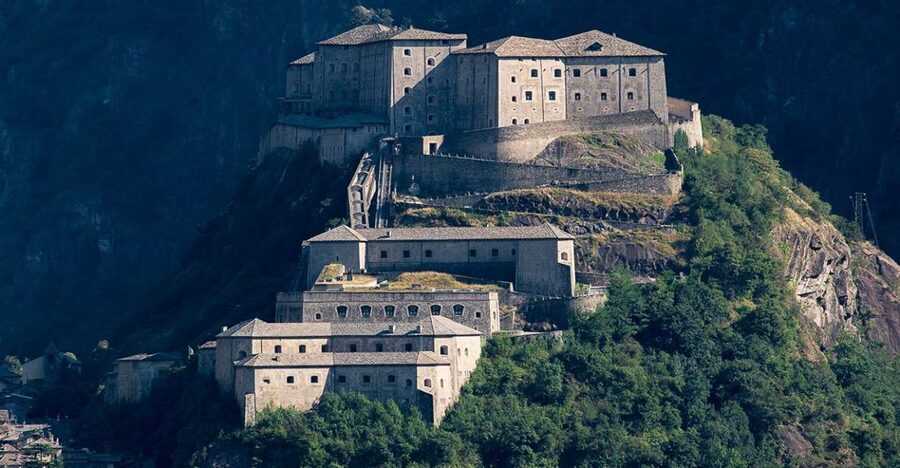
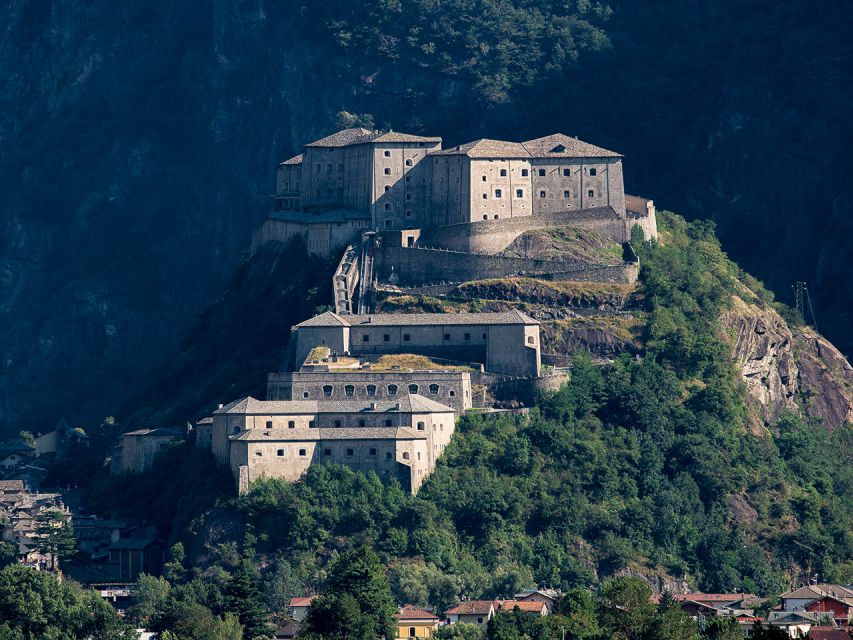
Forte di Bard is built on a rocky rise at the entrance to the Aosta Valley, and the structure is so imposing that you feel it even before you get inside. The place has shifted from military purpose to cultural center, so you’re not just looking at stone walls—you’re walking through rooms that tell stories through exhibitions, design, and interpretive tech.
What I like is the flow. You can spend the day moving from one themed space to the next, without the usual “stand in line then rush out” feeling. The museums are the anchor, but the fortress architecture does real work too: it frames what you’re seeing and makes the themes land with more weight.
You’re also not locked into a fixed tour with a live guide. The experience is built around an audio guide and self-paced exploration, which is great if you want to pause for photos, slow down in the prisons, or just linger where an exhibition clicks for you.
You can also read our reviews of more museum experiences in Bard Italy
Getting up inside the fort: lifts, walkways, and photo strategy
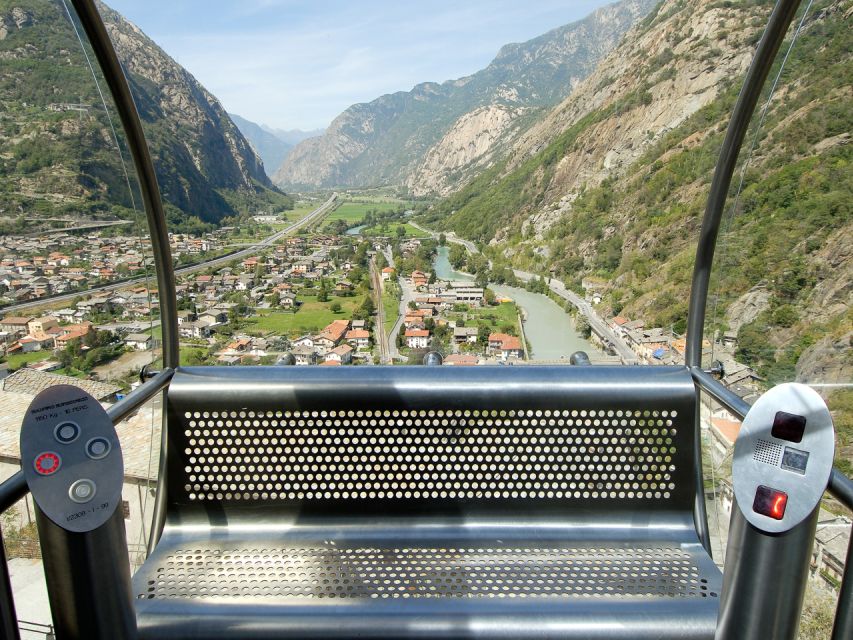
You’ll have two ways to reach the fortress areas: a scenic walk or using the three panoramic lifts. If you’re short on time or traveling with anyone who prefers less climbing, use the lifts. If you want the full “arrive by road, then see it rise” experience, do the walk—just expect it to eat up energy.
Photo-wise, this is the kind of site where the angles change every few minutes. The fort’s position gives you chances to shoot the valley from lower levels, then get tighter views as you move higher. I’d plan to take pictures twice: once while you’re heading in, and again after you’ve seen the main museum spaces. That second round helps you photograph with context, not just for scenery.
One more practical detail: you’ll exchange your voucher for an entry setup at the ticket counters. There are two ticket counterpoints—one at the start of the first panoramic lift, and the other at the top of the medieval village behind the Church of Bard. If you don’t want to waste time figuring it out mid-arrival, pick one counter and stick with it.
Museum of the Alps: context first, then the story gets sharper
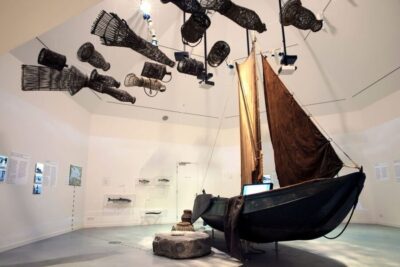
The Museum of the Alps is the best starting point because it gives you the geography and human connection before the fortifications take over. Instead of jumping straight into military architecture, you start with the region itself—what the Alps mean here and why this valley mattered.
I like this order. The fortress feels less random once you understand the setting. It also helps you connect later exhibits about defense and frontiers to the real-world terrain they were built around. When you view the fortifications next, you’ll notice more of the “why” behind the structure, not just the “what.”
The museum displays are set up for self-paced walking. If you’re the type who reads labels cover to cover, you’ll probably want to spend extra time here. If you skim and move, you can still get a good overview without feeling like you missed the point.
Museum of Fortifications and Frontiers: read the walls like a map
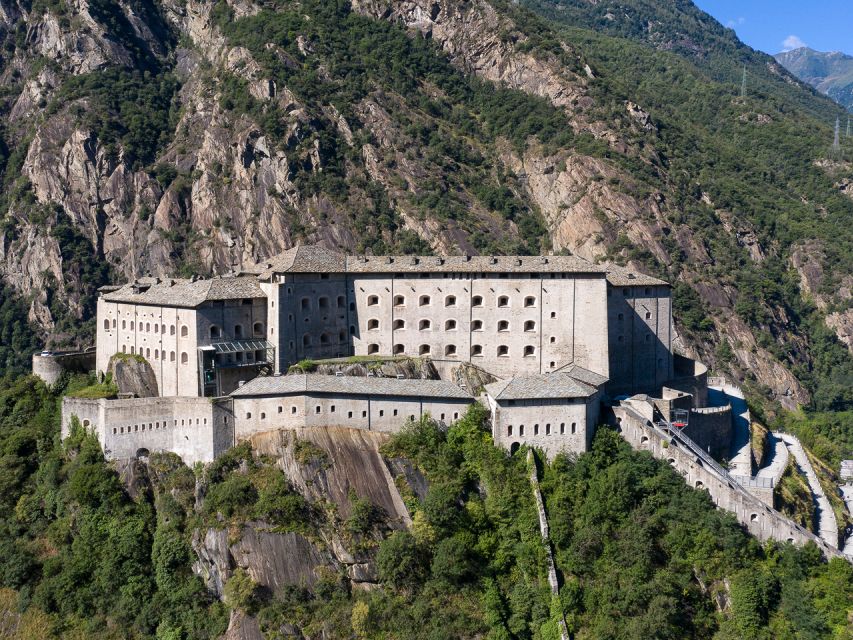
This is where Forte di Bard starts feeling less like an attraction and more like a lesson in how borders were managed. The Museum of Fortifications and Frontiers focuses on the military logic behind the site—how the fort functioned and how it related to the wider idea of protection and control.
Even if you’re not a military buff, you’ll probably appreciate the museum’s structure: it pushes you to look at the fortress as a system. The building isn’t just background. It becomes part of the interpretation, so you’re constantly linking what you see indoors to what you can still imagine outside on the rock.
One of the stronger points in this area is the use of multimedia in the exhibitions. Some displays include video projections, and that can make the historical themes feel more immediate. I’d count on a few moments where you pause without meaning to—because the presentation tends to steer your attention.
The Prisons: when the tone turns heavy

The prisons are often the emotional center of a fortress experience, and Forte di Bard doesn’t shy away from that. The exhibition area is designed to move from the big-picture military story into something more personal and difficult—the human reality of confinement.
In the best displays, you walk out feeling affected, not just informed. One review summed up the effect as emotionally moving, and I can see why: the subject matter is uncomfortable, and the fortress setting makes it harder to treat as abstract history.
Practical tip: keep your pace slow here. If you rush through the prisons just to check boxes, you’ll miss the point of the space. Give yourself time to read and reflect, even if it’s only 10–15 minutes extra. If you’re visiting with kids, plan breaks. The site is family-friendly, but you may notice some parents letting children run around in exhibition areas. Staff are described as very polite and helpful, but that doesn’t fix the vibe if you’re trying to focus.
Chapel, parade grounds, courtyards, and walkways: the architecture part of the show
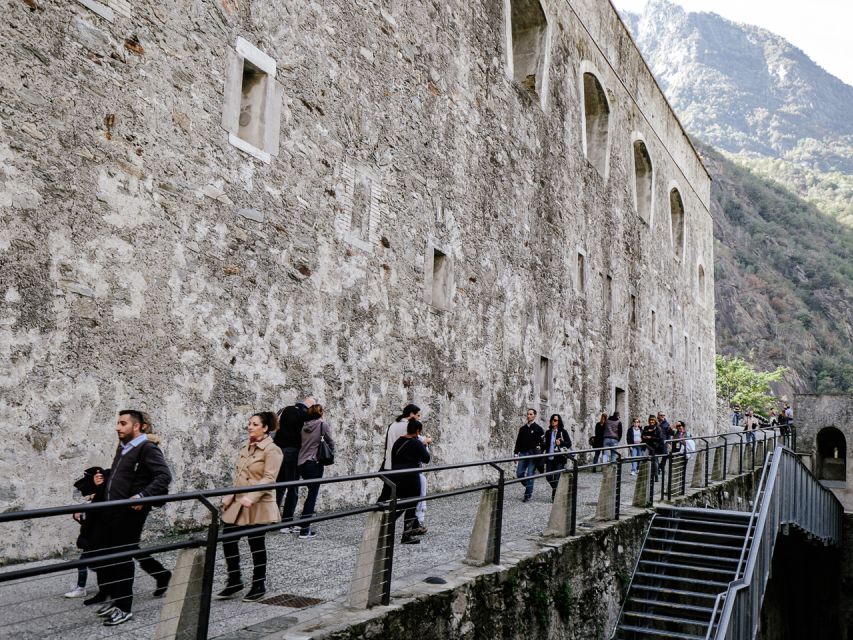
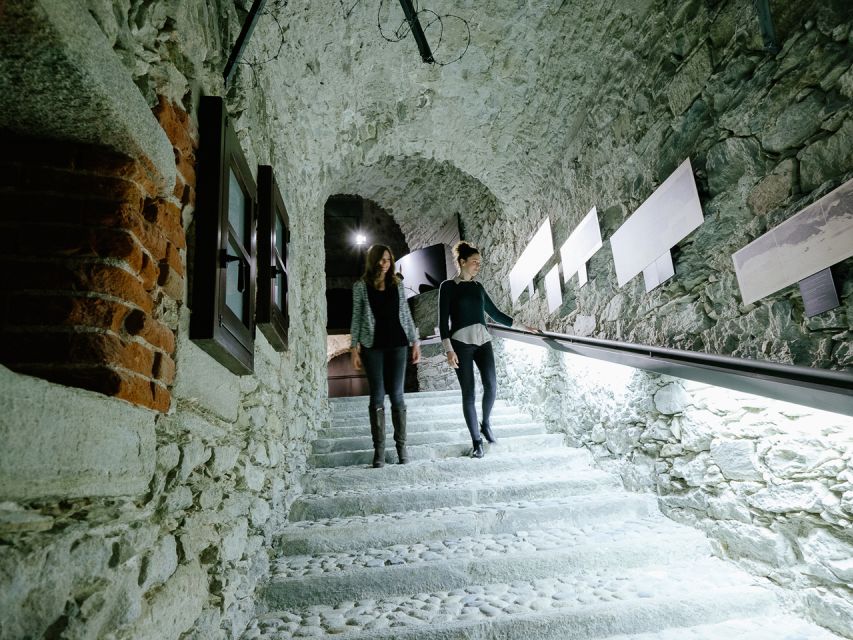
Beyond the three core museums, you’ll have access to the fortress spaces that make the site feel like a functioning place of military life: the chapel, parade grounds, courtyards, and walkways.
This is where Forte di Bard really earns its keep. Museums can feel sealed off from the real world, but the fortress spaces connect everything. You’re outside (or semi-outside) with long views, then back into interpretive areas, then outside again—so your brain keeps resetting between themes.
The chapel, in particular, helps change the mood. It’s not only a visual break from the heavier museum themes; it also adds another layer to how the site worked as a community, not just a machine for defense.
If you like to “understand by walking,” spend time here. It’s tempting to power through, but these spaces explain the building’s internal logic more clearly than any single exhibit.
Temporary exhibitions and the audio guide that keeps you moving
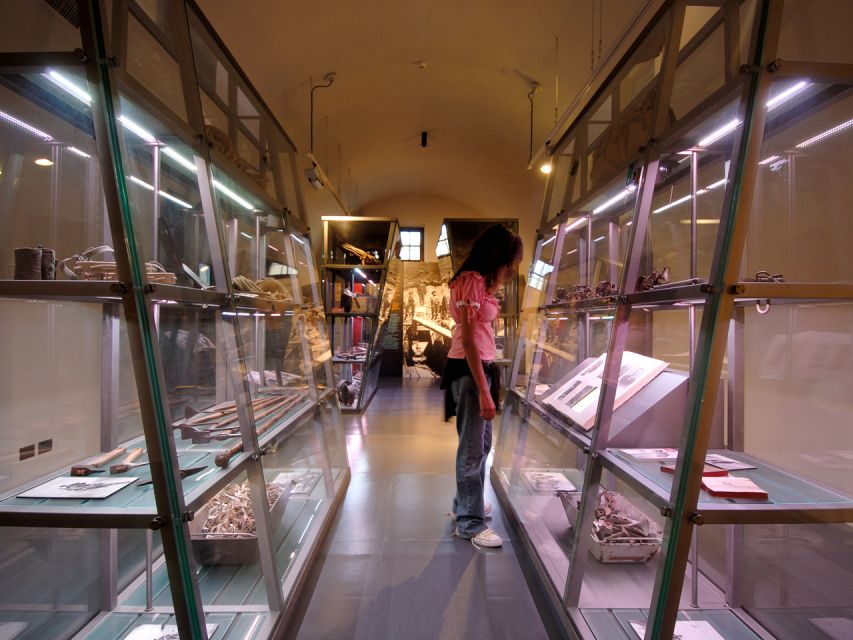
Your entrance ticket also includes access to temporary exhibitions happening during your visit. That’s a big value add because it means your day can feel current rather than purely static. Temporary shows can also change how long you stay in particular areas—especially if a theme grabs you.
The other key piece is the audio guide. You won’t rely on a live guide, so the audio takes the role of your “follow-along.” You download the Museon app on your smartphone, and then you’ll use a QR code provided at the ticket office.
I like this setup for a simple reason: it gives you control. You decide what to hear and when. If you’re in a hurry, you can keep moving. If a section gets interesting, you can stop and let the audio do its job.
One warning to keep your day smooth: bring your phone battery and be ready to download before you start wandering too far. If your phone is low or the app struggles, it’s annoying to recover. You don’t want your visit to become an IT problem.
Price and value: what $28 buys you at Forte di Bard
The price is listed as about $28 per person, and the value is in the fact that you’re not paying for just one museum. You get entry to the fortress plus access to the panoramic lifts, multiple museum areas (including the prisons), chapel and outdoor spaces, and all temporary exhibitions that are open during your visit.
You also get the audio guide included, which matters. Many standalone museum tickets feel like you’re paying entry only, then you add-on explanations later. Here, the interpretation is part of the package. That’s especially helpful if you’re visiting on your own or with people who don’t want a guided tour.
The main value trade-off is time, not money. Because it’s a self-guided, full-day layout, you’ll probably want to plan a real day rather than squeeze it between two hectic stops. If you treat it like a quick in-and-out, you may feel you rushed the best parts.
Booking realities: voucher exchange and avoiding entrance-day friction
You’ll need to exchange your voucher at the ticket counter before you start. Since there are two ticket counterpoints, it’s easy to lose a few minutes if you go to the wrong one.
Also, here’s the inconsistency to plan around: at least one booking experience reported that even with online purchase, you still have to queue to exchange for paper at the entrance, with no added financial benefit. Other experiences reported smoother entry when using the voucher approach, with less waiting.
So my practical advice is simple: arrive with extra time. If you’re coming at a busy time, give yourself a cushion for the voucher exchange process. That way, you don’t start the day stressed.
Who should visit Forte di Bard (and who might not)
This is a good fit if you like museums that use the setting as part of the storytelling. You’ll enjoy Forte di Bard more if you’re the type who likes to walk through themed spaces, read interpretive content, and take photos from multiple levels.
It’s also a strong pick for people who want a day that’s structured but still flexible. No live guide is included, so you can adapt your pace.
You might want another plan if you need a very short, low-walking outing. The experience includes scenic walking routes and multiple levels, even if lifts help. And if audio guides aren’t your thing, you’ll rely mainly on exhibition signage and the fortress spaces themselves.
Should you book Forte di Bard? My decision guide
Yes, I’d book it if you want a full-day site where the architecture and the museums work together. The three-museum combination, the included audio guide, and the option to use panoramic lifts make it a practical choice for most travelers who can handle a museum day with some walking.
I’d also book if you’re photo-minded. The site’s vertical setup gives you repeated chances to shoot the valley as you climb, and having lifts means you won’t feel like you’re sprinting.
Just book with your eyes open about entrance-day flow. Plan extra time for the voucher exchange at the ticket counter, and you’ll avoid the kind of frustration caused by last-minute queues.
FAQ
FAQ
What’s included with the Fortress of Bard entrance ticket?
You get entrance to the fortress, access to the panoramic lifts, visits to the chapel, parade grounds, courtyards, and walkways, entry to all exhibition spaces (the Museum of the Alps, the Prisons, and the Museum of Fortifications and Frontiers), access to temporary exhibitions open during your visit, an audio guide, and a 10% discount at the Fort Bard bookshop.
Do I need a live guided tour?
No. A guided tour with a live guide is not included. The experience is designed for self-guided exploration with the included audio guide.
How does the audio guide work?
You need to download the Museon app on your smartphone. At the ticket office, you’ll get a QR code you can use to access the audio service.
Where do I exchange my voucher?
You must exchange your voucher at the ticket counter. One ticket counterpoint is at the start of the first panoramic lift, and the second is at the top of the medieval village behind the Church of Bard.
Can I use the panoramic lifts at the fortress?
Yes. Entrance includes access to the panoramic lifts, and you can choose lifts or a scenic walk to explore the fort.
Is Forte di Bard wheelchair accessible?
Yes, the activity is listed as wheelchair accessible.
What’s the cancellation policy?
Free cancellation is available up to 24 hours in advance for a full refund.