REVIEW · BARD ITALY
Fortress: Prisons, Museum of Fortifications and Alps Museum
Book on GetYourGuide →Operated by Forte di Bard · Bookable on GetYourGuide
Defense history with mountain views. Fort Bard turns the Alps into a classroom, using panoramic lifts and a carefully built visitor route to show how Western Alpine fortresses worked in real terrain, not just on maps. I particularly like how the fortress interiors and displays link upgrades in weaponry and strategy to what you actually see in the stone walls.
Two big draws for me: the original prison cells—24 rooms about 1.3 by 2 metres—plus the chance to walk the fortress spaces that still feel like the site’s original “machine for defense.” One thing to keep in mind: if you’re hoping for a pop-culture tie-in (like a Marvel-themed exhibit), don’t plan your visit around that. The focus here is military history and Alpine transformation.
In This Review
- Key things to know before you go
- Fort Bard in the Aosta Valley: why this fortress matters
- Getting your bearings: panoramic lifts, parade grounds, and walkways
- Museum of Fortifications: how weapons and strategy changed the Alps
- The prisons at Fort Bard: 24 tiny cells and what they communicate
- Museum of the Alps: nature, people, and the modern mountain
- Audio guide and Museon app: the easiest way to go deeper
- Price and value: what around $17 gets you
- Who should go: the best match for your travel style
- Timing inside Fort Bard: how to get the best flow
- Should you book Fort Bard: my decision checklist
- FAQ
- What’s included with the Fort Bard ticket?
- How do I choose which exhibitions to visit?
- Are panoramic lifts included?
- Do I need a live guide?
- What’s special about the Prisons?
- What languages are available?
- Is Fort Bard wheelchair accessible?
- How long is the ticket valid?
- Where do I exchange my voucher?
Key things to know before you go
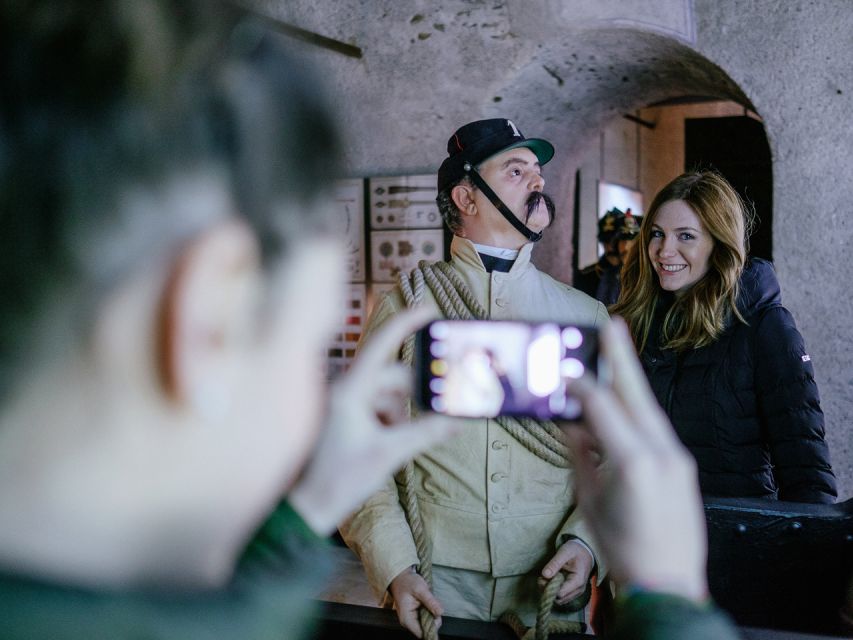
- Panoramic lifts help you start “in the right mindset,” with big Alpine views as soon as you arrive.
- Museum of Fortifications is built like a time line, tracing how defenses evolved as weapons and tactics changed.
- 24 prison cells are tiny, arranged in sections, and preceded by an entrance gallery that sets the fortress story.
- Practical fortress wandering: you can reach the prisons via the panoramic route and explore chapel, parade grounds, courtyards, and walkways.
- Museum of the Alps looks at nature, Alpine civilization, and then modern-era transformation—so it’s not only military.
- Audio guide + Museon app let you control your pace and get context while you move through the site.
Fort Bard in the Aosta Valley: why this fortress matters
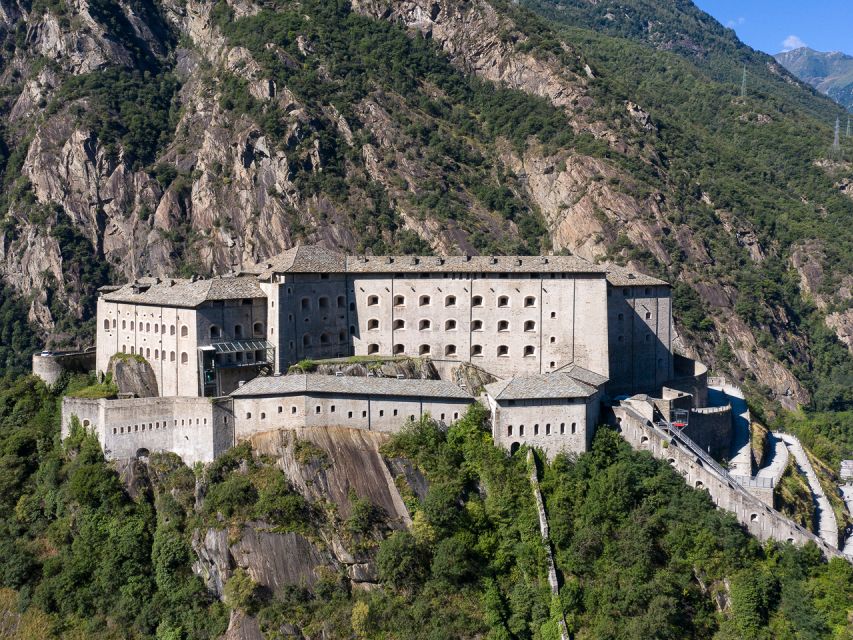
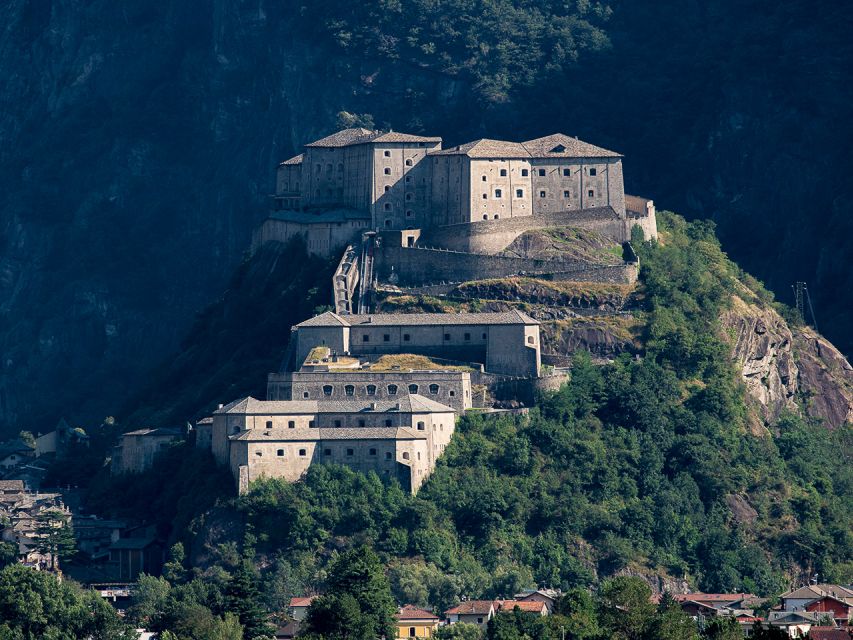
Fort Bard sits in Italy’s Aosta Valley, right where mountain geography makes decisions for you. When you arrive, it helps to remember what this place was built to do: control movement and hold ground in one of Europe’s most challenging landscapes.
What I like about Fort Bard is that it doesn’t treat the fortress like a random pile of walls. It treats it like a system. You see how the site’s design connects to visibility, access routes, and the idea of holding a boundary in harsh conditions. That sense of purpose stays with you as you move from lifts and courtyards toward the museums and then the prisons.
And yes, you’re in the Alps—so you get that natural “scale” effect. The mountain environment isn’t just background. It’s part of the story, which becomes clear once you reach the Museum of the Alps and see how people adapted to mountain life over time.
Getting your bearings: panoramic lifts, parade grounds, and walkways
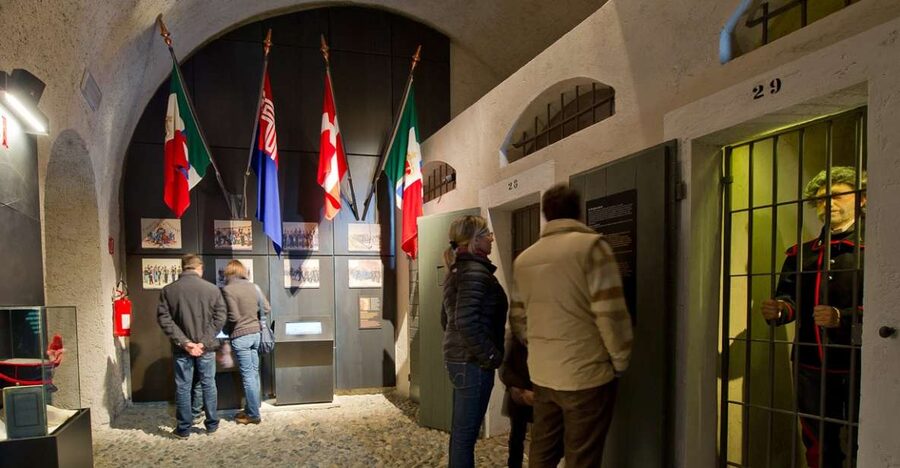
Before you hit the museums, I recommend you use the panoramic lifts early. They do more than save walking; they set the tempo of the visit. You start with views and orientation, so later, when you’re inside galleries and courtyards, you understand why certain spaces were built where they were.
Once you’re up, Fort Bard gives you multiple “layers” of movement. You’ll have access to:
- the chapel
- the parade grounds
- courtyards
- walkways
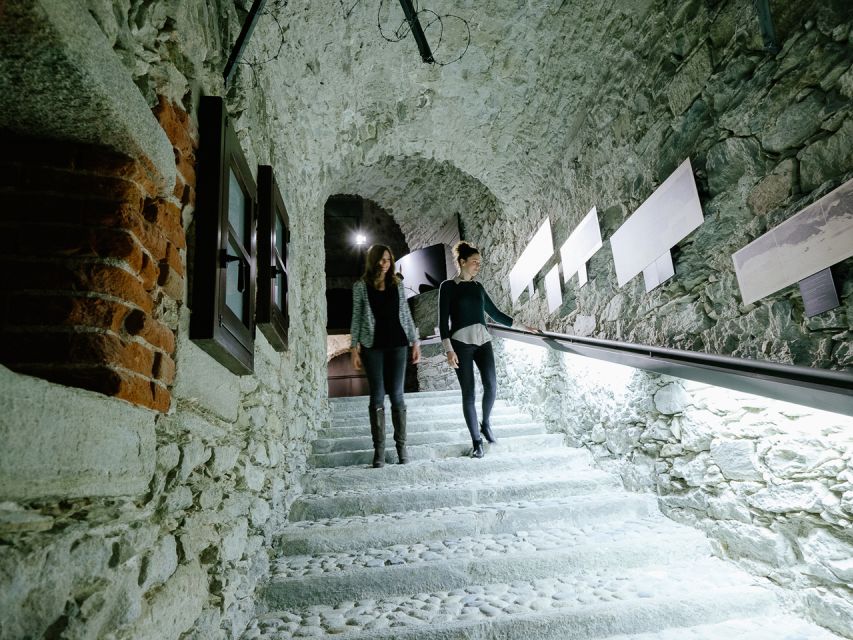
These aren’t filler stops. In a fortress like this, courtyards and parade grounds are where logistics and daily routines would have played out. Even without a guide walking you through every detail, the spaces help you read the architecture.
Practical tip: plan to pause at viewpoints when you can. The layout makes more sense when you’ve looked outward first, then turned back inward to the defensive spaces.
Museum of Fortifications: how weapons and strategy changed the Alps
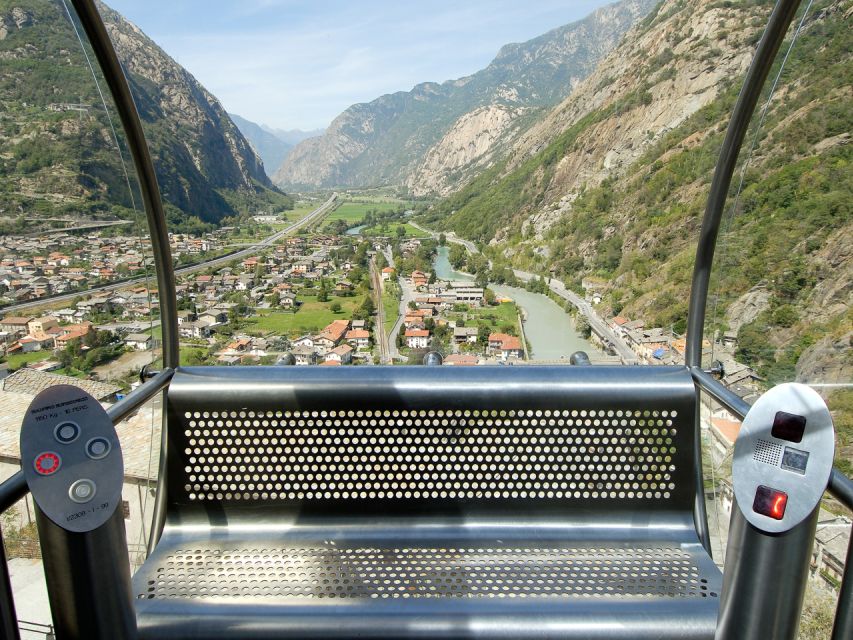
The Fortress of Bard experience really clicks in the Museum of Fortifications. It’s split into sections that feel like chapters rather than one long room.
In the first part, you get historical settings supported by models, film footage, and authentic weapons. This isn’t just display cases; it’s meant to show a chain reaction: as weapons improved, fortresses had to respond with new architectural choices and shifting strategy. If you’re the kind of visitor who likes cause-and-effect, this section delivers.
Then the museum moves into the second part, focused on changes from the late 19th century into the early 20th century. Fort Bard becomes part of a larger system of fortifications from that era. You’ll see scale models and reconstructions that help you picture how the fortress fit into broader defense planning across the Alps—not just as a standalone stronghold.
The third part lands with a question: The Alps, a boundary? It pushes you to think about what the word boundary really means here. Is it a border that separates? Or a barrier that stops? Or a line that defines control? That final framing is clever because it connects the technical museum content back to geography and human meaning.
One drawback to consider: the museum is strongly focused on defense history and Alpine transformation rather than pop culture. If your main goal is entertainment trivia, you may feel the exhibitions are more serious than expected.
The prisons at Fort Bard: 24 tiny cells and what they communicate
From the panoramic route, you can reach the prisons—often the most memorable part of the visit. This is where the fortress story gets personal, not because it’s sentimental, but because the space is so constrained.
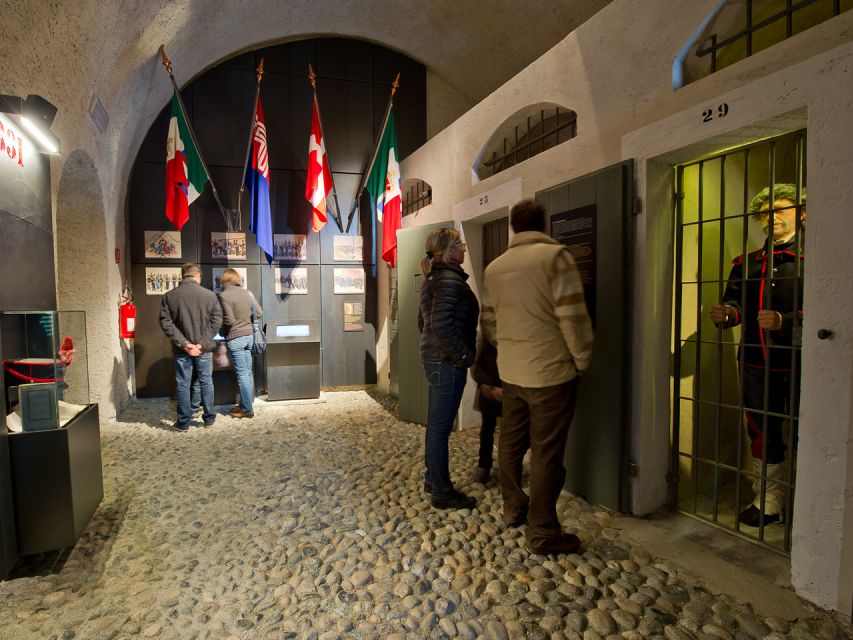
You’ll find 24 very small cells, arranged along four sections. Each cell is roughly 1.3 x 2 metres—small enough that you can quickly understand how imprisonment worked as confinement, not comfort.
Before you enter the cell areas, there’s an entrance gallery dedicated to the iconographic representation of the fortress. That matters. It gives you context so the prisons don’t feel like an isolated horror stop. Instead, you see them as part of the fortress system—how a defensive site could also function as punishment and control.
How to get more from this section:
- Move slowly. The point isn’t speed.
- Look at the layout between sections, not only at the cells themselves.
- Let the space do the explaining. When a cell is that small, you don’t need a lot of narration to grasp the impact.
If you’re sensitive to cramped, restrictive environments, this area is likely to be intense. It’s educational, but it is still prison space.
Museum of the Alps: nature, people, and the modern mountain
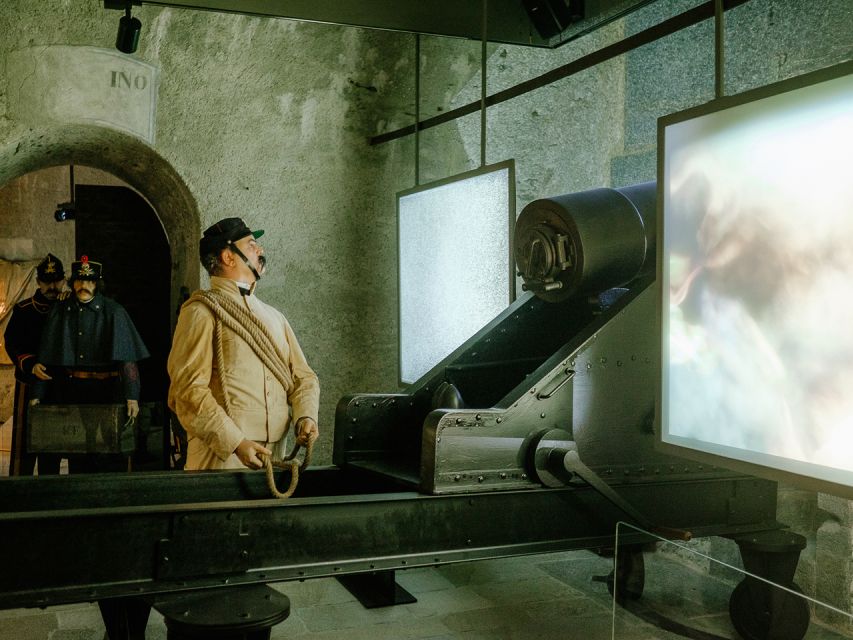
After defense and confinement, the Museum of the Alps changes the mood in the best way. It takes you from stone and tactics to the wider Alpine story: woods, altitude, and how mountain life evolved.
The exhibition is organized into three parts.
First, it examines the mountain environment through natural and human components. That’s important because it frames why mountains aren’t just scenery; they shape decisions, work, travel, and survival.
Second, it turns to Alpine civilization—how people lived with those conditions. This is where the fortress experience gains depth. You begin to see that the Alps were always about adaptation, not only about armies.
Third, it addresses transformations in the era of modernity. This portion helps explain how the mountains changed as technology, society, and ways of moving through the region shifted. It’s a good counterbalance to the fortress’s defensive timeline.
What you’ll enjoy most here is the sense that the Alps are a living system. You’re not only learning history. You’re learning relationships: between land, people, and change.
Audio guide and Museon app: the easiest way to go deeper
Fort Bard includes an audio guide to help you understand the history and architecture of the fortress. This is especially useful because the site is large and the museums cover multiple time periods.
There’s also a practical service tied to the Museon APP. You’ll need to download it on your smartphone, then use a QR code you get at the ticket office. I like this setup because you don’t have to carry printed stuff. You just keep moving and pull up the right content when you’re ready.
Tip: if you want the best flow, don’t listen to everything at once. Use the audio guide to “unlock” the next room or space as you reach it. You’ll get more meaning per minute.
And since this visit doesn’t include a live guided tour, the audio guide becomes your best friend for turning walls and exhibits into a coherent story.
Price and value: what around $17 gets you
Let’s talk value honestly. At about $17 per person, this ticket is doing a lot of work.
You get:
- entrance to the fortress
- access to three exhibition spaces of your choice from the permanent options (Museum of the Alps, Prisons, Museum of Fortifications and Frontiers)
- access to panoramic lifts
- access to major fortress areas (chapel, parade grounds, courtyards, walkways)
- an audio guide
- access to art exhibitions open at the time of your visit
That combination matters. Many attractions in Italy make you choose between “one museum” or “one site.” Here, you can build a mixed experience that goes from architecture to weapons history to prison spaces, and then to the broader Alpine environment.
Also, the price is especially fair if you’re visiting solo or in a small group because the audio guide helps you get context without paying for a private live guide. The visit is designed for self-guided exploration, and you’re set up to do it.
If you only care about one narrow theme—like purely military hardware—you might feel the range is broader than necessary. But if you like connections, it’s a strong deal.
Who should go: the best match for your travel style
This is a great fit if you:
- like history that explains why systems exist, not just dates
- enjoy museums that combine objects, models, and reconstructions
- want an Alps destination that isn’t only about hiking views
- prefer self-guided pacing with an audio layer
It’s also a good choice for mixed groups where not everyone wants the same type of attraction. One person can linger longer on fortifications and weapons. Another can focus on the Museum of the Alps and the transformation themes.
Who might find it less ideal:
- If you’re expecting a modern pop-art or entertainment-heavy museum, this is not that. The exhibitions are built around fortifications, prisons, and mountain change.
- If you hate confined spaces, the prison cells may be hard to take.
Timing inside Fort Bard: how to get the best flow
You can visit the fortress and its sections under a self-guided plan. To make that work smoothly, I’d structure your time around themes:
1) Start with the panoramic route and orientation. Get your bearings.
2) Do the Museum of Fortifications next, so you understand the logic behind the walls.
3) Visit the prisons afterward, when you can connect them to the fortress system.
4) Finish with the Museum of the Alps, so the visit ends on land, people, and modern transformation rather than confinement.
This order helps you keep one big story in your head: how mountains shaped defense, and how humans kept reshaping life in those mountains.
Also, don’t rush the common spaces. The chapel, courtyards, and walkways are part of the “read” of the fortress. If you skip them, you miss the architecture doing its job.
Should you book Fort Bard: my decision checklist
Book it if you want a high-value, self-guided Alps experience that teaches you something real and lets you control pacing. For roughly $17, you’re getting panoramic lifts, multiple permanent museums, the prison section with 24 tiny cells, plus architecture context through the audio guide and fortress areas.
Don’t book expecting a Marvel-style attraction or pop-culture surprises. Even if some film scenes were shot here, this visit is built around military evolution and Alpine transformation themes.
My final take: if you enjoy historical places where the setting actually explains the subject, Fort Bard is an easy yes.
FAQ
What’s included with the Fort Bard ticket?
Your ticket includes entrance to the fortress, access to three exhibition spaces of your choice from the permanent museums (Museum of the Alps, Prisons, Museum of Fortifications and Frontiers) plus any art exhibitions open during your visit. You also get access to panoramic lifts, the chapel, parade grounds, courtyards, and walkways, and an audio guide. You’ll use the Museon APP via a QR code at the ticket office.
How do I choose which exhibitions to visit?
You select three exhibition spaces from the available permanent museums: Museum of the Alps, Prisons, Museum of Fortifications and Frontiers (plus art exhibitions open at the time of your visit).
Are panoramic lifts included?
Yes. Access to panoramic lifts is included with your ticket.
Do I need a live guide?
No. A guided tour with a live guide is not included. You’ll rely on the audio guide to learn about the fortress history and architecture.
What’s special about the Prisons?
The Prisons are one of the fortress’s most striking areas, with 24 very small cells (about 1.3 x 2 metres) arranged along four sections. An entrance gallery presents the iconographic representation of the fortress before you reach the cells.
What languages are available?
The included information lists multiple languages, and it specifically notes cancellation language details. For exact language availability beyond what’s stated, check with the ticket office on arrival.
Is Fort Bard wheelchair accessible?
Yes, it’s listed as wheelchair accessible.
How long is the ticket valid?
The ticket is valid for 90 days. You should check availability to see starting times.
Where do I exchange my voucher?
You must exchange your voucher at the ticket counter. There are two counter points: one at the start of the first panoramic lift, and another at the top of the medieval village behind the Church of Bard.