REVIEW · BARCELONA
Barcelona: Small Group Picasso Tour with Picasso Museum
Book on GetYourGuide →Operated by Turisme de Barcelona · Bookable on GetYourGuide
Picasso wasn’t born famous; he built it. This small-group tour follows a young, restless Picasso through key corners of Barcelona, then lands you in the Museu Picasso with skip-the-line entry.
I especially love how the walk turns street scenes into cause-and-effect stories, not just photo stops. And the small group (max 9) keeps the pace human, so your guide can actually explain what you’re seeing as you go.
One thing to consider: the total time is tight. You get about an hour in the museum, so you’ll see major highlights rather than a full, slow read of thousands of works.
In This Review
- Key things to look forward to
- Why this Picasso walk starts in the Gothic Quarter
- Plaça Reial and Llotja de Mar: where youth meets ambition
- Els Quatre Gats: the café that helped make Picasso
- Picasso’s only public art: the frieze you can actually see
- Museu Picasso: skip the line, then focus on early Picasso
- Small group size: why max 9 actually changes the tour
- Price and timing: is $46 a smart value?
- Who this tour fits best (and who should tweak the plan)
- What to bring (so the tour feels easy)
- Should you book this Picasso tour?
- FAQ
- How long is the Barcelona Small Group Picasso Tour?
- Where does the tour start?
- Is the group size small?
- What languages are available for the live guide?
- Does it include museum tickets and skip-the-line entry?
- What should I bring, and what’s not allowed?
Key things to look forward to
- Gothic Quarter walking route that connects Picasso’s teenage years to real places you can still stand in
- Els Quatre Gats for the café culture Picasso helped shape, including his early exhibition and the menu design
- Skip-the-line Museu Picasso access that saves time and gets you into the art fast
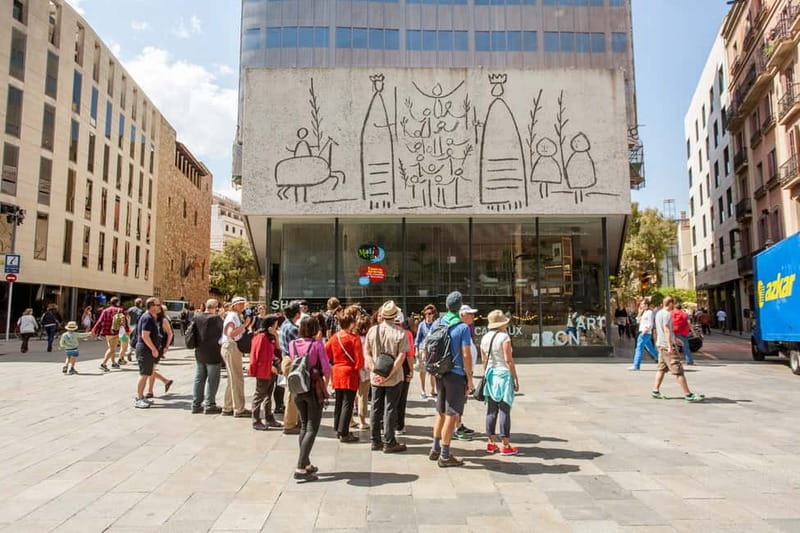
- Picasso’s only public artwork (a frieze) at the Architects’ Association Building
- Official-language live guidance in English or French, with optional English audio support
- Headphones recommended because the streets can get loud and you’ll want to hear every detail
Why this Picasso walk starts in the Gothic Quarter
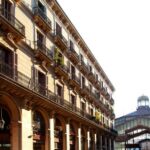
The tour begins in central Barcelona near Pl. de Catalunya at the tourist information point (you’ll go down the escalators between two big pillars to find it). From there, you head into the Gothic Quarter, where the streets feel like they were built for footfalls and storytelling.
This part works best if you like art that has a pulse. Instead of treating Picasso as a distant genius, you see the city as part of the machine that shaped him. Expect your guide to connect the dots between place and period: the young artist learning technique, absorbing ideas from arts circles, and practicing until his style could change on command.
A bonus: the walk time is long enough (about 50 minutes) that you don’t feel herded like luggage. It’s enough time to look up at façades, notice street corners, and get a sense for why certain neighborhoods became Picasso’s creative habitat.
You can also read our reviews of more museum experiences in Barcelona


Plaça Reial and Llotja de Mar: where youth meets ambition
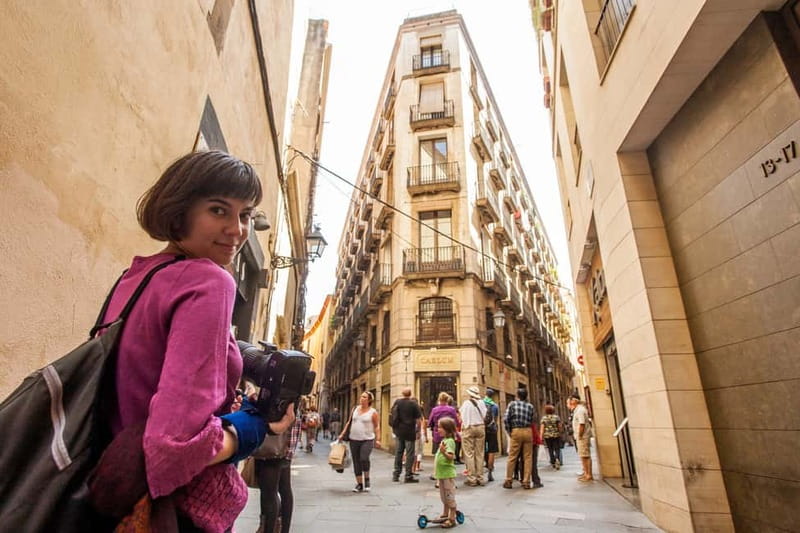
As you move through the early stops, the tour emphasizes how early Picasso was already producing work that impressed people. One of the most memorable ideas is the “before fame” view: young Picasso sketching café life and learning the art-social rhythm of Barcelona.
The tour also includes the atmosphere of an art education setting linked to his early rise: Llotja de Mar, the prestigious academy where the story says Picasso’s talent stunned professors when he was just a young teen. Even if you’re not a museum person, these kinds of place-based details help you understand that Picasso’s breakthroughs didn’t fall from the sky. They were built from training, feedback, and constant practice.
Then there’s the shift from learning to becoming visible in public spaces. You’ll hear how Barcelona’s scene gave him access to debates, friendships, and the kind of creative push that made him bold enough to keep changing his style.
Els Quatre Gats: the café that helped make Picasso
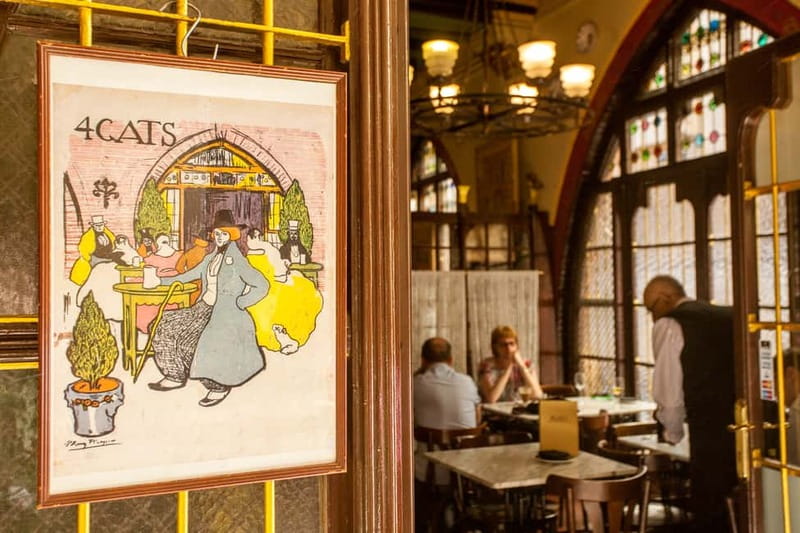
The short stop at Els Quatre Gats (about 10 minutes) is worth it because it isn’t treated like a quick photo moment. The point is context.
Els Quatre Gats is described as the avant-garde café where an 18-year-old Picasso held his first exhibition, and where Picasso also designed an iconic menu that’s still used today. There’s even detail about the social edge of the place—this was a hub for artists and rebels, and the tour includes the idea of absinthe culture.
What I like about this stop is that it explains the “how” behind Picasso’s swagger. He wasn’t just producing paintings; he was participating in the same conversations as the people around him. That’s a big deal for you if you want to understand his creativity as something social and iterative, not solitary and mystical.
Practical note: because it’s only a quick visit, you’ll get the setting and the story, but you won’t have time to linger like you would on a free morning. Treat it as a stepping stone to the museum, not a standalone café break.
Picasso’s only public art: the frieze you can actually see
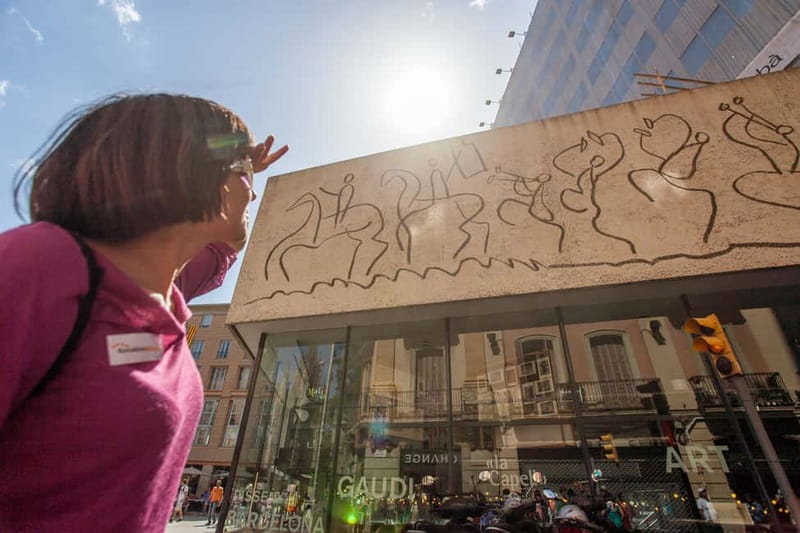
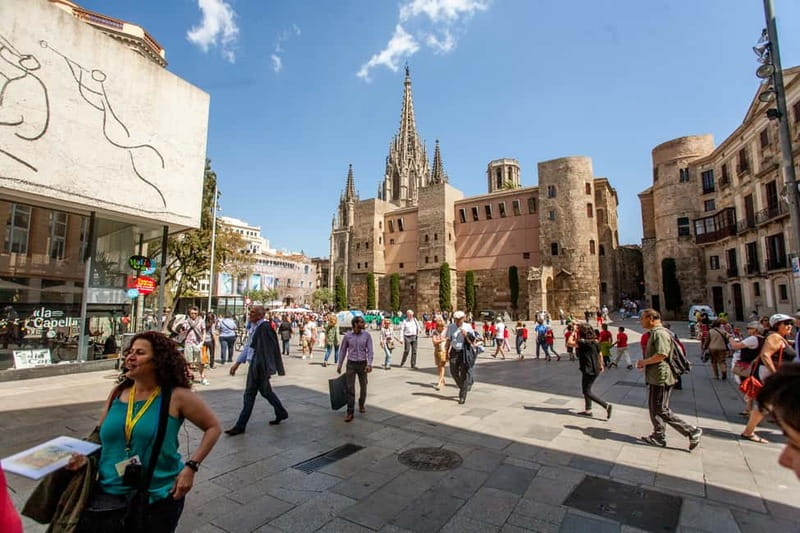
One of the most distinctive perks here is the inclusion of Picasso’s only public artwork—a frieze at the Architects’ Association Building.
Most visitors focus on the famous museums and miss the “street-level” evidence that Picasso was part of Barcelona’s public life. This stop changes that. It’s a reminder that his work didn’t stay trapped in galleries. Even in an everyday city setting, Picasso’s mark shows up.
If you’re thinking, Fine, it’s just a frieze, here’s the value: a small public artwork can still tell you a lot about recognition. It helps you understand what parts of his influence became visible beyond the art world.
Museu Picasso: skip the line, then focus on early Picasso
Next is the main event: Museu Picasso with guided time inside (about 1 hour). The tour includes skip-the-ticket-line, which matters in a city where museums can chew up your day if you’re waiting.
Inside, the emphasis is on Picasso’s evolution, especially the early works. You’ll be led through a collection that includes 4,200+ pieces arranged across five Gothic palaces. You won’t see all of it on this tour, but your guide helps you choose the “turning points” view: childhood sketches showing off technical control, early masterpieces, and later series that show how he kept attacking tradition.
The tour highlights include:
- The Las Meninas series (a radical 1957 reinterpretation of Velázquez)
- Childhood and youth works that show unbelievable mastery
- Intimate portraits of lovers and friends
- Rare ceramics and engravings
This is where the walking tour earns its keep. If you’ve just spent time connecting Picasso’s early Barcelona life to the kind of artistic circles he joined, the museum feels less like a list of artworks and more like a timeline that has logic. You’ll understand not only what you’re seeing, but why his methods kept changing.
Potential drawback: one hour in the museum is a sprint. If you want a slow, sensory “read everything” museum experience, you might want to come back later on your own. But for most visitors, this guided visit gives you enough structure to explore more intelligently after.


Small group size: why max 9 actually changes the tour
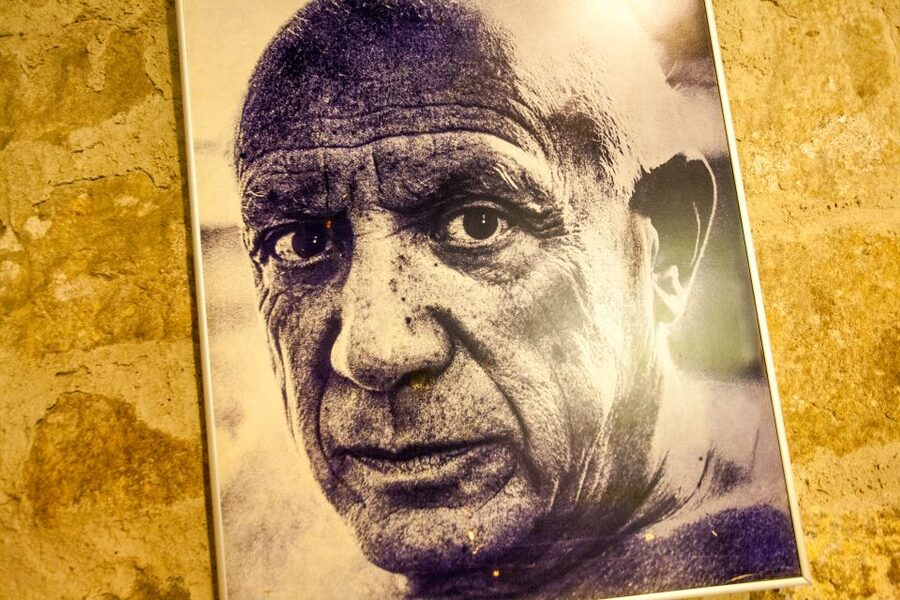
A lot of “small group” tours still feel large. Here, max 9 participants helps more than it sounds like.
In practice, it means:
- You can hear your guide without constantly asking people to move.
- Your guide can answer questions tied to what you’re seeing, not what they planned to cover.
- The pacing stays tight enough to hit the highlights without turning into a speed-walk contest.
The tour’s guide quality also seems to be a repeat theme. Names that have stood out in past groups include Pilar, Stephen, Julie, Olga (including Olga Escribano), Sylvie, Jorge, Ali, Catarina, Jordi, and George. The common thread is strong storytelling—guides connect Picasso’s periods to the people, places, and pressures around him, so you don’t just get facts. You get a sense of cause.
And yes, the streets can get noisy, so I’d treat the “headphones” guidance as serious advice. Bring your headphones and keep your smartphone charged, especially if you’re planning to use maps, photos, or audio support.
Price and timing: is $46 a smart value?
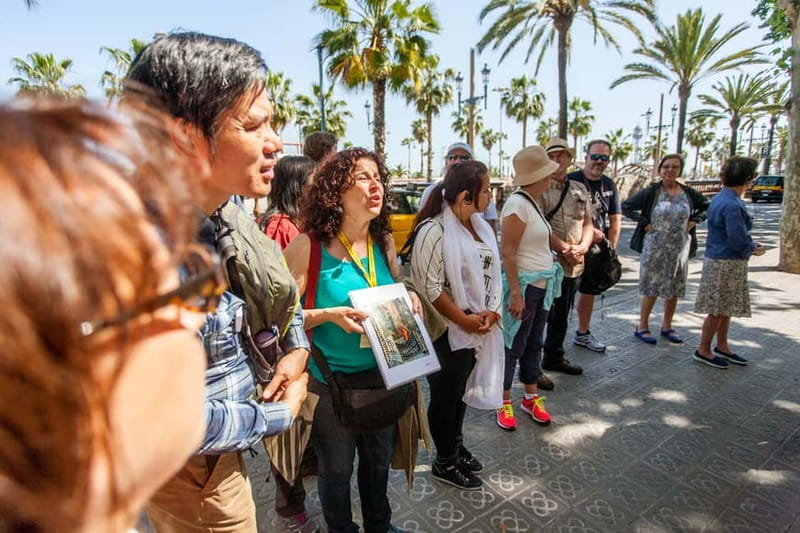
At $46 per person for roughly 2 hours, this tour is priced like a real experience, not a “stand here and point” add-on. The value is strongest because it includes:
- A guided bohemian Barcelona walking segment
- Guided Museu Picasso time
- Skip-the-line museum entry
- Entrance fees included (so you’re not surprised by extra ticket costs at the door)
You also get the best of both worlds: the physical city (streets, squares, the one public artwork) plus the art context inside the museum. For a first-time Picasso stop in Barcelona, it’s a good balance: you leave with a clearer map of his style changes, and you can decide what to revisit later.
Timing matters too. Two hours is short enough that you can fit it into an itinerary without wrecking your day, but long enough to feel like you got something “real” rather than a quick hit.
Who this tour fits best (and who should tweak the plan)
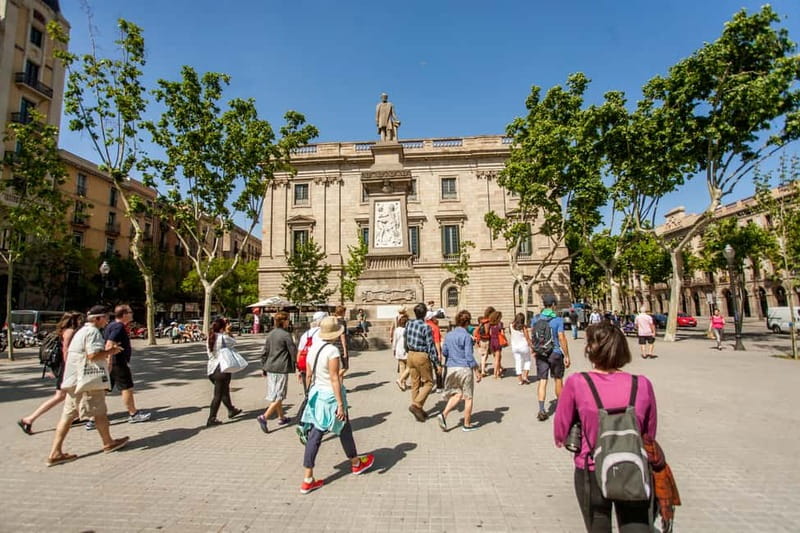
This works especially well if:
- You’re coming to Picasso for the first time and want an organized path
- You like art with backstory tied to real neighborhoods
- You prefer a guided museum visit so you don’t waste your limited time hunting for meaning
It might not be ideal if:
- You want long, quiet time to study every painting
- You’d rather do museums completely on your own, at your own speed
- You’re traveling with a lot of luggage or pets (the tour does not allow either)
If you’re a “paintings first” person, consider doing this as your primer. Then, after the guided hour, you can return later and spend more time on the works that caught your eye.
What to bring (so the tour feels easy)
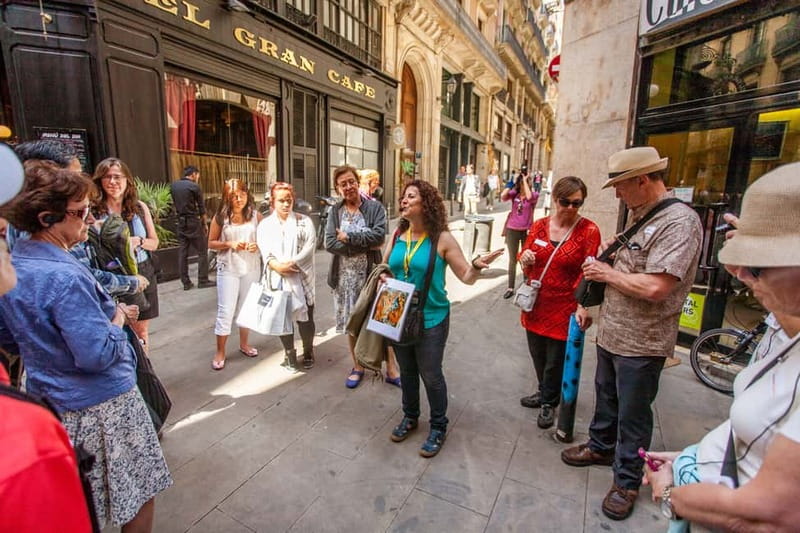
You don’t need much, but the small list is practical:
- Comfortable shoes for walking
- Headphones (the streets can be loud, and the tour experience relies on hearing your guide)
- A charged smartphone (use it for directions, photos, and optional audio features if you choose)
Also plan for what you can’t bring: no pets, and no luggage or large bags. If you’re carrying something bulky, plan storage or leave it elsewhere before you meet.
Should you book this Picasso tour?
Book it if you want Picasso connected to Barcelona in a way that makes sense fast. The combo of Gothic Quarter streets + Els Quatre Gats + skip-the-line museum time is a strong starter package, and the small-group format (max 9) is a real quality lever.
Skip it (or add time elsewhere) if you’re the type who needs hours inside a museum to feel satisfied. This tour is built for highlights and interpretation, not for slow, complete coverage.
My simple decision rule: if you want the story and the key turning points in a tight schedule, this is a smart buy for Barcelona.
FAQ
How long is the Barcelona Small Group Picasso Tour?
The tour duration is 2 hours.
Where does the tour start?
The meeting point is at the Tourist Information Point at Pl. de Catalunya, 17-S, Barcelona. You’ll go down the escalators between two large pillars to reach it.
Is the group size small?
Yes. The group is limited to a maximum of 9 participants.
What languages are available for the live guide?
The live tour guide is available in English and French. There is also an optional audio guide in English.
Does it include museum tickets and skip-the-line entry?
Yes. The tour includes skip-the-line entry for the Museu Picasso, and all entrance fees are included.
What should I bring, and what’s not allowed?
Bring comfortable shoes, headphones, and a charged smartphone. Pets and luggage or large bags are not allowed.