REVIEW · BARCELONA
Picasso’s Footsteps: Private Tour & Museum
Book on Viator →Operated by Icono Spain Tours · Bookable on Viator
Picasso’s Barcelona has a trail you can walk. This private tour strings together key early-life stops with skip-the-line Picasso Museum entry, so you spend more time seeing and less time waiting. I especially like how the guide gives context that makes the art feel connected to street-level Barcelona.
Two more things I like: you get coffee or tea included at Els Quatre Gats, and the schedule is light enough to feel like a guided stroll rather than a cram session. One possible drawback: the meet-up point can be a little fussy, and one guest reported the voucher location wasn’t quite right—so it’s smart to map it before you leave.
In This Review
- Key Moments You’ll Actually Feel
- Starting on Pg. d’Isabel II: Easy to Find, Smart First Move
- Porxos d’en Xifré: The Block Where Picasso’s Early Life Echoes
- Real Academia Catalana de Bellas Artes de San Jorge (Escola de Llotja)
- Inside Museu Picasso: One Hour That Actually Feels Focused
- Sala Pares: A Short Stop With an Early-Modernist Payoff
- Els Quatre Gats: Coffee Where Barcelona Artists Socialized
- Tour Value in Plain Terms: What You Pay For
- Who This Private Picasso Tour Fits Best
- Booking Thoughts: Timing, Pace, and Getting the Most Out of It
- Should You Book Picasso’s Footsteps?
- FAQ
- How long is Picasso’s Footsteps?
- Where does the tour start and end?
- Is museum admission included?
- Is coffee or tea included?
- What language is the guide?
- Is this a private tour?
- What if the weather is bad?
Key Moments You’ll Actually Feel
- Skip-the-line Picasso Museum access saves time and keeps your energy for the art
- Els Quatre Gats coffee/tea included at the end, in a place tied to the Modernist scene
- Porxos d’en Xifré (1840) links to the block where Picasso first lived in Barcelona
- Real Academia Catalana de Bellas Artes de San Jorge connects Picasso’s schooling to the city’s art institutions
- Sala Pares nods to Picasso’s early ties with modernist artists and exhibitions
- A private English-speaking local guide for questions at a pace that works for your group
Starting on Pg. d’Isabel II: Easy to Find, Smart First Move
You begin at Pg. d’Isabel II, 14 in Ciutat Vella, a location that’s practical for getting your bearings fast. From there, the walk makes sense: you start with the built environment around Picasso’s early life, then you move into the museum where the story becomes concrete.
This is a 2-to-3-hour private tour, so the timing is built for focus. Stops are short at the streetscape sites (about 10 minutes each), then the schedule gives you the longer moment inside the Picasso Museum (about 1 hour).
One bonus detail: it’s offered in English, and it’s a mobile ticket format. That matters in Barcelona, where you’ll often be juggling metro timing and museum ticket lines—anything that reduces friction is good value.
You can also read our reviews of more private tours in Barcelona


Porxos d’en Xifré: The Block Where Picasso’s Early Life Echoes
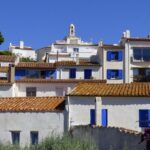
The first stop is Porxos d’en Xifré, a historic building inaugurated in 1840 after four years of works. The description alone is interesting—built on plots urbanized after the sea wall demolition—and it even notes the building as the first place in Spain to appear in a daguerreotype.
But what makes this stop click is the Picasso connection. The tour points you to the broader area where Picasso’s family first lived after moving to Barcelona, with the exact address given as Passeig d’Isabel II, number 4 (where there used to be a boarding house). Even if you’re not a history-nerd, you can feel the logic: before you see the masterpieces, you’re getting the geography of the person.
A practical note: because this is a “look, listen, orient” type stop, don’t expect a long indoor break here. Bring the mindset of a quick reset. Ask your guide what details on the façade or layout matter most, then carry that lens into the next stop.
Real Academia Catalana de Bellas Artes de San Jorge (Escola de Llotja)
Next you head to the Real Academia Catalana de Bellas Artes de San Jorge, connected to the Fine Arts School known as Escola de Llotja. The tour explains that Picasso entered the Fine Arts School in 1895, in the neo-classical building reached from Carrer del Consolat del Mar.
This is the kind of stop that helps you avoid the common mistake of thinking Picasso simply appeared as a genius. Here you’re looking at training—where artists from Catalonia and those temporarily in Barcelona studied together. The tour also notes that the Trade Commission created the Fine Arts School on the top floor, adding a sense of how institutions shaped what young artists could learn.
Why I think this is good value for your time: in a short walking tour, you often miss the education side. This one doesn’t. You’ll leave with a clearer picture of Picasso’s early development and why Barcelona’s art world mattered to him beyond the museum walls.
Inside Museu Picasso: One Hour That Actually Feels Focused
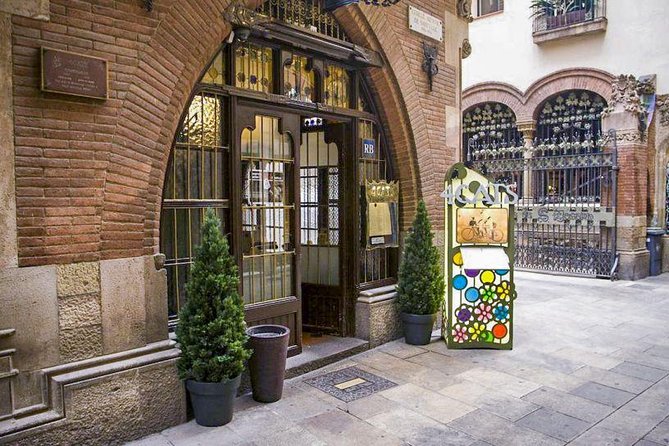
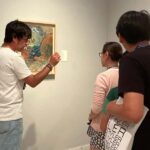
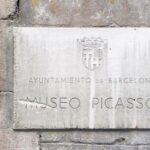
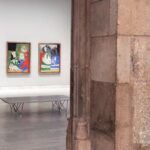
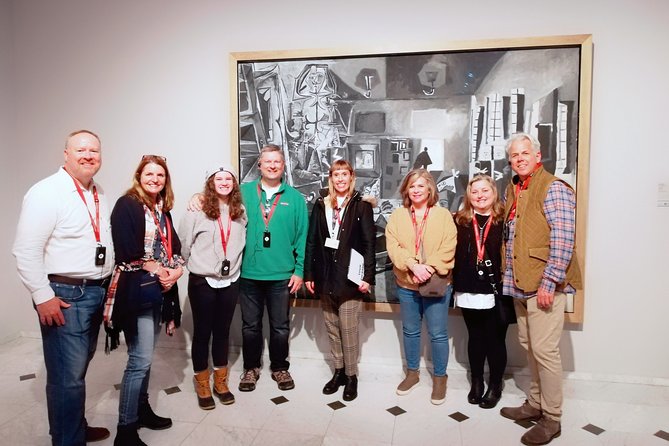
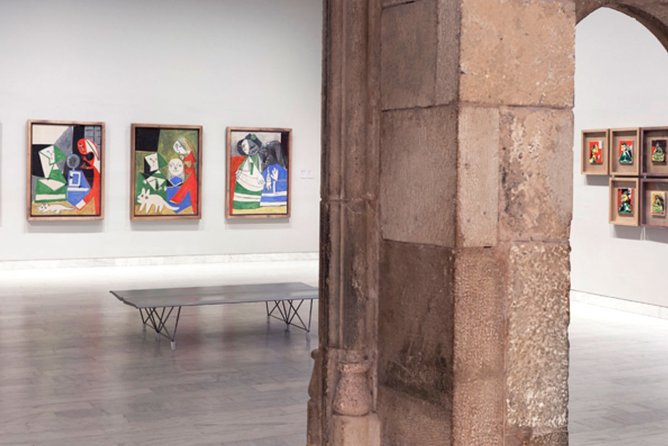
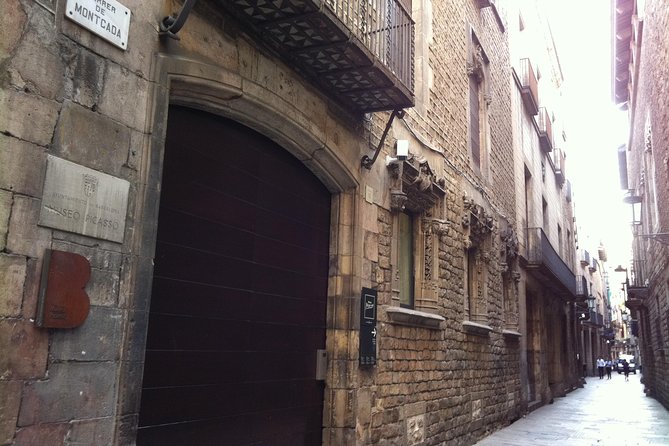
The largest time investment is at Museu Picasso, where you get about 1 hour with admission included. The museum is framed as a key reference for understanding Picasso’s formative years, built around a permanent collection totaling 4,251 works.
This stop is where the skip-the-line ticket earns its keep. You avoid wasting that precious museum hour watching other people shuffle through ticket queues. Instead, you’re more likely to arrive with your energy intact and follow the guide’s route without losing time.
What you should expect from a good guided museum visit here is perspective. Several tour experiences highlight that the guide ties Picasso’s early schooling and youthful years to what you see in the galleries. If your guide is strong—examples from the tour include Adriano, Palomae, Olga, Victoria, Alexandra, Jordi, Dani, and Georgina—you’ll likely get practical interpretation rather than a list of dates.
What to watch for while you’re there:
- Think “learning and experimentation,” not just “finished masterworks.”
- Pay attention to how themes and styles develop when you compare early work across rooms.
- Use questions. A private setting is perfect for asking things like what to notice first or why certain works feel different.
One small consideration: the museum time is set, so you won’t see everything in the building at a slow pace. If you love museums that let you wander for 2+ hours on your own, you might want to add extra time after the tour.
Sala Pares: A Short Stop With an Early-Modernist Payoff
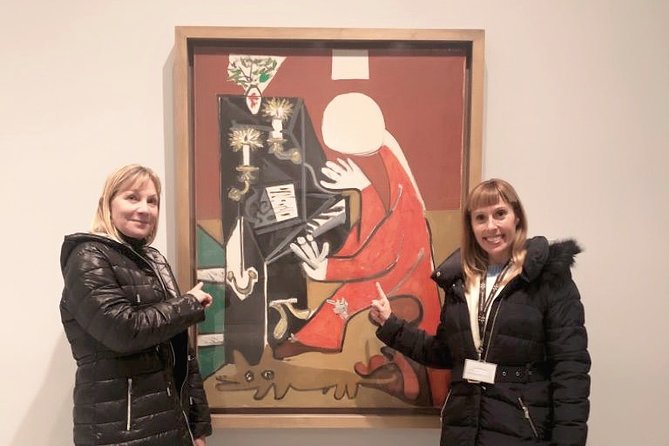
After the Picasso Museum, you stop at Sala Pares on Carrer Petritxol. This place matters because it’s tied to modernist art activity, and the tour notes that in 1901 it staged an exhibition of Picasso pastel drawings together with Ramon Casas.
Even though the visit is brief (about 10 minutes), it does one useful job: it widens the frame from Picasso alone to Picasso in Barcelona’s artist network. The point isn’t just “this is a historical address.” It’s that Picasso’s growth was part of a wider scene that included exhibitions, artists, and venues where work could be seen.
If you’re traveling with someone who likes art but gets restless in long museums, this is a nice palate cleanser. You get one focused exterior stop that connects the story. Then you move on to the final atmosphere stop.
You can also read our reviews of more museum experiences in Barcelona

Els Quatre Gats: Coffee Where Barcelona Artists Socialized
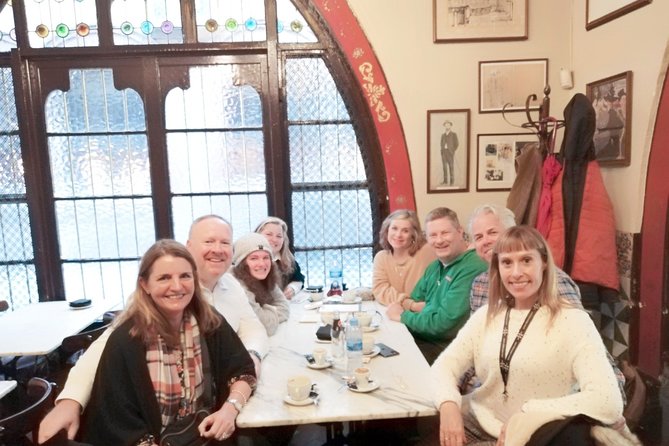
The tour ends at Els Quatre Gats (Carrer de Montsió, 3). This isn’t just a charming café—it’s described as the tavern founded in 1897 by Pere Romeu, Ramon Casas, Santiago Rusiñol, Miquel Utrillo, and others, modeled after the Paris cabaret Le Chat Noir.
You’ll also learn what Els Quatre Gats was for. It functioned as a meeting place for artists, with concerts, exhibitions, puppet shows, and shadow plays. The tour notes that the café’s branding included a gothic beer hall pitch for people who love the North, and an Andalusian courtyard pitch for those who love the South—plus posters and artwork connected to the founders, including a menu painted by Picasso.
The best part for most people: coffee or tea is included here. The value is real because you’re not paying extra to “reward” yourself after the museum. It’s also a practical moment to decompress and ask follow-up questions without the pressure of a museum closing time or crowds.
One consideration to keep in mind: one guest mentioned the 4 Cats restaurant was closed during their visit, so the drink didn’t happen. That’s not something you can control, but it’s worth being flexible and keeping your expectations realistic if the day is unusual.
Tour Value in Plain Terms: What You Pay For
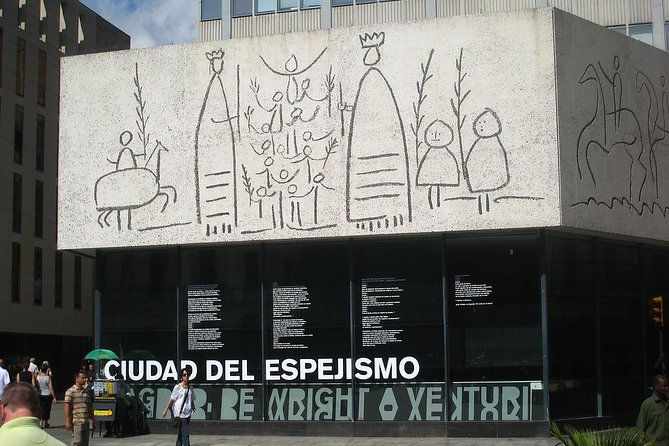
At $161.60 per person for a private, English-language guided experience, you’re paying for three big things:
- A structured route through Barcelona’s Picasso-linked addresses
- A guide who adds context so the museum isn’t just “rooms of paintings”
- Skip-the-line Picasso Museum tickets plus included admission and included café drinks
When you compare this to the cost of museum entry plus the time you’d spend figuring out where to go next, the pricing can feel more reasonable—especially because you’re getting a guided narrative that connects the streets to the art collection.
Duration also affects perceived value. Two to three hours is long enough to feel like you did something meaningful, but short enough that you can still build the rest of your day: Gothic Quarter wandering, tapas, or another museum without dragging your feet.
The tour is private, so you’re not competing with strangers for guide attention. That’s a big deal if you’re traveling as a couple, a small family, or even a group of art-curious friends.
Who This Private Picasso Tour Fits Best
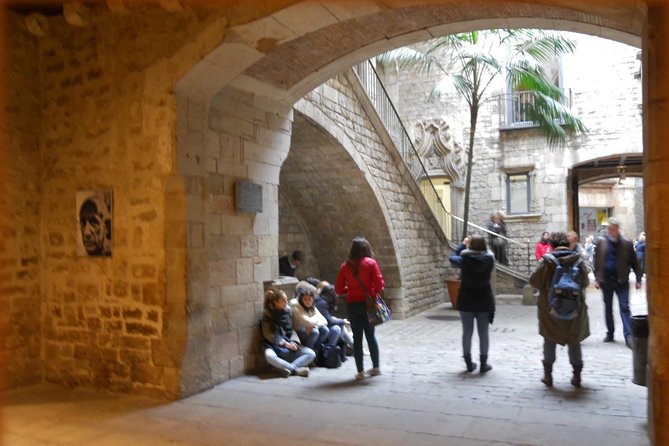
This tour works best if you like art with context—if you want to understand why the early works matter and how Picasso’s training and environment contributed to what came later.
I’d particularly recommend it for:
- First-timers to Barcelona who want a tight “Picasso essentials” plan
- People who find standalone museum visits hard to navigate without a storyline
- Travelers who like shorter walking stops and a longer museum block
- Families or mixed-experience groups where the guide can keep everyone moving at the right pace
You might choose a different approach if you’re the type who wants to spend hours wandering independently without a set route. Also, if you’re visiting during a period where outdoor walking is tough due to weather, keep in mind the tour requires good weather.
Booking Thoughts: Timing, Pace, and Getting the Most Out of It
This experience is often booked about 45 days in advance, so it’s smart to plan ahead if your dates are fixed. Since it’s a private tour, availability can tighten when lots of people want the same window.
For day-of success, do two simple things:
- Confirm the start point on Google Maps the night before (this tour’s meet-up spot is important)
- Bring a phone with your mobile ticket ready, so you’re not fumbling when you arrive
During the walk, don’t feel shy about asking your guide what to focus on next. A strong guide turns a 10-minute stop into something memorable by pointing out the one or two details most people miss.
Also, if your group is sensitive to noise or museum crowds, use your pacing advantage. Ask for a slower route inside the museum, especially if someone in your party wants time to read captions.
Should You Book Picasso’s Footsteps?
If you want an efficient, story-driven way to see Picasso’s Barcelona—plus a real, included finish at Els Quatre Gats—this is a solid book. The mix of skip-the-line museum time, street-level locations, and included coffee/tea makes it feel like you’re paying for outcomes, not just attendance.
Book it if you like guided context and you’re happy with a 2-to-3-hour structure (short exterior stops, one focused museum session). If you prefer total independence and long museum wandering, you might find the set timing a little limiting.
Either way, it’s hard to go wrong with a private guide who knows how to connect Picasso’s early training, schooling, and Barcelona addresses into a single walk-and-museum arc.
FAQ
How long is Picasso’s Footsteps?
The tour lasts about 2 to 3 hours.
Where does the tour start and end?
It starts at Pg. d’Isabel II, 14, Ciutat Vella, and ends at Els Quatre Gats, Carrer de Montsió, 3, Ciutat Vella.
Is museum admission included?
Yes. Admission for the Picasso Museum is included, and the tour provides skip-the-line tickets.
Is coffee or tea included?
Yes. Coffee and/or tea is included at Els Quatre Gats.
What language is the guide?
The guide is English-speaking (monolingual local guide).
Is this a private tour?
Yes. It’s private, meaning only your group participates.
What if the weather is bad?
The experience requires good weather. If it’s canceled due to poor weather, you’ll be offered a different date or a full refund.