REVIEW · SIEM REAP
Bantey Srei, Kbal Spean and Landmine museum Private Tuk-Tuk
Book on GetYourGuide →Operated by Angkor Wat Combine Tours · Bookable on GetYourGuide
Three stops, one honest day of Cambodia. I love this private tuk-tuk loop because it strings together Banteay Srei carvings, the jungle riverbed at Kbal Spean, and a museum that explains what landmines still mean for real people. It runs about six hours and works well when you want something beyond the big Angkor circuit.
What I really appreciate is the art-and-accountability mix: the Landmine Museum gives clear, unsoftened context on the Khmer Rouge era and today’s UXO demining efforts, and the trip stays private with an English-speaking driver who can adjust the flow. The one catch is Kbal Spean involves a jungle hike and access tightens in the afternoon, so start early and wear proper footwear.
In This Review
- Key points to know before you go
- Why this Siem Reap tuk-tuk day works for real schedules
- Banteay Srei: the pink temple carvings that feel close-up
- Kbal Spean: jungle hike to the carved riverbed
- A quick reality check on Kbal Spean planning
- Cambodia Landmine Museum: learning that hits harder in person
- Transport, tickets, timing, and what to pack (so nothing ruins the day)
- Temple tickets and entry fees
- Drinking water, and why I still bring my own
- Footwear and fitness
- Drivers, communication, and safety
- One thing to clarify before you go
- Who this day trip is best for
- Should you book this Banteay Srei–Kbal Spean–Landmine Museum tour?
Key points to know before you go
- Private tuk-tuk for up to 2 people means fewer hassles and more flexible pacing.
- Banteay Srei’s carvings are the star, and it often feels more intimate than bigger temples.
- Kbal Spean is part hike, part sculpture: a carved riverbed hidden in the forest.
- Timing matters at Kbal Spean since entry can stop around mid-afternoon.
- Landmine Museum is sobering and practical about demining and unexploded ordnance.
- Bring real shoes and a backup water even though drinking water is listed.
Why this Siem Reap tuk-tuk day works for real schedules
This is a small-group setup, just you and whoever you book with (priced for a group up to 2). That matters in Siem Reap, where the difference between “day trip” and “dragging your feet for half a day” is often just whether you’re waiting around.
The big win here is how the day is built: you get a temple with some of the finest carved stonework in Cambodia, then you switch to a hidden jungle site with Hindu mythology sculpted into sandstone, and then you end with the Landmine Museum. It’s a balanced emotional arc, even if you don’t plan it that way. One moment you’re staring at craftsmanship you can’t believe is old. The next, you’re staring at the after-effects of war.
And yes, the tuk-tuk ride itself is part of the experience. People tend to underestimate how much easier it is to enjoy the drive when you’re not sealed in. A breeze beats sitting in a hot car any day.
You can also read our reviews of more tours and experiences in Siem Reap.
Banteay Srei: the pink temple carvings that feel close-up
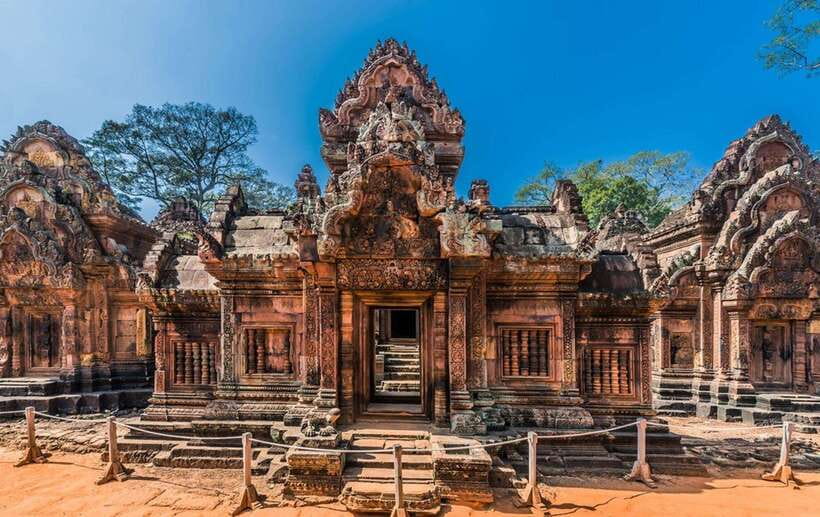
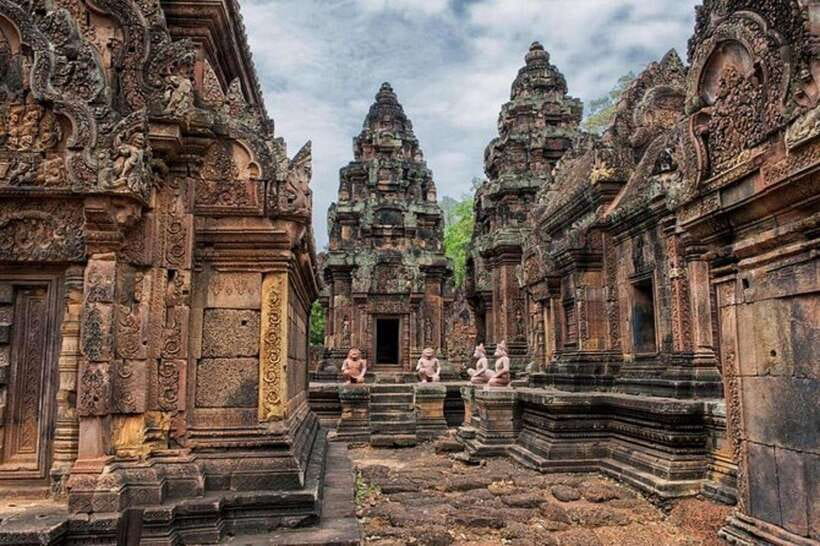
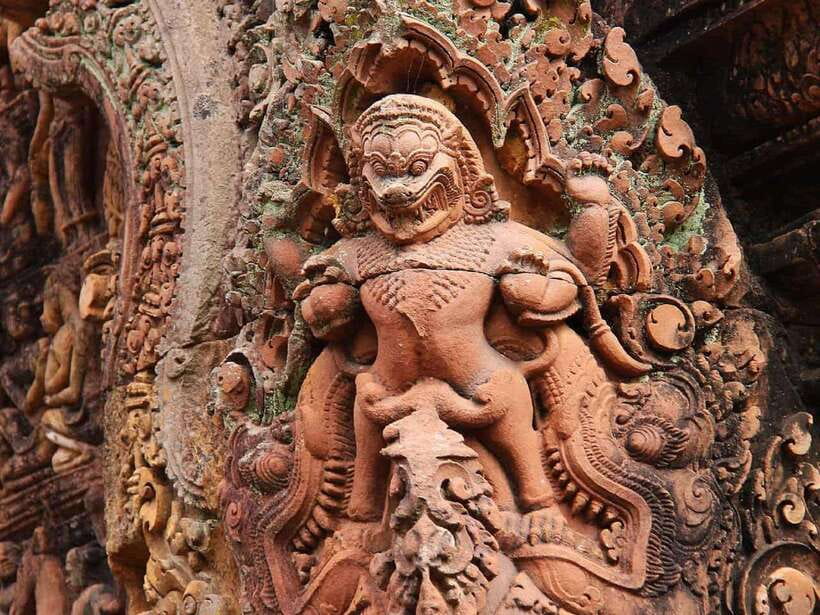
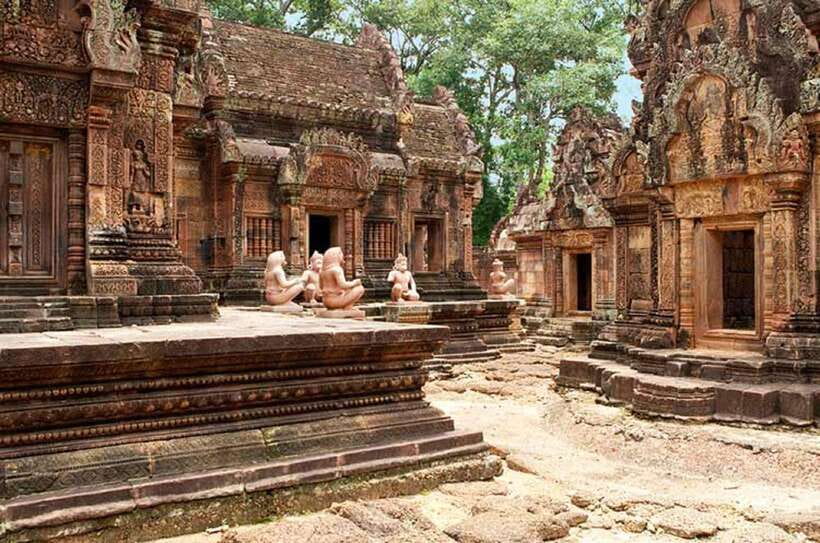
Banteay Srei is often called the Pink Lady Temple, and that nickname makes sense once you’re there. What you notice first isn’t scale. It’s detail. The carvings are thin, sharp, and incredibly worked—so much so that you end up slowing down and scanning instead of rushing through.
This temple is said to be older than Angkor Wat, and it’s renowned for top-tier stonework. If you’re someone who likes to look for patterns (instead of only chasing big monuments), this stop is a treat. The stone figures and decorative motifs reward patience, and you don’t need a huge crowd moving you along.
There’s also a practical side to this visit. One reason I like coming here is that you get more help understanding the restoration work than you might expect at other ruins. When a site explains how it was repaired and cared for, you can actually connect what you’re seeing now with what’s missing or what’s been reconstructed.
Tip for your visit: take a few minutes to view carvings from different angles. Some details pop only when you shift position, especially in daylight.
Kbal Spean: jungle hike to the carved riverbed
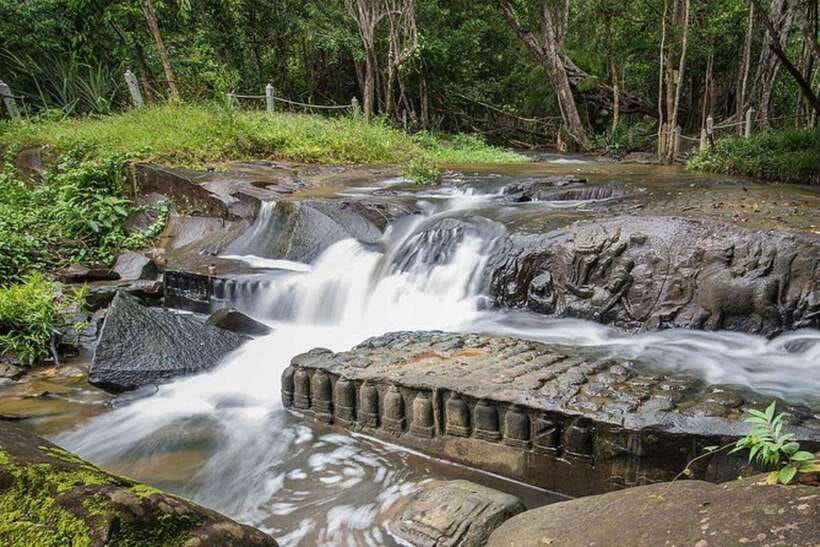
Kbal Spean is one of those places that feels like you’re traveling from the normal world into a quieter one. It’s described as a spectacularly carved riverbed hidden deep in the jungle, northeast of Angkor. In practice, you get there, then you earn the views with a hike.
From where you park, expect about a 1 km walk through wooded paths. This is not a “trail of flowers” hike. It’s a forest walk that can be muddy depending on conditions, and your legs will notice it. Reviews also point out wildlife and butterflies, which is a nice bonus if you’re paying attention and not just staring at the ground.
What you’re really there for is the sandstone that holds Hindu mythology sculptures, carved right into the riverbed. One thing to know: the carvings are described as being many, but some elements (like the lingas) can be smaller than you imagine. So don’t expect everything to be giant and movie-sized. Instead, look for repetition. Walk the area slowly, and let your eyes adjust.
Timing is the big practical consideration at Kbal Spean. One person noted that access stops around 3 pm, and that you should plan this earlier if you can. I agree with that logic. If your day starts later, you may feel rushed just when the site is most enjoyable.
What about cooling off at the waterfall? Some visits include time near a waterfall, and at least one group reported taking a dip. I can’t promise it will be possible for every day or every path, but it’s worth bringing swim-ready common sense (and a towel you don’t mind getting dirty).
A quick reality check on Kbal Spean planning
- If you want the calm version, start early.
- Wear shoes you trust on uneven ground.
- Go slow enough that you’re not sprinting between carvings.
Cambodia Landmine Museum: learning that hits harder in person
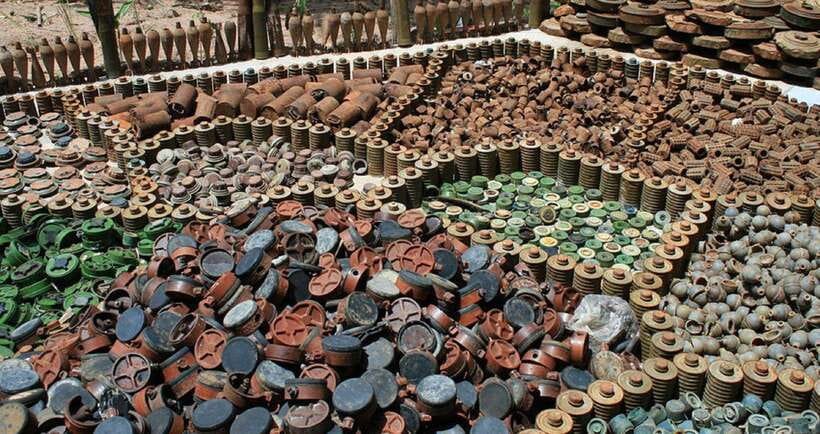
Then the day turns serious. The Cambodia Landmine Museum focuses on the reality that Cambodia remains one of the most heavily mined countries in the world because of decades of conflict—civil war, the Khmer Rouge regime, genocide, American bombings, and Vietnamese occupation.
What makes the museum valuable is how direct it is about ongoing effects. The key idea isn’t just that mines exist. It’s that people have lived with them: landmines and unexploded ordnance can still be found in backyards, rice fields, and on roads where children walk to school. Even with millions cleared, the museum frames demining as a long job that can take decades.
You also get context for why global issues matter. Unexploded ordnance isn’t only a Cambodia story, and the museum connects that local harm to a broader problem created by war long after the fighting “ends.”
Emotionally, it’s the kind of stop that changes how you think about everything else in the day. But it’s also not just sadness. It highlights demining work and the people doing it. One review even mentioned meeting the founder who helped de-mine so many mines throughout Cambodia, which adds a human face to the topic.
If you’re especially lucky, some visitors report meeting Aki Ra during the visit. Whether that happens for your day depends on the museum and timing, but it’s worth knowing the visit can connect to real individuals, not only photos behind glass.
Tip for your visit: give yourself time to read. This place isn’t improved by speed. If you need a quick reset, step outside for a minute, then come back in.
Transport, tickets, timing, and what to pack (so nothing ruins the day)
This trip is built around private tuk-tuk transport from Krong Siem Reap, with pickup included. You’re expected to wait at your hotel lobby about 5 minutes before departure, and then you’re off.
Duration is listed at 6 hours. In real life, that’s enough time to see all three stops without turning it into a sprint, but only if you’re not stuck waiting around. Private transport helps here.
Temple tickets and entry fees
Temple ticket costs are not included. That means you should budget extra cash for Banteay Srei (and any entry costs connected to other stops). Keep small bills if you can.
Drinking water, and why I still bring my own
Drinking water is listed as included. At the same time, at least one booking report said water wasn’t available in the tuk-tuk for them. So I’d do the grown-up thing and bring a small backup bottle yourself. It’s cheap insurance on a warm day.
Footwear and fitness
Kbal Spean’s walk is about 1 km through woods. That’s not a marathon, but it does matter. Wear shoes with grip, not flip-flops. If you have knee issues or get tired on uneven ground, this is the one part that could feel demanding.
Drivers, communication, and safety
The driver is listed as English-speaking, and multiple reviews praised specific drivers for safe, conservative driving and good communication. Names that came up include Danny, Danith, and Mr Tonh Tonh. There’s also mention of Mal being helpful on-site at Kbal Spean, which can make the difference between simply seeing carvings and understanding what you’re looking at.
One thing to clarify before you go
This is transport-focused rather than a fully narrated guided experience. If you want deep explanations at every stop, I recommend you do a bit of reading first—or ask the driver to help you with the big picture while you’re on the move.
Who this day trip is best for
This private tuk-tuk outing fits best if you want a day that feels like you’re escaping the “all Angkor all day” routine.
It’s a great match for:
- People who enjoy temples with fine carvings more than only the biggest names.
- Anyone who likes a bit of walking in nature for the payoff.
- Travelers who want a meaningful stop about war’s long-term consequences, not just sightseeing.
- Couples or small groups who want control over timing and order rather than following a fixed crowd schedule.
It might be less ideal if:
- You dislike hikes or muddy paths.
- You need a continuously guided, commentary-heavy experience with a dedicated guide at every stop.
Should you book this Banteay Srei–Kbal Spean–Landmine Museum tour?
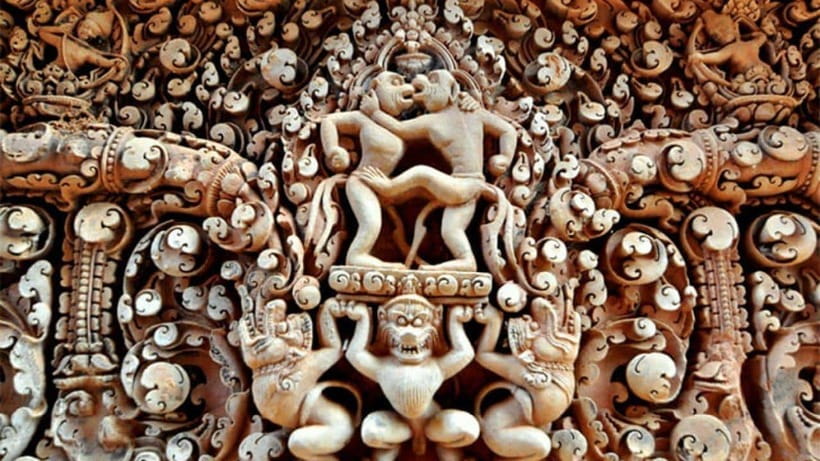
I’d book it if you like your Siem Reap days to mix beauty with clarity. Banteay Srei delivers the kind of carving quality that makes you stop and stare. Kbal Spean adds a jungle hike and a carved riverbed that feels more off-the-beaten-path than most. And the Landmine Museum makes the day land in a way that doesn’t fade when the photos do.
Just go in with two smart expectations: plan for early timing at Kbal Spean and bring proper footwear. Add a small backup bottle of water, since included water isn’t something I’d bet my comfort on.
If your goal is value and a day that feels real—not generic—this is a solid pick.